Neatly wrapped rods can still produce curls that drop as soon as you take them out. With synthetic braiding hair, the missing step may be checking the fiber, using its approved setting method, or letting the shape cool before releasing it. More heat is not automatically the fix.
For Kanekalon hair specifically labeled for hot water setting, the basic process is to test a small section, wrap the hair smoothly around suitable rods, follow the manufacturer’s water temperature and setting instructions, and let the hair cool completely on the rods. Work with detached extensions whenever possible. A product that allows hot water setting does not automatically allow a curling iron.
Check what your exact hair product allows
Kanekalon is a branded synthetic fiber name, but hair sold for braiding, wigs, and extensions can differ in composition and finishing. A listing that simply says synthetic hair is not enough to establish a safe styling temperature. Read the package and the manufacturer’s instructions for that exact product, including any limit on water setting, direct heat, or washing.
If the instructions explicitly permit hot water setting, use the rod method below within those limits. If they permit a heat tool instead, use only the stated tool method and temperature after testing a hidden section. When the instructions are missing or unclear, contact the manufacturer or choose hair sold with clear curling instructions; do not use boiling water or a hot iron as a material identification test.
Test one small section before styling the bundle
Separate a small offcut or discreet section and wrap it on the rod you intend to use. Apply only the setting method approved for the hair, then leave the section on the rod until it has cooled completely and dried. This gives you a useful preview of curl size, spring, smoothness, and whether the ends hold their shape.
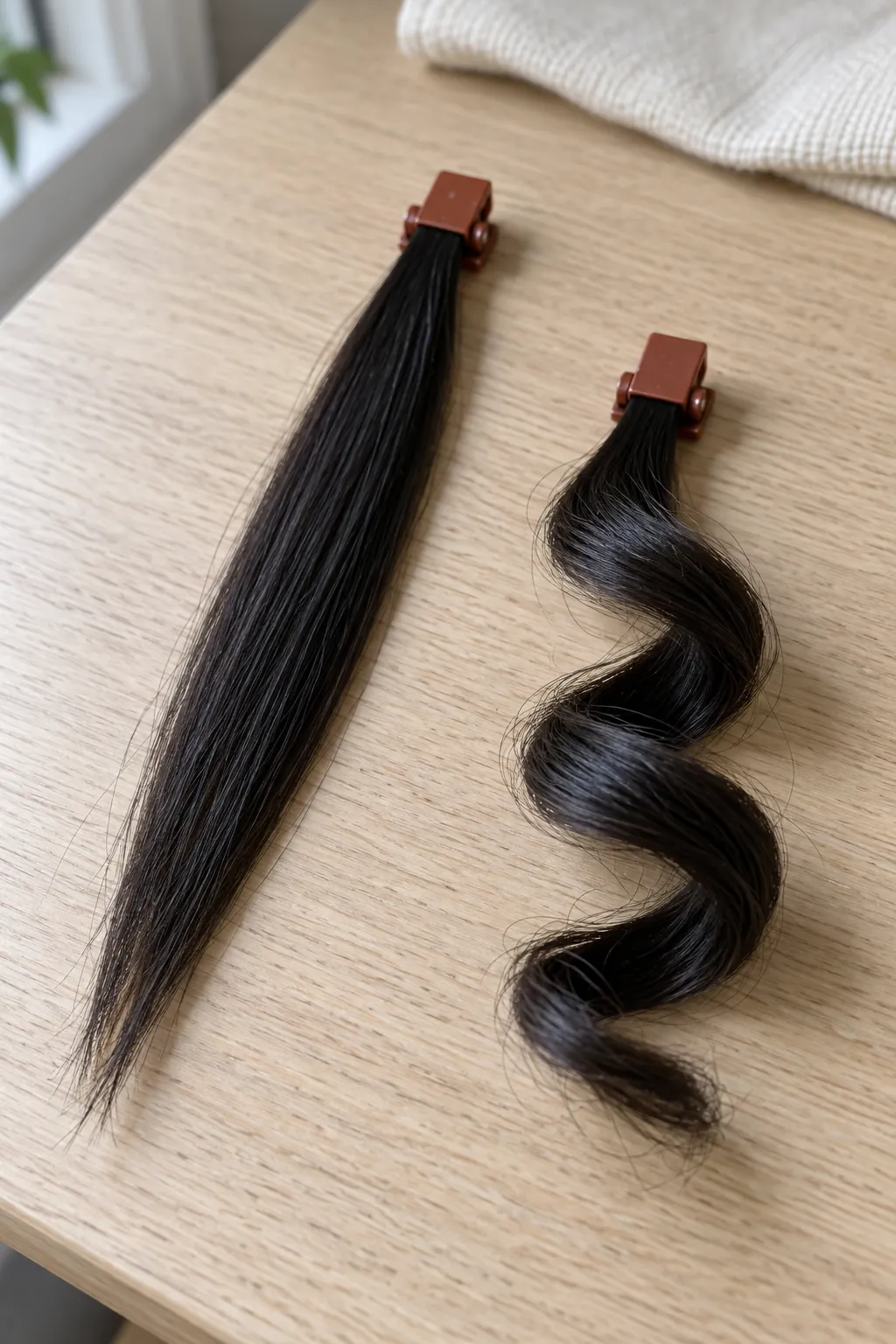
Stop if the fibers fuse, become sticky, develop rough kinks, shrink unexpectedly, or lose their normal flexibility. A damaged test section is a reason to reconsider the method, not to increase the temperature. Keep the product information and the successful test method together so you can repeat the same process across the remaining hair.
Choose rods and prepare a stable work area
Gather rods compatible with the chosen setting method, sectioning clips, end papers if needed, a suitable comb, and clean towels. For an approved water set, also prepare a stable heatproof container and the equipment needed to control the specified water temperature. Keep electrical styling tools unplugged and away from the wet work area.
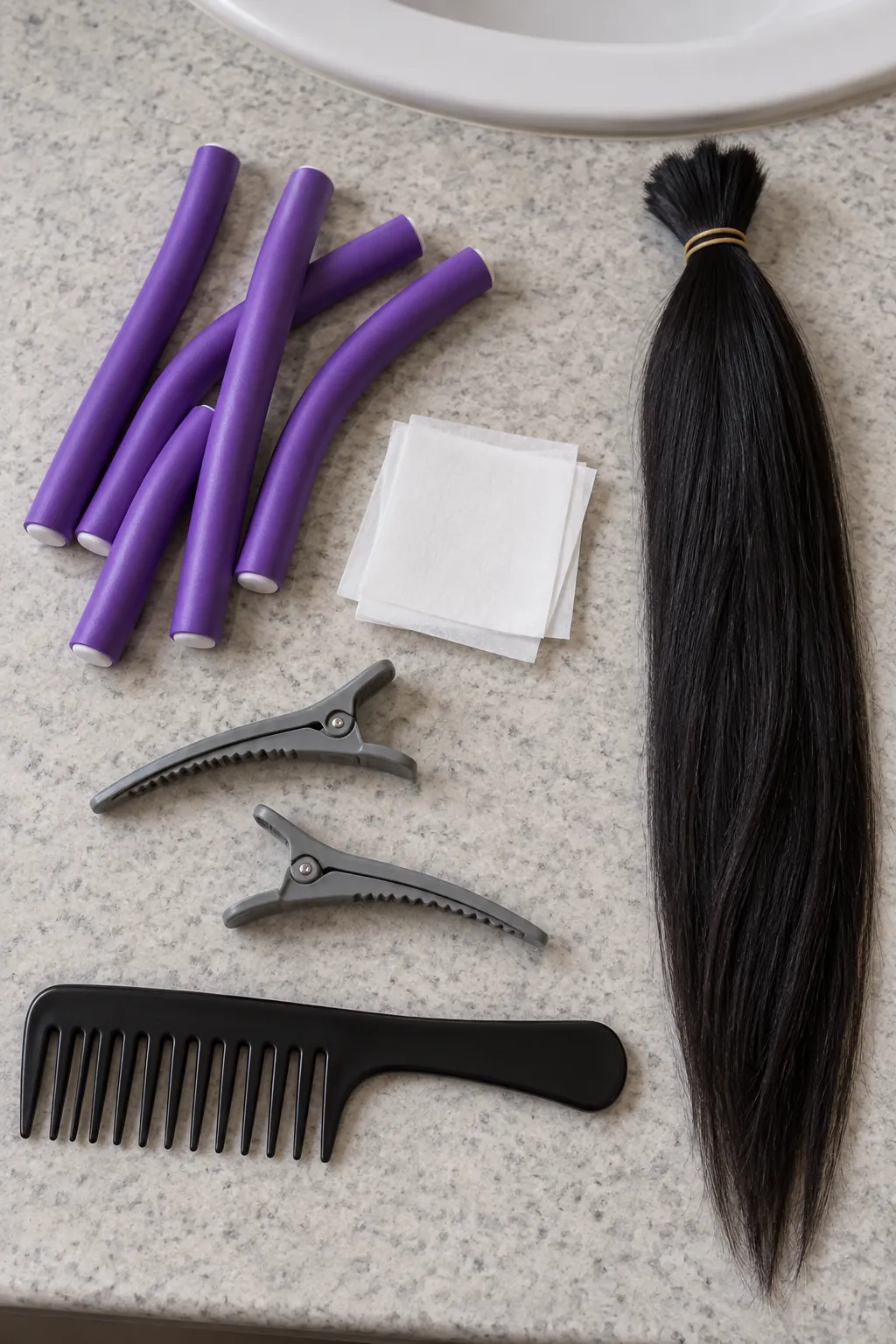
Smaller rods generally create tighter curls; larger rods create looser curves, with the final result also affected by section thickness and the fiber. Use your test curl to decide instead of assuming the rod diameter will exactly match the finished curl. Similar sized sections make it easier to produce consistent synthetic hair curls across the bundle.
Wrap smooth sections with the ends contained
Detangle loose hair gently from the ends upward while supporting the section above the area you are working on. Divide it into sections small enough to wrap in an even layer without a thick wad at the center. Keep the fibers aligned as you wind them, since crossed strands and folded tips can become part of the set.
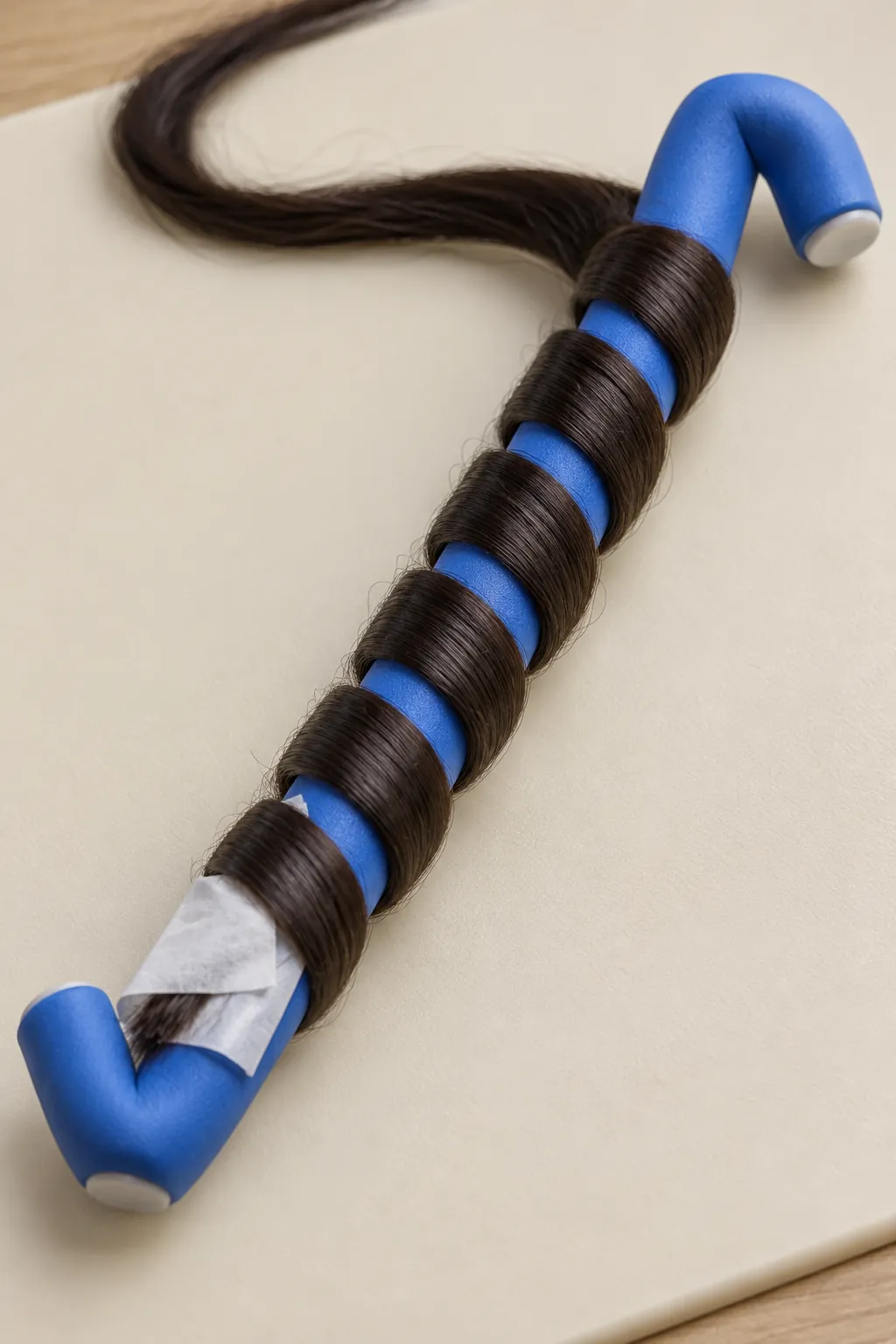
For a spiral, guide the section along the rod in an orderly coil rather than repeatedly piling it onto one spot. An end paper can hold wispy tips flat if it is compatible with the chosen method. Secure the rod without crushing the ends or bending a hard crease into the hair.
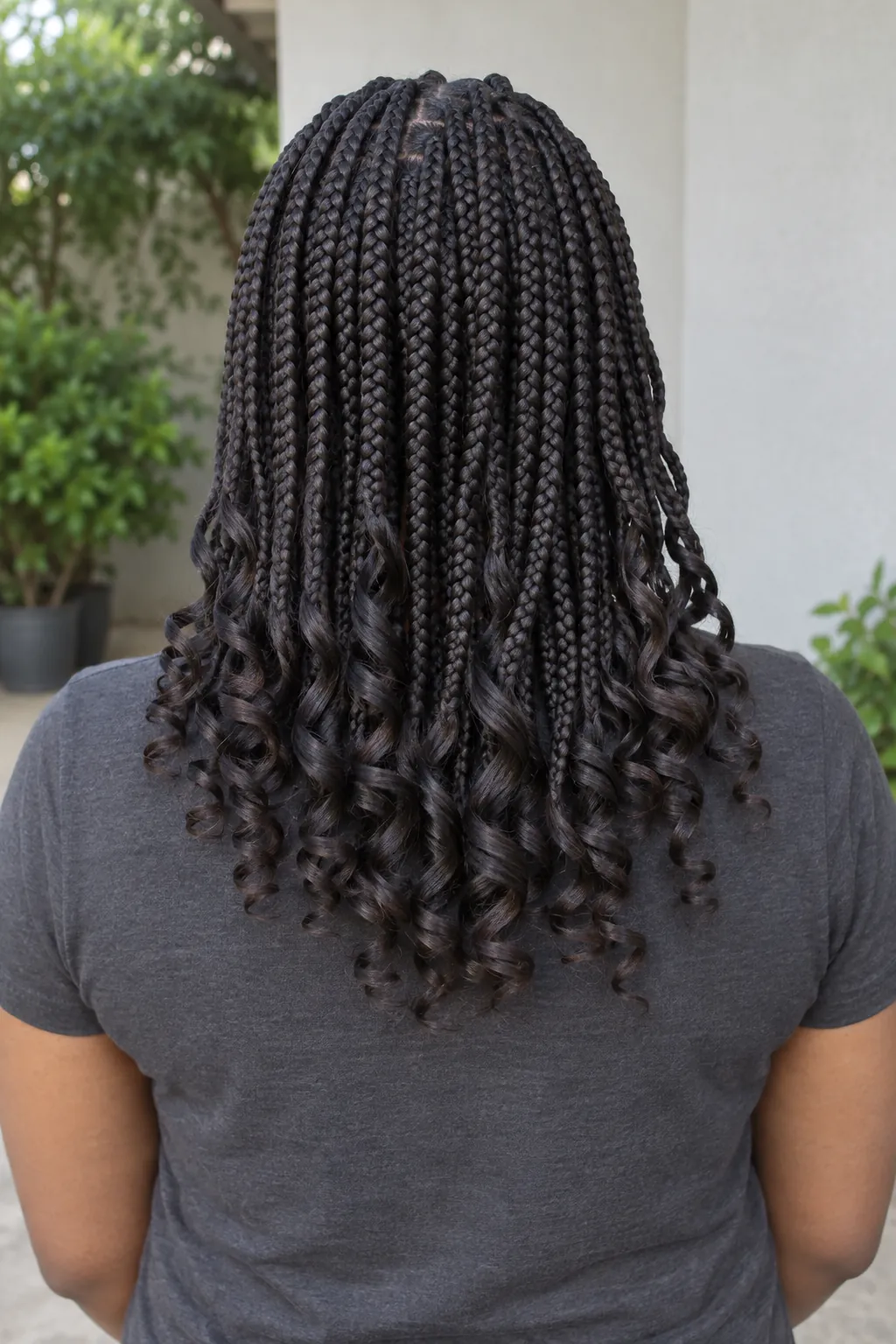
When curling braiding hair for a style with straight braided lengths and curly ends, wrap only the portion intended to curl. Detached practice braids let you check where the curl will begin before installing the hair. Avoid pulling installed braids tight just to keep a roller in place.
Set compatible hair using its hot water instructions
There is no single water temperature or dipping time that is appropriate for every product called Kanekalon. Use the exact temperature, exposure time, and method supplied for your hair and rods. Do not default to a rolling boil, and do not add extra exposure because another creator used it on a different brand.
For detached extensions whose instructions permit immersion, place the heatproof vessel securely in an empty sink or similarly contained work area. Prepare only enough water for the wrapped sections, keeping the container well below its rim. Use appropriate tools to lower and lift the detached hair while keeping your hands clear of hot water and steam, and keep the container away from children and pets.
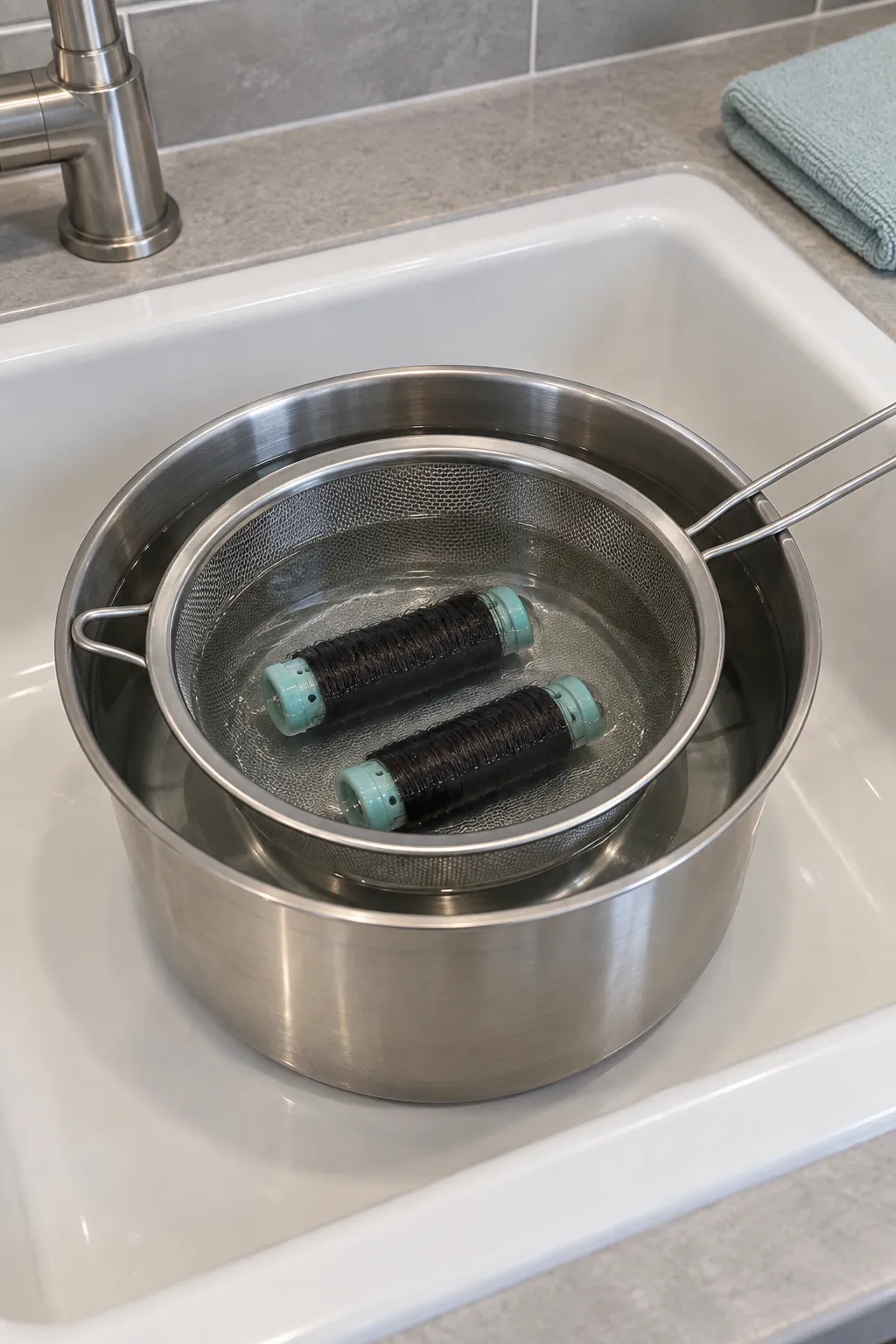
Keep the hair supported as you lift it, allowing hot water to drain back into the container before moving it to a protected cooling area. Do not pour hot water over your head, rest the vessel on your lap, or assume a towel will prevent a scald. If the braids are already installed, a qualified stylist is the better choice for a hot water service, especially when the intended curl begins near your skin or includes your natural hair.
Let the shape cool before removing the rods
Leave the rods secured while the fibers cool completely, then allow the hair to dry as the product directs. Support the curls on a clean towel or suitable drying surface so their own weight does not pull them straight. Rods and trapped water can stay hot after the outside looks ready, so avoid handling them until they are safe to touch.
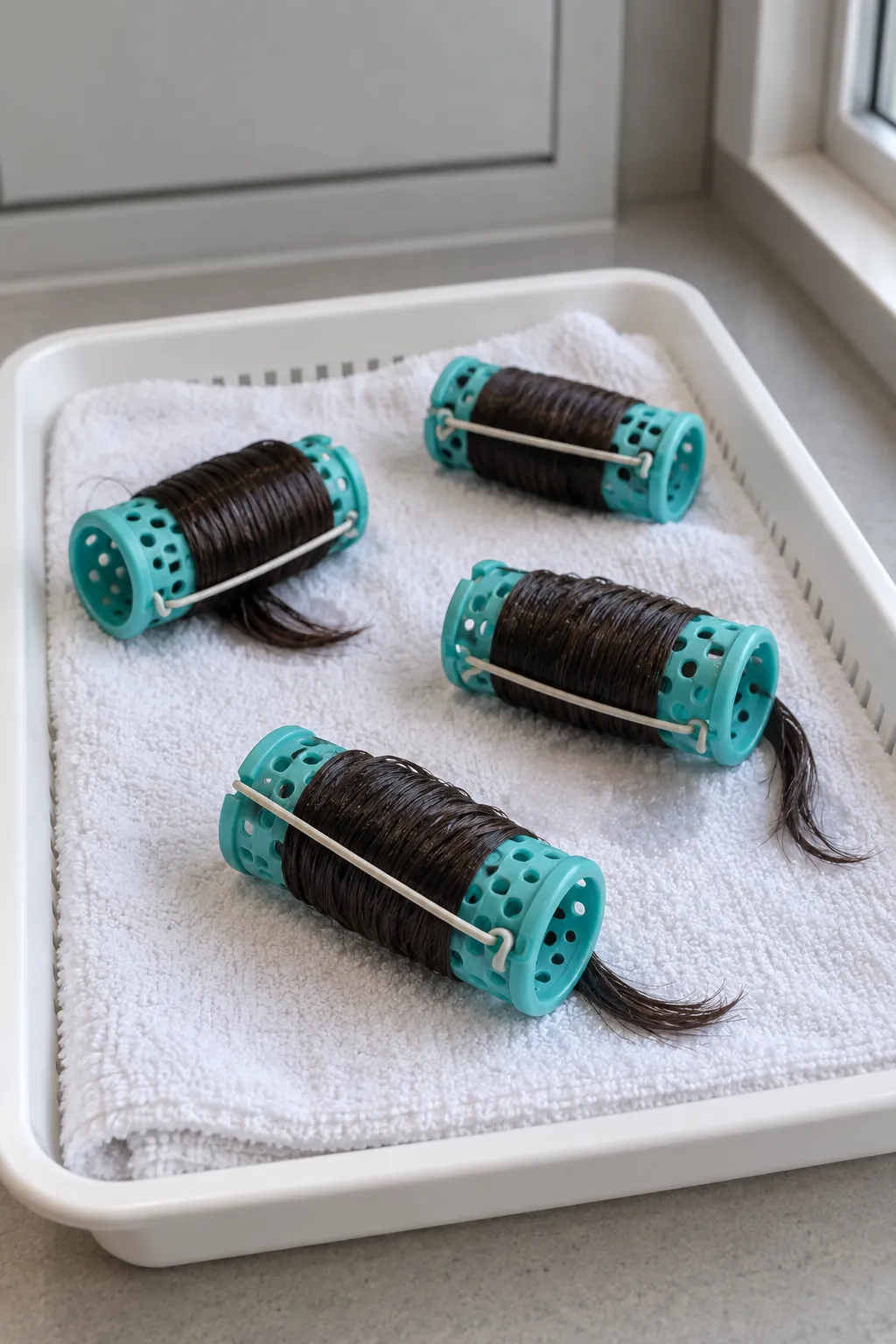
Open one rod first and unwind it in the direction that releases the hair without stretching the curl. If the test curl holds, remove the others with the same gentle motion. Separate the finished spirals only as much as the style needs; vigorous brushing can turn defined curls into a larger, fuzzier shape.
Check the cause when curls fall or ends kink
A curl that drops immediately can point to an incompatible fiber, a section too thick for the permitted process, loose wrapping, or releasing the rod before the hair cooled. Recheck the original instructions and the small successful test before changing anything. If the manufacturer allows another set, adjust one variable at a time within its limits so you can identify what helped.
Hooked tips often begin with ends folded under a fastener, while irregular curls can come from uneven section sizes or crossed fibers. Smooth wrapping and contained ends address those mechanical problems more directly than adding product. Oils, mousse, and human hair heat protectants cannot make an unsuitable synthetic fiber safe for a hot tool.
Keep finished curls from tangling and stretching
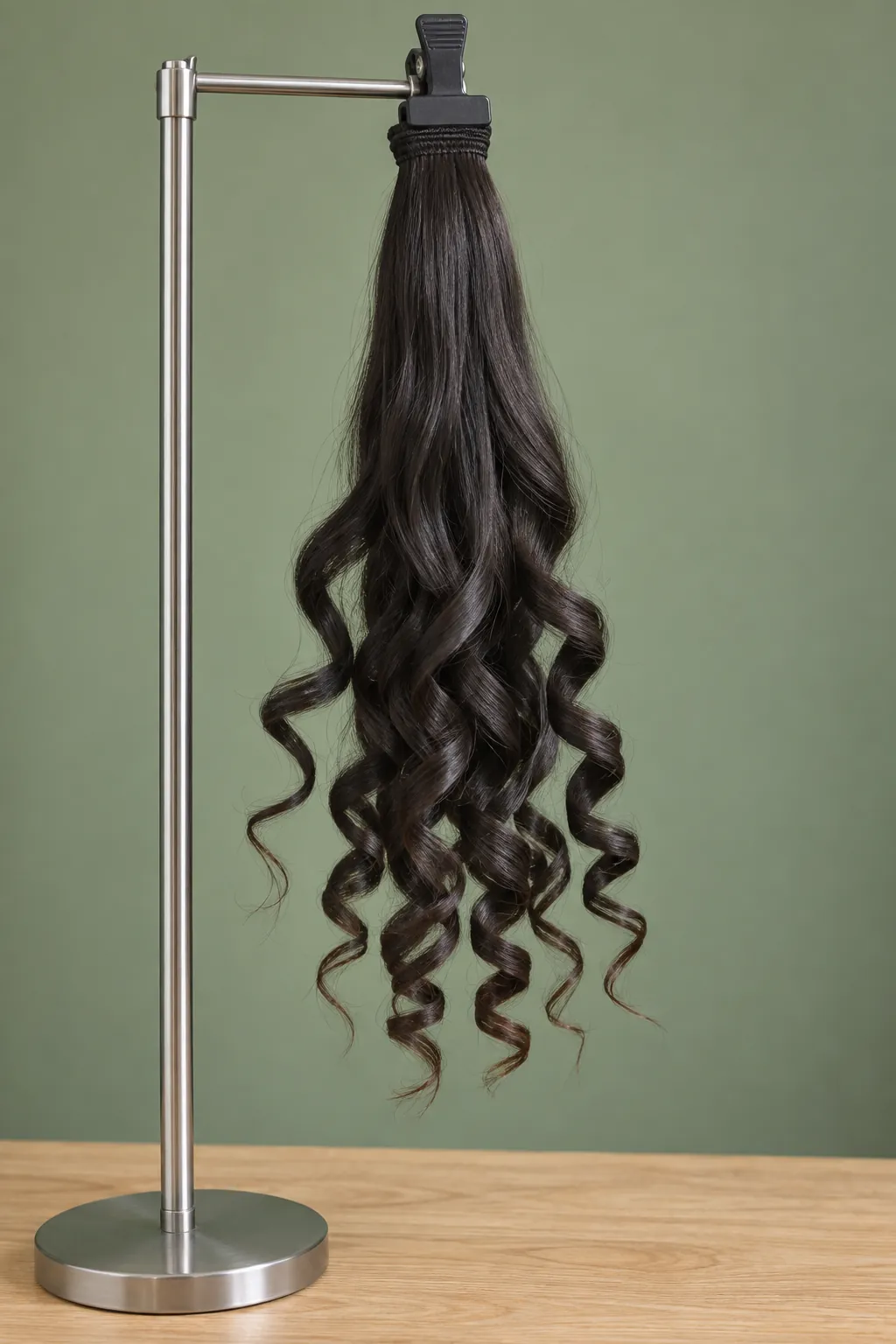
Handle the finished curls by small sections and gently separate tangles with your fingers before they tighten. Use only care products suitable for the fiber, since heavy coatings can leave synthetic hair sticky without improving the set. Keep removable pieces supported during storage, and follow the manufacturer’s washing and drying directions because heat can change the shape again.
For installed braids, arrange the curled ends loosely under a satin bonnet or scarf without folding them tightly into one compressed bundle. You do not need to repeat the setting process every time a curl looks slightly different. A test curl that stays flexible and holds after cooling is the result to repeat across the style.