

A lob can look polished right after a salon visit, then turn flat at the crown and puffy at the ends when it dries at home. The problem is usually not air drying itself. It is the order of water removal, product application, shaping, and hands off drying. This routine keeps enough moisture for smooth clumps while giving the roots room to lift.
The method works best when you adjust the amount of product to your density and natural texture. Fine hair usually needs less cream and more light hold. Thick or wavy hair can often handle a richer leave in product and a stronger gel. Use the photos as checkpoints, then change one variable at a time if your result feels heavy, fuzzy, or uneven.
Start With Clean, Fully Wet Hair
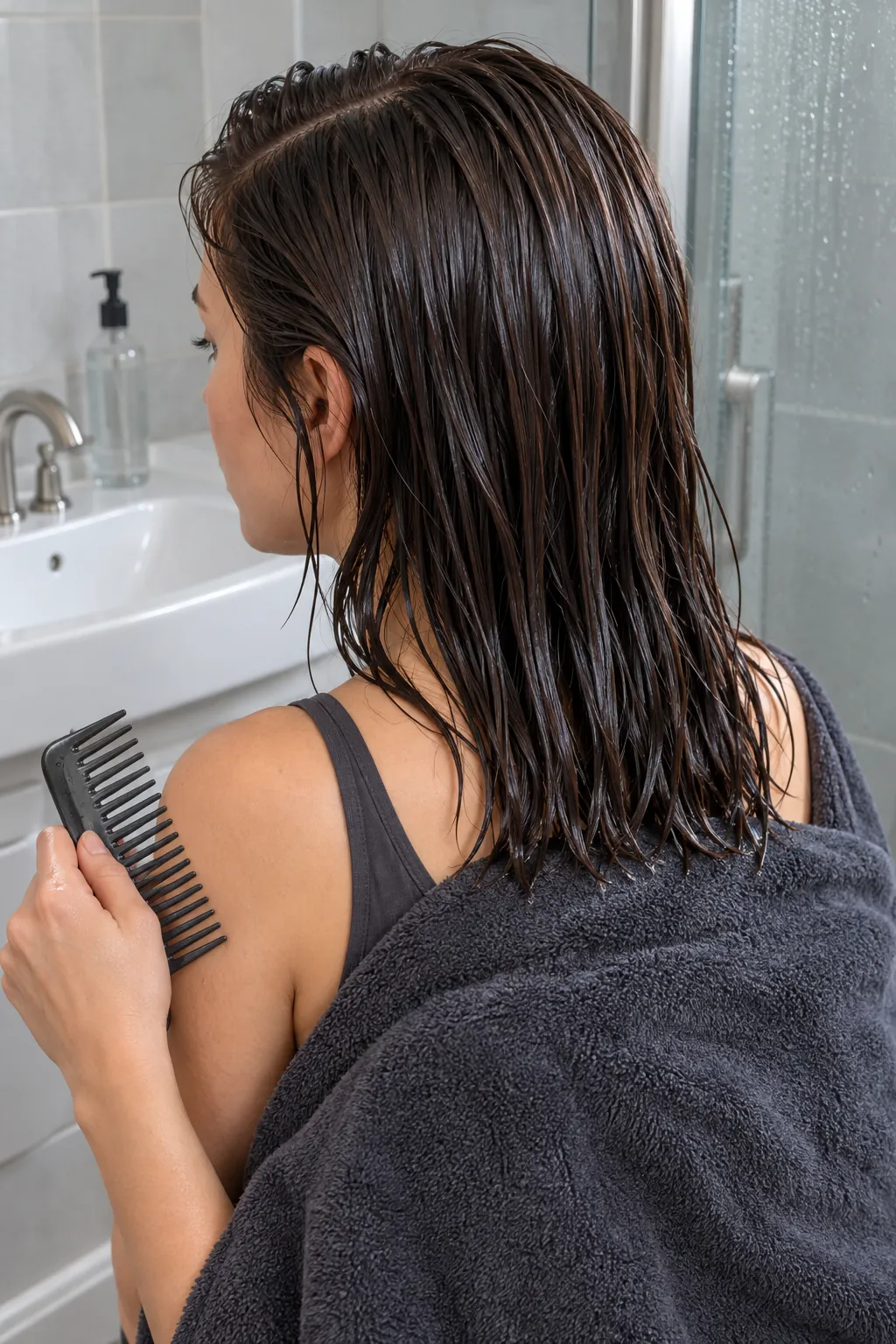
Begin while the hair is still saturated from the shower. Water helps neighboring strands gather into smooth groups, so combing after the hair has started to dry can create separate fuzzy pieces. Apply conditioner mainly from the middle of the hair to the ends, then rinse until the roots feel clean and the lengths still feel slippery rather than coated.
Use a wide tooth comb or a flexible detangling brush while the conditioner is still present. Work upward from the ends instead of pulling from the scalp. If your hair collapses easily, keep heavy masks and oils away from the first several inches near the roots.
Blot Without Breaking the Clumps
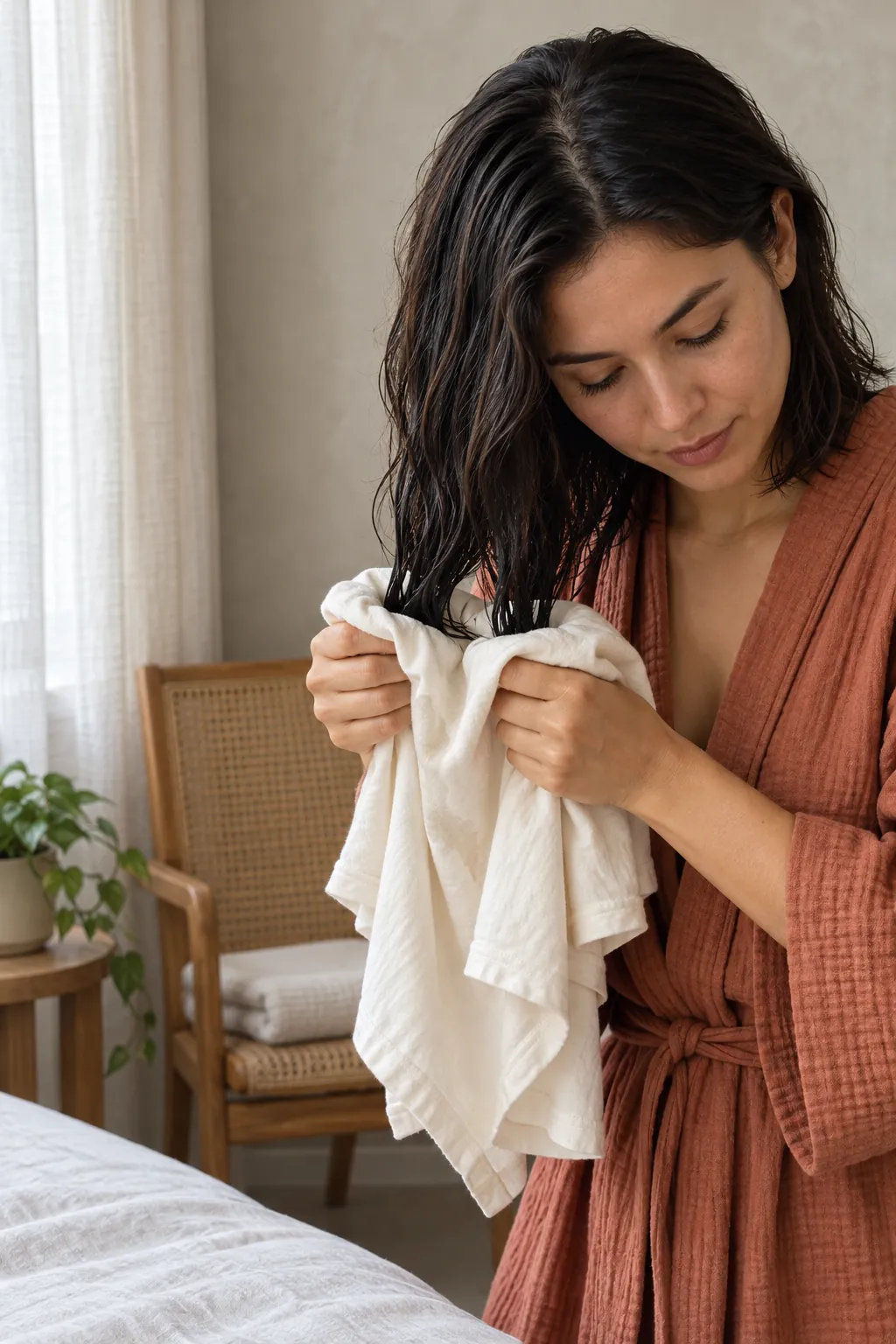
Step out of the shower and squeeze excess water downward with open palms. Press a soft cotton shirt or a smooth microfiber towel around the ends for a few seconds. Do not rub, twist tightly, or drag the fabric across the surface because friction separates the clumps and lifts the cuticle.
The right moisture level looks damp enough for strands to stay grouped, but not so wet that product runs onto your shoulders. If the ends already look stringy, mist them with water and gently press them together again. This small reset is often more effective than adding extra product later.
Layer Lightweight Moisture and Hold
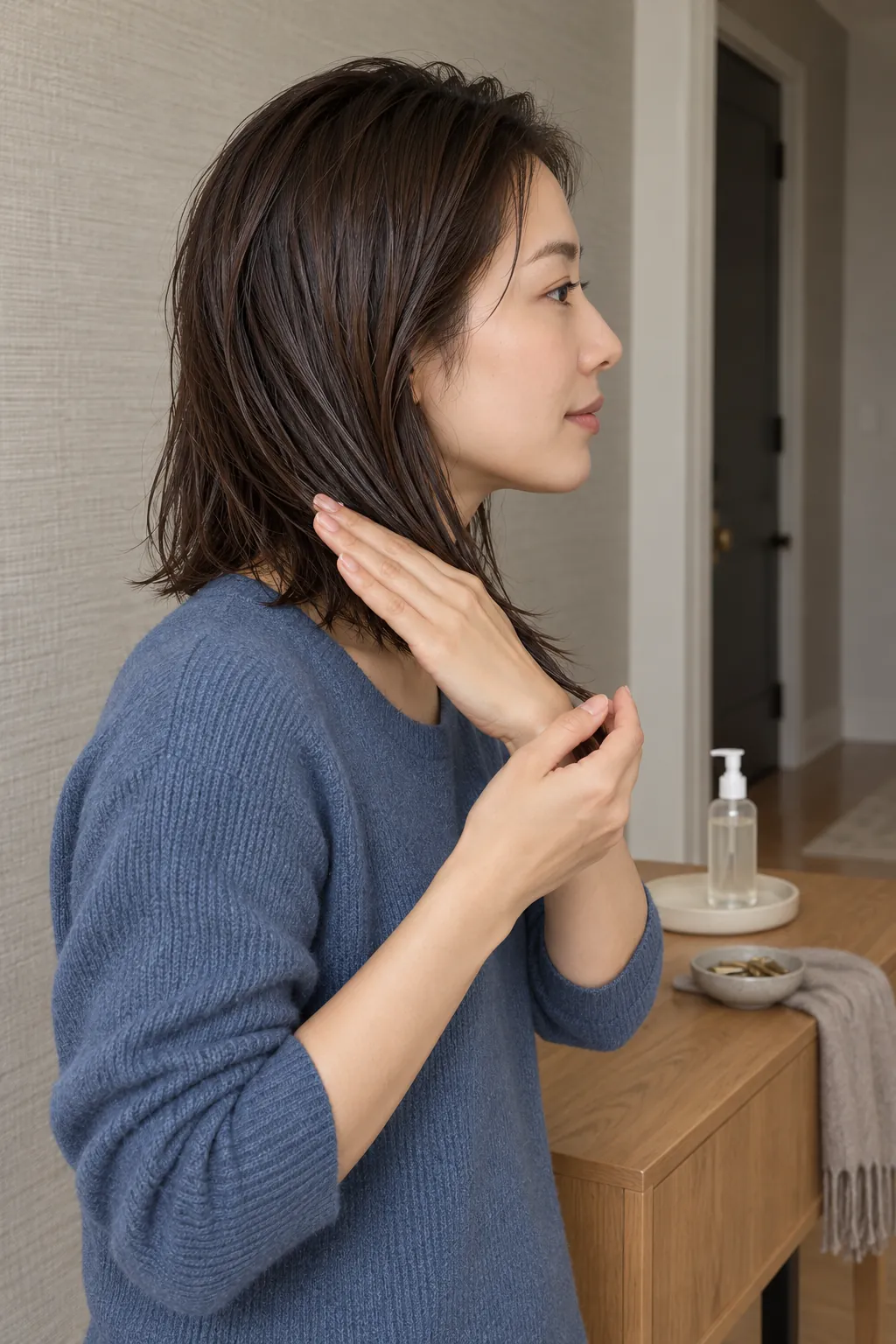
Rub a small amount of leave in conditioner between wet palms, then glaze it over the lower half of the lob. Follow with mousse or gel for hold. Start with less than you think you need, since a shoulder length cut can lose movement when too much product gathers around the perimeter.
Use flat hands to smooth product over the outside, then rake only enough to distribute it. Cup the ends and press them toward the scalp to encourage bends or waves. Straight textures can skip repeated scrunching and instead use palms to guide the hair into a clean inward or outward curve.
Set the Part Before the Surface Dries
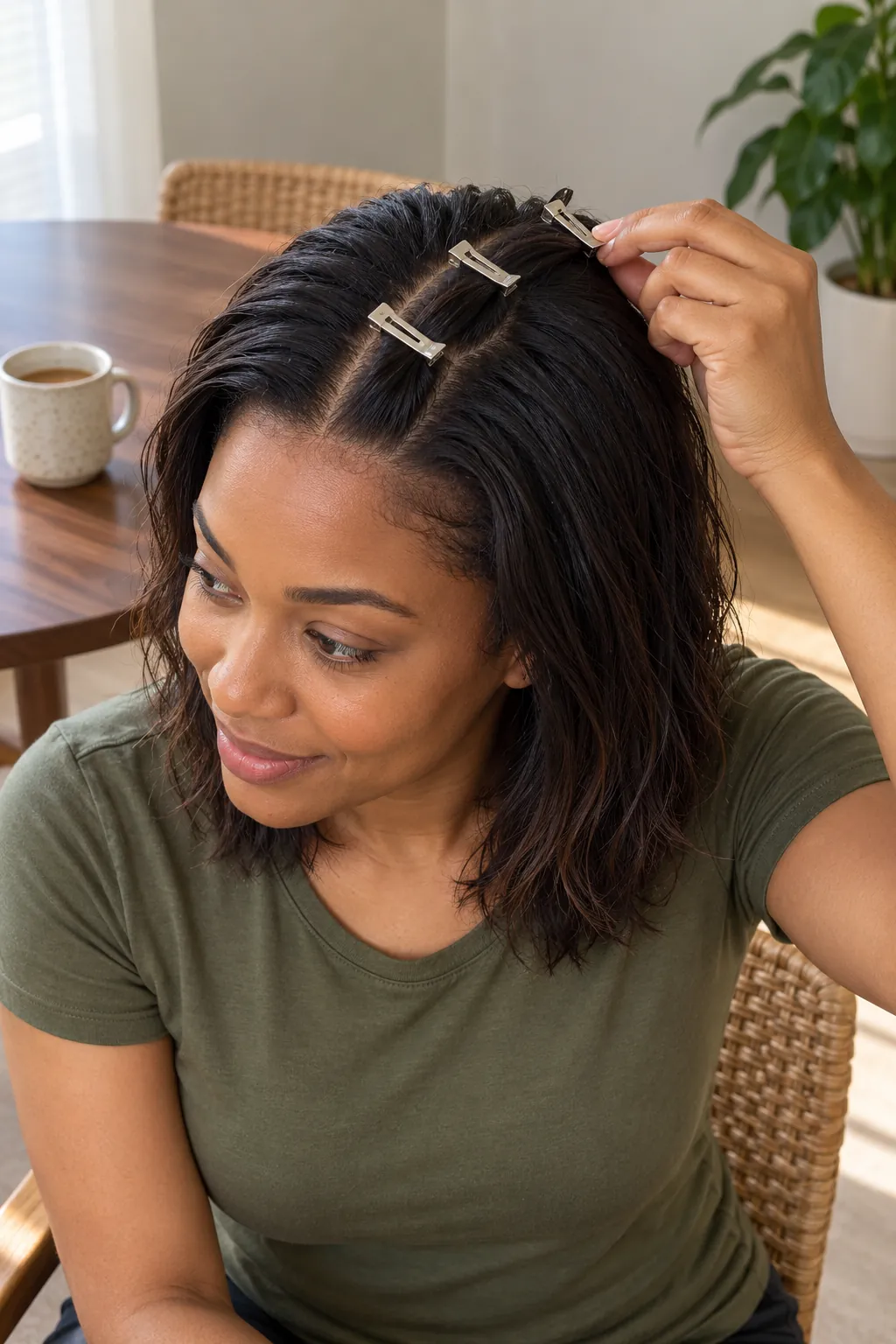
Choose your part while the roots are still very damp. Use the tail of a comb for a precise line or your fingertips for a softer result. A slightly imperfect part often looks fuller because the hair does not fall into one rigid channel.
For more crown lift, place two or three small flat clips at the roots. Slide each clip across the part so it supports hair from both sides without creating a sharp ridge. People with fine hair may need only one clip at the crown, while dense hair may need several small clips spread across the top.
Shape the Ends to Suit the Cut
The perimeter determines whether a lob reads as intentional or unfinished. For soft waves, divide the ends into several broad sections and twist each section once around a finger. For a straighter finish, comb the last few inches into place and press them gently against the neck or collarbone.
Pay special attention to the shorter pieces near the face. Guide them away from the eyes and let their natural bend decide the final direction. Trying to force every section into the same curve often makes the front look stiff and exposes uneven drying.
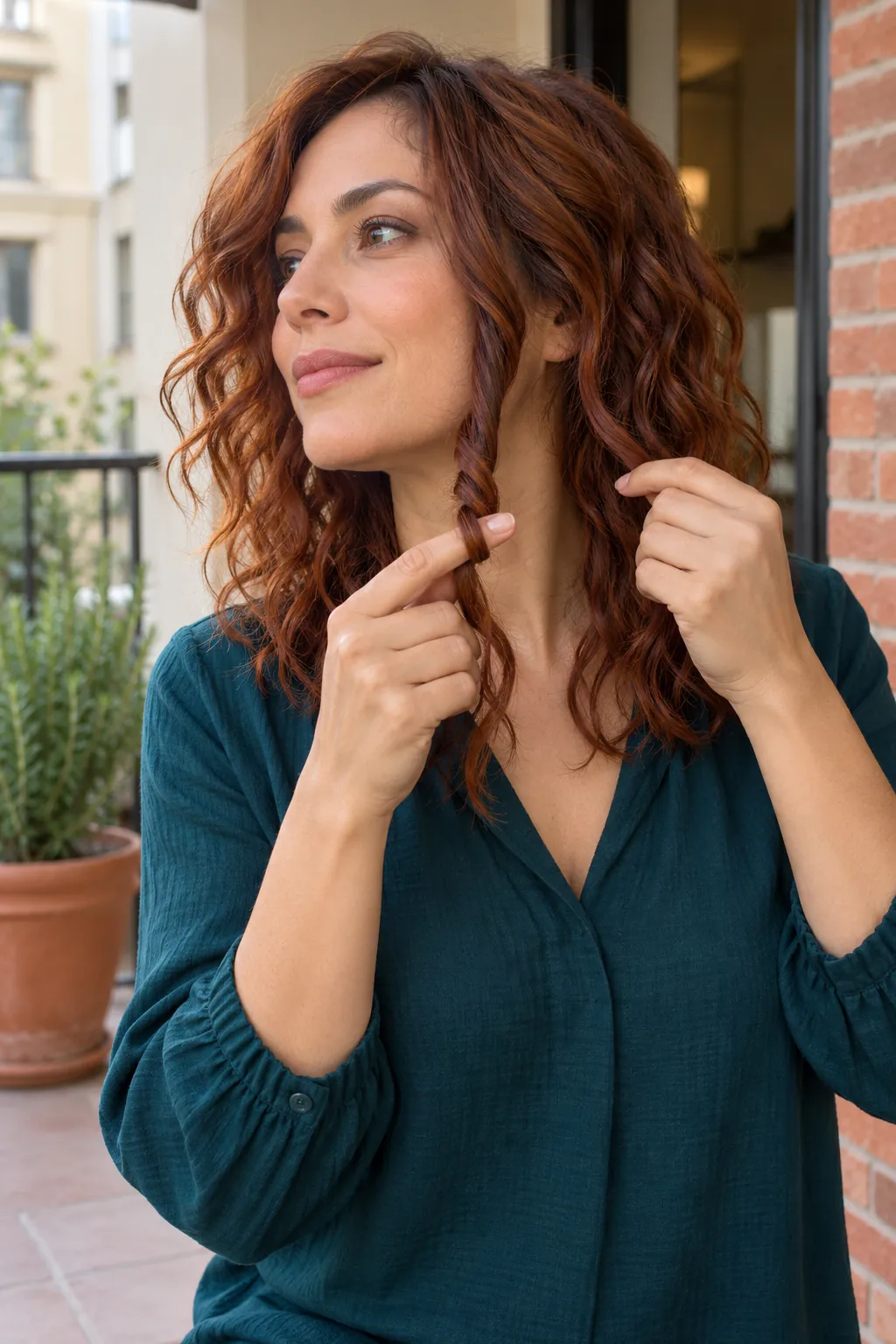
Leave the Hair Alone Through the Middle Stage
The middle stage is when the outside feels cool and partly dry but the inside still holds moisture. Touching, fluffing, or tucking the hair behind the ears during this period breaks the developing shape. Let the lob hang freely and keep clothing, chair backs, and bag straps from pressing against the ends.
If one area begins to frizz, wet your palms lightly and press a trace of gel over that spot. Do not comb through the whole section again. Remove root clips only when the roots can hold their position, usually when they feel mostly dry rather than merely cool.

Finish Only When Every Section Is Dry
Check the hair underneath near the nape, since that area often stays damp longest. Once every section is dry, slide your fingers under the roots and lift gently. If gel created a firm cast, cup the ends and squeeze until the hair feels soft while the shape stays intact.
Use one drop of light serum only on ends that need extra polish. A wide tooth comb can soften straight textures, but wavy textures usually look better when separated with fingertips. On the next wash day, change only one detail, such as towel pressure, product amount, root clips, or drying time, so you can see what actually improved your air dried hairstyle.