
A haircut can look long enough from the back and still fail the moment you reach for an elastic. The front may be too short, crown layers may slide free, or the bottom may sit exactly where shoulder movement loosens it. A ponytail friendly cut must be planned around the shortest piece and the height where you actually tie your hair.
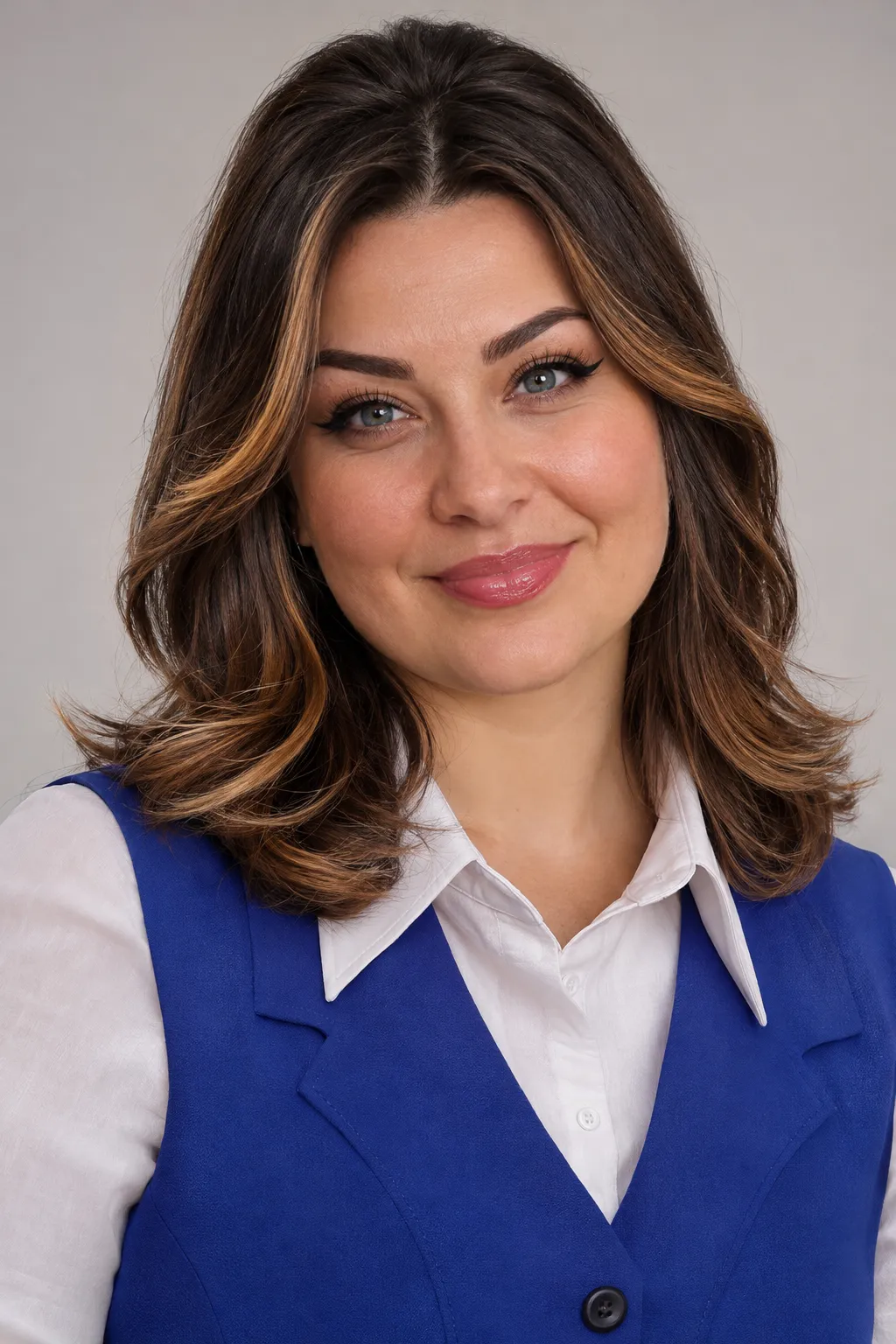
The safest starting point is usually a collarbone lob with a strong perimeter and restrained long layers. That does not mean every piece must be one length. It means each intentional layer has a job and you know whether it should reach the elastic or remain loose around the face.
Choose Length With Your Ponytail Height in Mind
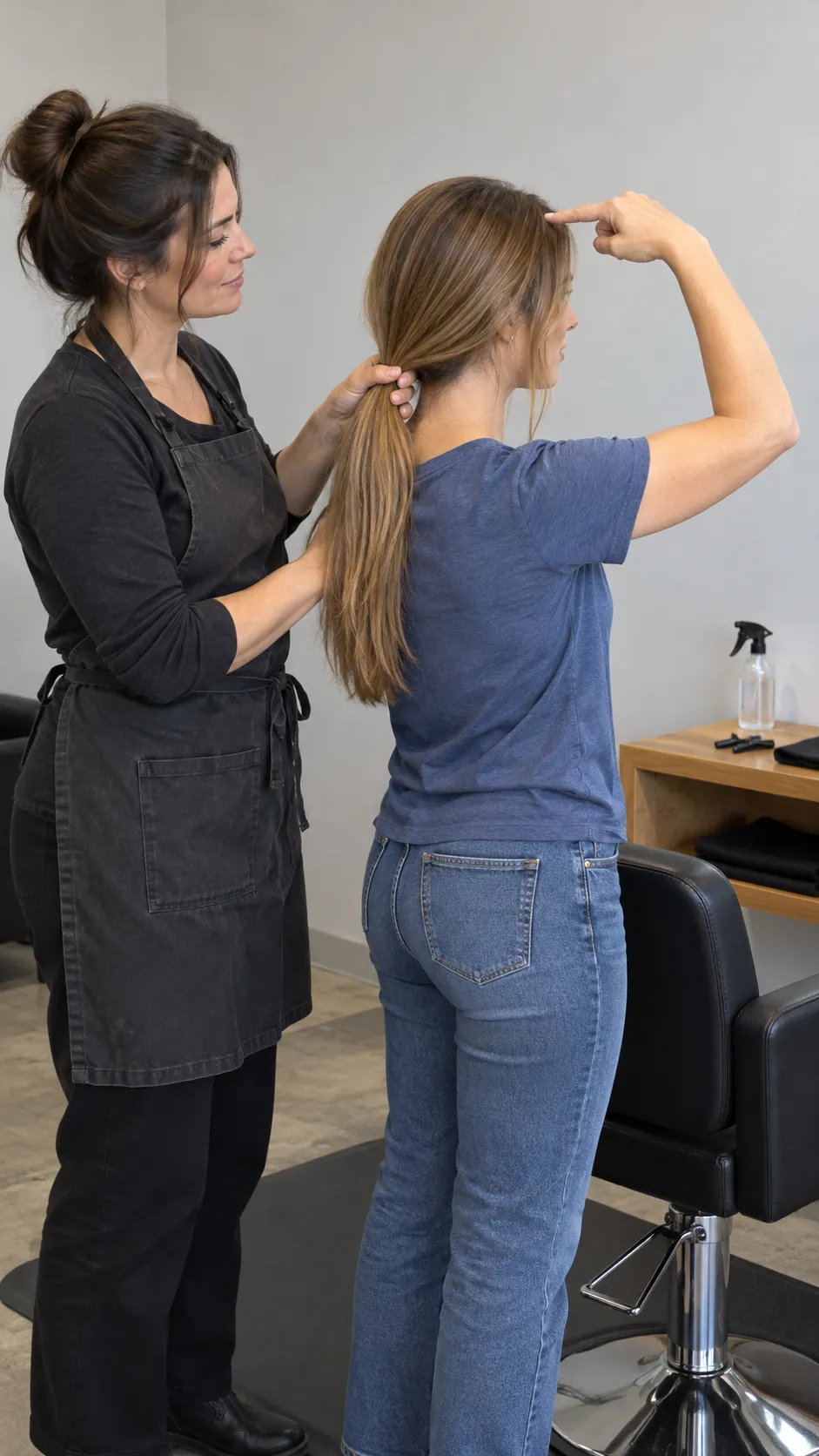
A low ponytail at the nape needs less length than a high ponytail near the crown. Shoulder length hair may gather low but fall apart when lifted several inches. Decide where you need the elastic for work, exercise, sleep, or daily comfort before choosing the final perimeter.
Collarbone length gives most straight and wavy hair a useful margin. Curl shrinkage can reduce that margin, so assess curly hair close to its dry state. If secure high styles matter, keep additional length or accept that clips and a headband will remain part of the routine.
Set the Shortest Layer by Reach
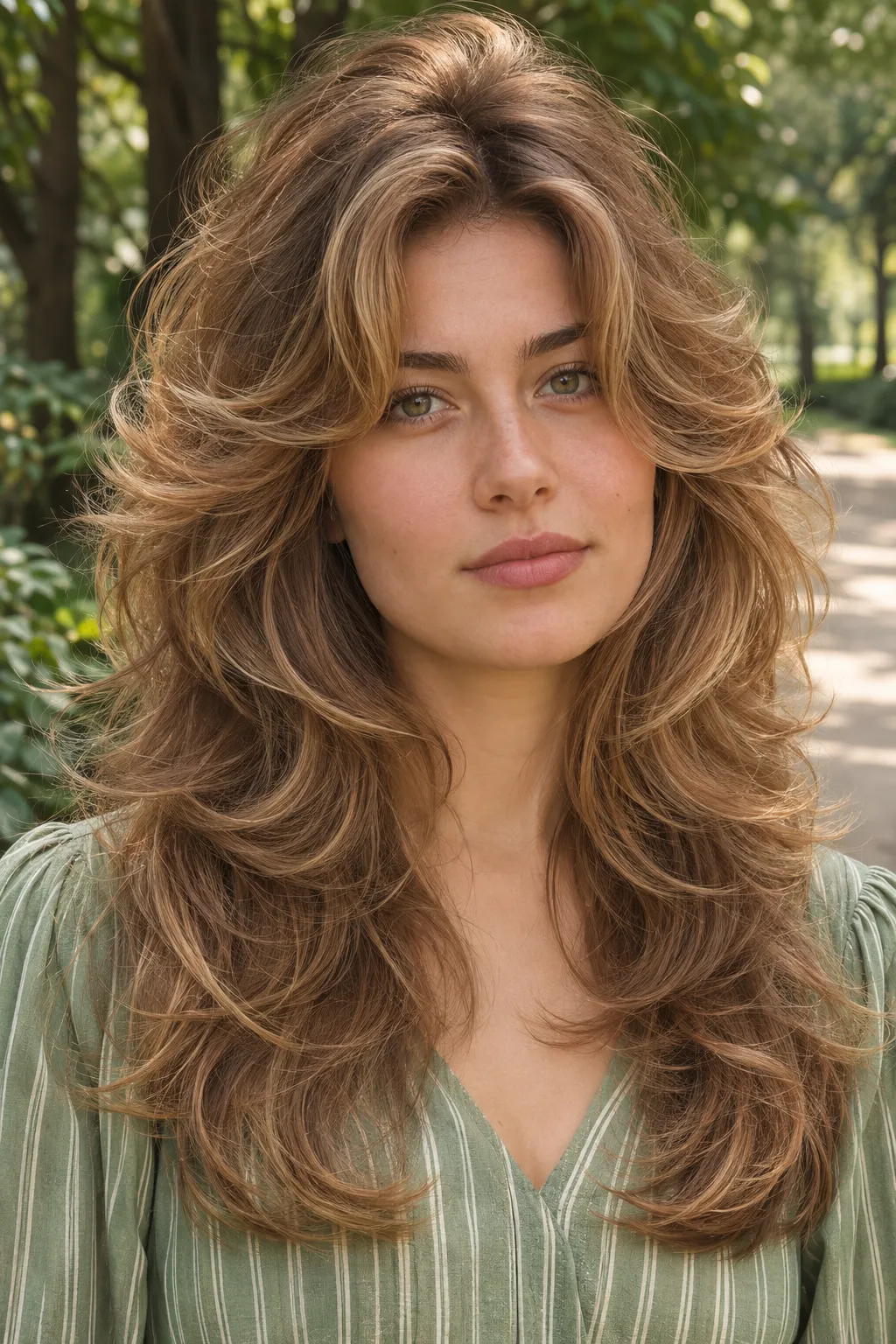
Long layers can add movement without ruining a ponytail when their shortest point still reaches your usual elastic. Crown layers are the common problem because they travel farther to the back than the perimeter does. A layer that reaches in a low style may escape a higher one.
Ask the stylist to gather a sample section toward the intended ponytail position before cutting it. Keep the difference between layers modest if you want one secure bundle. Internal weight removal can reduce bulk without creating many visible short ends.
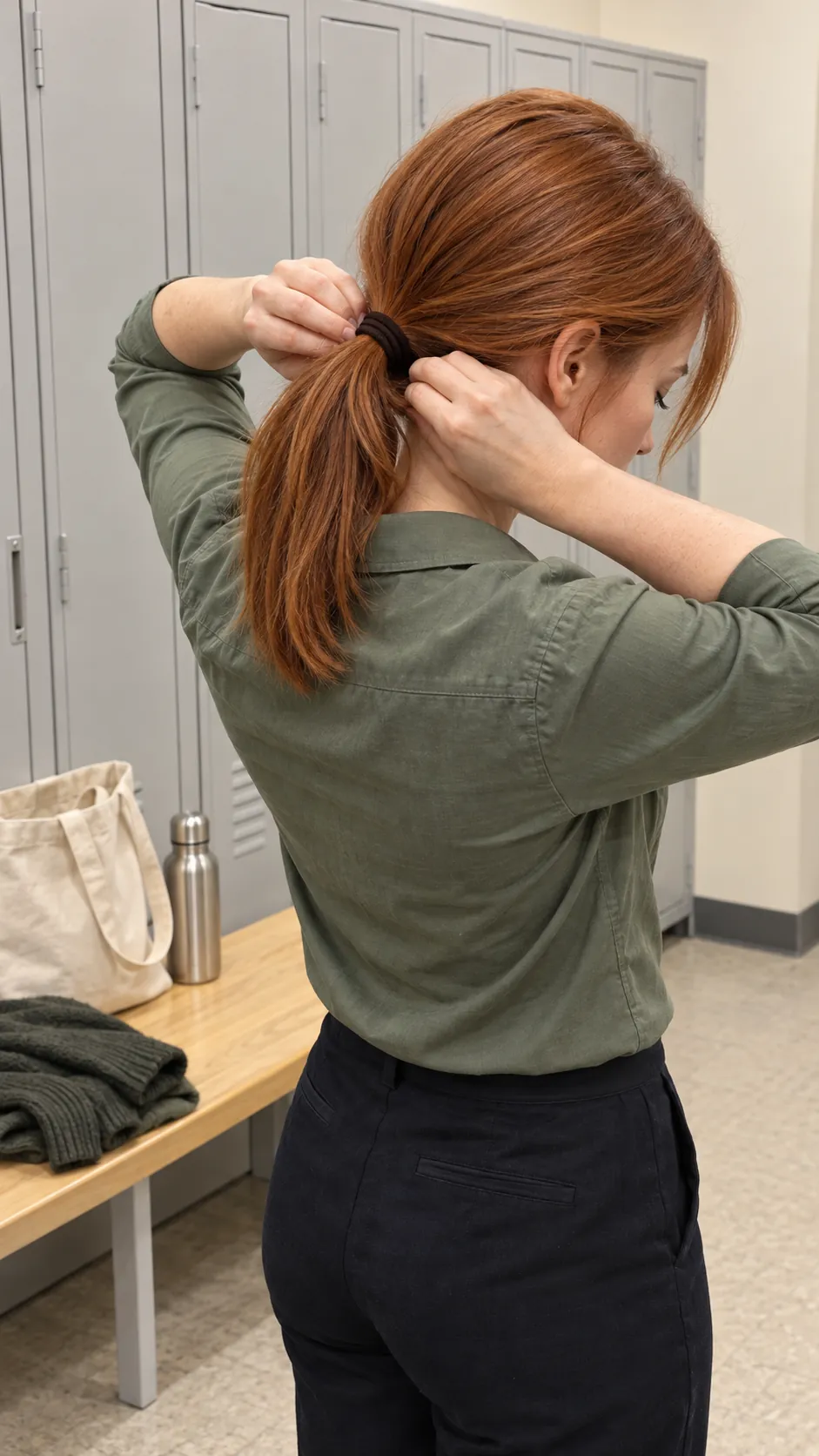
Decide Which Face Framing Pieces Stay Loose
Face framing layers can soften a ponytail without requiring full bangs. Pieces that end below the chin create a deliberate loose effect and are often easier to tuck behind the ears. Shorter sections make a stronger statement but may fall forward during exercise or hands on work.
Choose the loose pieces on purpose. Show the stylist where you want them to end and whether you need them to tuck, clip, or stay out. If every strand must be secured, request that the front reaches your elastic and use styling around the face only when the hair is down.
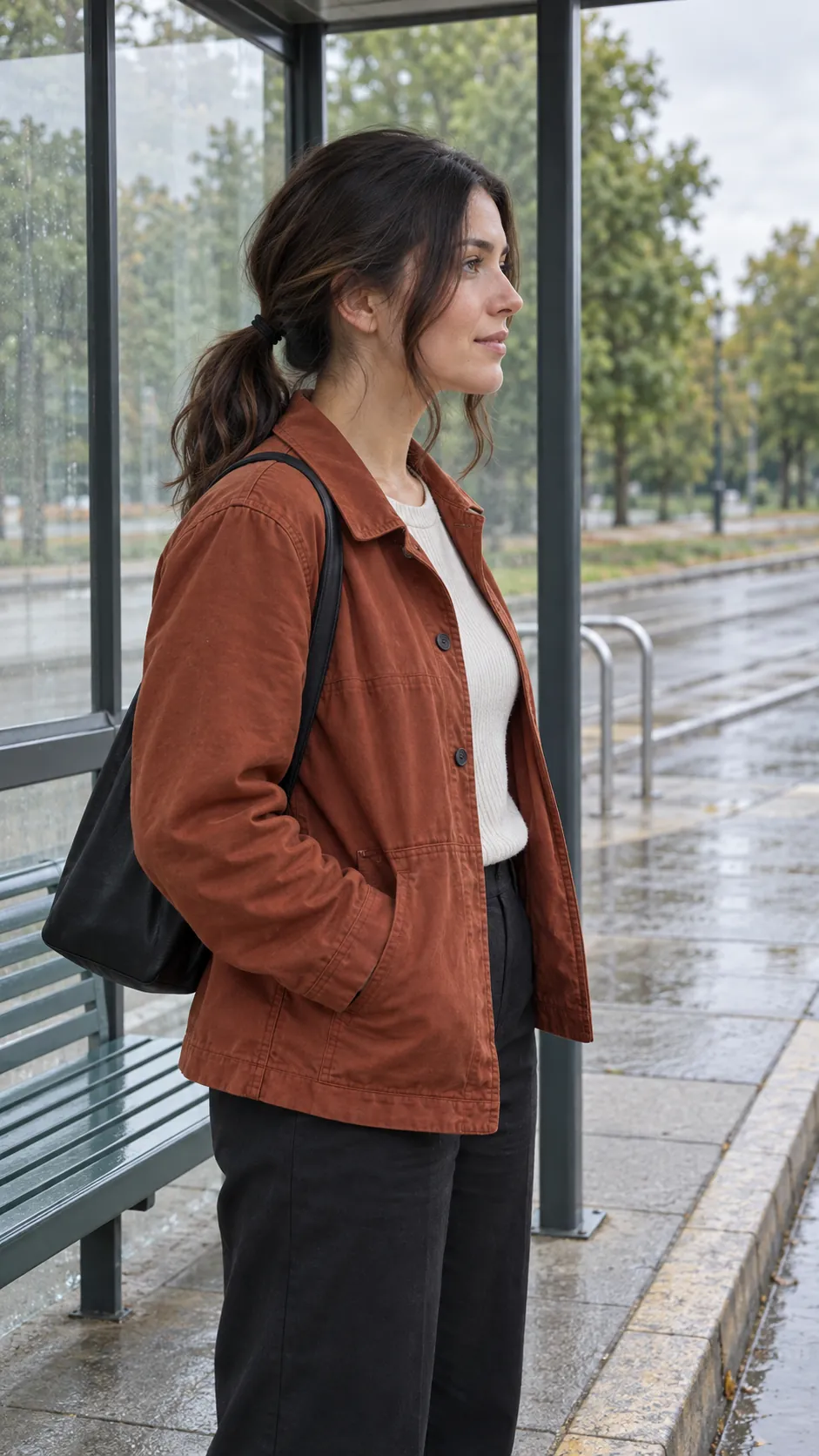
Account for Texture and Shrinkage
Waves and curls can spring several inches above their wet cutting position. They also create more friction, which may help a ponytail hold while making short layers harder to smooth. Straight, silky hair gathers easily but may slip from a loose elastic if the cut sits close to the minimum length.
Test the shape when the hair is dry enough to show its normal pattern. Discuss whether you will straighten, diffuse, or air dry most often. The practical length is the shortest version your hair reaches during your usual week, not its longest position under tension.
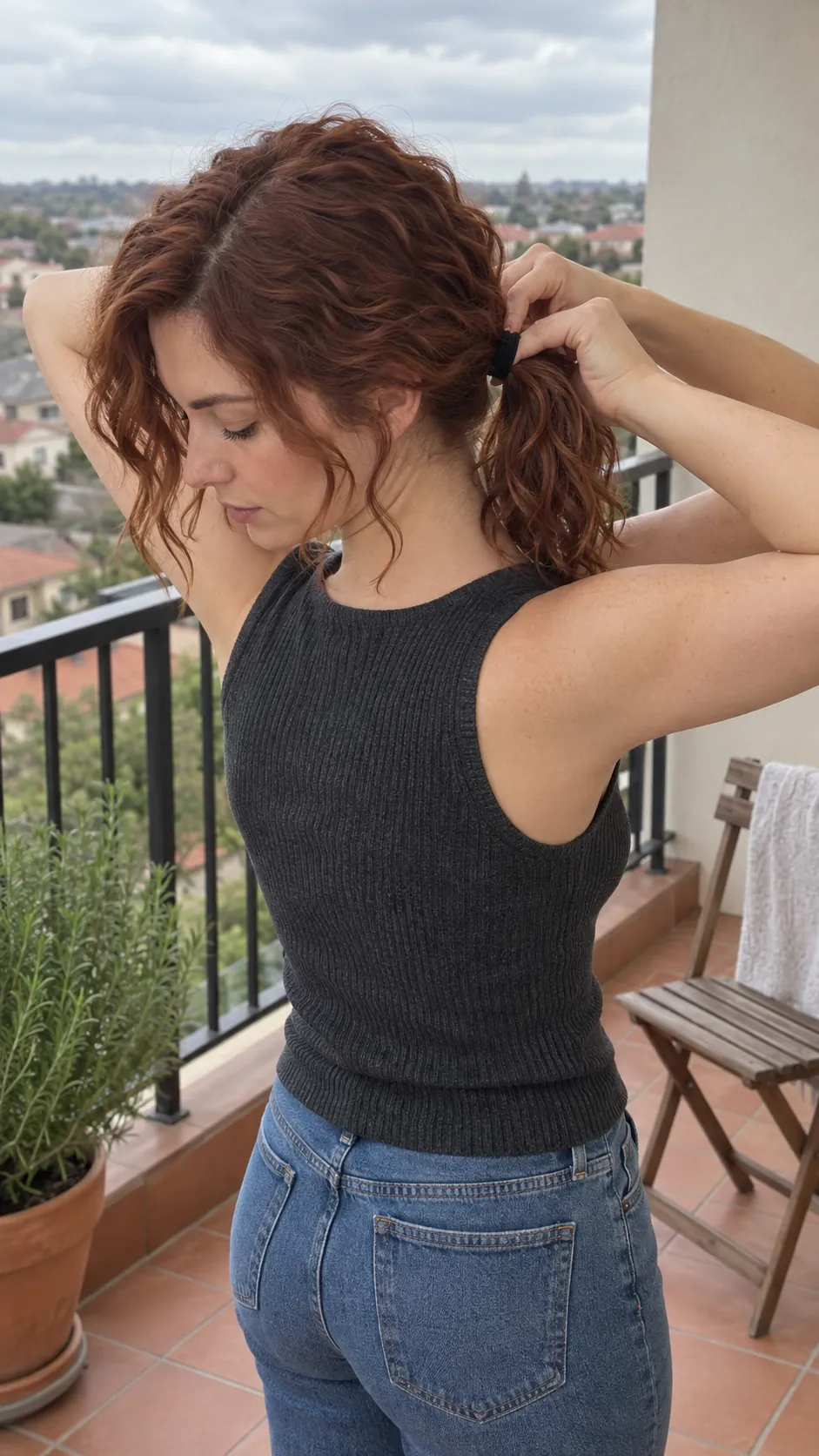
Keep Enough Weight for a Stable Bundle
Heavy texturing can make a medium haircut feel light when worn down, but it also creates many short tips that escape an elastic. Fine hair may look especially thin in a ponytail when too much density is removed. Thick hair may benefit from internal reduction, provided the outer length remains connected.
Ask for a strong perimeter and conservative thinning if the ponytail itself should look substantial. Avoid random razor work near the shortest usable length. A compact bundle with healthy ends is often more practical than dramatic movement that depends on wearing the hair loose.

Perform the Tie Back Test Before Cutting
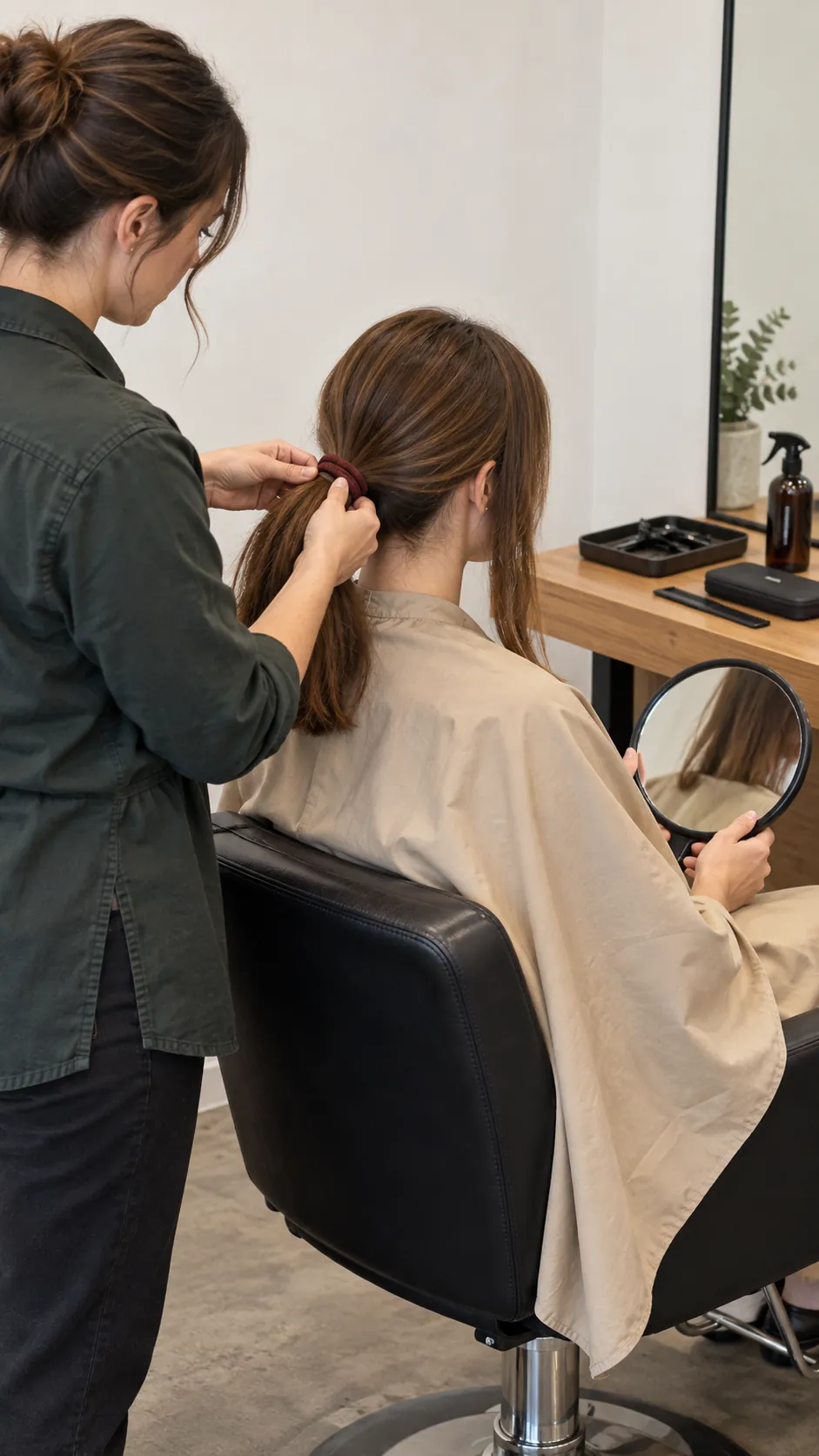
Bring the elastic you normally use and show the exact placement during the consultation. Gather the current hair, identify the sections that barely reach, and agree on which pieces may stay loose. Demonstrate any uniform, helmet, headset, or exercise requirement that changes the height or security of the style.
Ask the stylist to repeat the test after establishing the perimeter and before making shorter layers. Check the front, sides, crown, and nape rather than judging only the back view. This simple pause protects the function you need while leaving room for a flattering collarbone lob, long layers, or intentional face framing.