
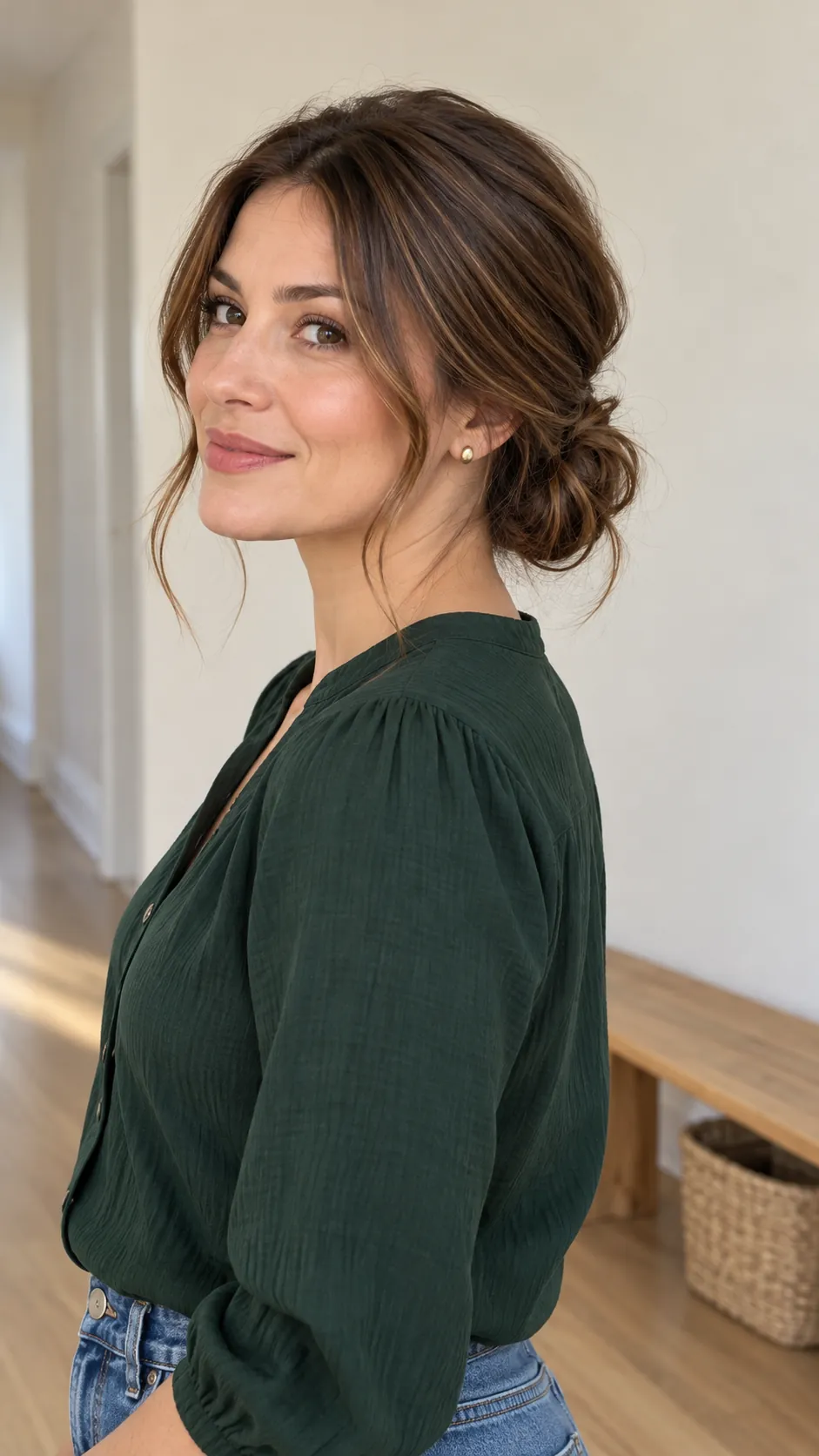
Shoulder length hair can reach an elastic, yet the shortest layers often cannot. Pull the ponytail higher and the nape falls out. Pull it lower and the pieces near the temples escape. The most reliable solution is to stop asking one elastic to hold every length and instead build the style in small support zones.
You do not need to flatten every loose piece. A few soft strands around the face can make an updo look intentional. Focus on the sections that fall into your eyes, stick to your neck, or loosen the main anchor. Then choose pins, clips, or a second elastic that matches where those sections naturally reach.
Prepare Grip Without Making Hair Stiff
Freshly washed fine hair often slides out of pins, while very dry textured hair may snag when gathered. Mist smooth hair with a light texture spray or work a small amount of styling cream through wavy ends. The goal is flexible grip, not a hard shell.
Use your fingers to identify three reach zones. The longest hair reaches the main elastic, shorter crown and side layers need a second anchor, and tiny pieces near the hairline can stay loose or take one small pin. This quick map prevents repeated brushing and tightening.
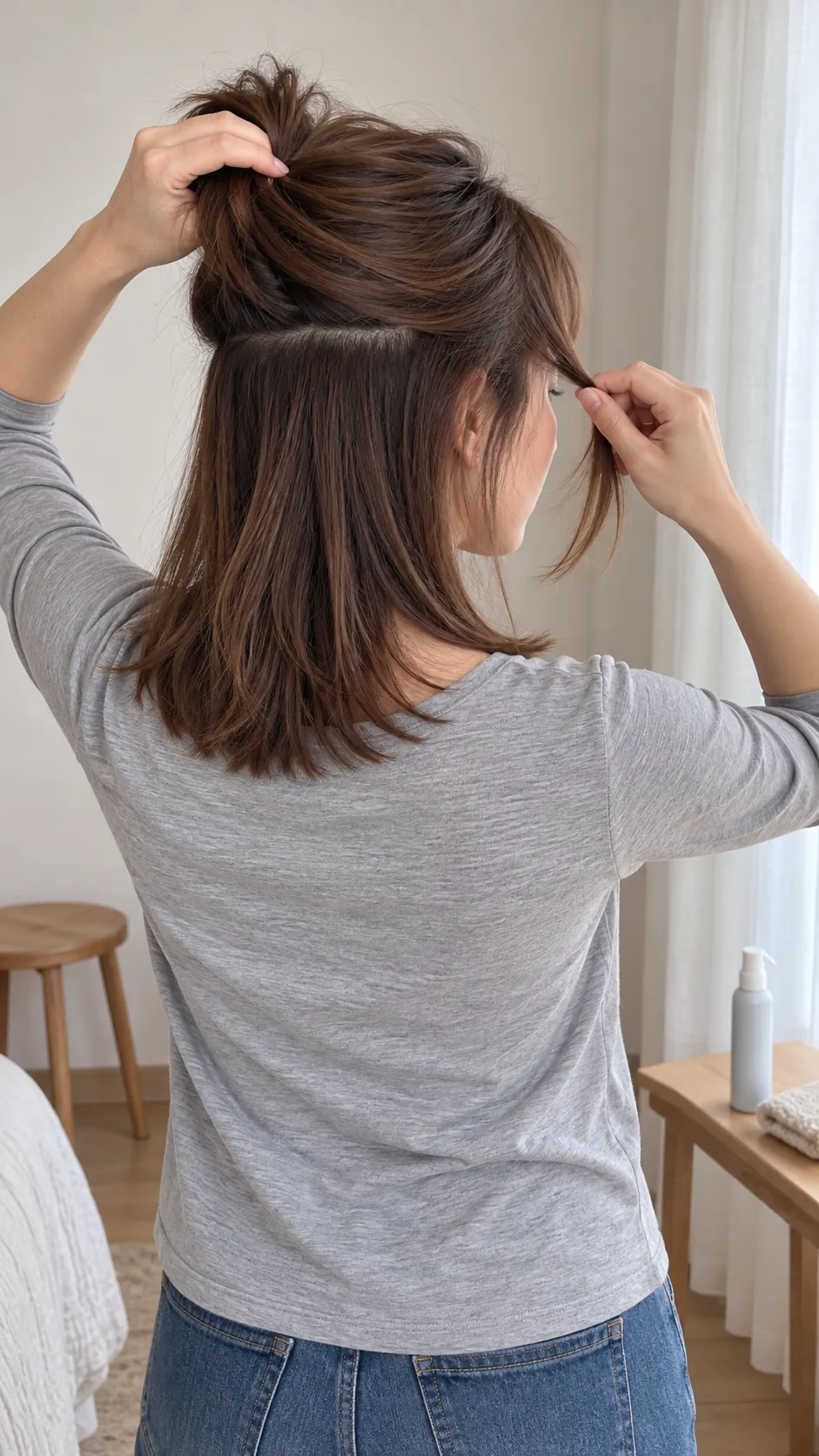
Build a Low Ponytail in Two Stages
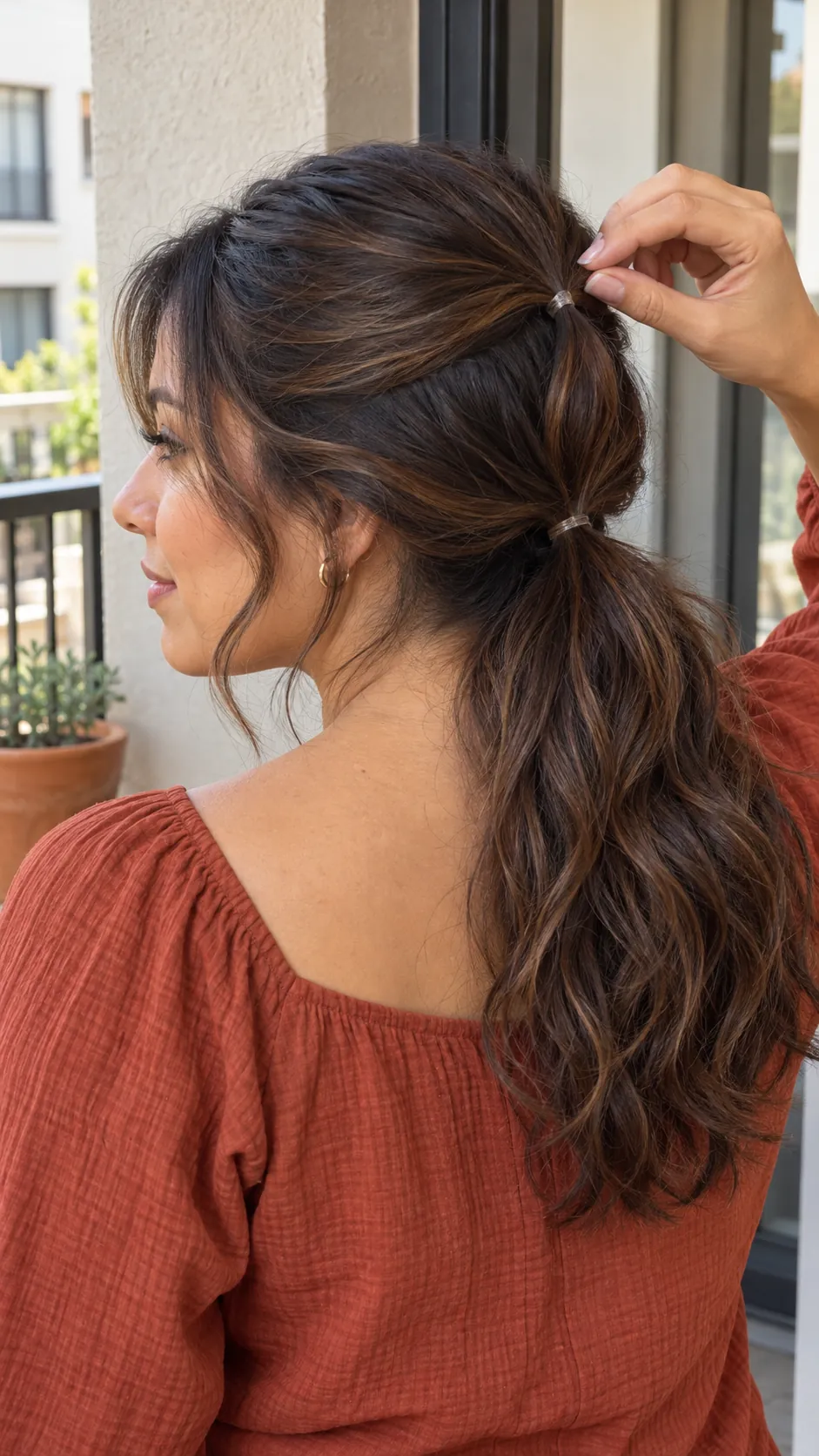
Gather the lower half at the nape and secure it with a small elastic. Keep the first anchor close to the head so the shortest back layers have the least distance to travel. Next, sweep the crown and side sections over that base and secure everything with a second elastic.
The hidden lower ponytail gives escaping nape pieces their own support. Loosen the hair above the second elastic with your fingertips if the crown looks flat. For comfort, keep both elastics firm enough to hold but loose enough that you can slide one fingertip beneath them.
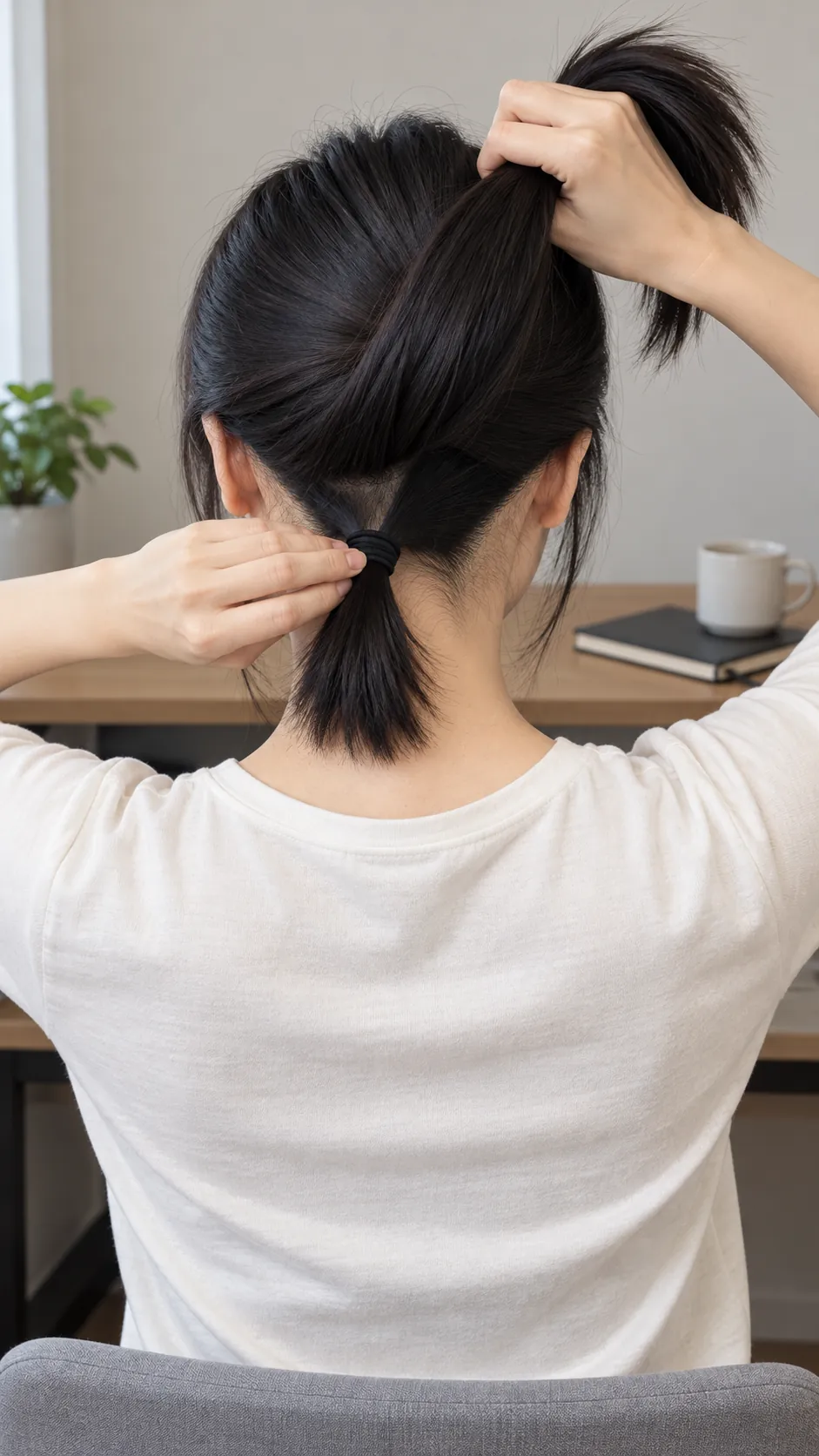
Twist Short Nape Layers Into the Base
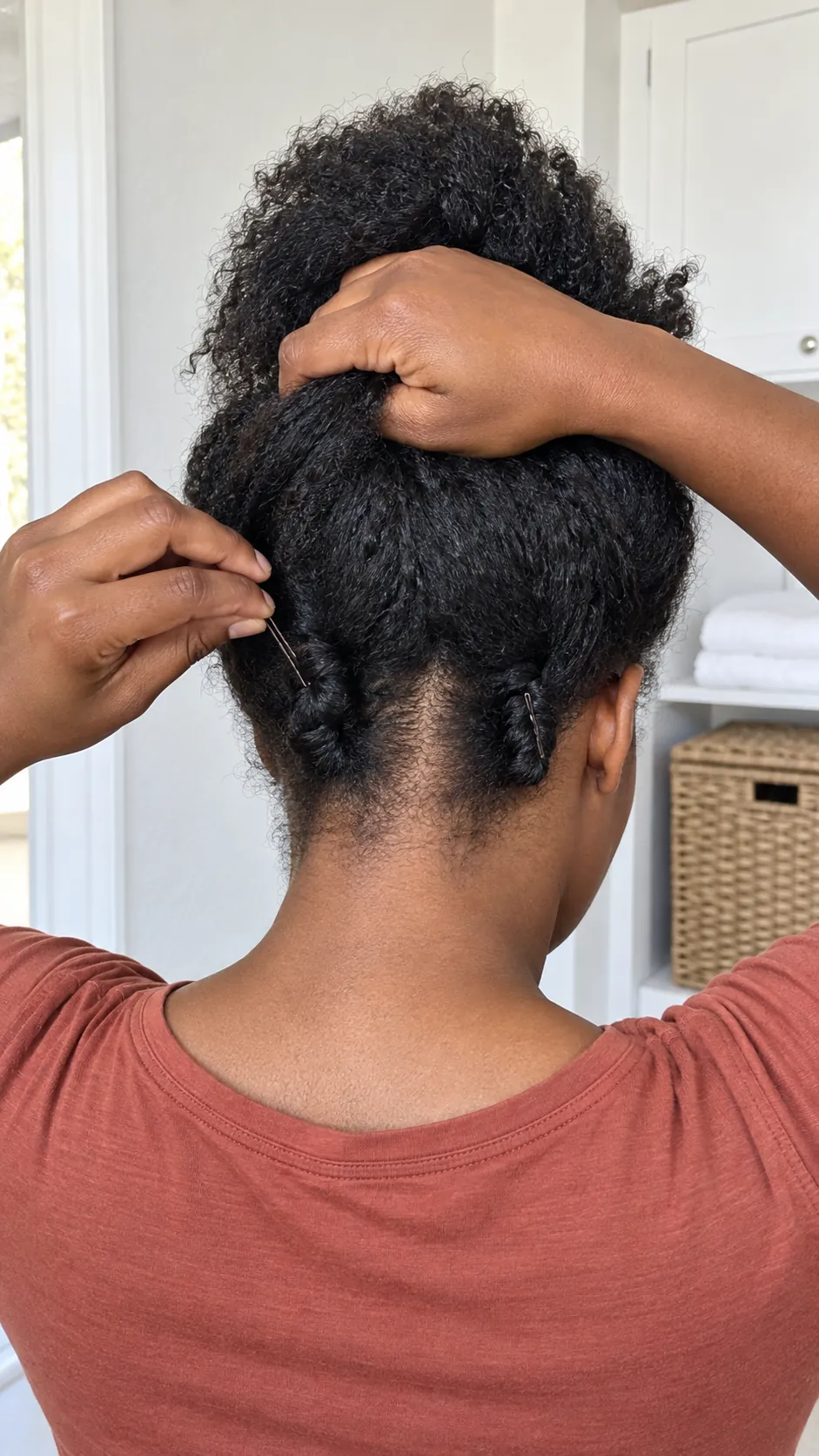
When the bottom layers are too short even for a low elastic, divide them into two small sections. Twist each section upward toward the center and slide a bobby pin into the twist from top to bottom. Cross a second pin only if the first one moves.
Insert the wavy side of a traditional pin toward the scalp for extra grip. Aim the pin back into the twist rather than straight against the head. This catches hair from both directions and uses less pressure than several pins placed at random.
Use a Half Up Anchor for Short Front Layers
Take a section from each temple and bring both sections toward the back of the crown. Secure them with a tiny elastic or two crossed bobby pins. Add the remaining length to a low ponytail, small bun, or loose twist beneath that anchor.
This method gives chin length layers a shorter route, so they do not need to stretch all the way to the nape. Keep the temple sections soft to avoid pulling around the hairline. If bangs are too short to reach, style them separately instead of coating them with heavy gel.
Choose a Claw Clip That Fits the Twist
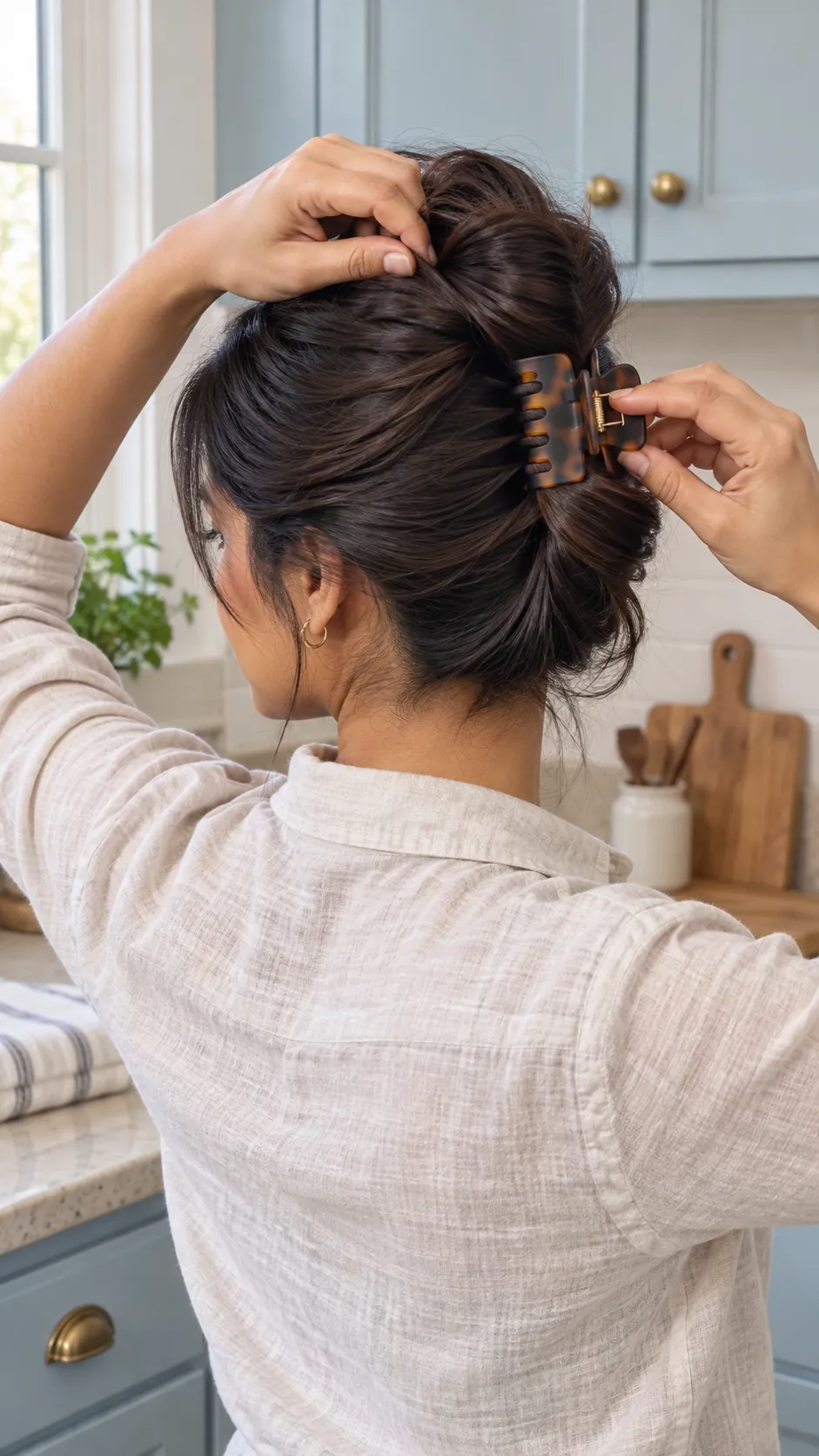
A medium claw clip usually holds layered shoulder length hair better than an oversized clip. Gather the hair low, twist it upward once, and fold the ends back down before closing the clip across the thickest part. The folded shape gives short layers more surfaces to catch.
Place the clip vertically if your hair is dense and diagonally if one side has more layers. Check that the teeth touch hair on both sides of the twist rather than closing only around the center. If the clip feels heavy or creates a sore spot, choose a lighter clip with a strong spring instead of tightening the twist.
Make a Soft Low Bun With Visible Texture
Start with the two stage low ponytail, then fold the tail into a small loop and wrap only the longest ends around its base. Secure the loop with a soft elastic or two pins. Shorter ends can remain visible around the bun because their texture helps the style look relaxed rather than unfinished.
Press any sharp flyaway into place with a trace of styling cream on one fingertip. Leave soft face framing layers alone unless they block your view. A comfortable updo should survive normal movement without forcing every strand into the same tight anchor.