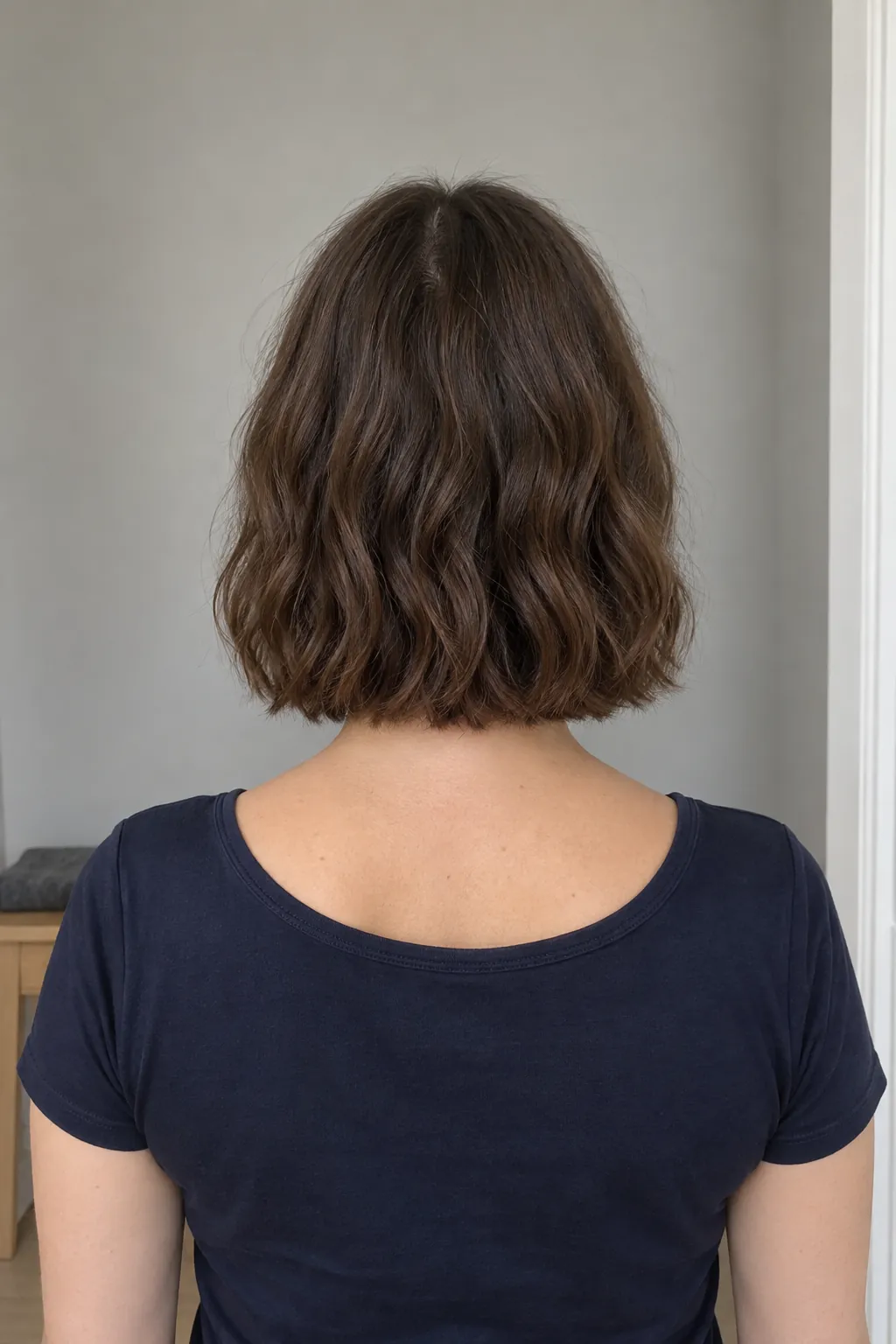

A haircut can gain length and still feel less wearable for a while. The front, back, and shorter layers may reach useful styling lengths at different times, while the ends begin to meet collars and shoulders. A workable plan protects the length you need and changes how you wear the cut along the way.
Choose the next shape before booking a trim
Growing longer and keeping the exact outline of a fresh bob are different goals. Decide whether your next destination is a longer bob, a collarbone cut, or enough length to tie back. Choose a reference that resembles your natural texture and the styling effort you want to make. A photograph with a very different density or heavily styled finish can set an unhelpful target.
Tell your stylist that length retention is the priority. Ask which parts can be left alone and which areas are making the cut difficult to wear. Agree on the amount to remove before the scissors start. If your bob is angled or strongly stacked, ask how that structure will change as the shortest areas catch up.
Maintain the perimeter without restarting the haircut
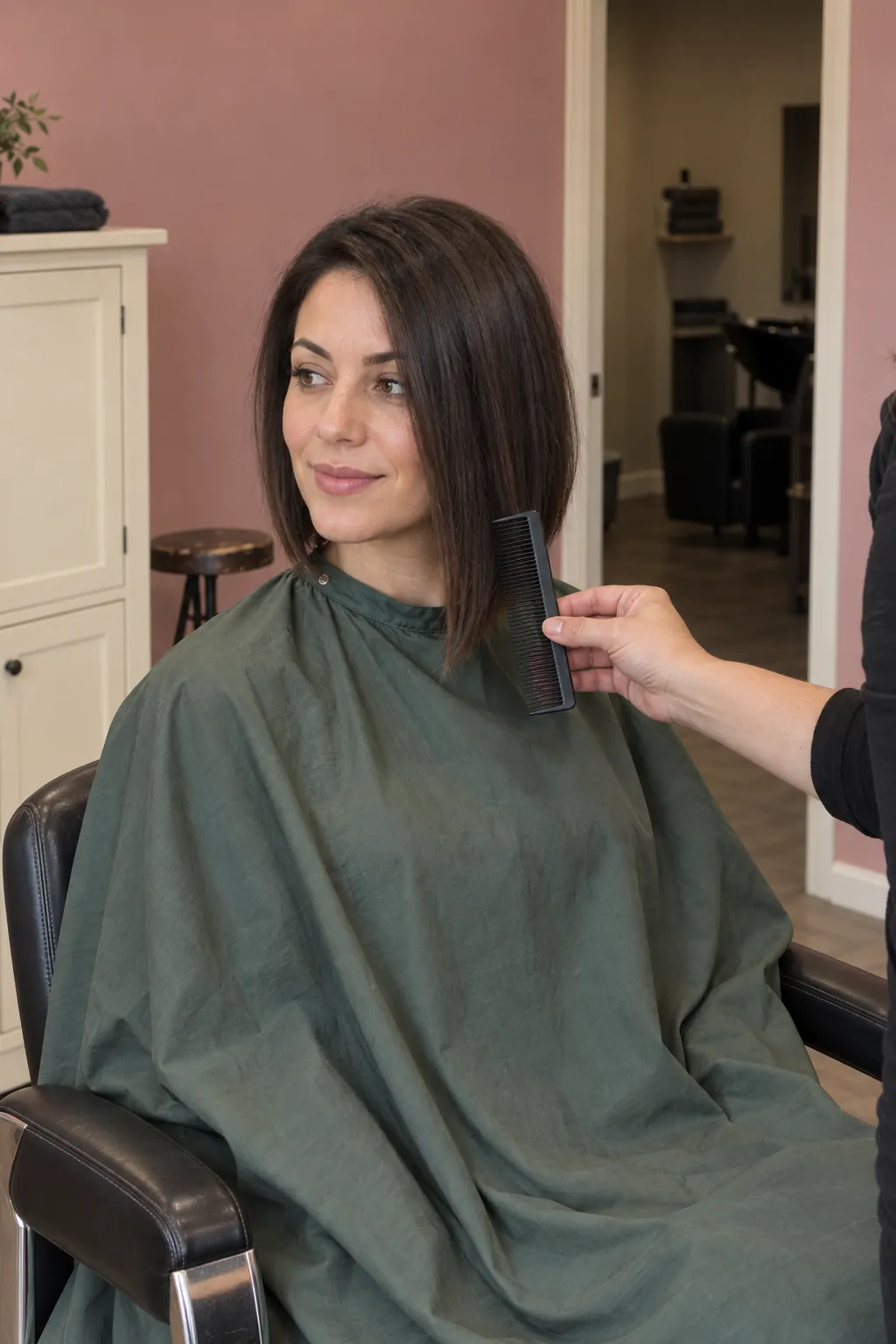
A maintenance appointment does not have to recreate the original bob. Your stylist may be able to tidy a ragged edge or rebalance one area while leaving most of the length intact. Ask for a clear explanation of what will be cut and why. Removing a little length can improve the outline, but every trim also removes some of the growth you have kept.
Book by what your hair needs rather than copying a universal calendar. If the ends feel sound and the shape is manageable, you may be able to wait longer between appointments. If the back becomes difficult to style, or the ends are breaking and tangling, arrange an assessment. Trimming does not make hair grow faster at the scalp.
Avoid automatically adding short layers each time the cut feels bulky. They can create useful movement, but they may also give you another set of short pieces to grow out. Discuss weight distribution in relation to your texture and final goal instead of asking for thinning as a default.
Let the shortest layers catch up
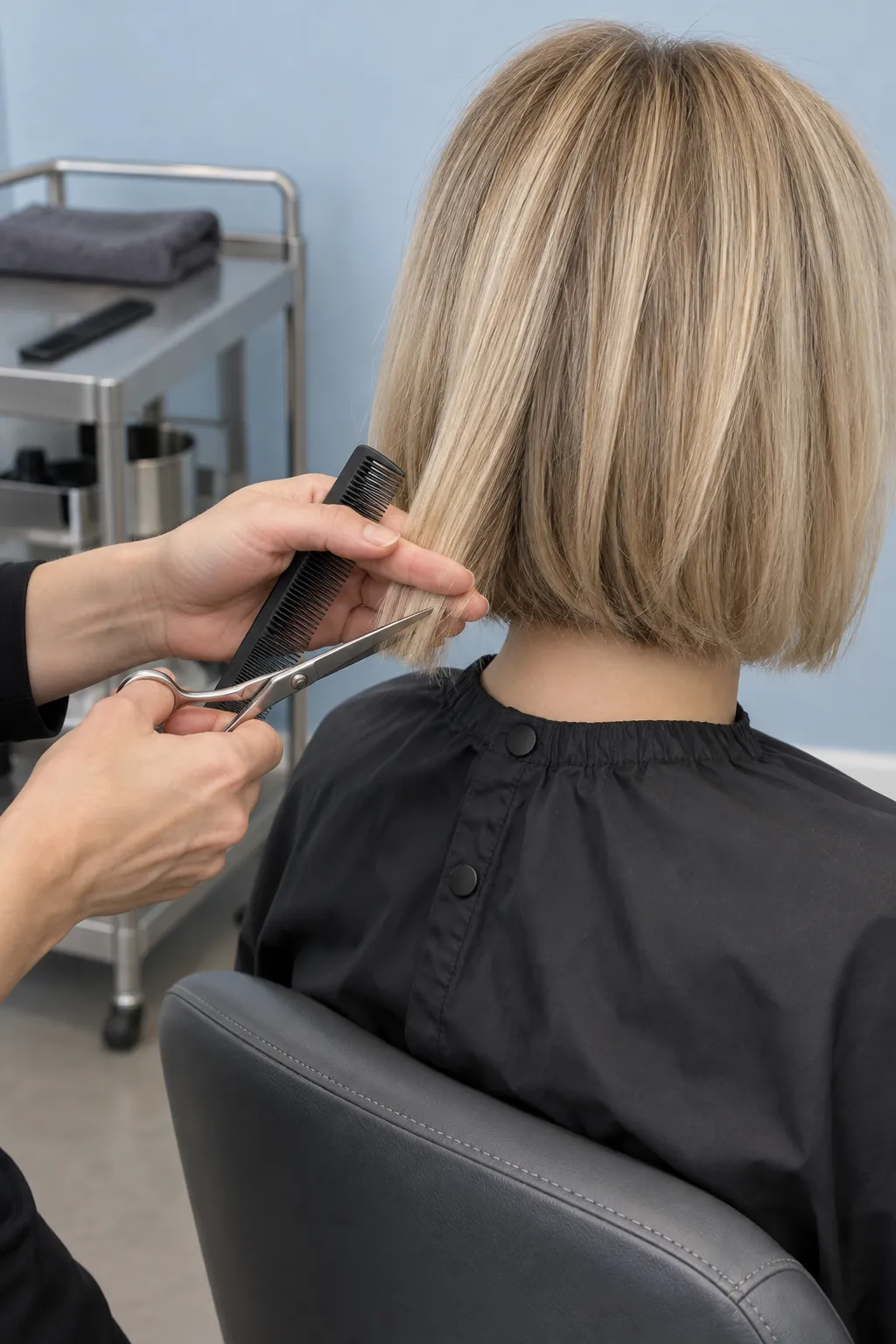
An angled front or stacked back can make bob grow out stages look uneven before the haircut becomes longer overall. Identify the shortest part that must reach your target. Keep that area growing while your stylist checks whether the longer sections need a small adjustment. Do not assume that every uneven edge means one area is growing faster.
At home, style toward a coherent silhouette rather than making each layer identical. A shifted part can change where volume sits, and a gentle bend can soften a strong step between lengths. If you use a dryer or hot tool, protect the hair as directed and avoid repeated heat on the same short pieces. Try the hairstyle in its natural texture too, so the plan does not depend on daily intensive styling.

Use temporary styles while the shape changes
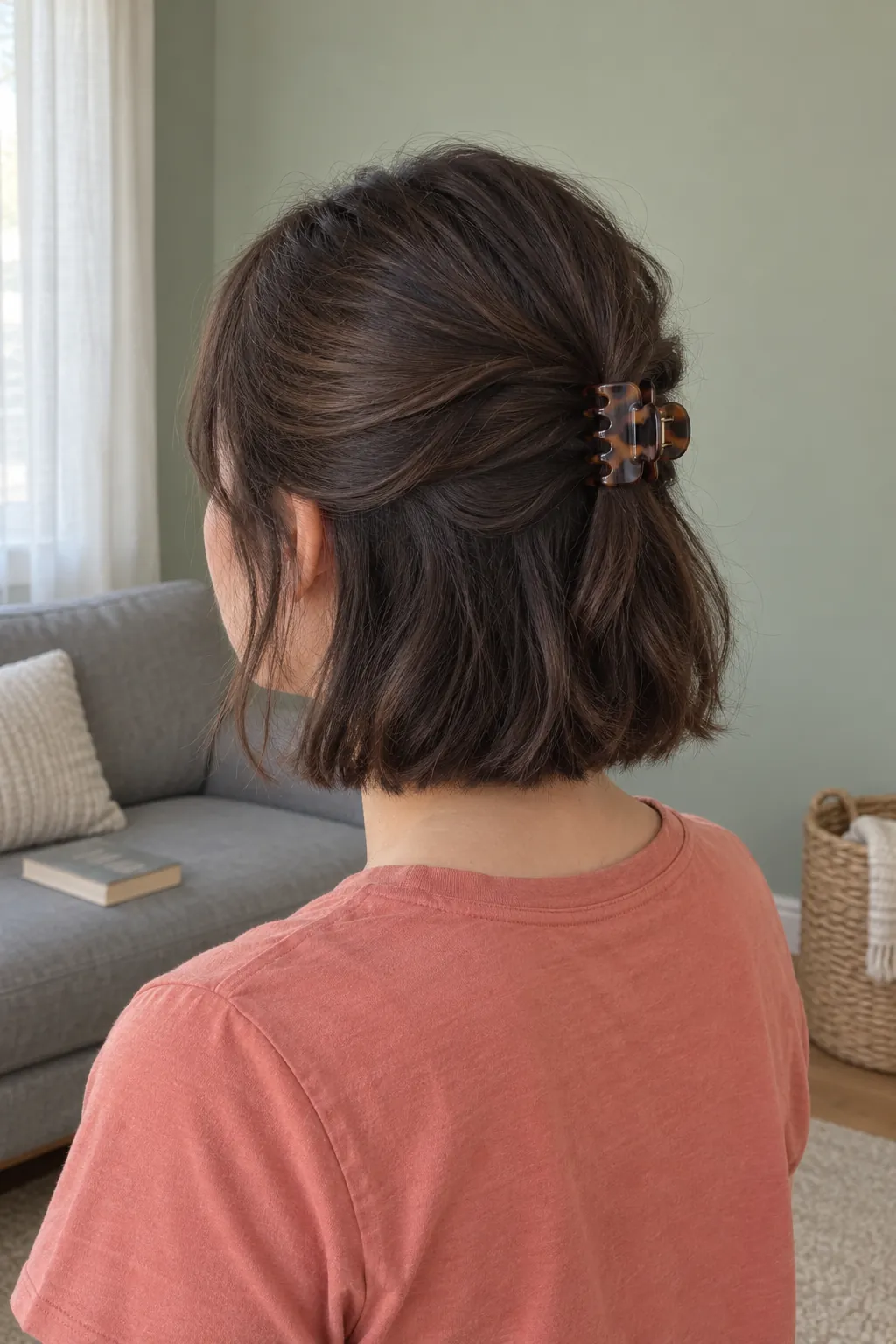
For in between hairstyles, a small side clip can keep a shorter front piece in place without cutting it. A loose half up style can move upper layers away from the face while the lower outline stays visible. Use only as much tension as you need, and change the position if a clip or tie pulls. Accessories should help you wear the current length, not hide discomfort.
When enough hair reaches the back, try a loose low tie and allow shorter pieces to remain softly out instead of pulling them tight. A headband may work before a tie does. For waves, keep the movement broad enough to suit the length and your natural texture. You do not need to master a complicated style to get through a changing cut.
Test one or two reliable options on a day when you are not rushing. This gives you a fallback before the shape reaches a stage you find awkward. If an accessory catches or breaks hair, replace it rather than continuing to use it for the sake of the grow out.
Expect the shoulder stage to move differently
As a bob approaches a lob, the ends may meet your shoulders and turn outward. That change can happen even when the haircut is balanced. Check whether the flip begins where the hair touches clothing before trying to straighten it repeatedly. A soft wave or a deliberate outward edge may be easier to wear at this length than a perfectly tucked line.
For long bob styling, dry the underside fully and guide the ends in the direction you prefer. Keep collars clear while the hair cools, and use finishing product sparingly if your roots lose volume easily. The same style can behave differently with a jacket than with an open neckline. Show your stylist how the hair sits with the clothes you normally wear.

Protect the length and review visible progress
Handle the ends gently while you wait for the haircut to change. Detangle without yanking, condition according to your hair’s needs, and reduce unnecessary hot tool passes. A product cannot guarantee a faster bob to lob transition, and a fixed completion date is not realistic for every person. The starting cut, growth, breakage, and amount trimmed all affect how the change looks.
Take an occasional front, side, and back photograph in similar light with the same part and an upright posture. Compare the outline and the shortest pieces, rather than judging progress from one day’s styling. Bring those pictures to an appointment if you keep losing length without getting closer to your target. Ask whether the current maintenance plan is preserving the areas that need to grow.
When you are tempted to cut everything back into the familiar shape, try your reliable temporary style first and revisit the decision later. You can still choose a shorter cut if you prefer it. The useful question is whether you want that haircut now, or whether you only want relief from this week’s awkward stage.