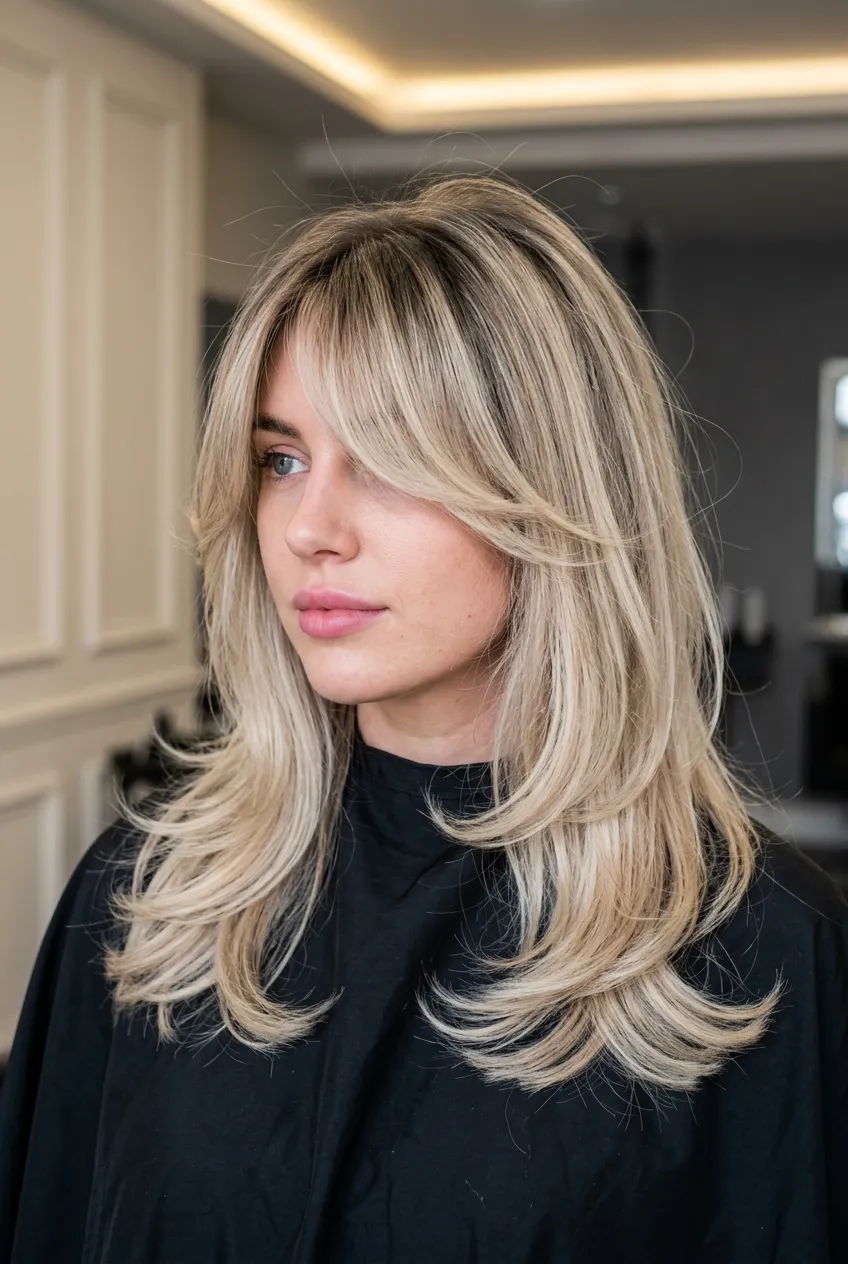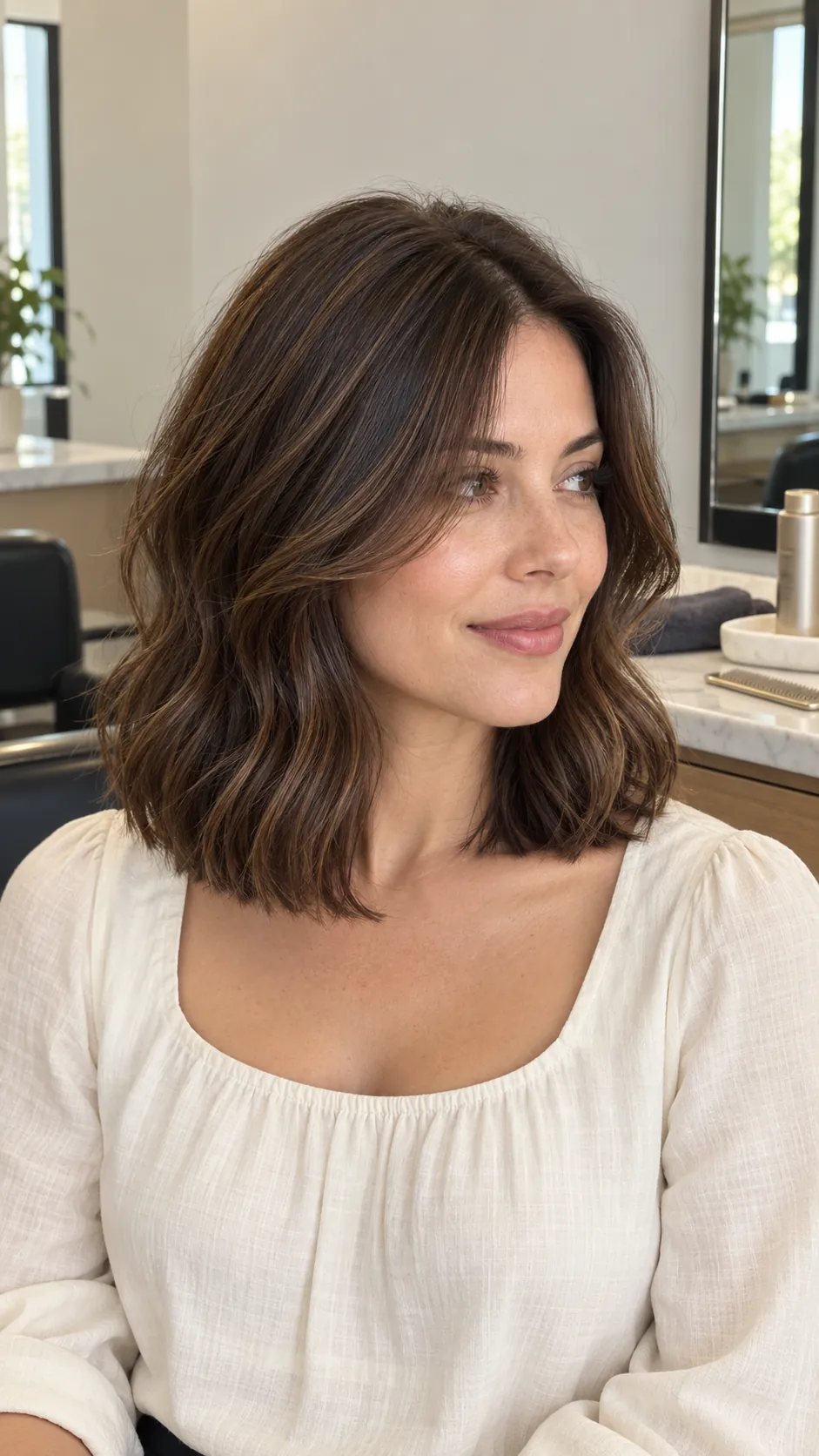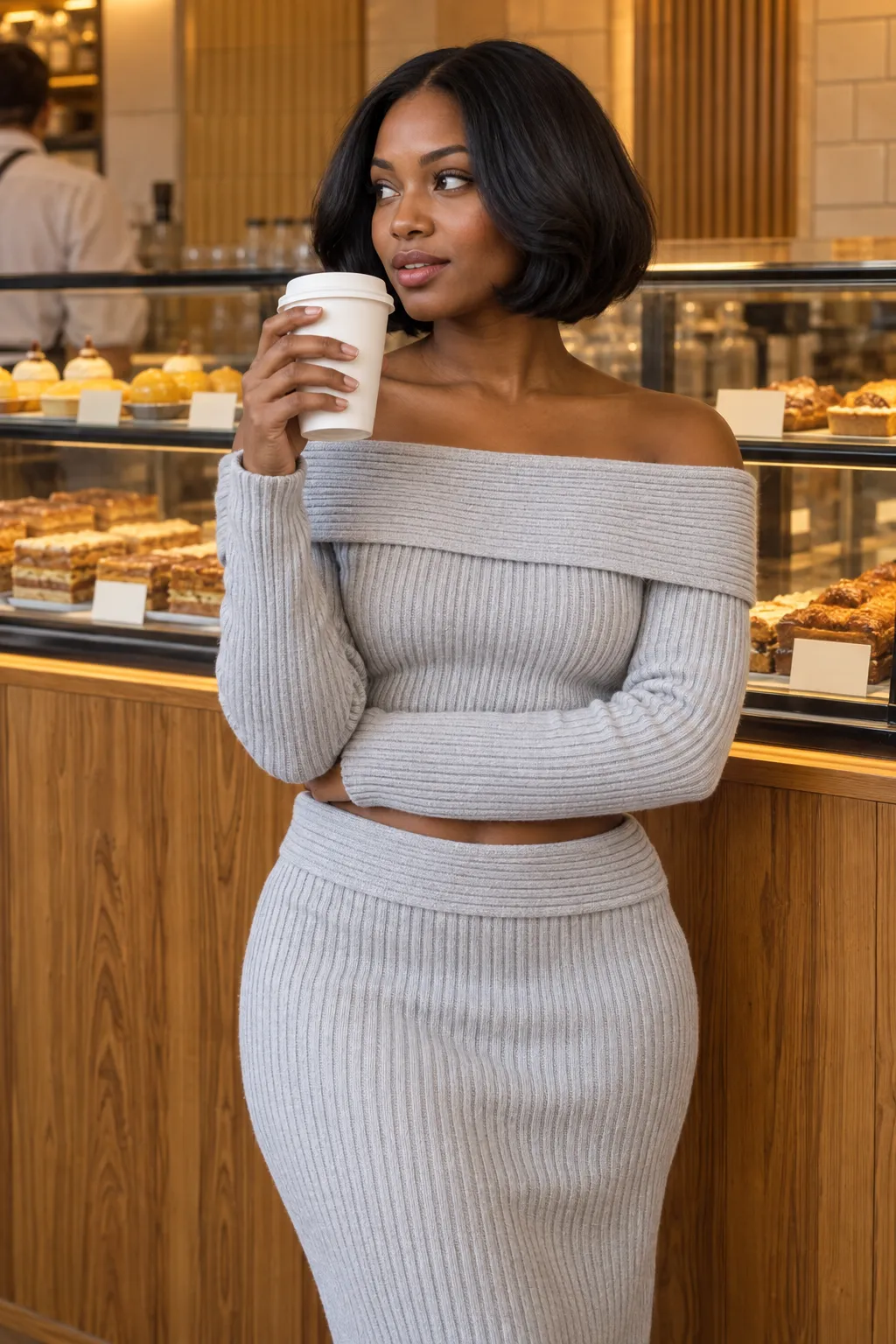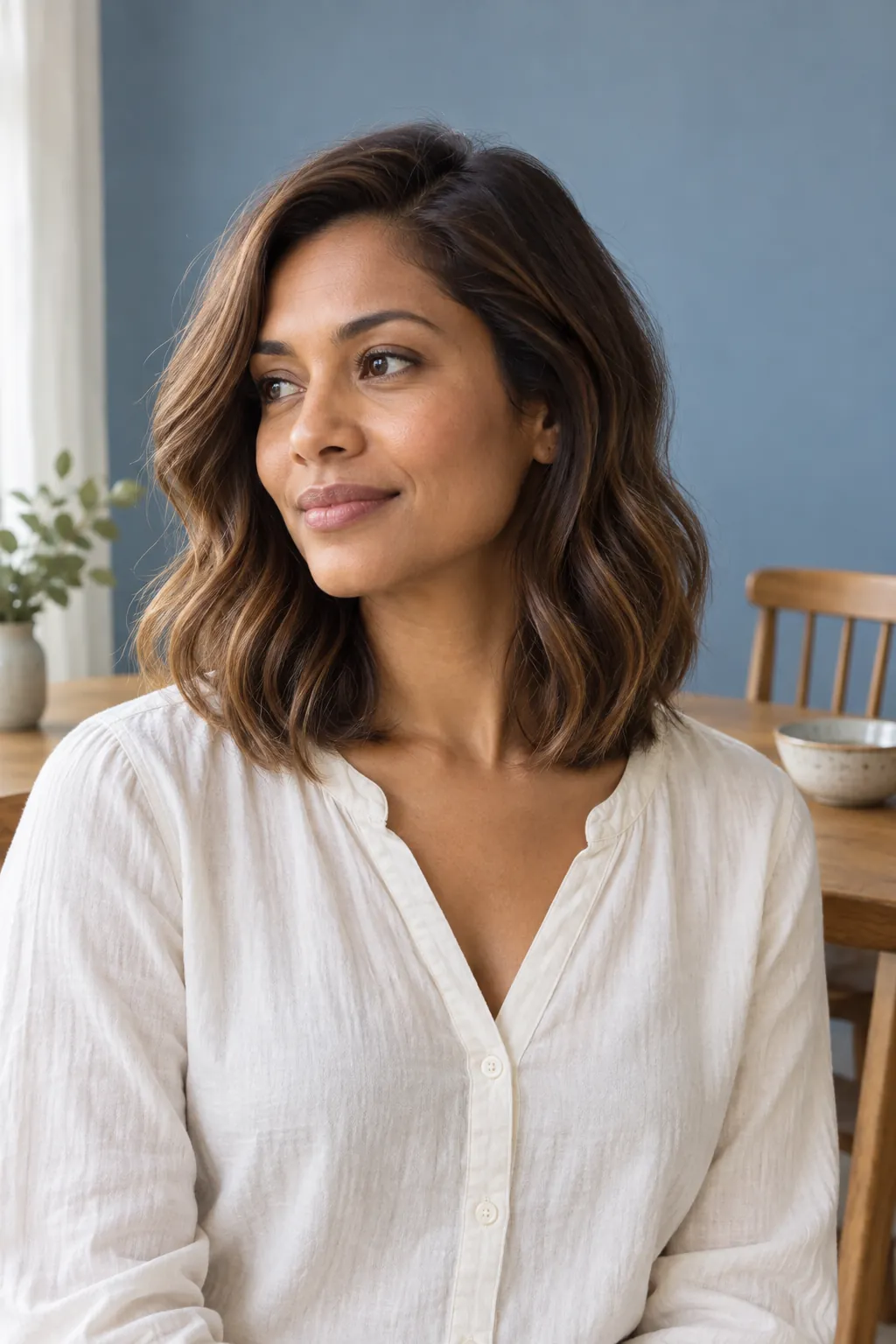
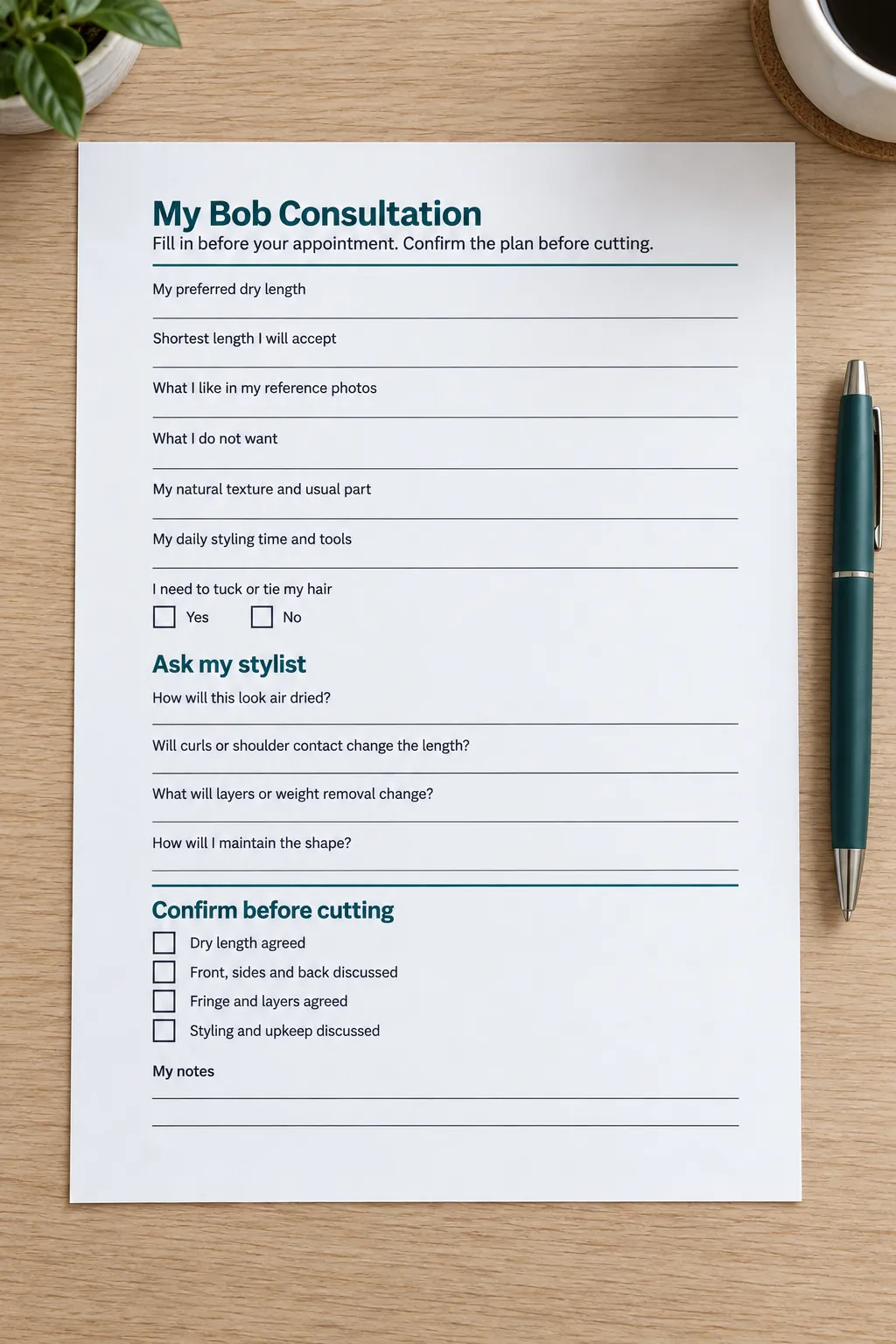
A reference photo cannot tell your stylist which part of the haircut matters most to you. The safest starting point is a shared plan for the finished dry length, the shape around your head, and the routine you will actually use. This worksheet helps you put those choices into clear words before the scissors come out.
Fill in the printable below and bring it with a few relevant reference photos. Click the preview to open the full size image, or use the download button to open it in a new tab and save it from there. Keep the writing spaces blank until you are ready to record your own choices.
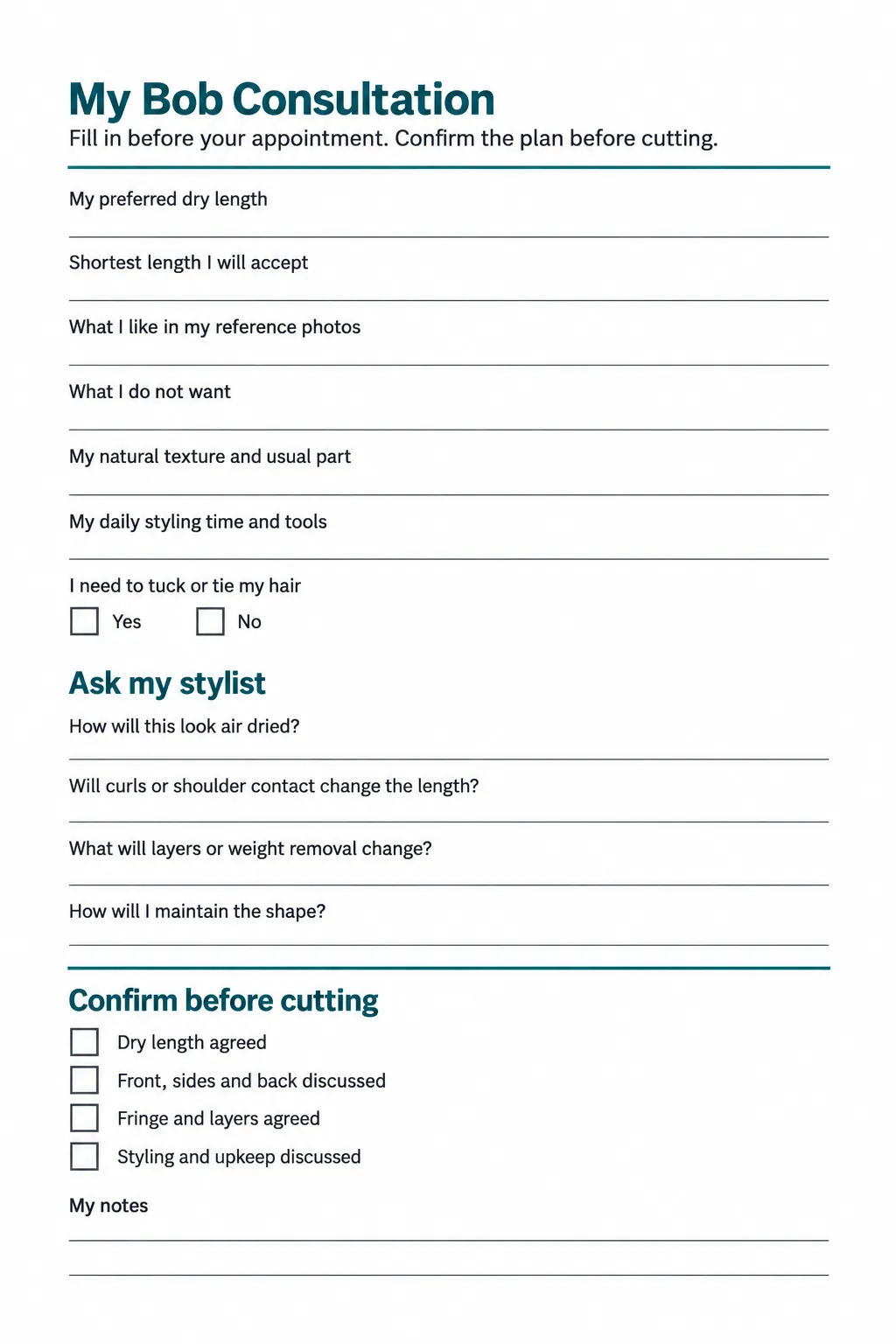
Download high-resolution printable
Agree on a dry length you can point to
Use a body landmark such as the chin, below the jaw, or near the collarbone when discussing bob haircut lengths. Point to the place on your own body while your head is level, then ask the stylist to show where the finished dry hair is expected to sit. A phrase such as short bob can mean very different things to two people. Write your preferred position and your shortest acceptable position in the first two fields.
If your hair curls or waves, ask how the stylist will account for shrinkage. If the ends will meet your shoulders, discuss the possibility of outward flips rather than assuming the line will stay perfectly straight. Tell the stylist if tying or tucking your hair is a practical requirement, because some shorter shapes will not leave enough length for it.
Choose photos that explain one clear plan
Bring a small set of haircut reference photos showing the front, side, and back when available. Identify the feature you like in each picture, such as a solid edge, soft nape, longer front, or forehead coverage. Do not expect the stylist to know whether you mean the cut, color, or finish without saying so.
Use the worksheet fields to separate what you want from what you want to avoid. For example, you might want a chin length outline but not the high stacked back in a particular photo. A reference showing a smooth blowout may also conceal the natural curl pattern and the time needed to create that surface.
Ask which parts of the reference are realistic for your density, texture, and current length. A stylist may suggest a nearby version that works better with your growth pattern. Treat that explanation as part of choosing a bob haircut, then agree on the revised shape before cutting begins.
Translate haircut terms into visible changes
Blunt usually describes a more solid perimeter, while layers create different lengths within the haircut. Graduation builds a shorter to longer relationship through a section, often affecting the nape shape, and an angled outline can leave more length toward the front. These terms do not specify an exact result on their own. Ask your stylist to show what each proposed change will do to your particular hair before agreeing to it.
Weight removal and thinning are also choices to discuss, rather than automatic additions to every bob. Ask where hair would be removed, how the ends would look, and whether the result will still suit your normal finish. Record the answer under your notes if it affects a decision you want to remember.
Describe the routine you will really use
Write your natural texture, usual part, available styling time, and the tools you are comfortable using. A bob haircut consultation is more useful when the stylist knows whether you normally air dry, diffuse, blow dry, or smooth selected sections. Tell them about glasses, frequent ear tucking, sports, and other habits that change how the hair sits.
Confirm the whole shape before cutting
Use the four confirmation boxes after you and the stylist have discussed the dry length, front and back outline, fringe and layers, and daily upkeep. Leave a box blank if a point is still unclear and ask about it before proceeding. The boxes are conversation prompts, not a guarantee that every hair texture will behave identically.
You can say, “I want the ends to sit here when dry, and I do not want them above this point. I like this edge and this back shape, but I will usually wear my natural texture. Can we confirm the length and layers before you start?” Ask for a simple styling demonstration and a realistic reshaping schedule, then keep the notes for your next appointment.
Print a page that leaves room for your choices
Open the full size image and use your printer preview to fit the whole page inside the printable area. Choose portrait orientation and confirm that no labels or writing lines are cut off. Plain paper is suitable for filling in the worksheet, and the dark text and outlined checkboxes remain usable in grayscale. Bring the completed page to the appointment, with any undecided points left open for the consultation.