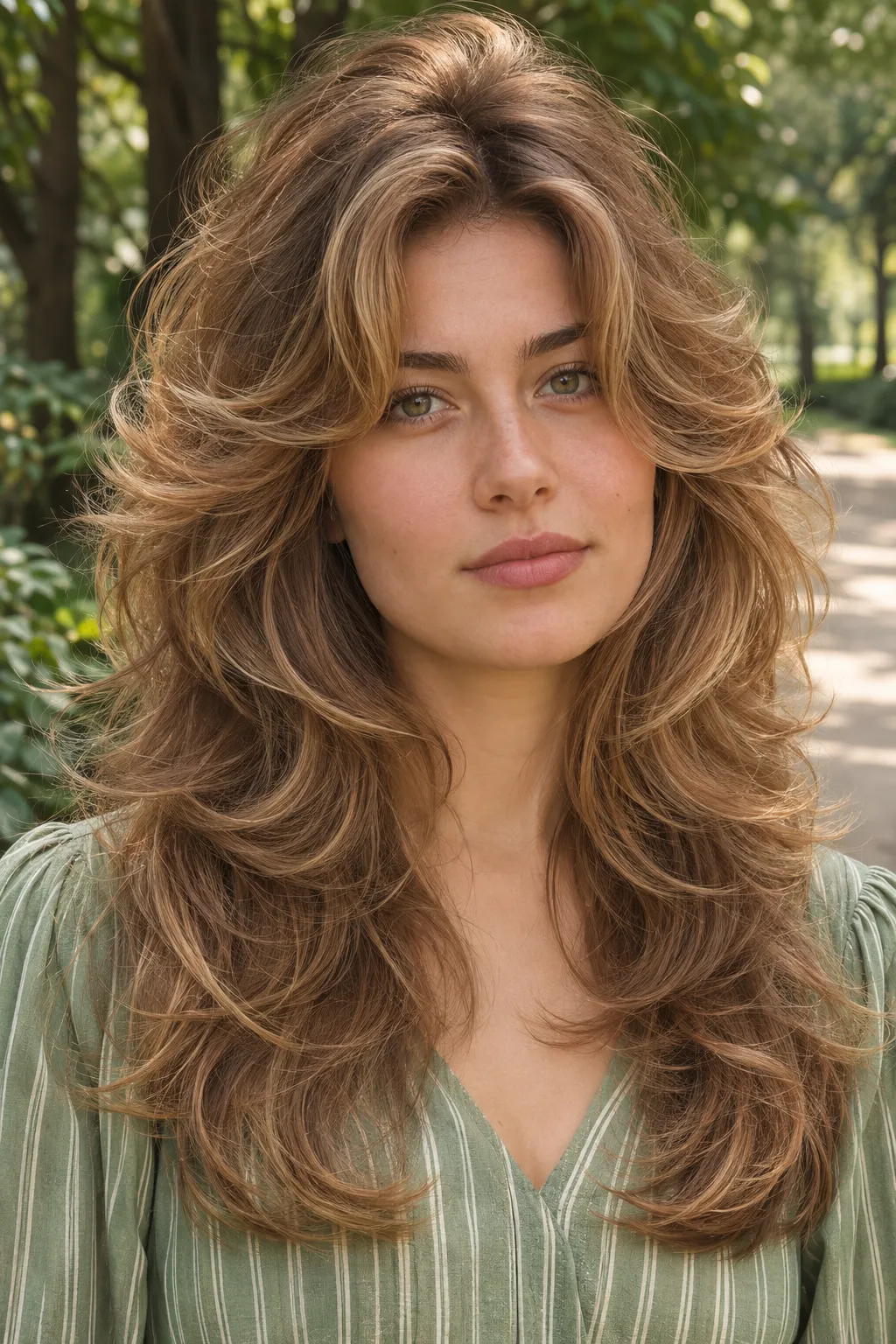
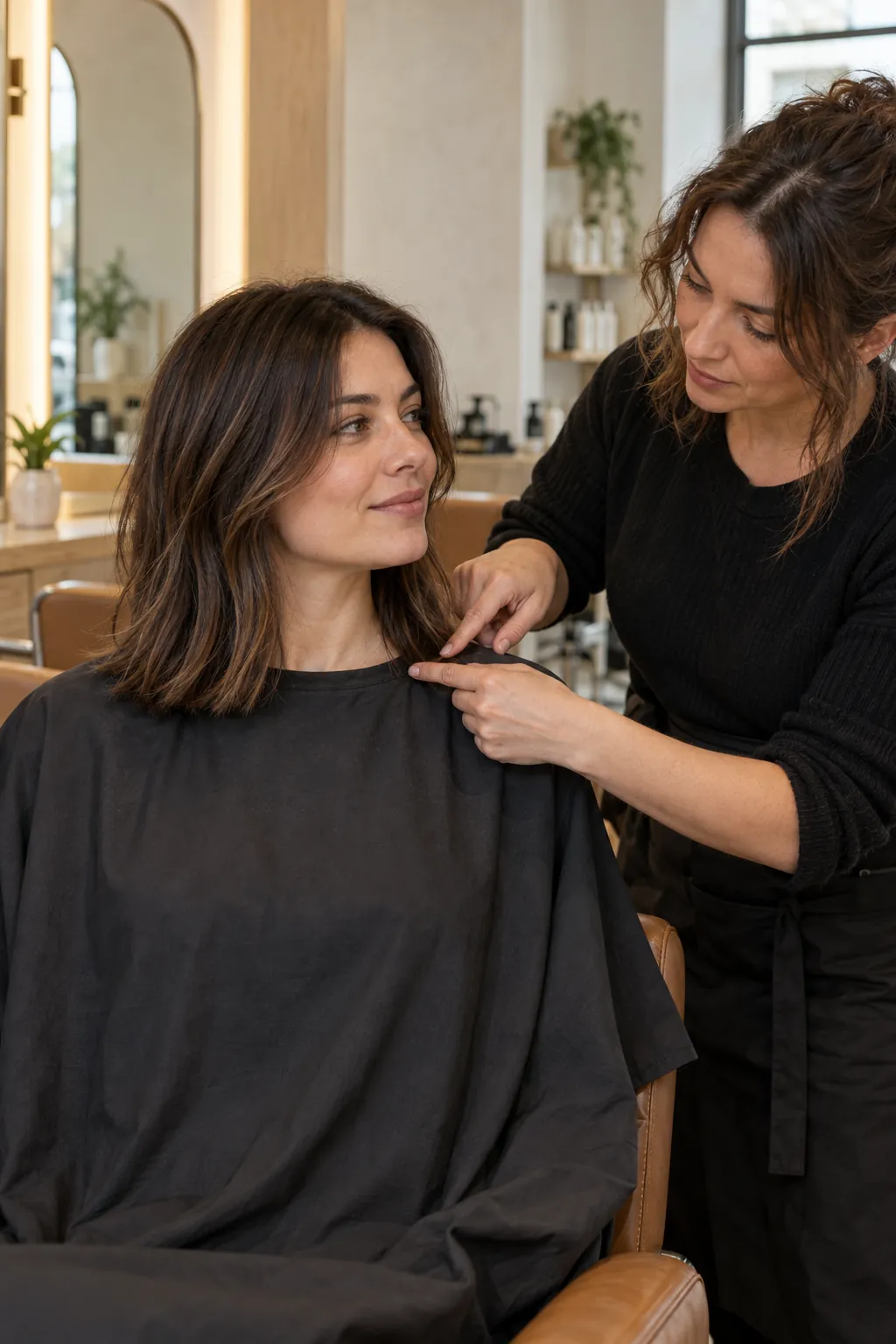
A reference photo helps, but it does not tell your stylist which part of the picture matters to you. Two people can point at the same cut and mean different lengths, different layers, or a different finish. A clear consultation separates those decisions before the first section is cut.
You do not need professional vocabulary. You need a measurable length, a description of the perimeter, a plan for layers and face framing, and an honest account of how you style at home.
Name a Body Landmark, Not Just Medium
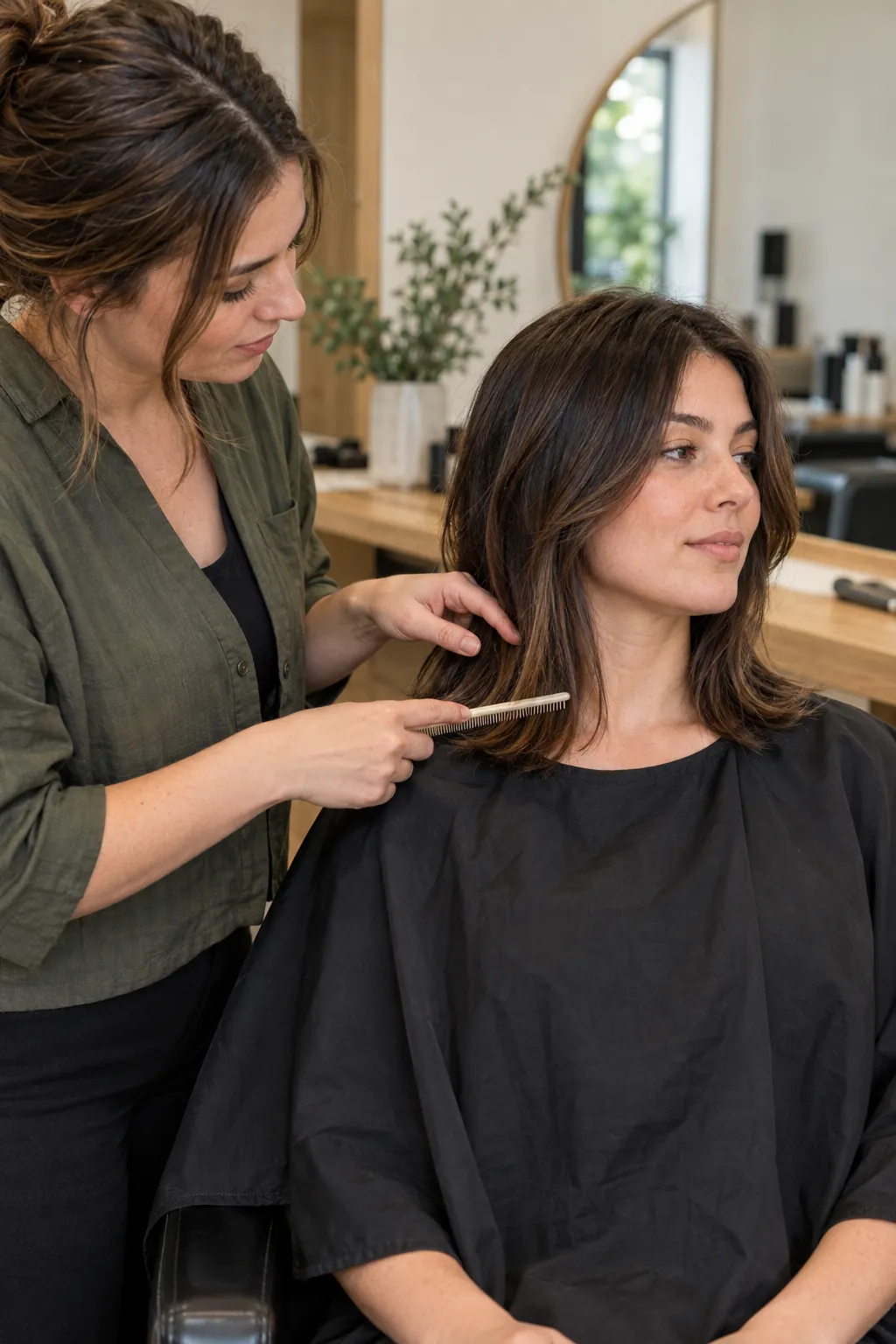
Shoulder length can mean touching the shoulders, sitting above them, or falling at the collarbones. Point to the exact place where you want the dry perimeter to land. If your hair shrinks or springs up, ask the stylist to account for your natural texture before choosing the wet cutting length.
Describe the Bottom Edge
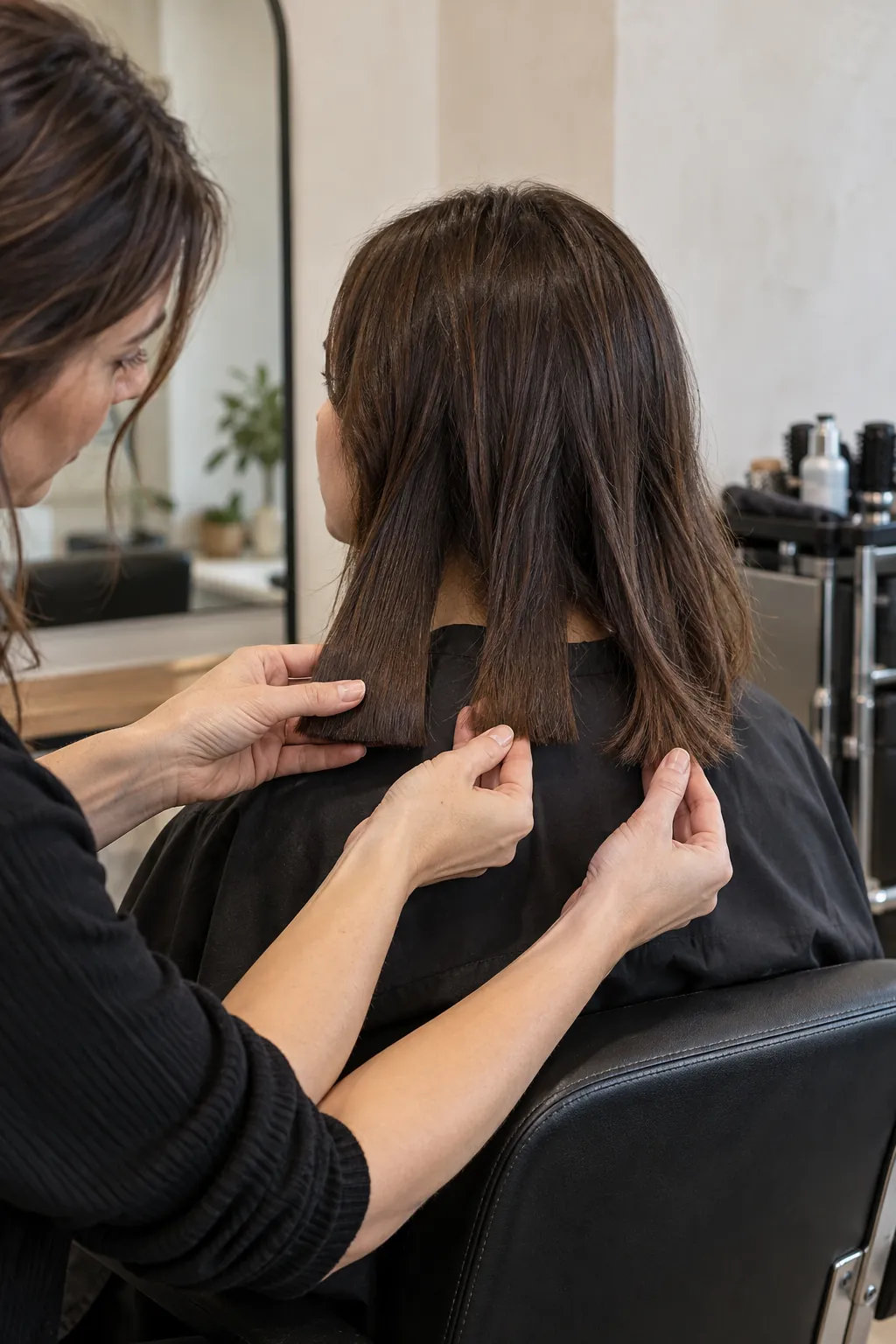
Ask for a blunt perimeter when you want the ends to look dense and graphic. Request a softly textured edge when you want movement without a visibly choppy finish. Explain how much fullness you want to keep, because removing weight and removing length are not the same decision.
Place the Shortest Layer
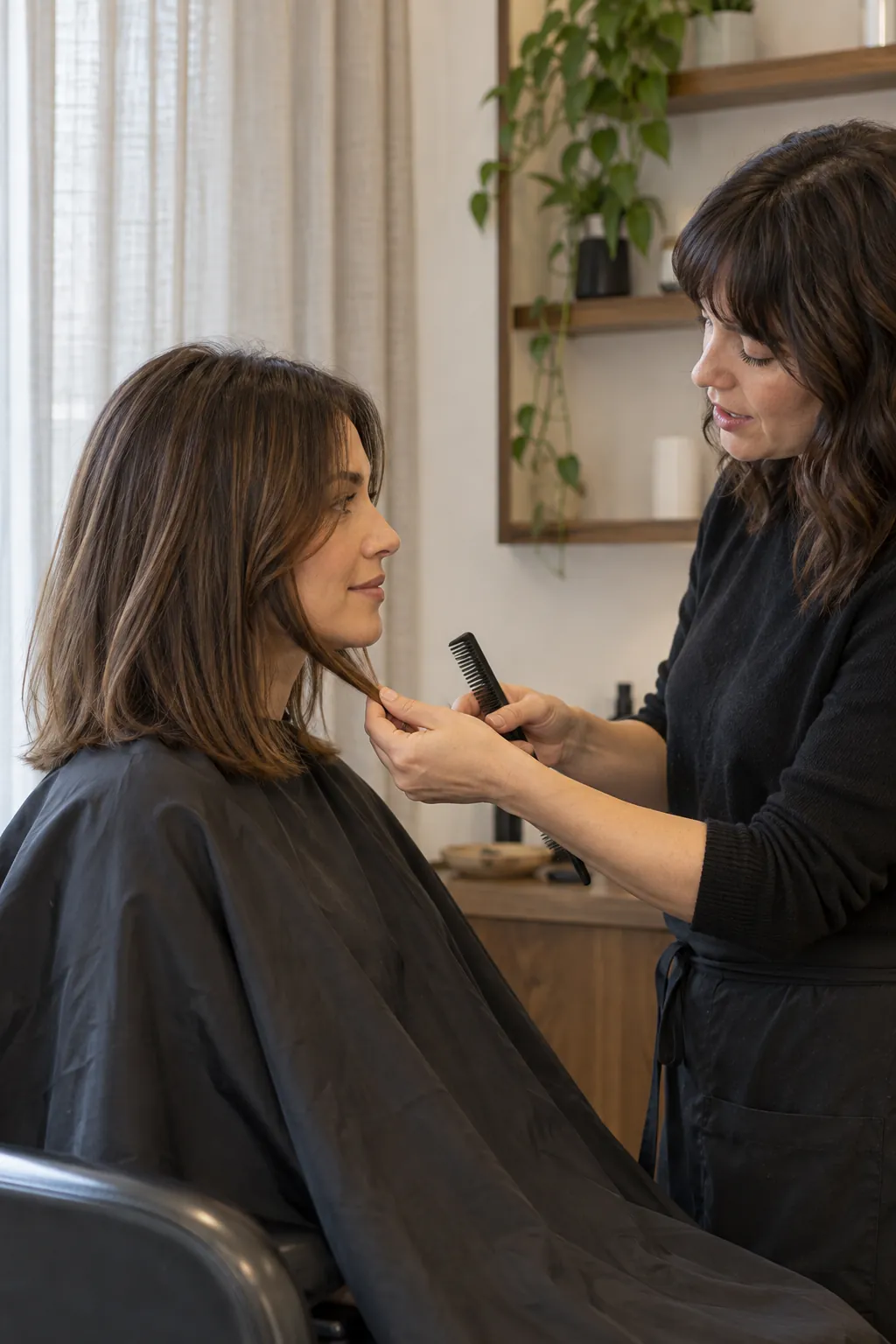
The phrase long layers still leaves room for interpretation. Show where you want the shortest layer to start, such as the chin, jaw, or collarbone. Then say whether you want visible separation or a blended shape that reads almost as one length.
For thick or wavy hair, discuss where bulk gathers when the hair dries. For fine hair, say if preserving a solid bottom line matters more than extra movement.
Define Face Framing Separately
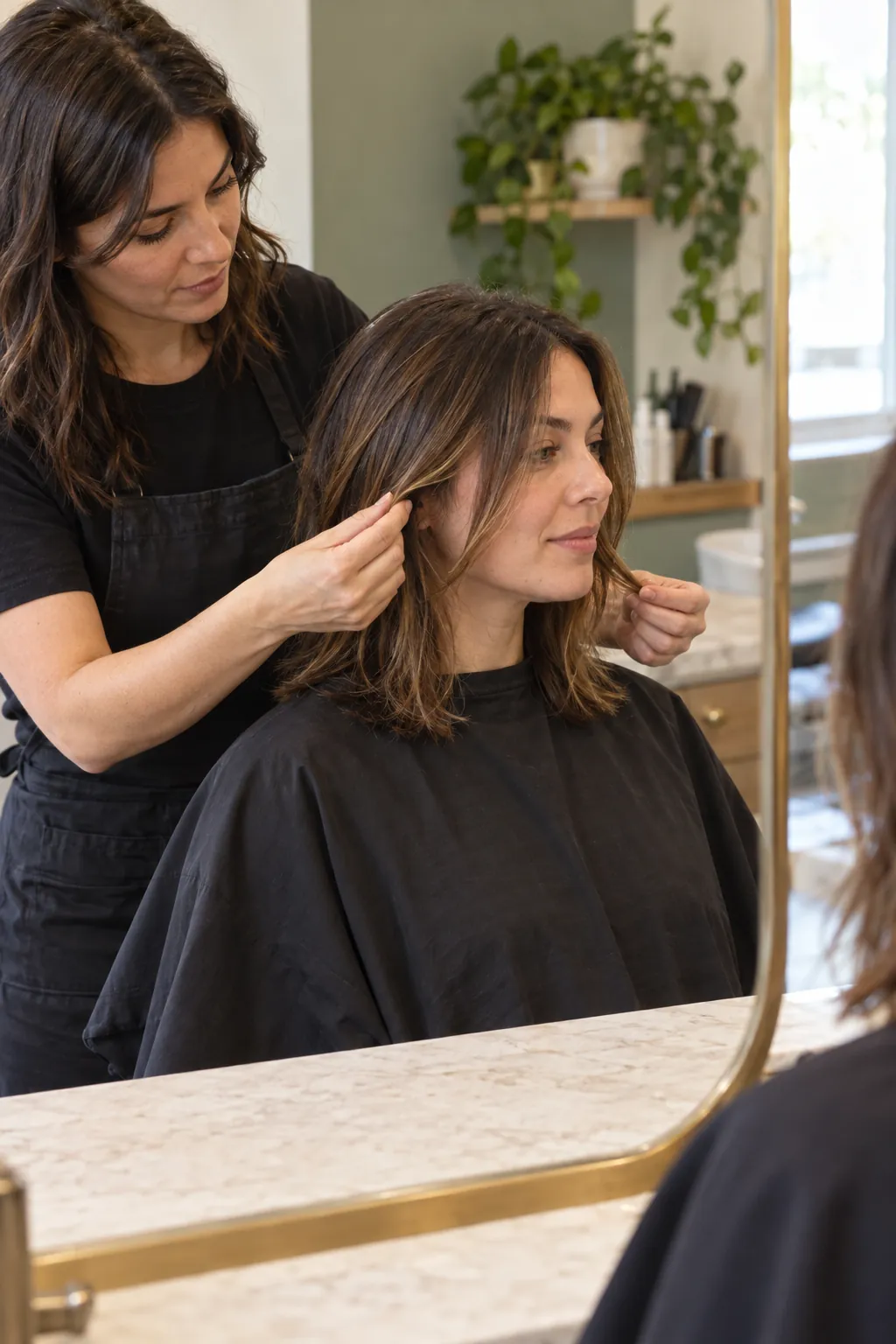
Face framing pieces are not automatically bangs. Point to the shortest piece you will accept and explain whether it should connect into the rest of the layers. Mention cowlicks, a preferred part, and whether you need the front to tuck behind your ears.
Use Reference Photos With a Commentary

Bring two or three photos with hair texture and density close to yours. For each image, say what you want and what you do not want. A useful sentence is: I like this length and front shape, but I want a fuller bottom and fewer short layers.
Ask the stylist to explain how the pictured result was styled. A cut that looks right only after a large round brush blowout may not suit an air dry routine.
Confirm the Plan Before Cutting
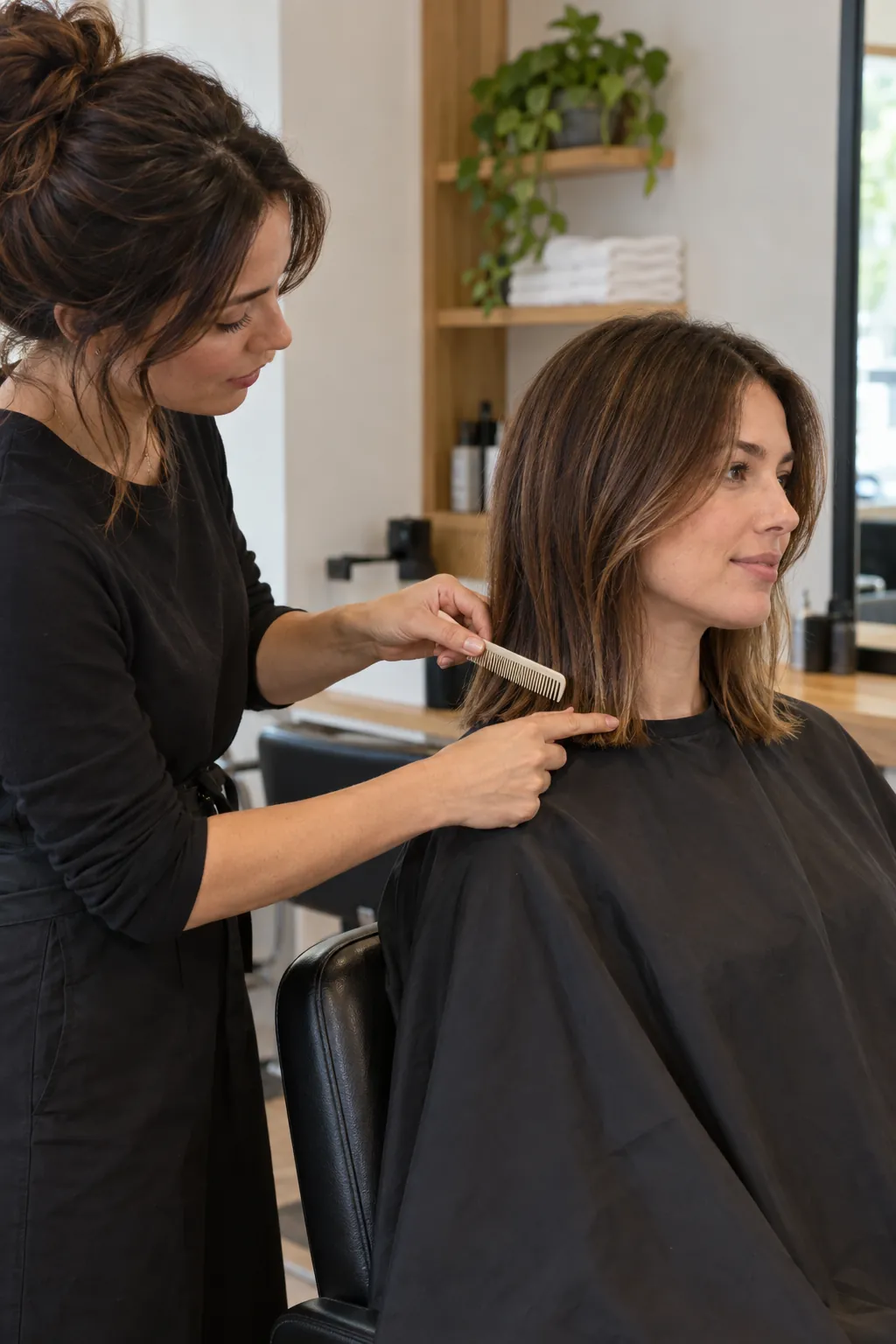
Repeat the agreed plan in plain language: the dry length, the bottom edge, the shortest layer, and the front pieces. Ask how much will be removed at the first cut, especially if you are nervous about losing length. Speak up when the stylist proposes a new angle or shorter piece that was not part of the plan.
The best consultation ends with a shared picture of how your hair will look on an ordinary day. That is more reliable than finding one perfect haircut name.