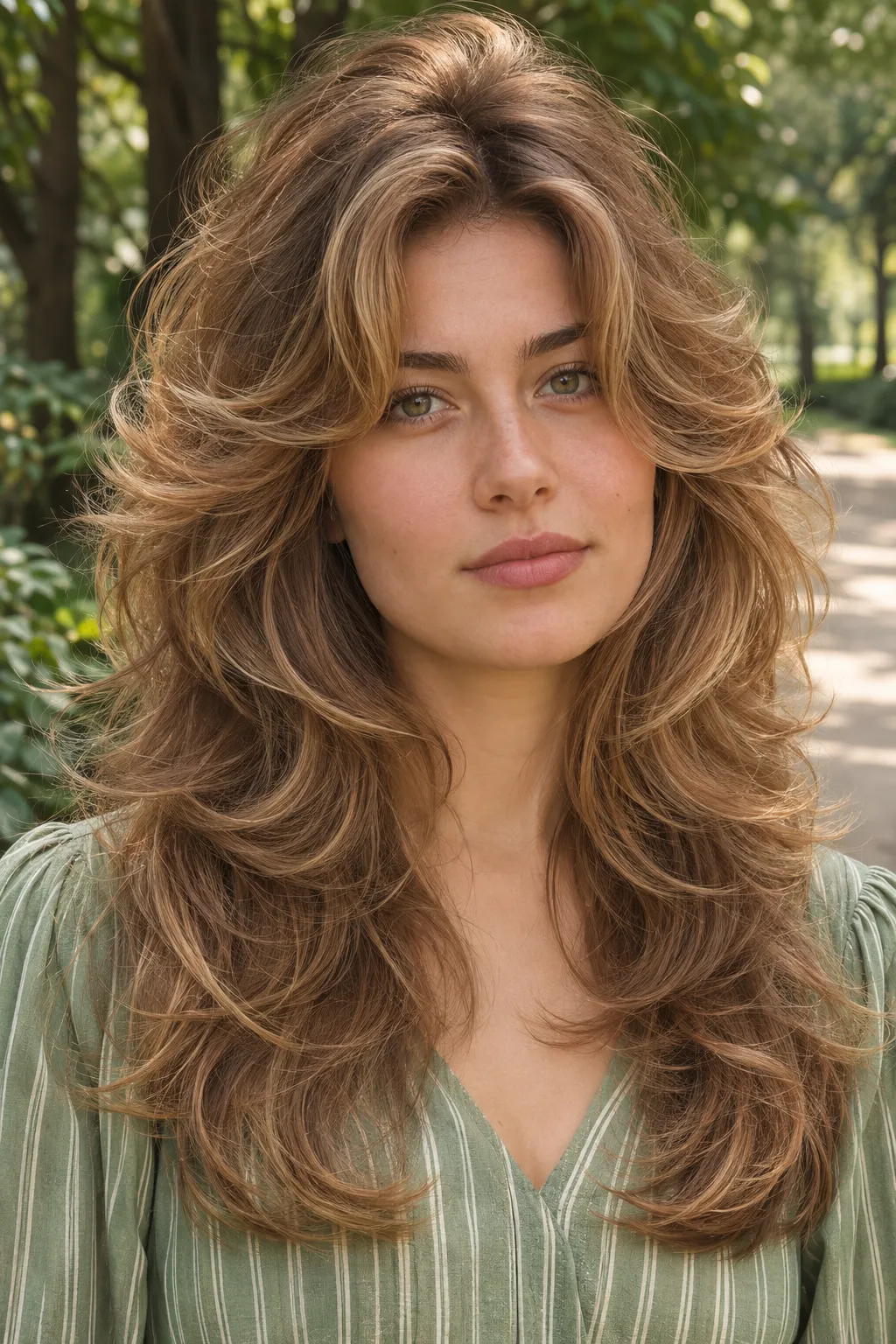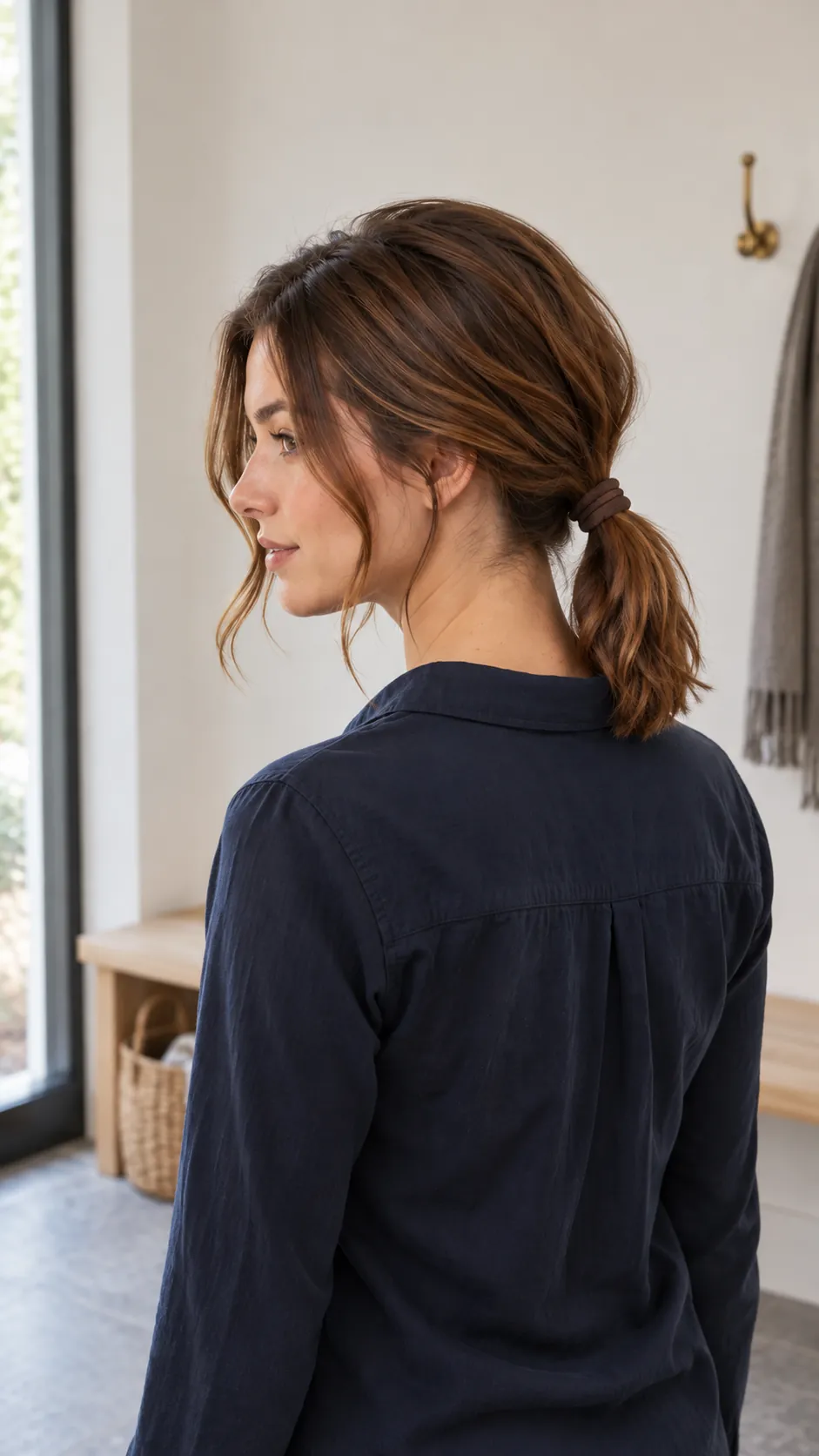
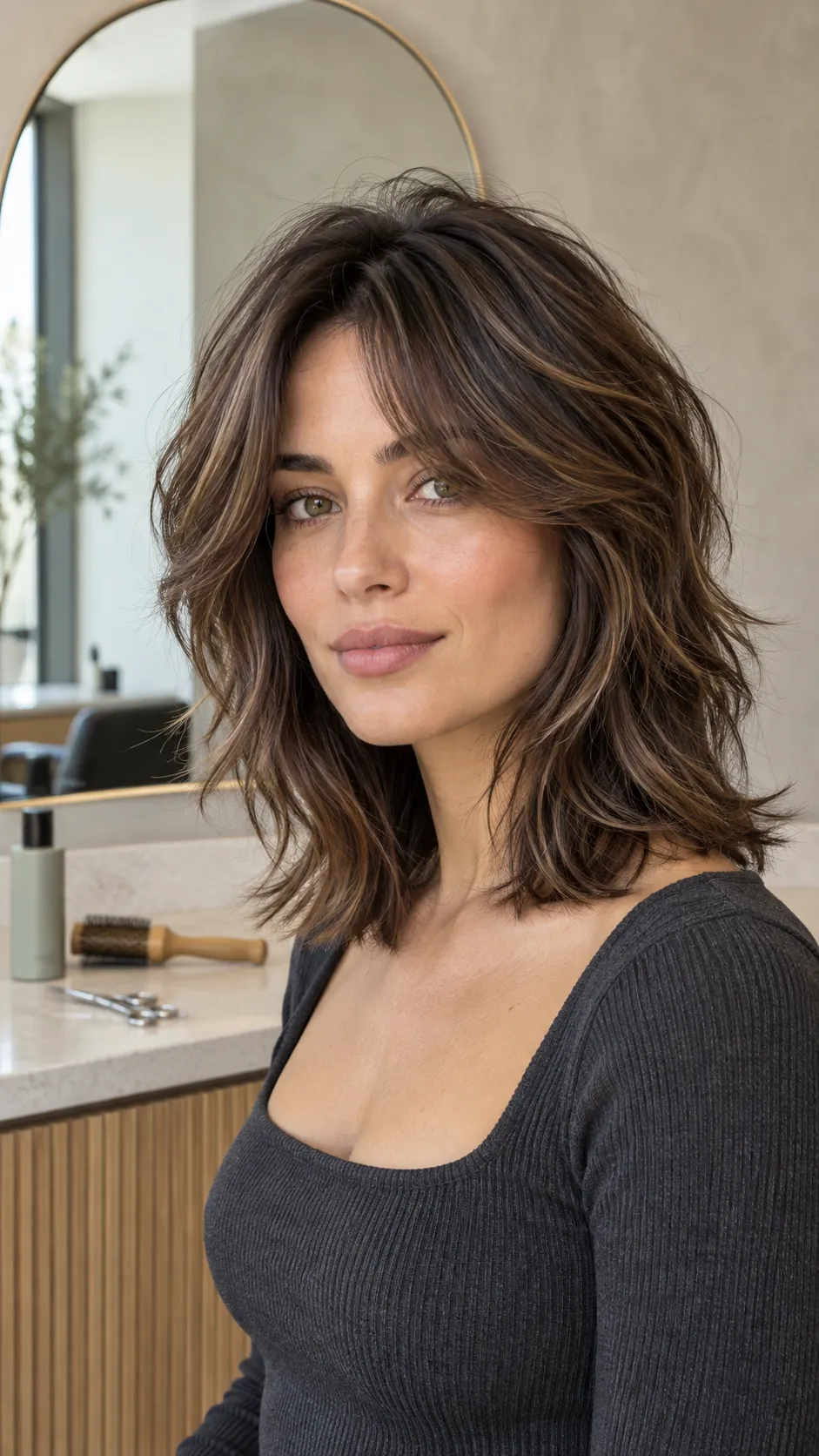
A wolf cut can look effortless in a posed photo and surprisingly flat after the first wash. The deciding factors are crown length, perimeter density, natural texture, and the amount of styling you will actually do. Choosing the level of contrast before the appointment is more useful than asking for the trend by name alone.
Indexed hair discussions repeatedly mention disappointment when straight roots will not lift, fine ends become sparse, or thick waves turn frizzy after excess thinning. The sequence below begins with gentle connected shapes and moves toward stronger disconnection. Use it to identify both the result you want and the maintenance you accept.
Soft Blended Wolf Cut
The softest wolf cut relies on long connected layers and only a little lift at the crown. It gives medium hair movement without creating a sudden shelf above the shoulders. This is the most forgiving option when you like the idea of the cut but worry about an abrupt change.
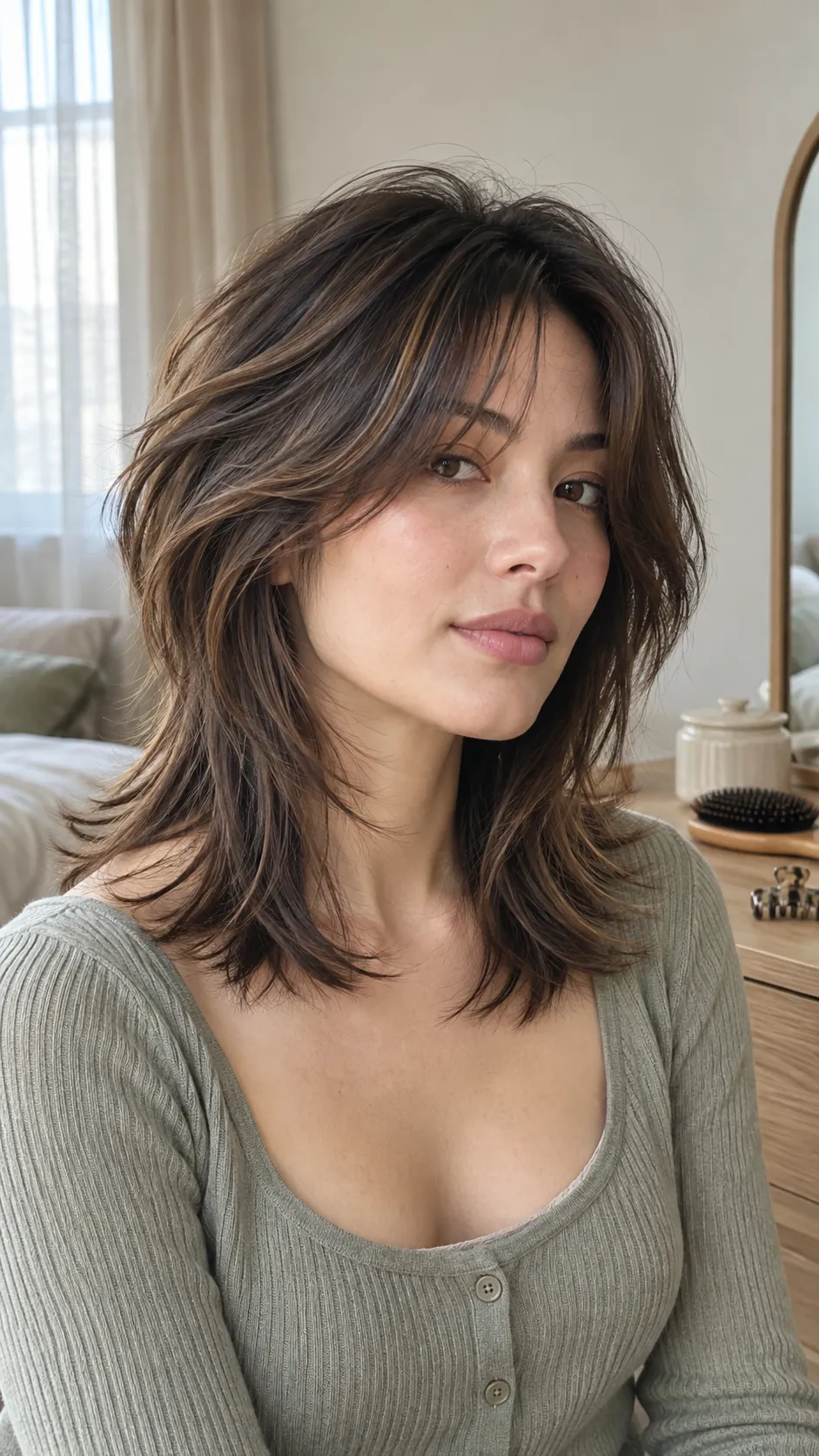
Ask for a full perimeter and a crown guide that can still tuck into the rest of the hair. A light mousse and a quick root lift are usually enough to reveal the shape. The blend also makes future grow out less demanding.
Long Layer Wolf Cut
Long layers preserve visible length while creating the tapered movement associated with a wolf cut. The shortest pieces can begin near the cheek or jaw instead of high on the head. That choice is useful for hair that becomes fluffy when too much weight is removed.

Bring references that show the back as well as the face. The stylist should connect every tier so the ends do not separate into a thin tail. Air dry for a relaxed finish or bend the front sections with a large brush.
Airy Wolf Cut With Curtain Fringe
Airy crown layers and curtain fringe create lift around the eyes without hiding the face. The open fringe can merge into cheek length pieces, which keeps the front from looking disconnected. This version gives a clear wolf shape while remaining soft.
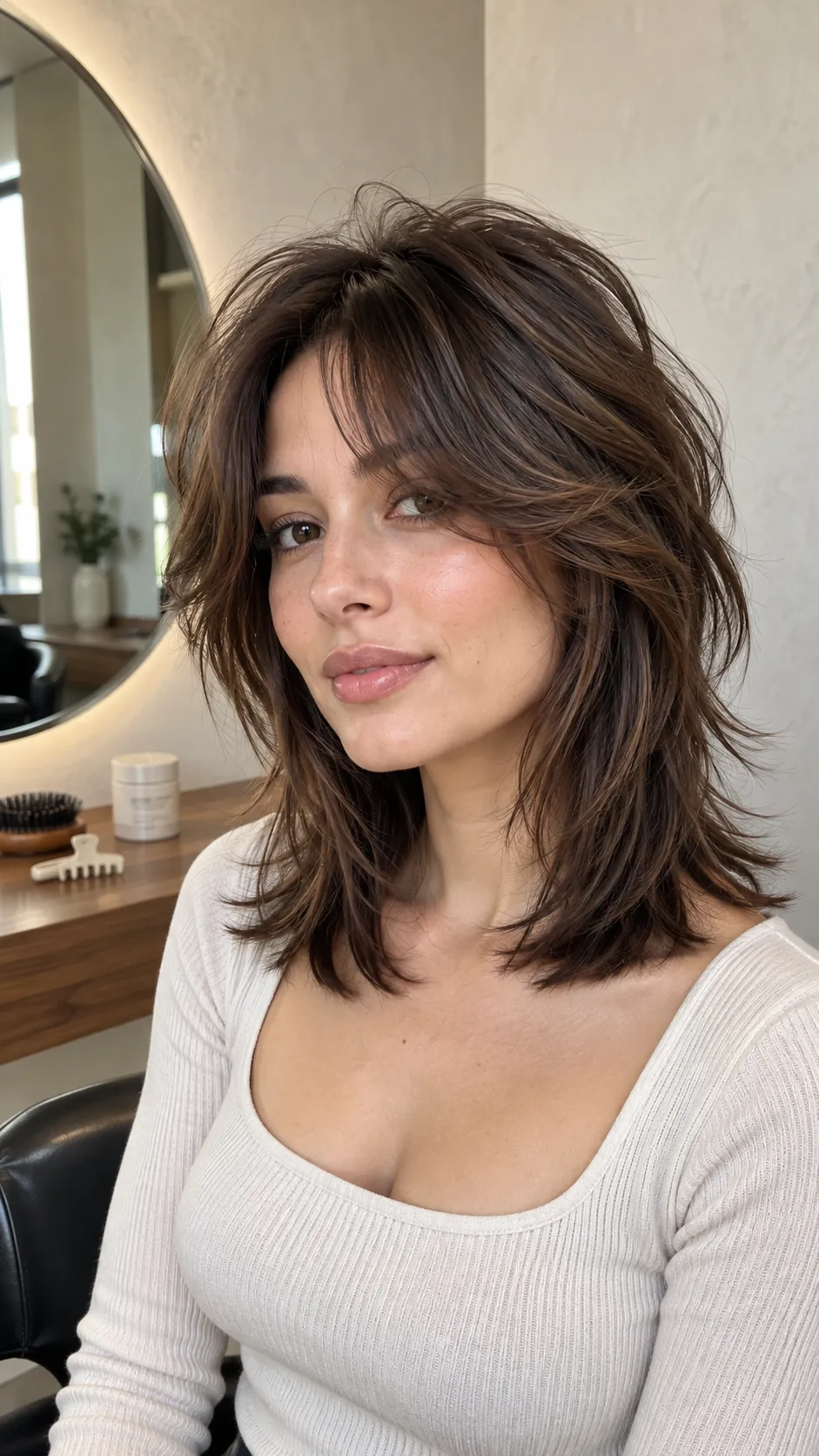
Explain how your fringe behaves when it is not freshly styled. Dry it side to side before directing the ends away from the face. Keep heavy oils off the roots so the crown remains light.
Rounded Wolf Cut With Full Ends
A rounded upper shape makes the cut feel plush rather than spiky. Full shoulder ends balance that volume and protect the appearance of density. It is a strong choice for fine strands when overall hair density is moderate or high.
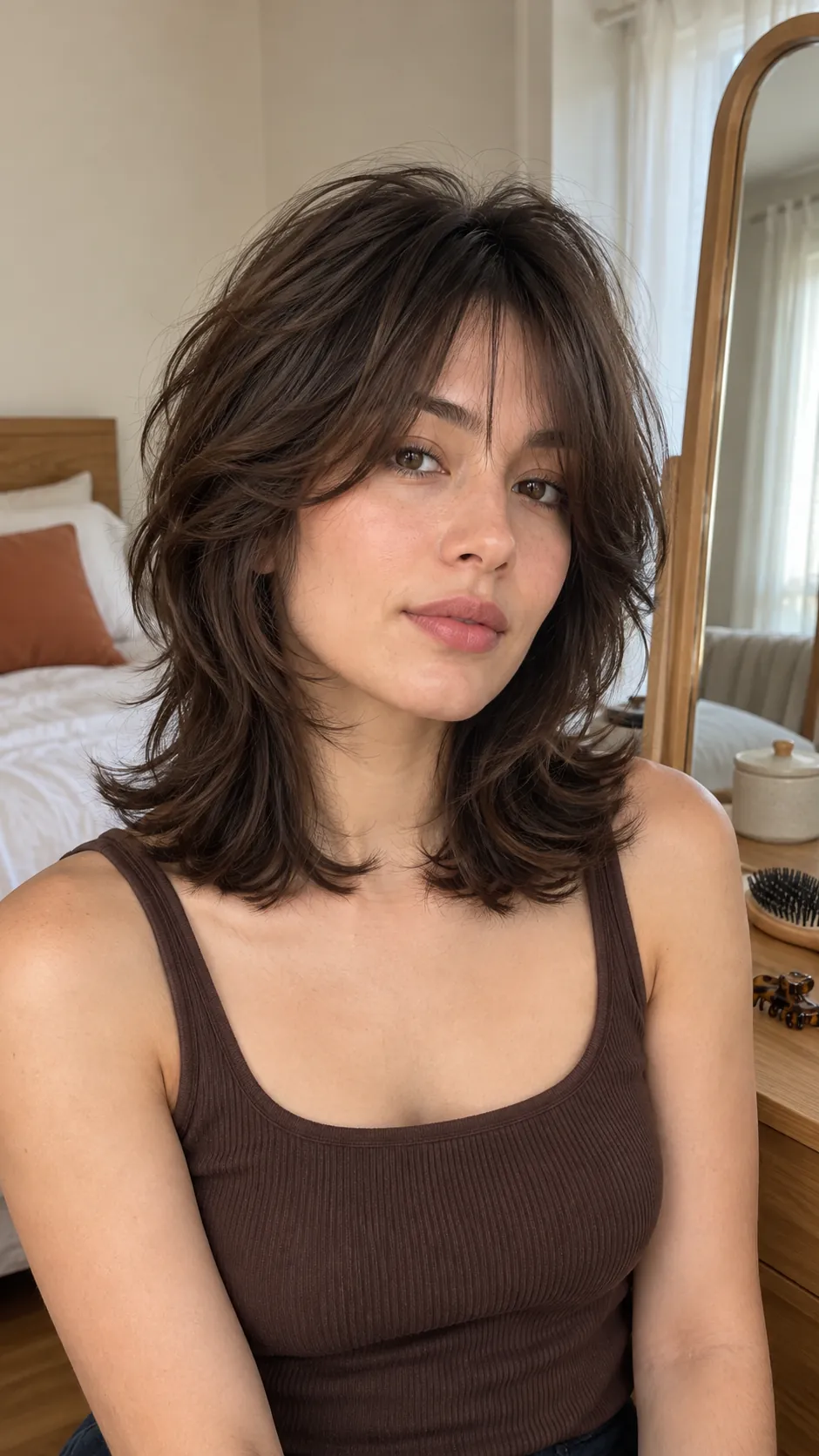
Request internal graduation instead of widespread thinning. A medium round brush can form the curve without turning every section into the same curl. Finish by loosening the ends with your fingers.
Wavy Wolf Cut With Gentle Crown Lift
Natural waves give a wolf cut much of its movement without daily hot tools. Gentle crown lift prevents the top from lying flat while seamless layers keep the lower waves cohesive. The result changes naturally with humidity but should retain its outline.
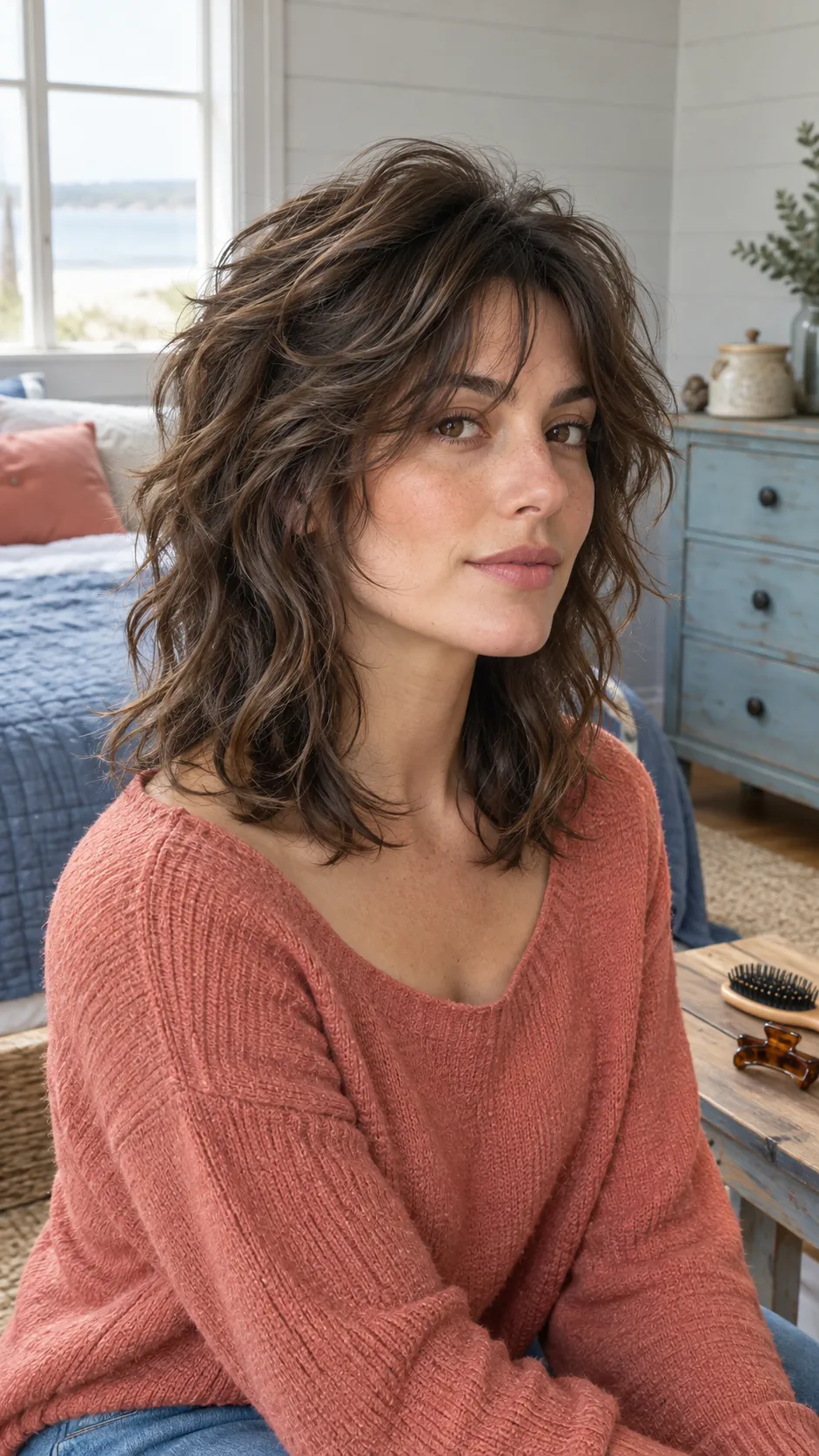
Discuss which sections dry straight and which sections shrink. Apply foam to very wet hair and diffuse on low air. Avoid handling the waves until they are fully dry.
Curly Wolf Cut With Graduated Layers
Curly wolf cuts work best when the top layers are graduated according to curl spring. A short guide chosen on stretched hair may rise much higher after washing. The lower curls need enough connection to avoid a round cap above a heavy base.
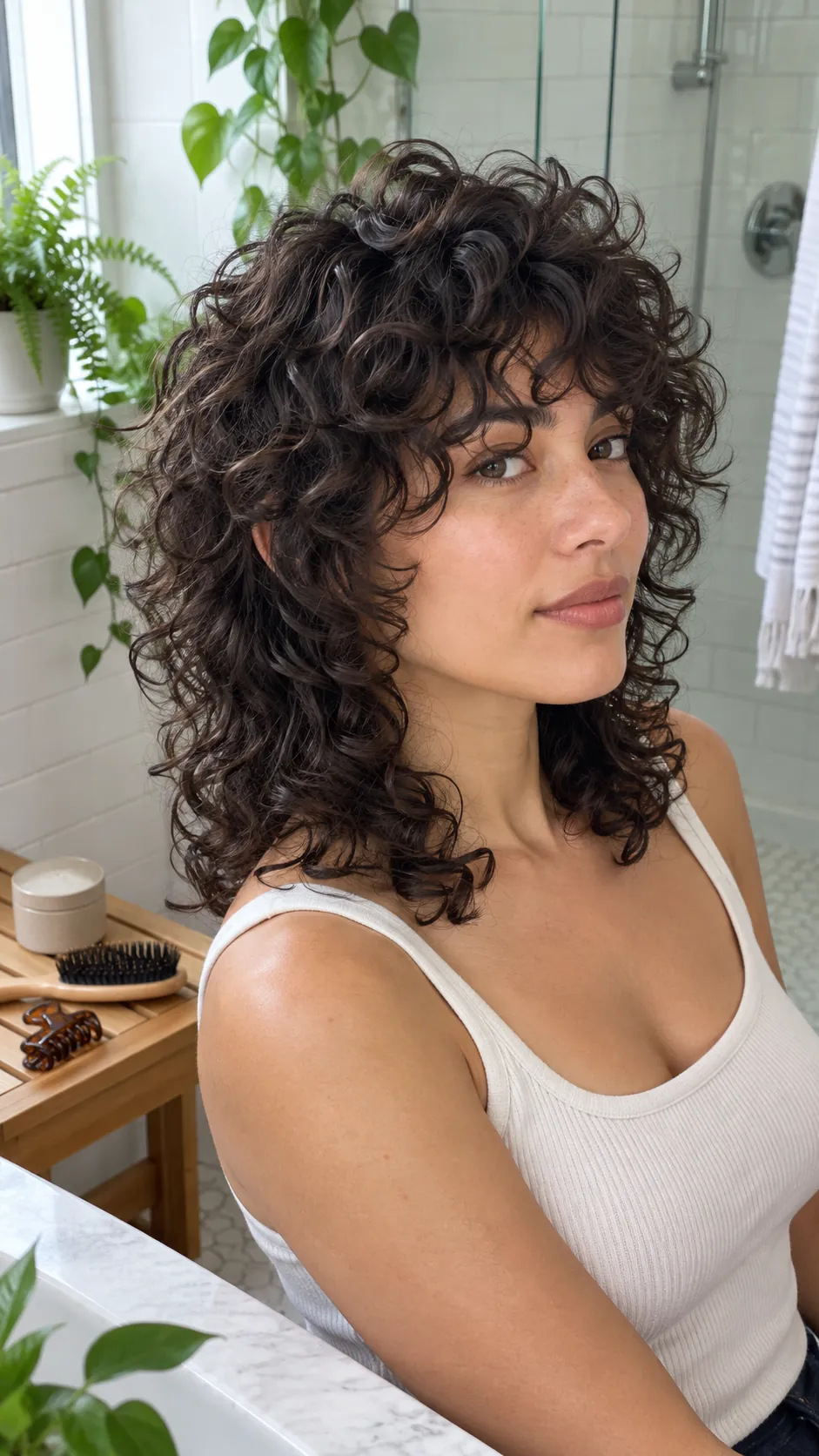
Show your stylist the hair on an ordinary wash day. A curl aware consultation can map density and shrinkage before cutting. Diffuse with minimal movement so each tier settles into its intended place.
Fine Hair Wolf Cut With Dense Perimeter
Fine hair needs fewer strategic layers and a visibly strong perimeter. Light movement near the crown and face can create lift without sacrificing the shoulder line. This design answers the common fear that a wolf cut will make the ends look sparse.
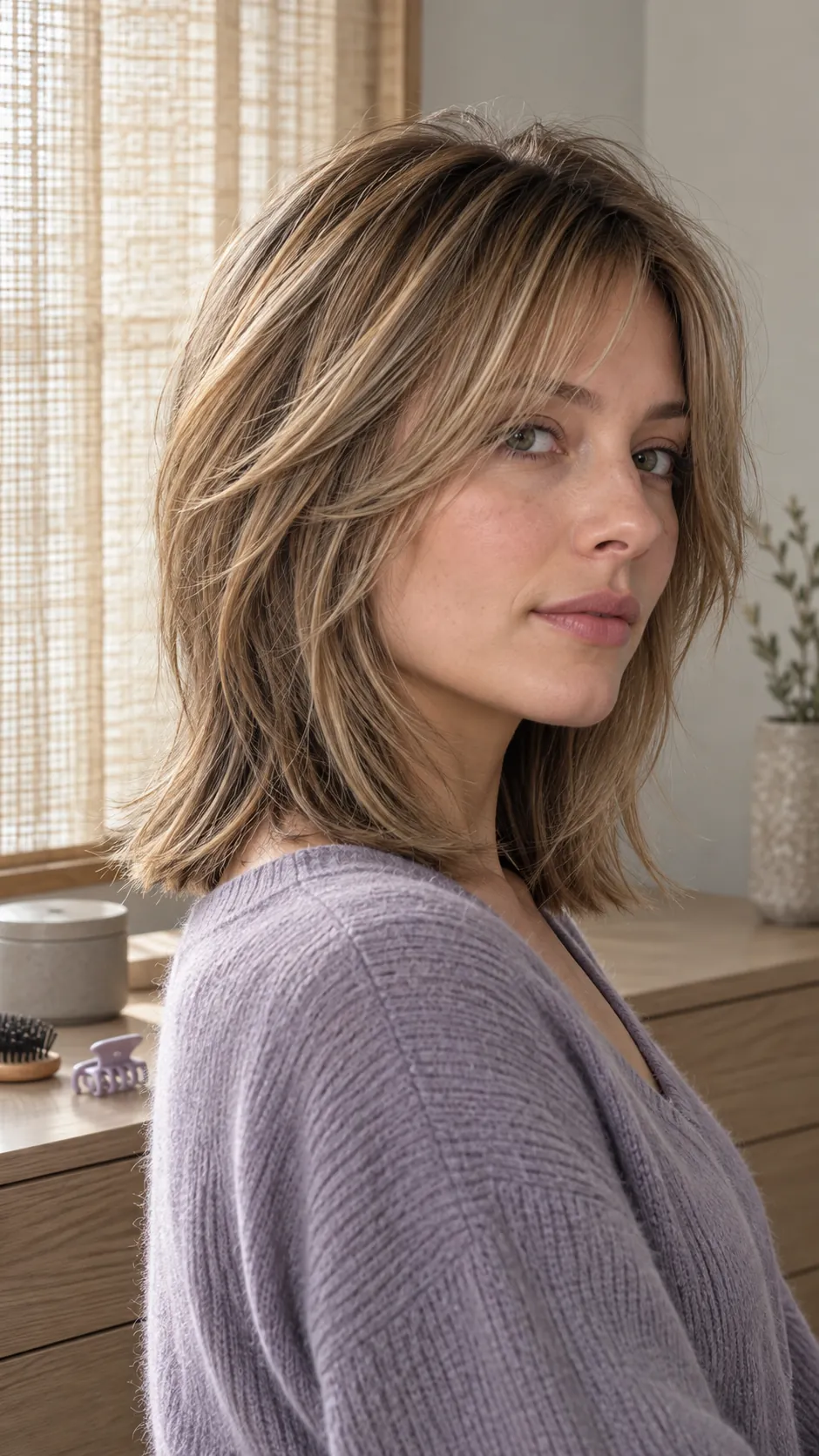
Ask the stylist to distinguish fine strands from low density because they are not the same condition. Keep the baseline compact and use volumizing spray only at the roots. Skip heavy texture paste through the ends.
Thick Hair Wolf Cut With Hidden Debulking
Dense hair can carry dramatic layering, but hidden bulk may need to be removed first. Targeted interior work lets the outer veil remain smooth while the cut gains movement. Random thinning near the surface can make waves expand and frizz.
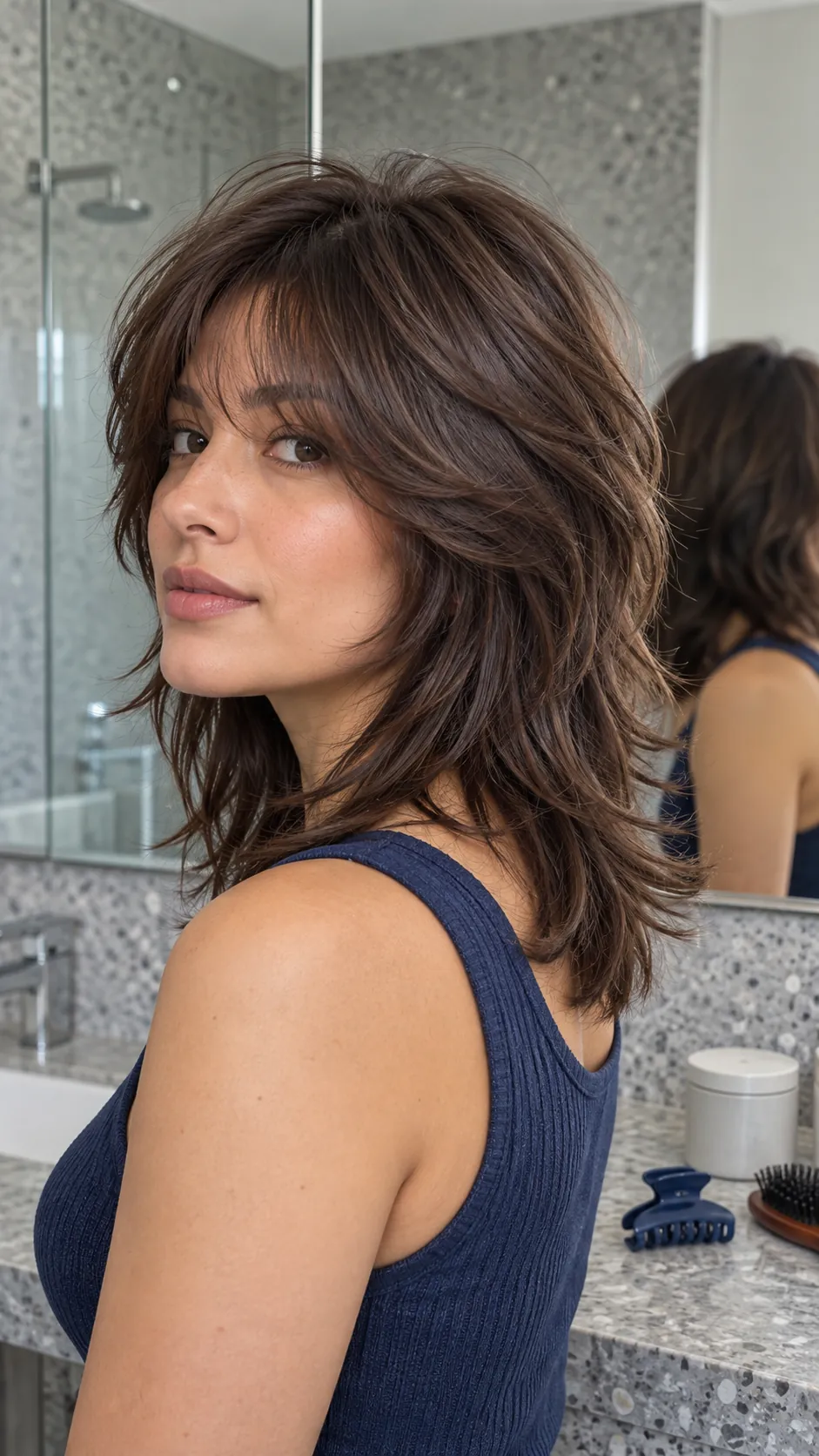
Ask exactly where weight will be removed and how it will affect air drying. A smoothing cream through the middle lengths can control expansion. Let the shorter top layers provide the visible texture.
Straight Hair Wolf Cut With Bent Ends
Straight hair can show a wolf cut clearly when the ends receive a small outward bend. Smooth middle lengths keep the design polished while the turned tips reveal each tier. This approach does require a little styling if the hair will not hold shape naturally.

Use a medium brush only on the last few inches. Set each bend with cool air instead of loading it with stiff spray. A maintenance trim keeps the narrow ends from looking tired.
Polished Wolf Cut With Smooth Layers
Smooth overlapping layers make the wolf cut suitable for professional settings. The crown still has movement, but the surface stays controlled and the ends form soft arcs. On casual days the same cut can relax into a looser texture.
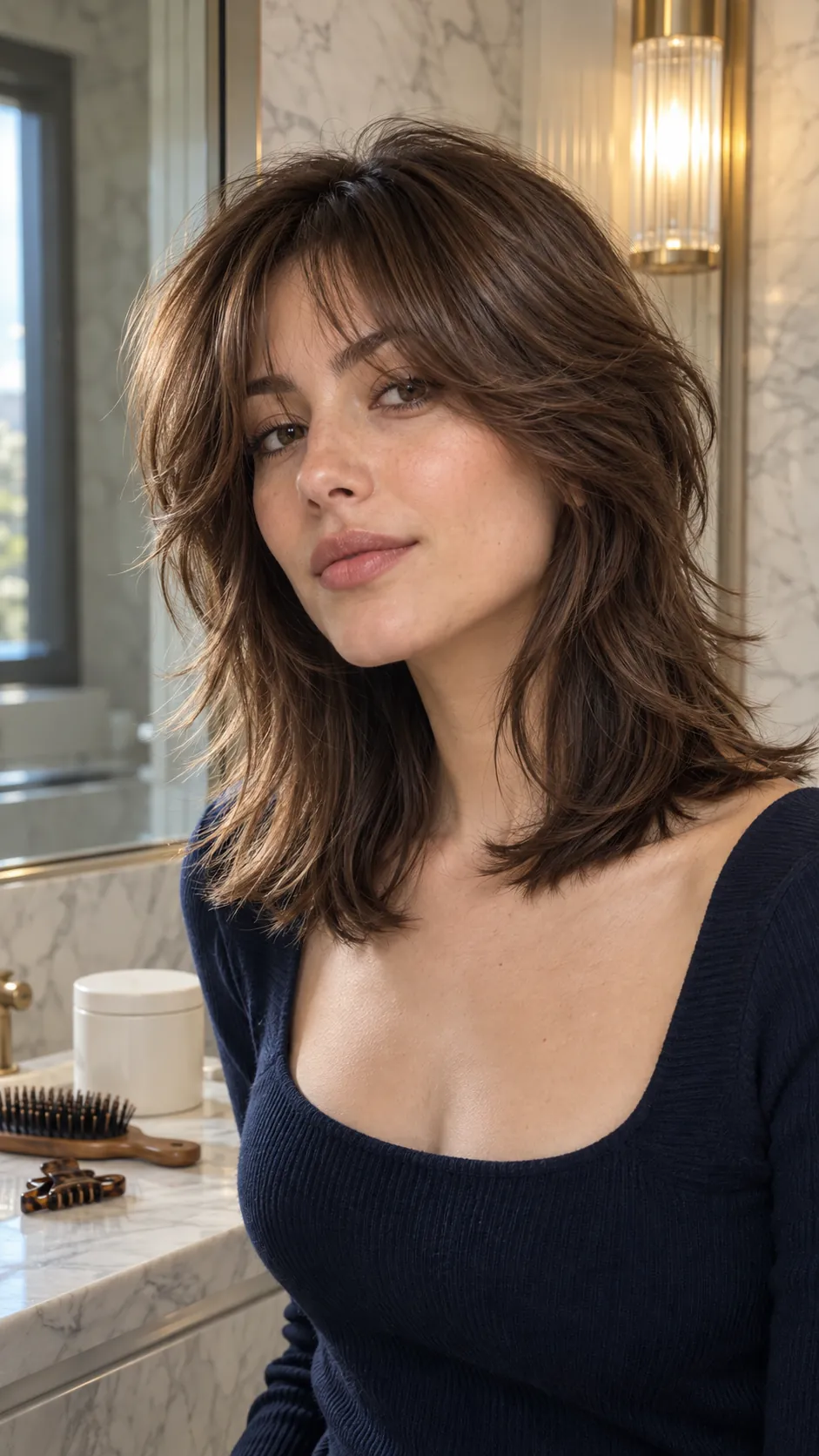
Request connected curves and avoid excessive point cutting at the perimeter. Moderate brush tension will polish the surface without flattening the roots. Flexible spray should preserve motion rather than freeze the shape.
Side Part Wolf Cut
A deep side part sends the fringe and crown layers across the head on a diagonal. This can create lift for roots that naturally fall flat. The opposite side must retain enough weight to balance the stronger sweep.
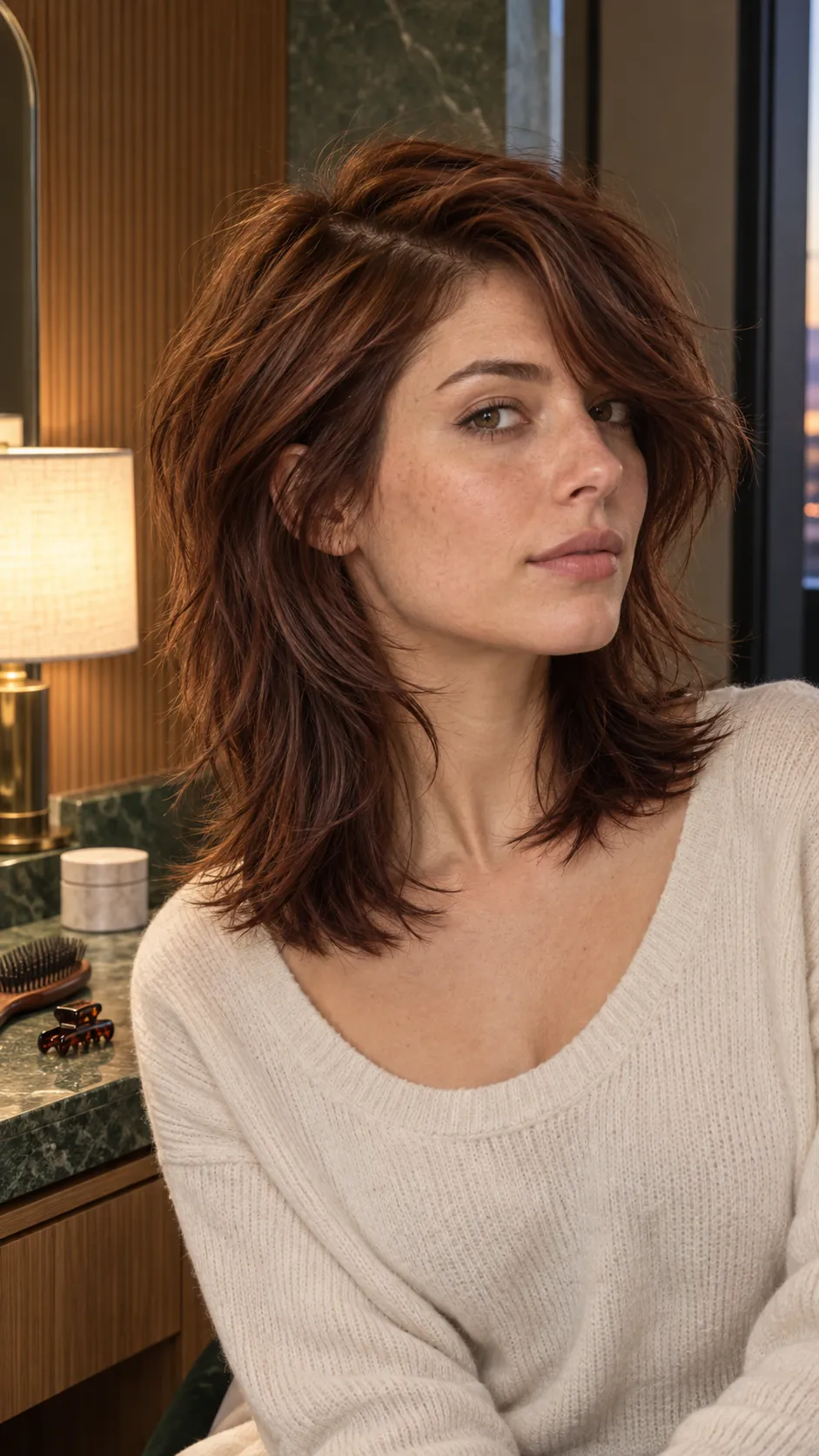
Have the cut planned around your real part and any stubborn cowlick. Dry the roots against their normal direction, allow them to cool, then return the hair to the preferred side. The result should look asymmetric but stable.
Center Part Wolf Cut With Face Wings
A center part creates balanced wings around the cheekbones and makes the layer pattern easy to compare. Small natural differences between the two sides prevent the finish from looking rigid. This shape is dependable for people who rarely move their part.

Ask for each wing to suit the face rather than forcing exact mirror symmetry. Direct both front sections away with a round brush, then separate them with your hands. Keep the crown slightly tousled for contrast.
Wolf Cut With Bottleneck Bangs
Bottleneck bangs begin narrow near the brow and widen as they approach the jaw. They offer more forehead coverage than curtain fringe while still opening around the eyes. The outer pieces connect naturally to a wolf cut.

Consider cowlick direction and forehead length before deciding where the center will land. Keep the widest pieces long enough to tuck when needed. Dry the roots forward first, then split the fringe gently.
Wolf Cut With Wispy Brow Fringe
Wispy brow fringe adds softness to a layered wolf shape. The light separation lets the forehead show through and makes grow out easier than a dense blunt bang. It works well when the rest of the cut is also airy.

Ask for a fringe that can move to either side. Use low heat and direct the roots downward before adding any bend. A tiny amount of dry paste can separate selected tips.
Wolf Cut With Cheekbone Pieces
Cheekbone pieces make the face framing clear without shortening the entire crown. They can emphasize the eyes and create a useful bridge to the longer collarbone layers. The back keeps enough weight for easy tying and tucking.
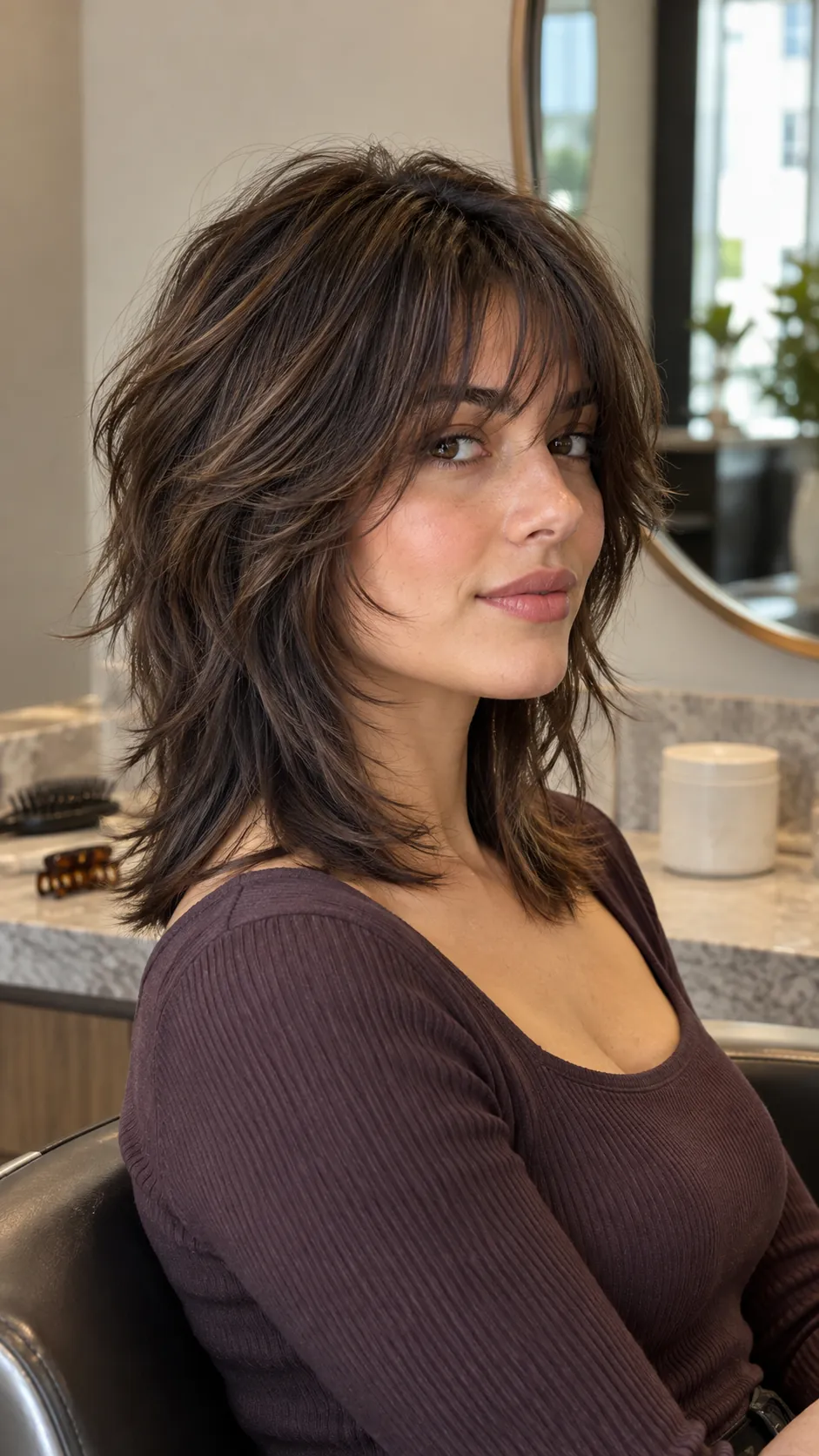
Agree on the exact cheek landing point before the first cut. Style those pieces away from the face while leaving the back more relaxed. This contrast makes the architecture easy to see.
Shaggy Wolf Lob
A shaggy wolf lob keeps a compact shoulder outline with hidden movement inside. The first impression is polished, but turns and tucks reveal the texture. It suits someone who wants a quieter version of the trend.

Request internal layers that do not break the strongest part of the baseline. Texture spray belongs underneath rather than across the smooth surface. The shape can be worn straight without losing its identity.
Butterfly Wolf Cut
Butterfly front layers sweep away from the face while a looser wolf crown supplies texture. The combination works particularly well on thick hair that needs motion around the cheeks. Length and density remain visible through the back.
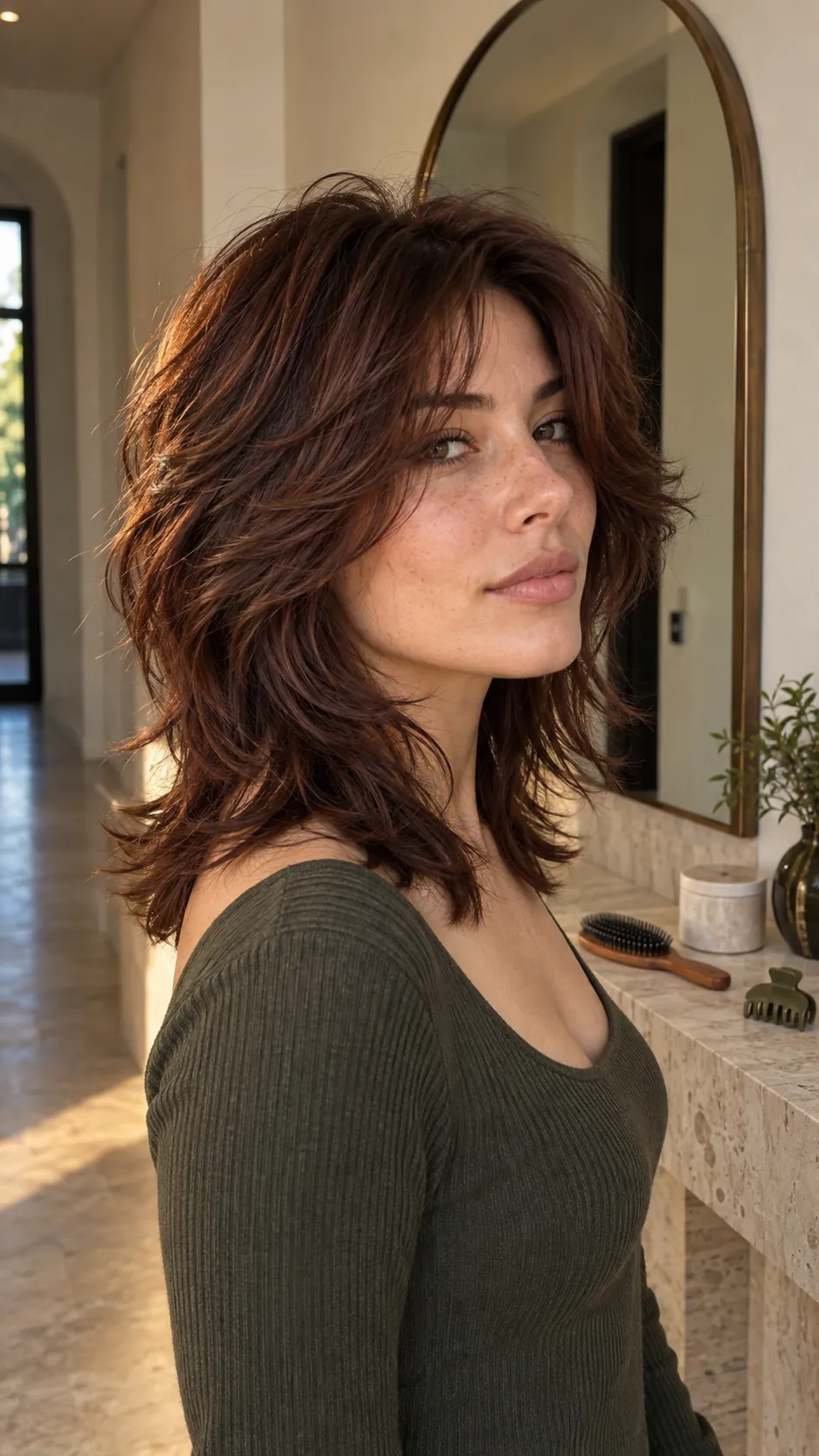
Show how often you wear the hair up so the front remains practical. Brush only the face frame into broad curves. Leave the crown less polished to keep the wolf character.
Mullet Inspired Wolf Cut
A mullet influence makes the crown and sides shorter while the nape stays noticeably longer. Medium length keeps the contrast wearable, but the design is still unmistakably bold. It rewards someone who is comfortable with an exposed layer transition.

Study side and back references before choosing the degree of separation. The nape should look intentional rather than like an accidental tail. Matte paste can define the shorter pieces without making them rigid.
Choppy Wolf Cut With Broken Ends
Broken layers create an irregular rhythm that looks convincing even when no two waves match. A firm shoulder edge prevents the silhouette from dissolving into random texture. This is useful for air dried hair with uneven bends.

Tell the stylist which zones dry flat and which expand. Those differences can guide the cut instead of being treated as flaws. Scrunch in foam and separate only a few dry pieces.
Razor Textured Wolf Cut
Razor work can produce the sharp separated surface many people associate with a wolf cut. It is most successful on healthy hair that does not frizz easily. Fragile or highly porous ends may respond better to scissors.
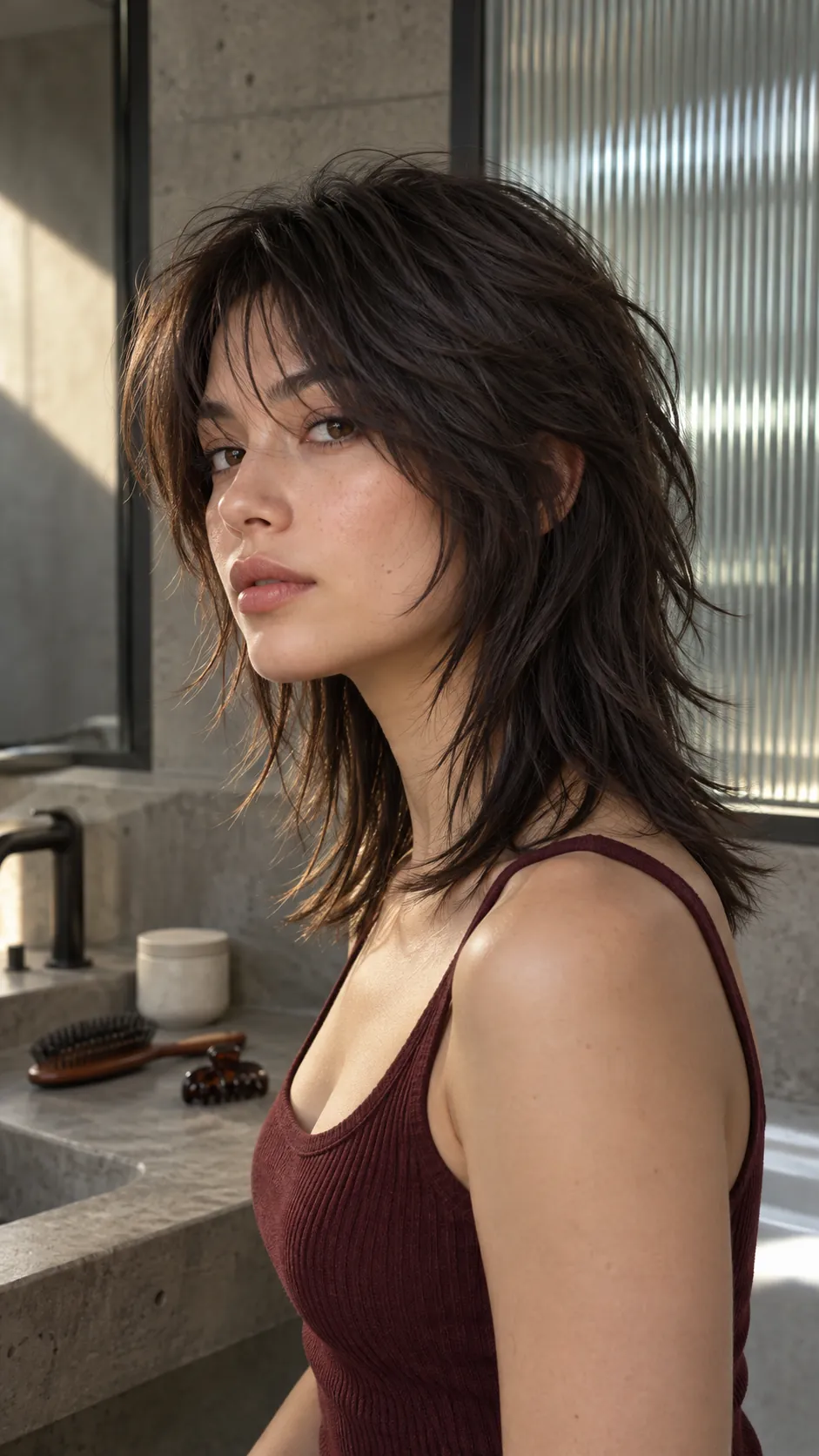
Ask why a razor suits your texture before agreeing to it. Use a small amount of balm to show the separation rather than coating every strand. Regular trims keep the fine tips from looking worn.
High Crown Wolf Cut
High crown layers create the strongest volume in the upper silhouette. Dense hair can support this height if the sides and shoulder pieces remain balanced. Fine low density hair may need a longer guide to avoid visible gaps.
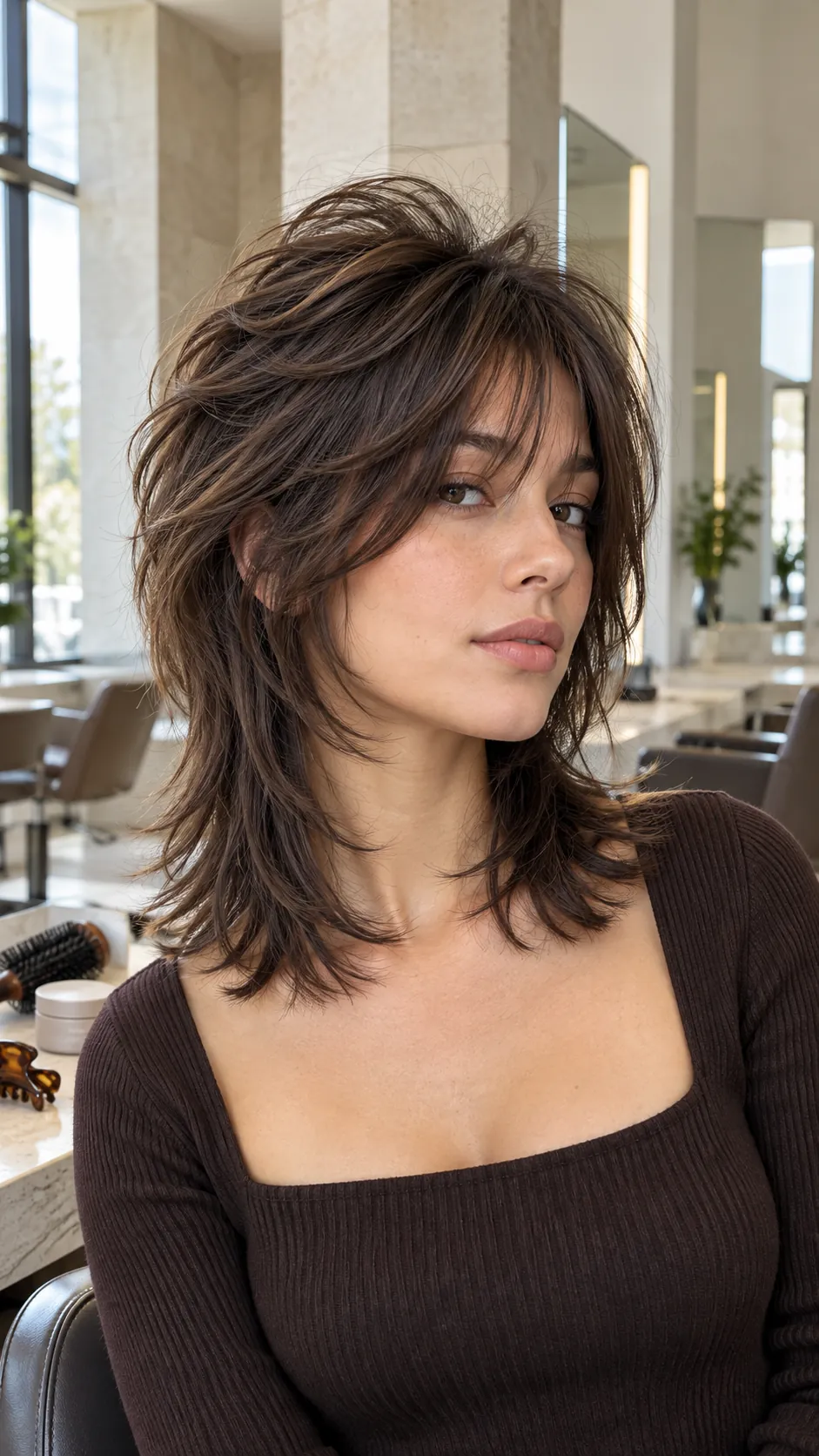
Have the stylist demonstrate where the shortest crown section will finish when dry. Lift the roots with a brush or diffuser, then cool them before touching. Keep conditioner and oil away from the scalp.
Wolf Cut With Short Rounded Bangs
Short rounded bangs give the wolf cut a compact front shape with a softer edge than a micro fringe. Curved cheek layers continue the round movement into the sides. Frequent trimming is part of maintaining the intended proportion.
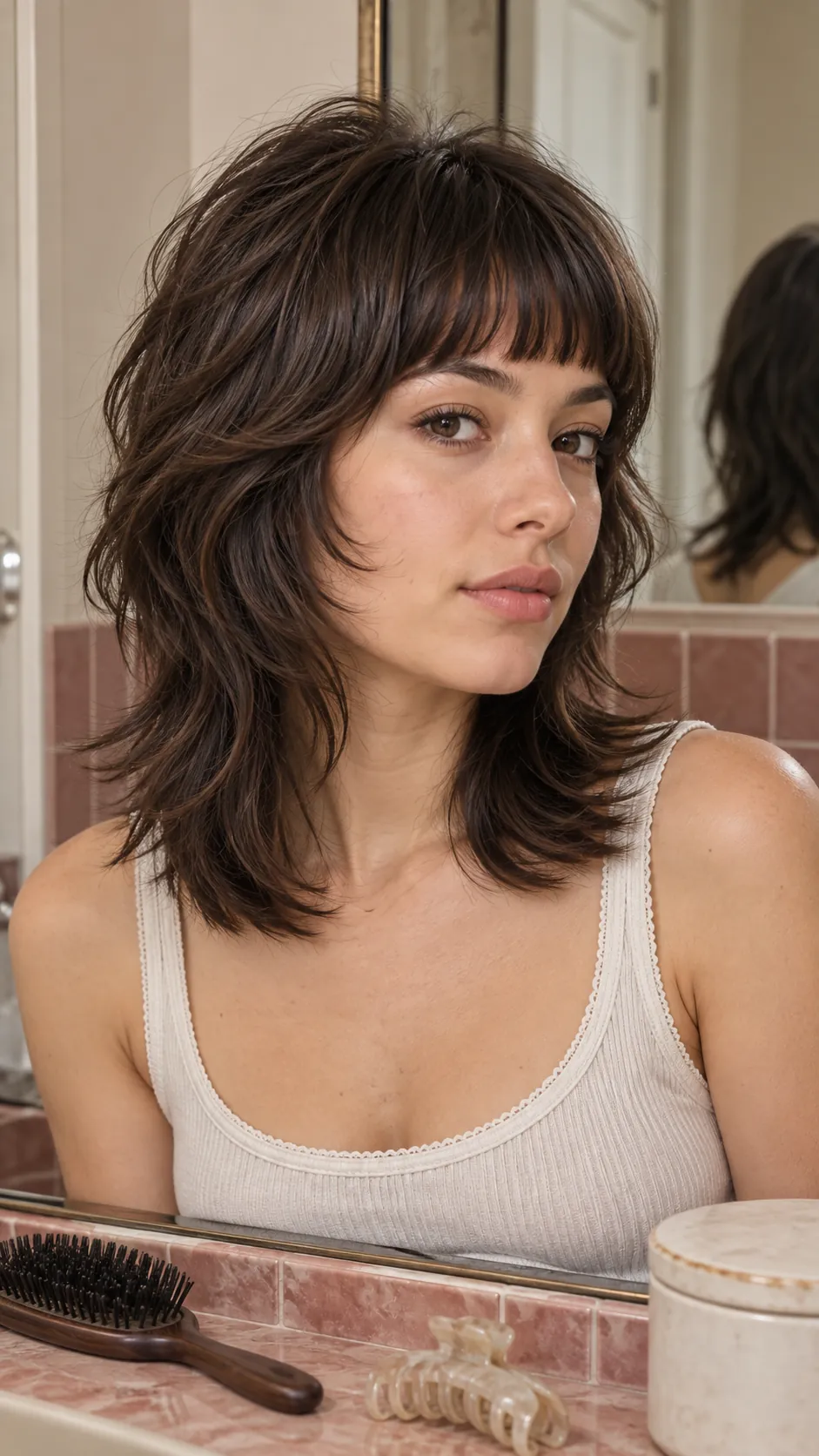
Check how the bang behaves around cowlicks and natural bend. Blow it downward first, then add a subtle curve. Avoid over rounding the rest of the cut or the silhouette can become too uniform.
Wolf Cut With Micro Fringe
A micro fringe creates a clear graphic line above loose fragmented layers. The contrast is bold and exposes more of the brow area. This choice suits someone willing to style and trim the fringe regularly.

Leave room for spring if the hair has any wave. Dry the fringe first because it changes shape quickly as it loses moisture. Define the longer pieces with dry paste for a deliberate finish.
Asymmetrical Wolf Cut
Asymmetry shifts the visual weight toward one side through a deep part or unequal face sections. It adds drama without requiring every crown layer to become very short. The quieter side can tuck neatly behind the ear.
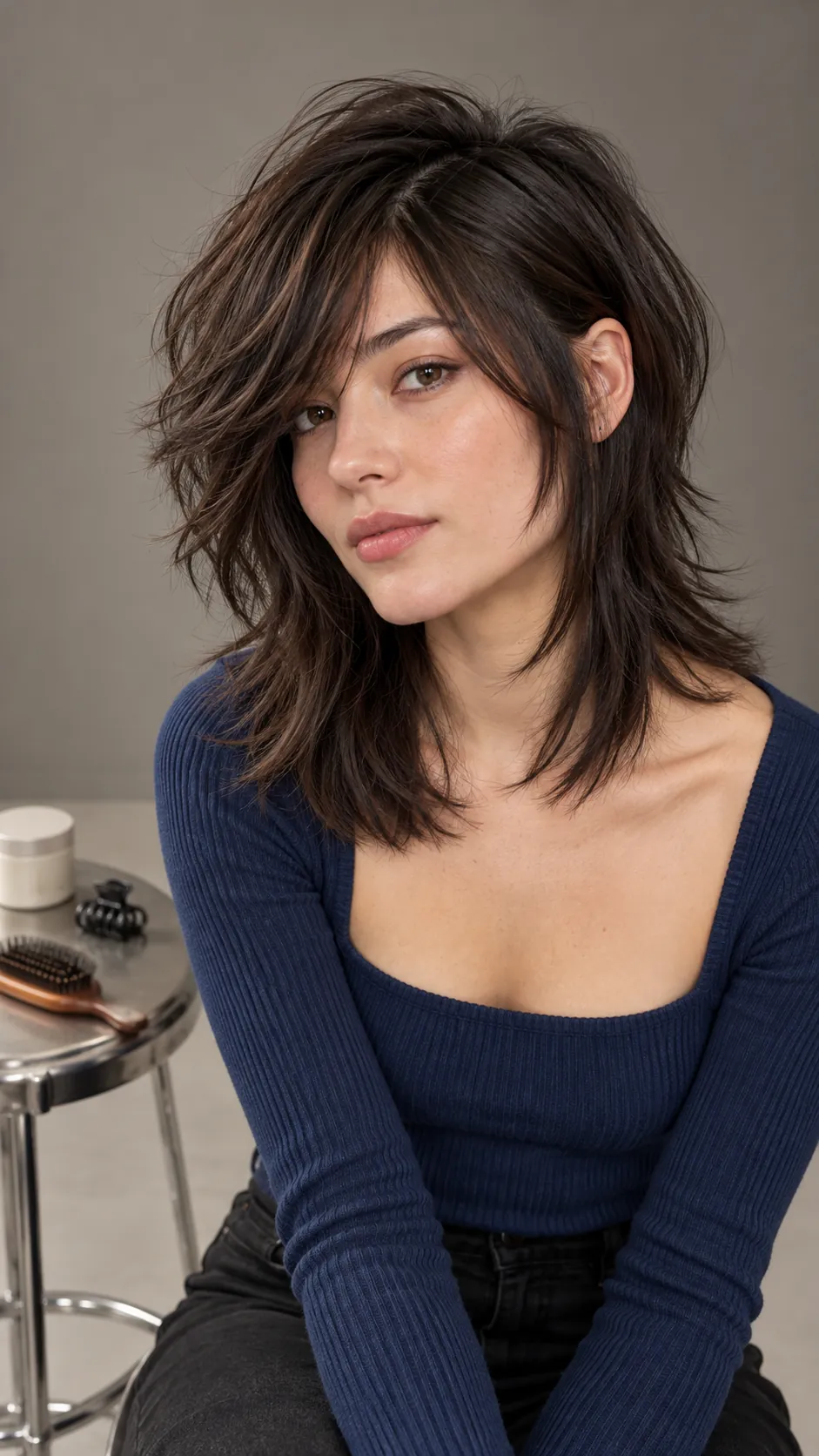
Choose the stronger side according to natural growth and styling habits. The cut must still balance from the back. Use root lift on the sweeping side and smoothing cream on the tucked side.
Two Tone Wolf Cut
Two tone color makes every layer transition easier to see. Dark roots can ground the crown while a pale face frame highlights movement near the cheeks. The color should support the cut rather than replace a clear structure.
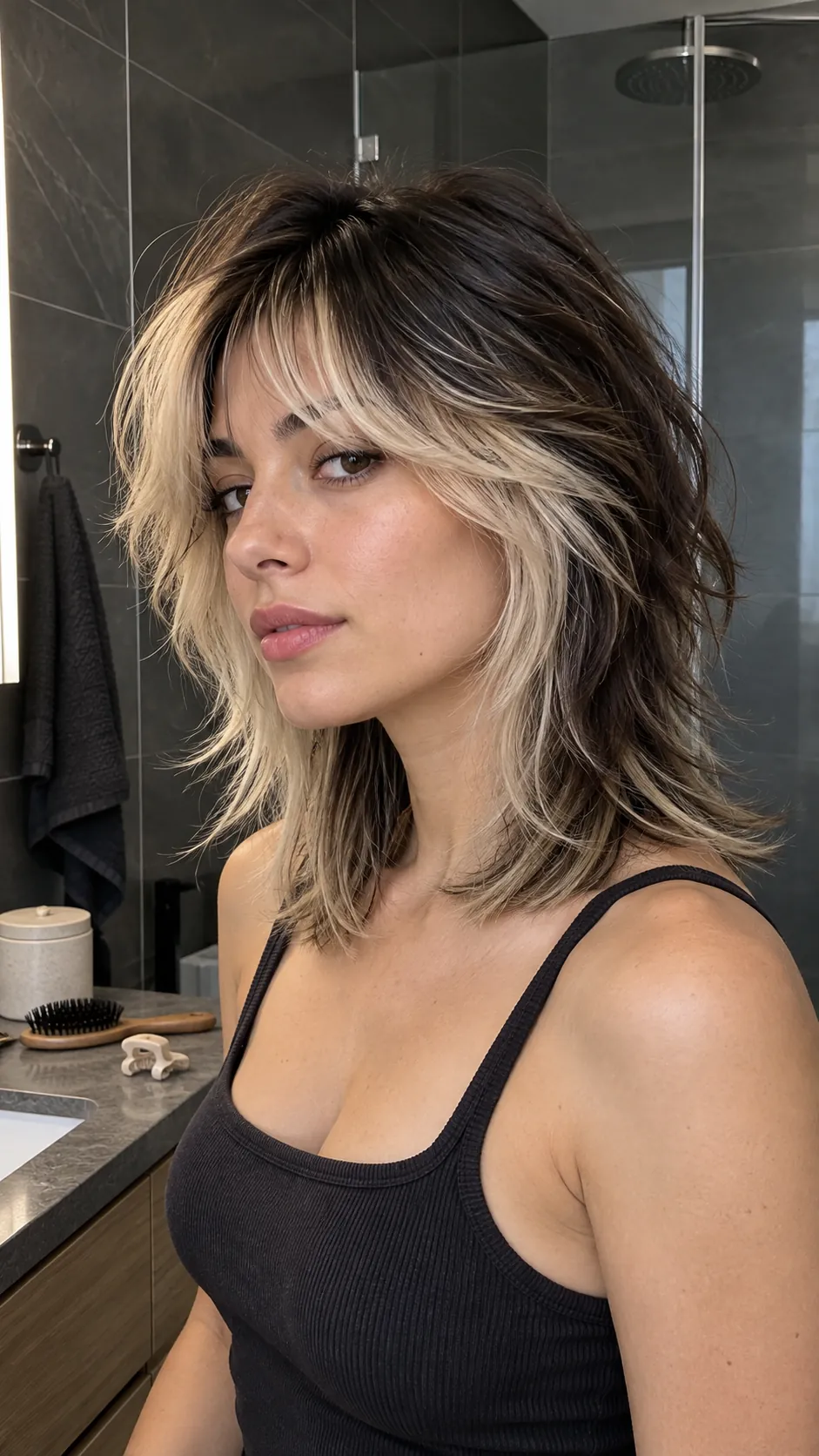
Plan the haircut before placing the light sections so they follow the intended tiers. Color care and haircut maintenance become linked. Use heat protection because brightened pieces may be more fragile.
Copper Wolf Cut With Bold Layers
Copper emphasizes the ridges and tips of a bold layered shape. Dimensional tones can make the crown, cheek, and shoulder sections read separately. The warm color looks strongest when shine and condition remain believable.

Ask for a layer map that still works if the color fades between visits. Use a gentle color safe routine and avoid excessive heat. A light cream can define the bold sections without dulling the copper.
Curly Wolf Cut With Short Crown
A short curly crown creates a compact halo above longer shoulder ringlets. The transition must follow actual curl groups so the top does not sit as a separate cap. This is a bold shape that benefits from a stylist experienced with shrinkage.
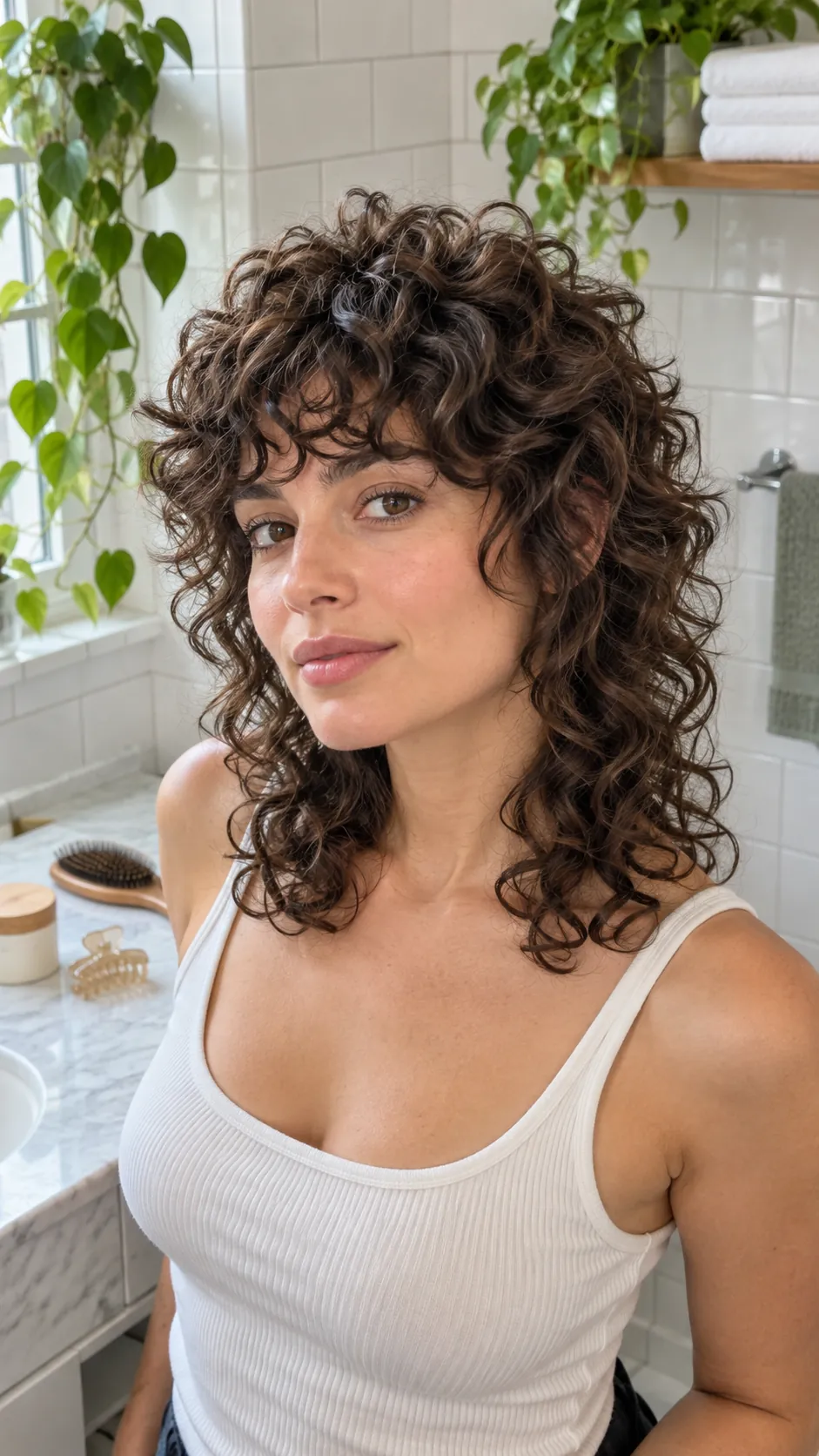
Judge the guide length on dry curls or with a clear shrinkage allowance. Apply product in sections and diffuse without breaking the curl clumps. Refresh the crown separately when it loses lift.
Wolf Cut With Disconnected Sides
Disconnected side panels make the face frame stand apart from the longer back. The design is sharper than a blended wolf cut and more obvious as it grows. It can emphasize the jaw while preserving length behind the shoulders.
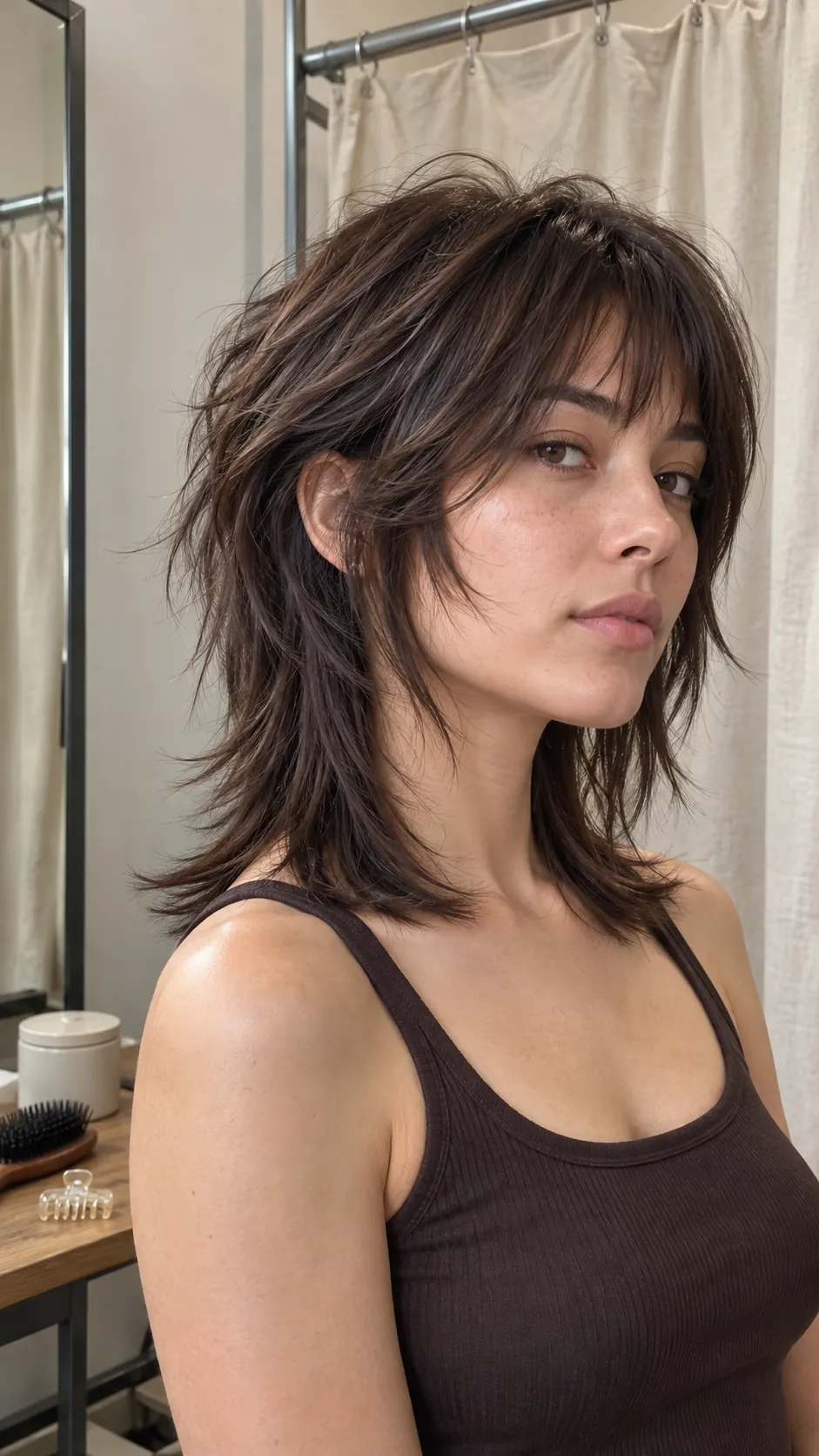
Agree on the exact boundaries of the disconnected sections. A conservative starting point is easier to strengthen later than to reverse. Style the panels toward the face and keep the back loose.
Bold Wolf Cut With Dramatic Crown
The boldest version combines dramatic crown height, a strong fringe, and narrow shoulder pieces. It creates maximum contrast and expects regular styling or naturally supportive texture. This option should be chosen for its clear statement, not because it looks effortless in a posed reference.
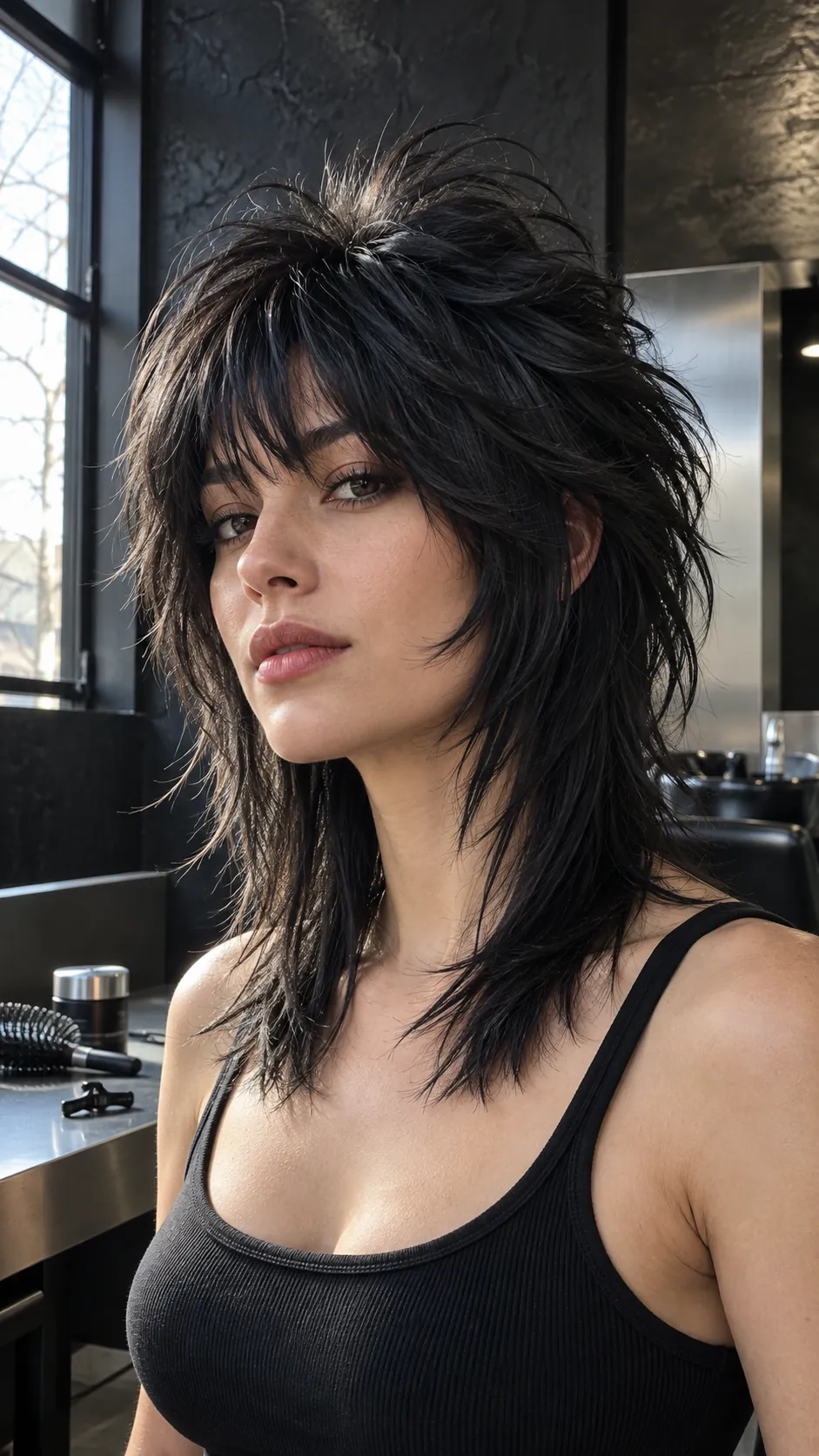
Discuss the routine required on ordinary days before committing. The stylist should preserve enough structure for the cut to make sense without a full blowout. Use root lift, matte separation, and controlled ends rather than one heavy product everywhere.