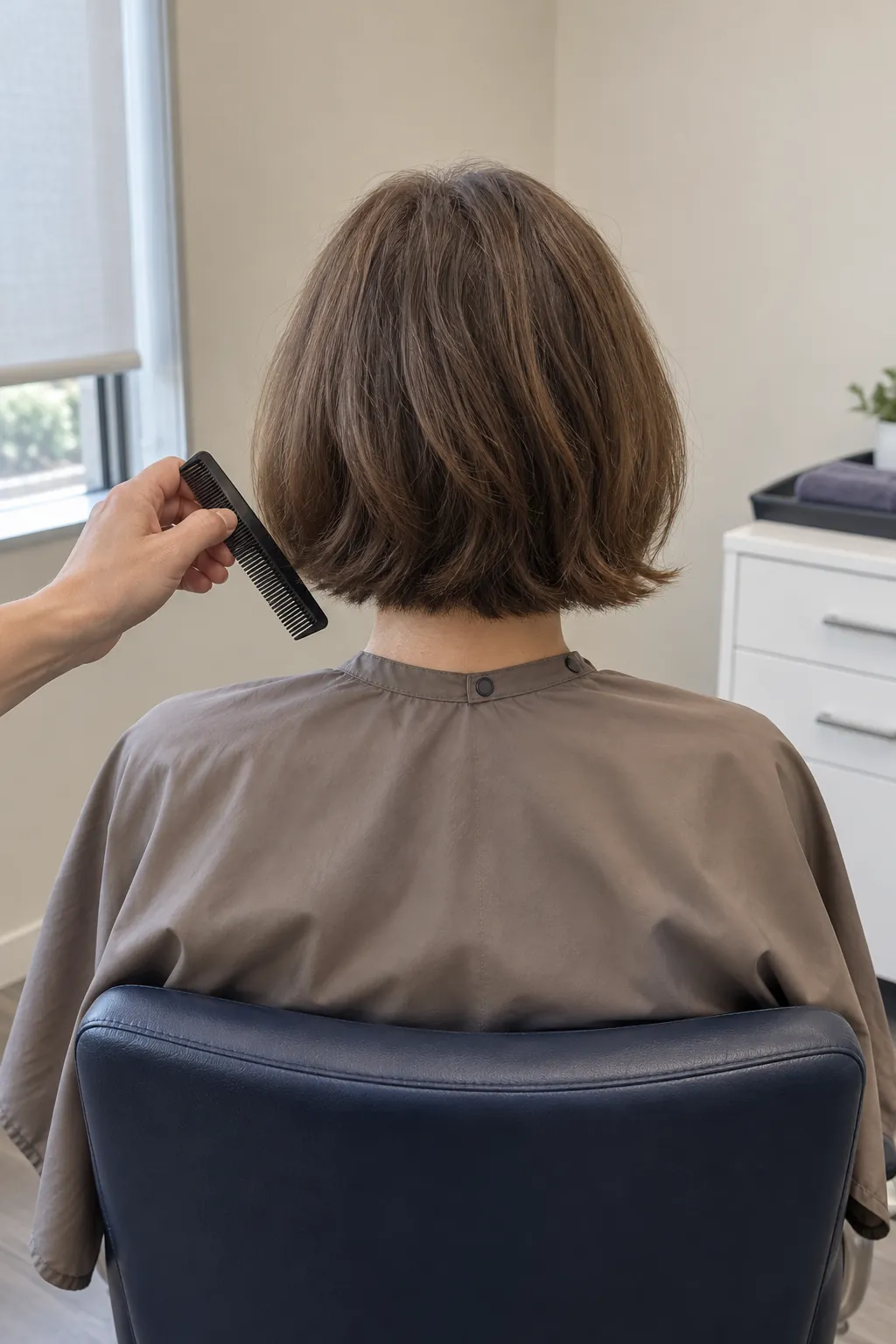
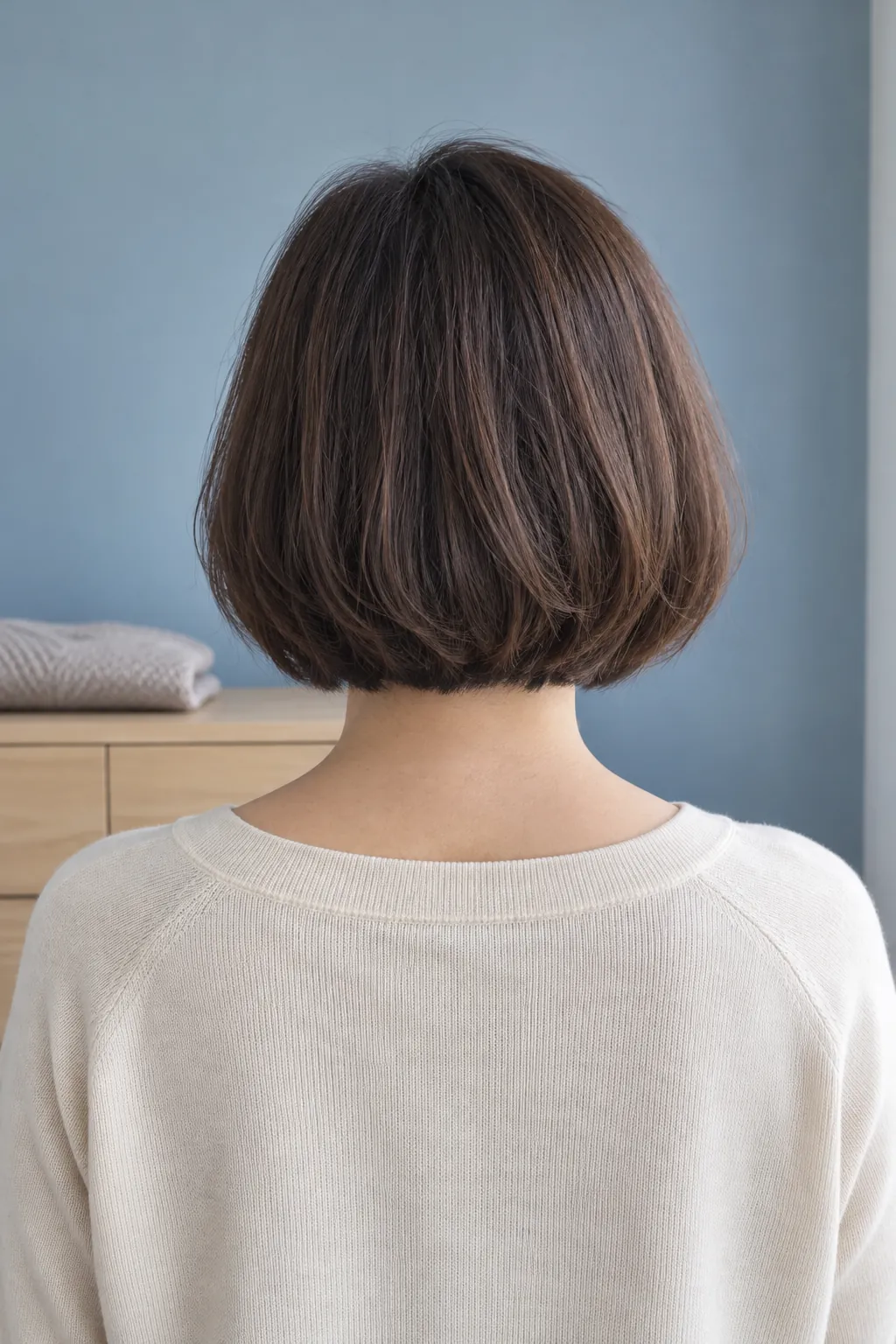
An outward bend is not always a styling mistake. The ends may be meeting your collar, the hidden lower layer may have dried in a different direction, or a cowlick may be steering the roots. Check which of those is happening before adding more heat.
Find out when the flip appears
The back can look tidy in the mirror and flick outward as soon as you put on a coat. That timing matters. If the ends change only after they touch your collar or shoulders, the contact may be the main problem. If one patch points outward while the rest hangs normally, look at the growth direction and how that patch dries.
Check the nape before styling, after drying, and after getting dressed. A second mirror or a quick photograph can show the spot more clearly than reaching behind your head. Note whether the flip starts at the roots or only at the ends. This gives you a specific problem to show your stylist instead of asking for a generic fix.
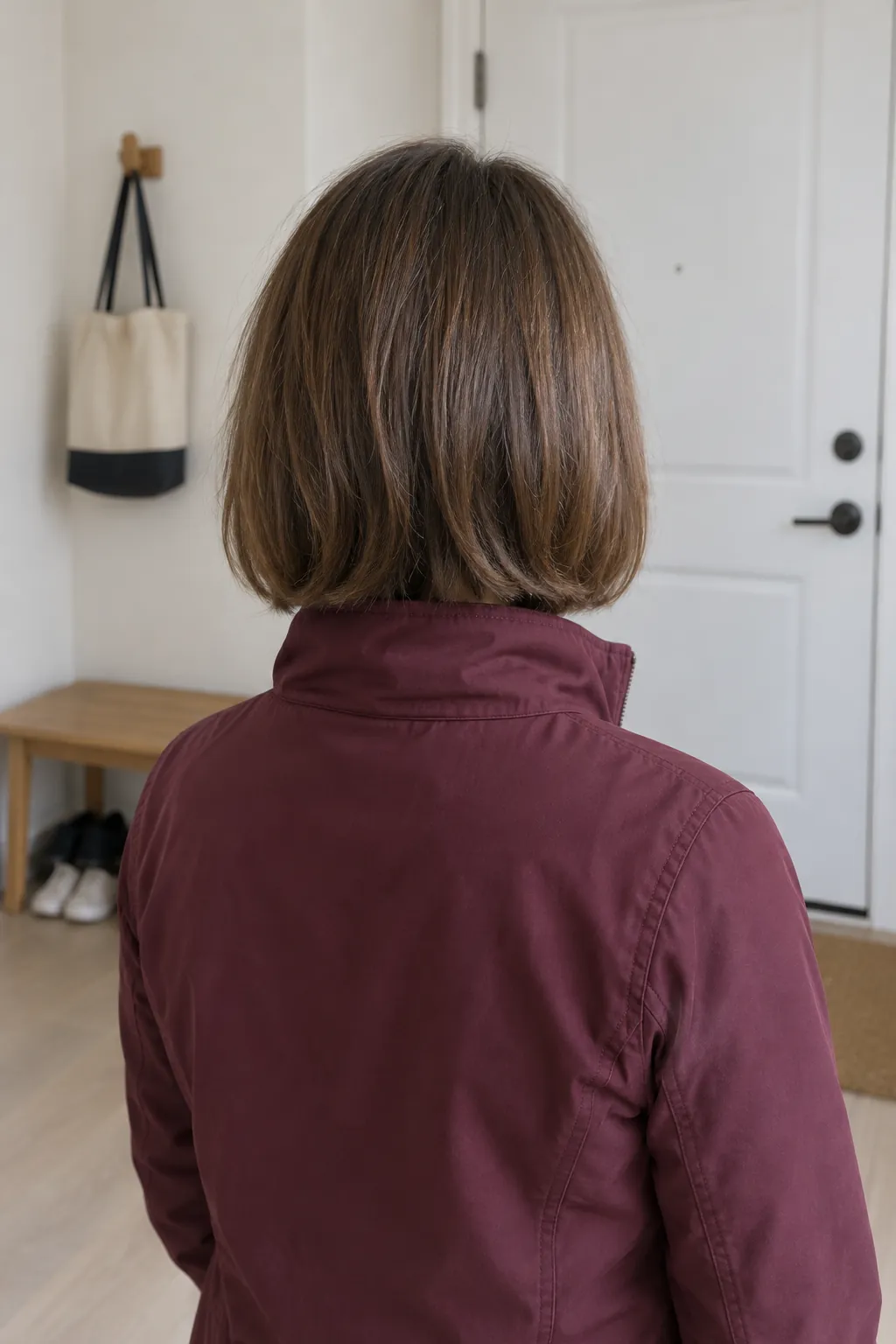
Reset the nape before it dries into a bend
For a bend left by sleeping, lightly dampen the affected hair rather than coating it in more finishing product. Detangle gently and apply your heat protectant as directed if you will use a dryer. Clip the upper layers up so you can reach the lower section. Keep electrical tools and their cords away from the basin and any water.
Direct the damp roots gently from one side to the other with a brush as you dry them, then guide them toward their intended fall. This can reduce a temporary bend, but it cannot permanently change a cowlick. Use comfortable airflow and avoid concentrating heat against the neck. Stop if your skin feels hot or the brush pulls.
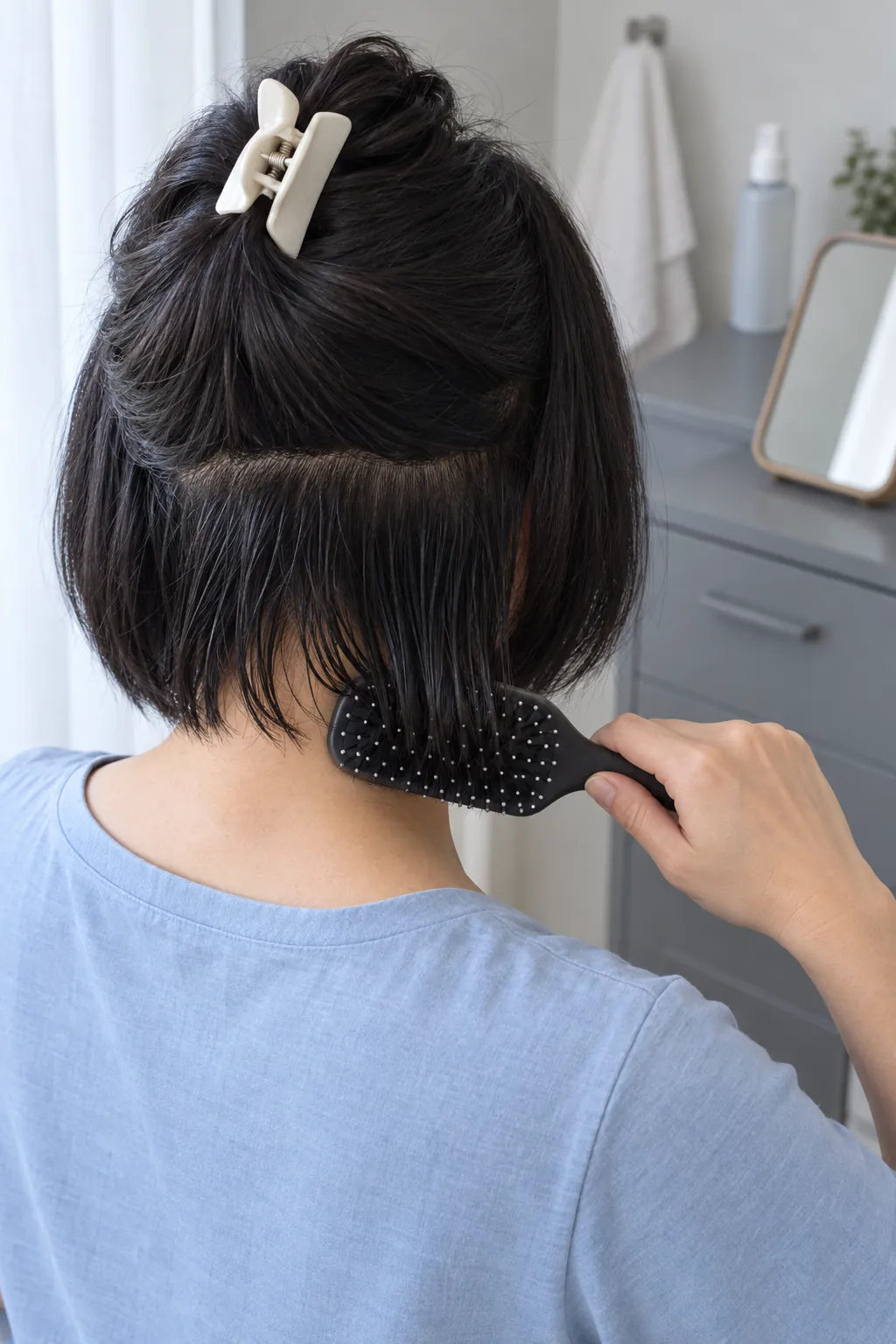
Dry a small lower layer with controlled airflow
The hidden lower layer can push the rest of the bob outward when it dries in a different direction. Work on that layer first while the upper hair is clipped away. Keep the section thin enough that your brush can control it. Aim the dryer along the hair from roots toward ends, keeping the nozzle moving and clear of the hair and skin.
Choose a brush you can turn comfortably within the available length. A small round brush may help shape shorter ends, while a larger barrel can make a broader curve on longer sections. Do not wind short hair repeatedly around the barrel. If your arm position feels awkward, stop, rearrange the mirror, and work on a smaller area.
Dry the lower section fully before letting the next layer down. Leaving the underside damp can allow it to settle differently later. Keep the dryer at the distance recommended by its manufacturer and reduce heat when practical.
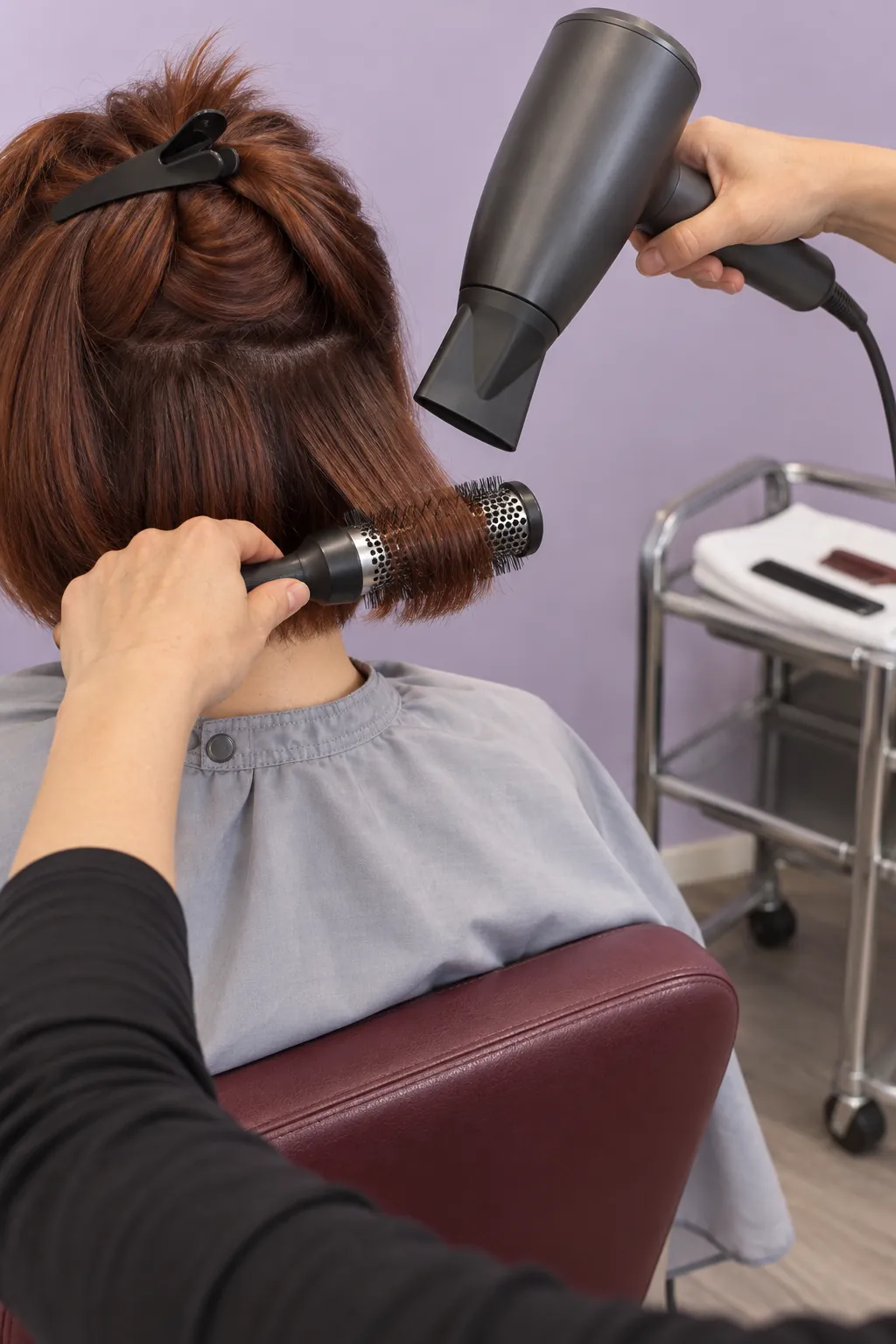
Make a shallow inward curve and let it cool
For round brush bob styling, support the ends over the brush and make a small inward turn. You are guiding the edge under, not building a tight curl. Follow with the dryer aimed down the section rather than blowing upward from beneath it. Hold the shape briefly as it cools, then release without yanking the brush through.
If you prefer a flat iron, use it only after the hair and any applied product are completely dry. A small inward wrist movement near the ends can create a gentle curve. Keep the tool moving and away from the nape, and avoid repeated passes to force a reluctant piece into place. For very short layers, a brush and dryer may be easier to control than hot plates.
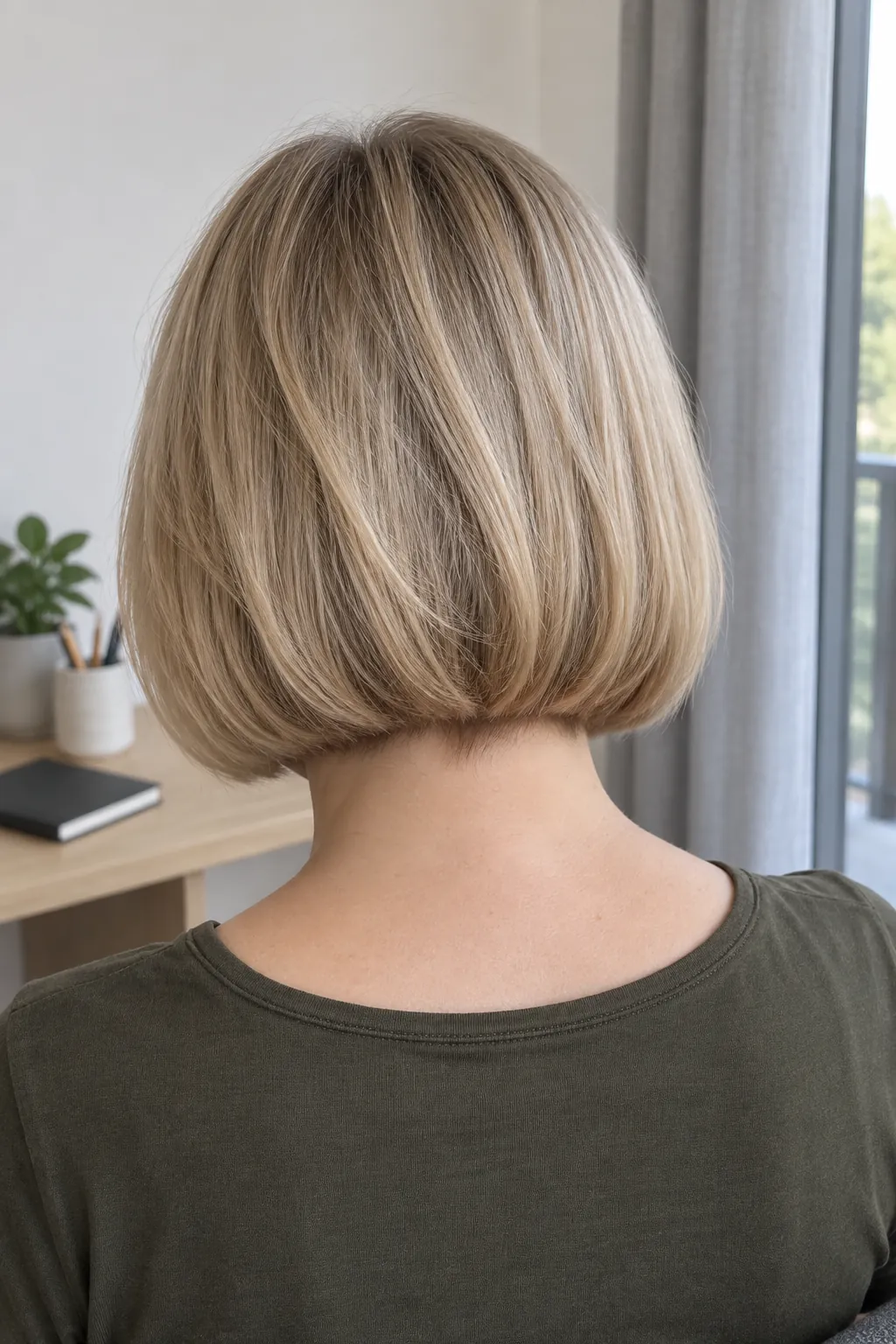
Keep collars and heavy products from undoing the shape
After styling, check whether the ends sit directly on a raised collar, scarf, or shoulder seam. Turn the collar down while the hair cools, and let the back fall freely when possible. A bob at shoulder height may still flip during normal movement. A slightly different length can be more useful than trying to seal every strand in place.
Use finishing products sparingly and choose them for your texture. A heavy oil or cream can flatten fine roots without preventing the ends from catching on clothing. A light hold product may help preserve a shape, but it will not remove a growth pattern or change the haircut. Follow the product label, and keep sprays away from active hot tools.
For a morning reset, test a gentle brush and a little water on the problem area before repeating the entire styling routine. If the shape returns after each wash, keep a record of where it begins. That pattern is useful information for your next appointment.
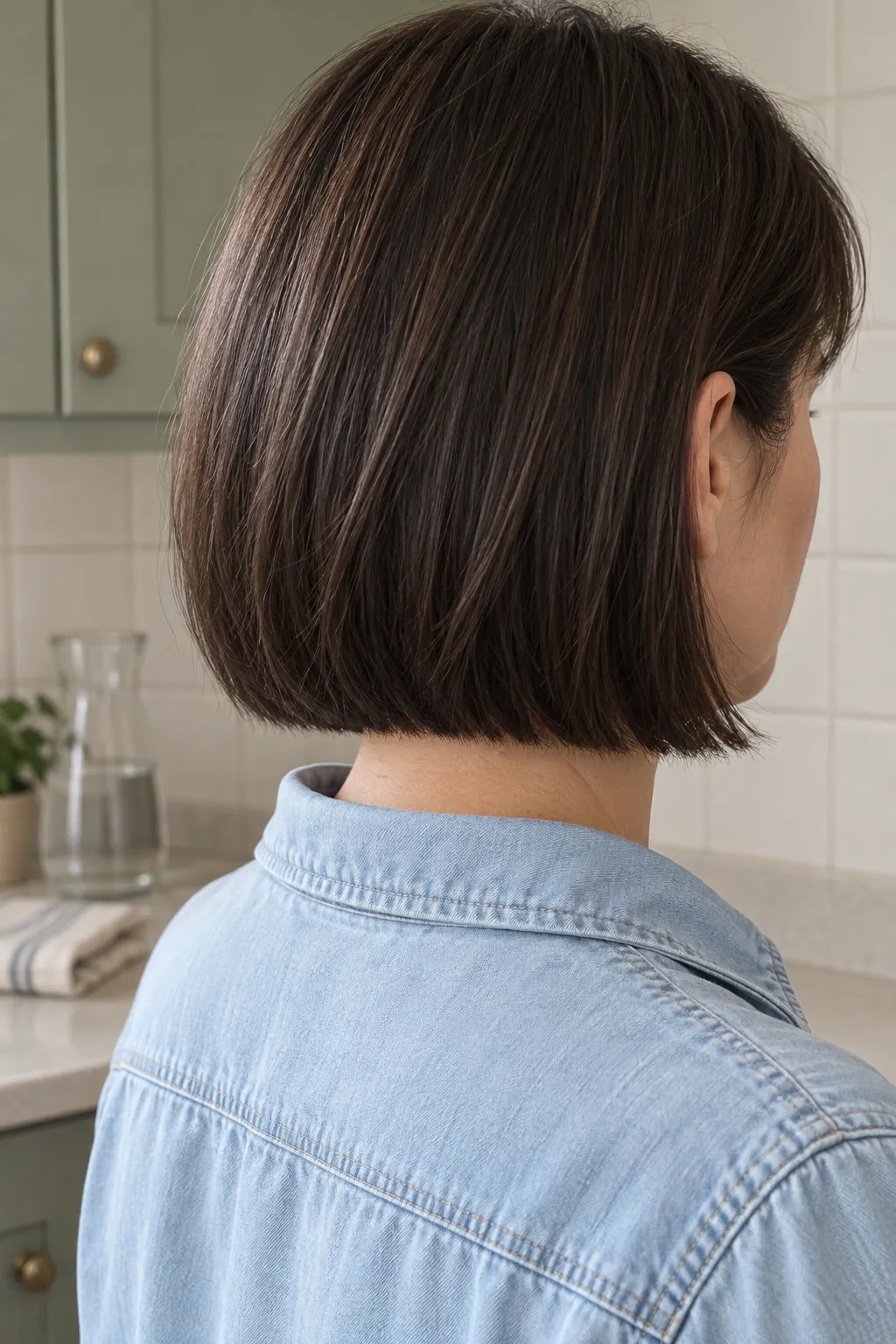
Ask for a cut that works with the growth pattern
Persistent flipped ends on a bob can involve the length, weight distribution, natural texture, or a nape cowlick. Ask your stylist to look at the hair dry and in its usual part before deciding what to change. Bring a photograph of the unwanted flip and explain how much daily styling you want to do.
Do not request thinning or an undercut as a universal solution. Removing weight may help one haircut and make another less predictable, particularly when the hair is fine or the growth direction is strong. Ask whether a modest length adjustment, a different perimeter, or targeted shaping would suit your hair. A good plan should explain the tradeoff between a crisp outline and a shape that settles naturally.
The practical target is a back section that is comfortable to style and easy to recognize when it needs a small reset. You do not need every end to stay motionless through a whole day. If the nape only cooperates after repeated high heat, the haircut and routine deserve another look.