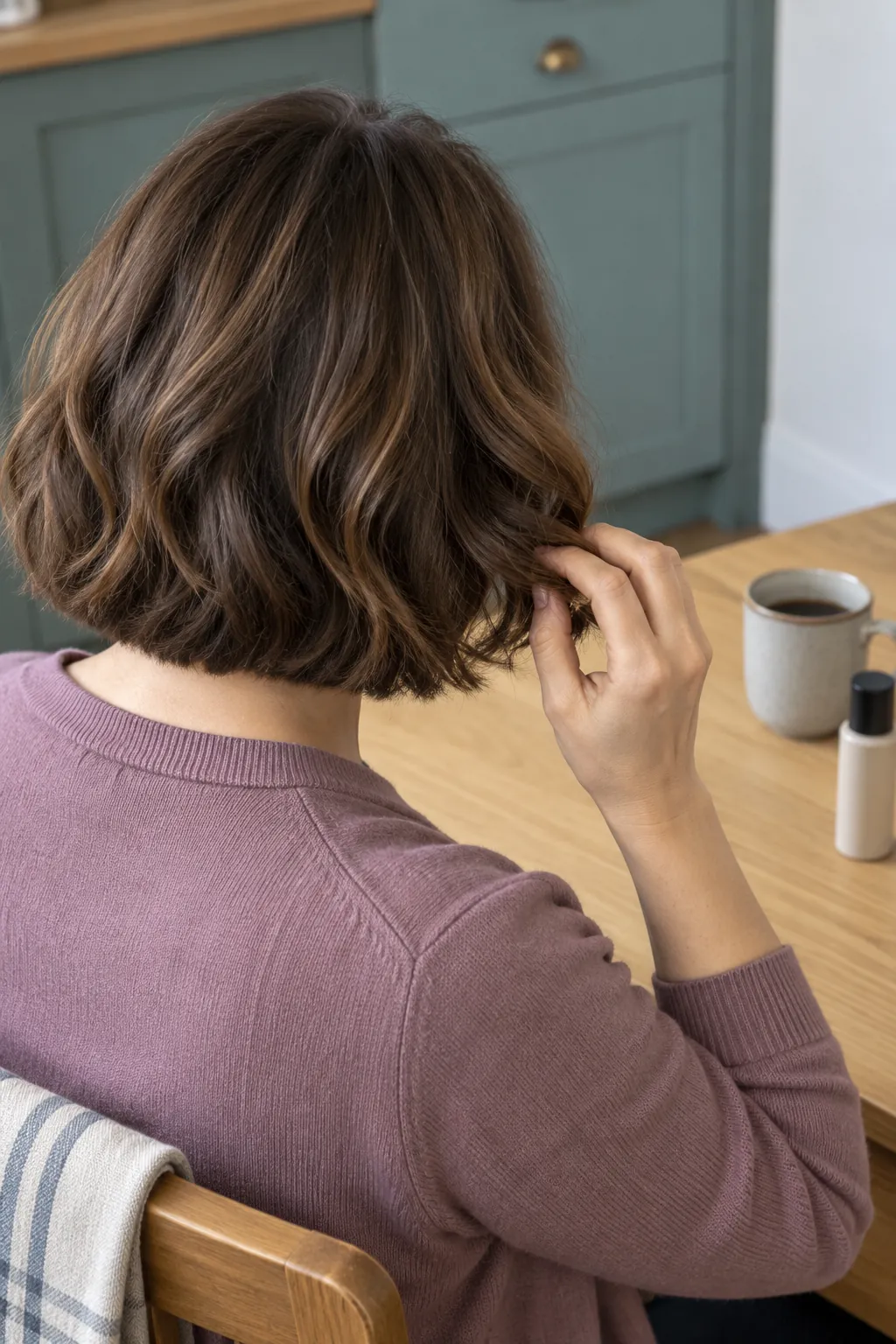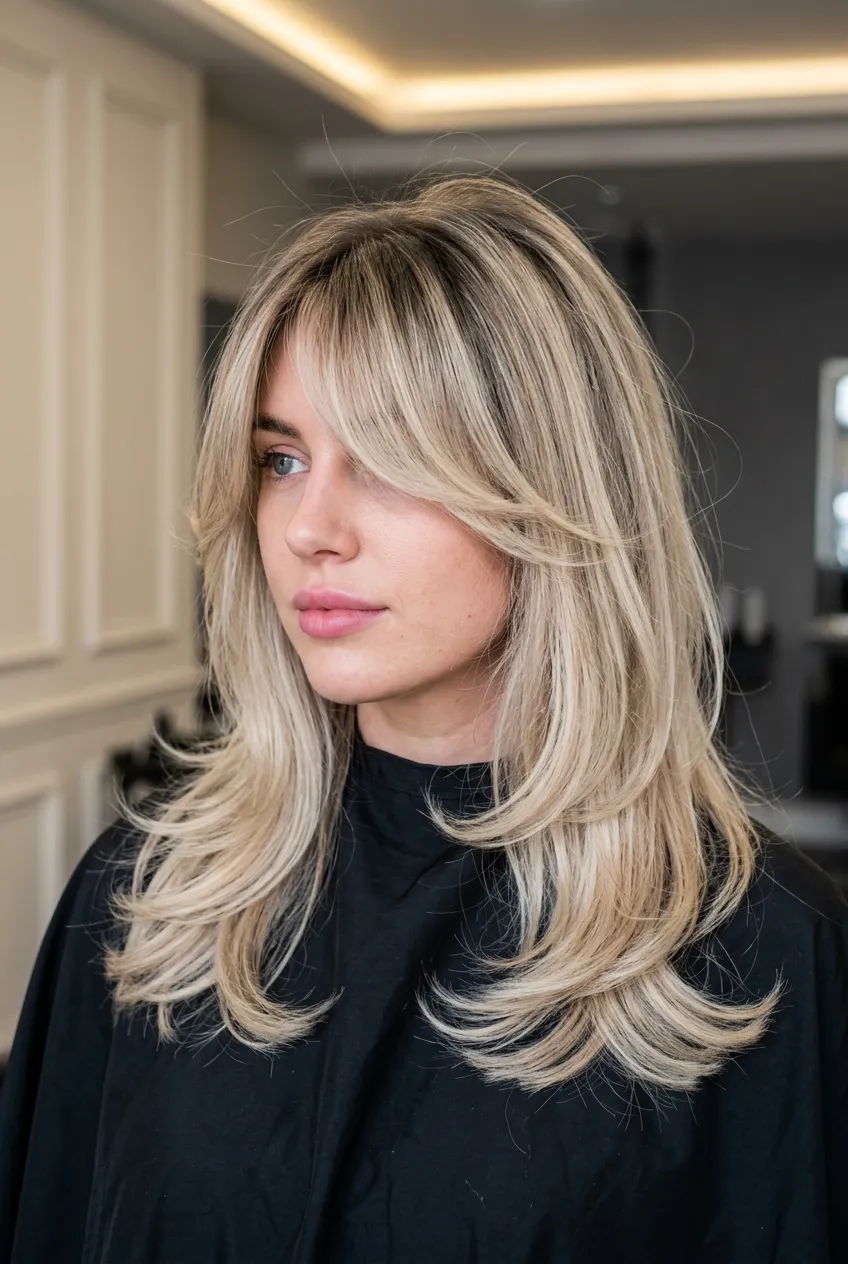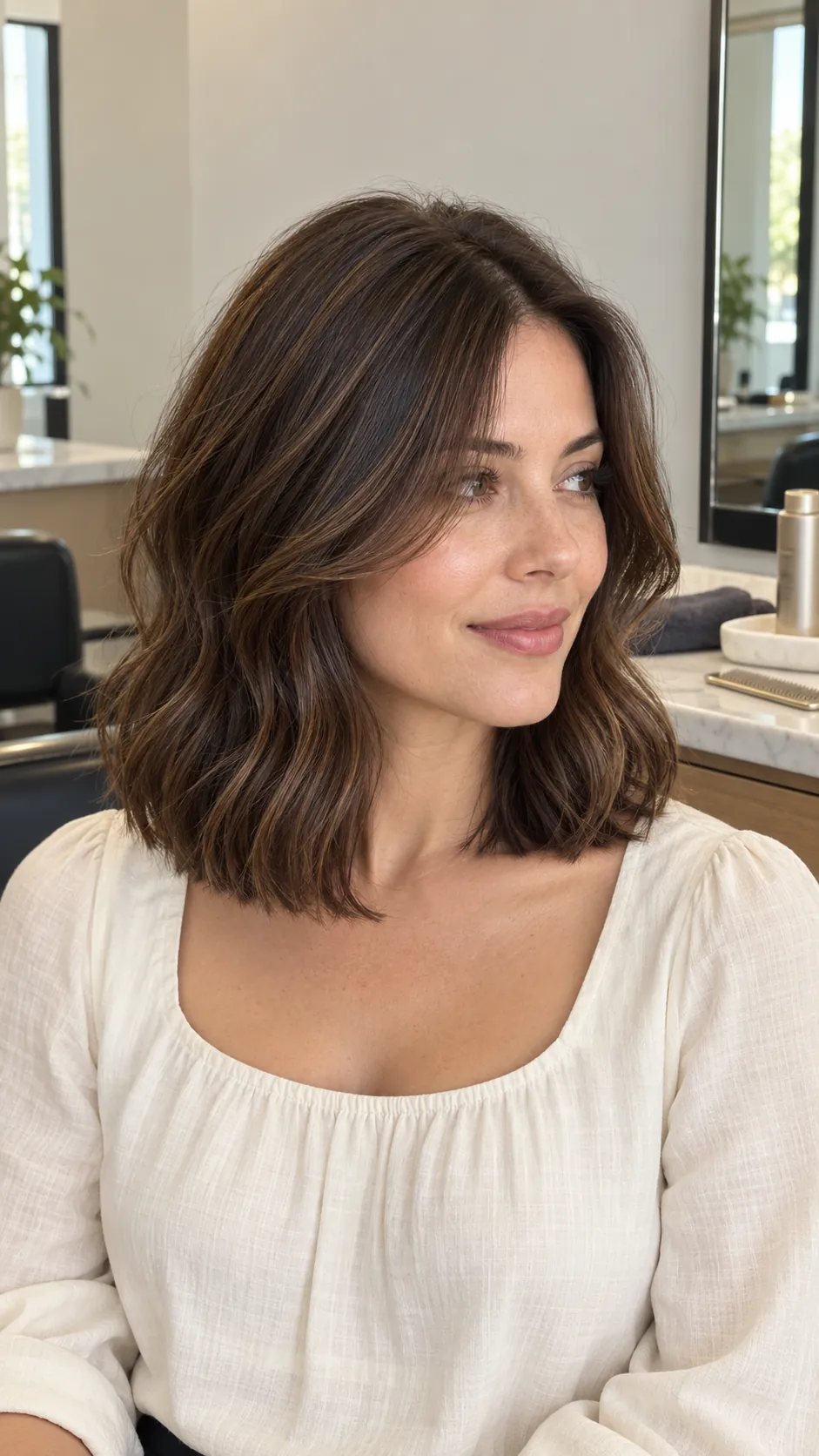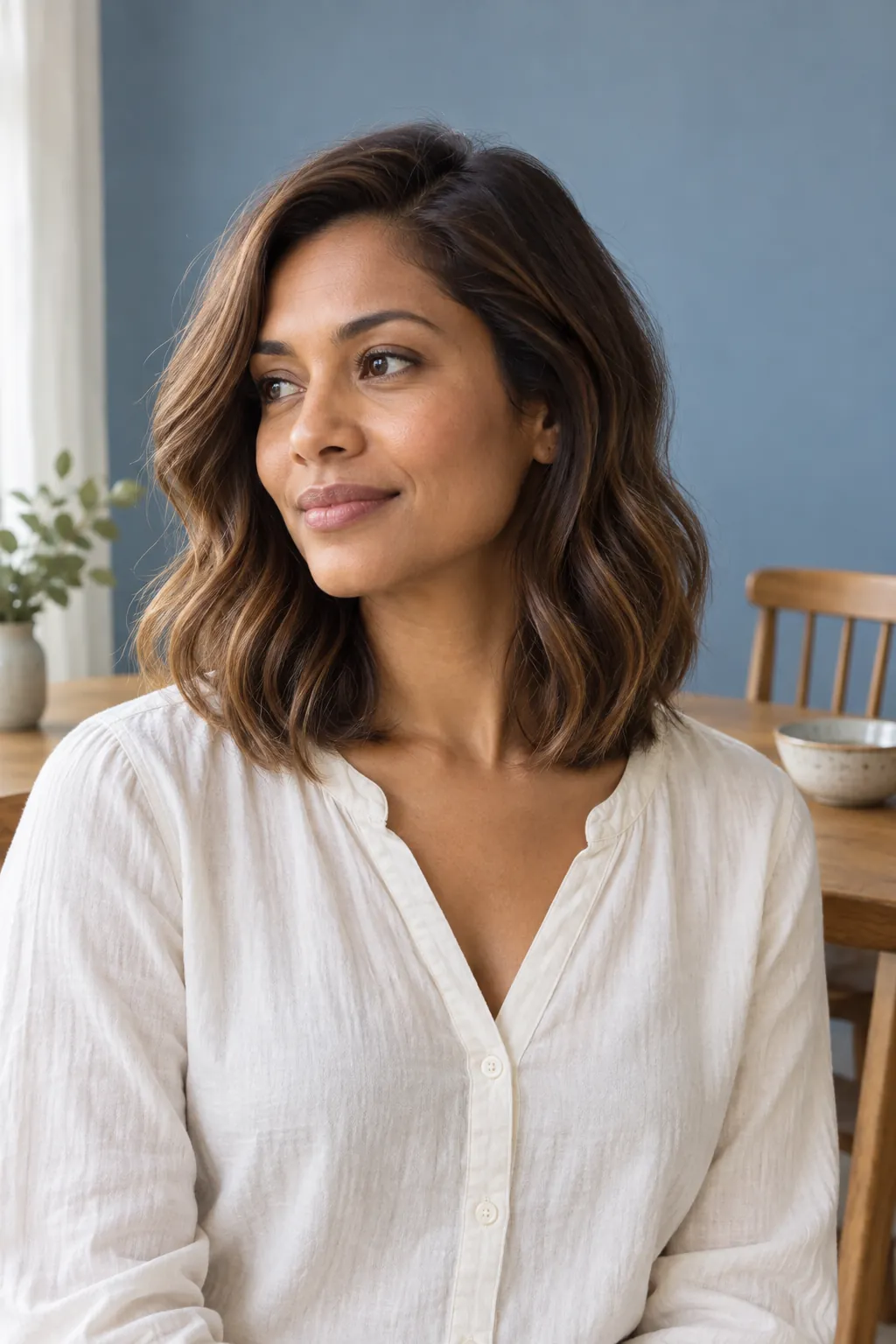

Short hair leaves little room to recover from a stalled pass or an oversized curl. Decide whether you want a smooth edge, a soft curve, or loose movement before you switch the iron on. Each finish uses a different wrist movement, but all three start with dry hair, small sections, and a tool that keeps moving.
Start with dry hair and a manageable tool
A crease near your cheek or a stiff bend at the ends often comes from the way the plates move, rather than a lack of styling product. Start with completely dry, detangled hair. Apply a heat protectant according to its label, and let any moisture from the product dry before the plates touch your hair. A flat iron is not a substitute for drying damp sections.
Choose a tool with adjustable temperature and plates narrow enough to turn through your shortest layers without touching your skin. Rounded outer edges can make bends easier, although you can still straighten with a more squared tool. Inspect the plates for buildup and follow the manufacturer’s cleaning instructions while the tool is unplugged and cool. Keep the cord away from water and place the iron on a suitable heat resistant surface.
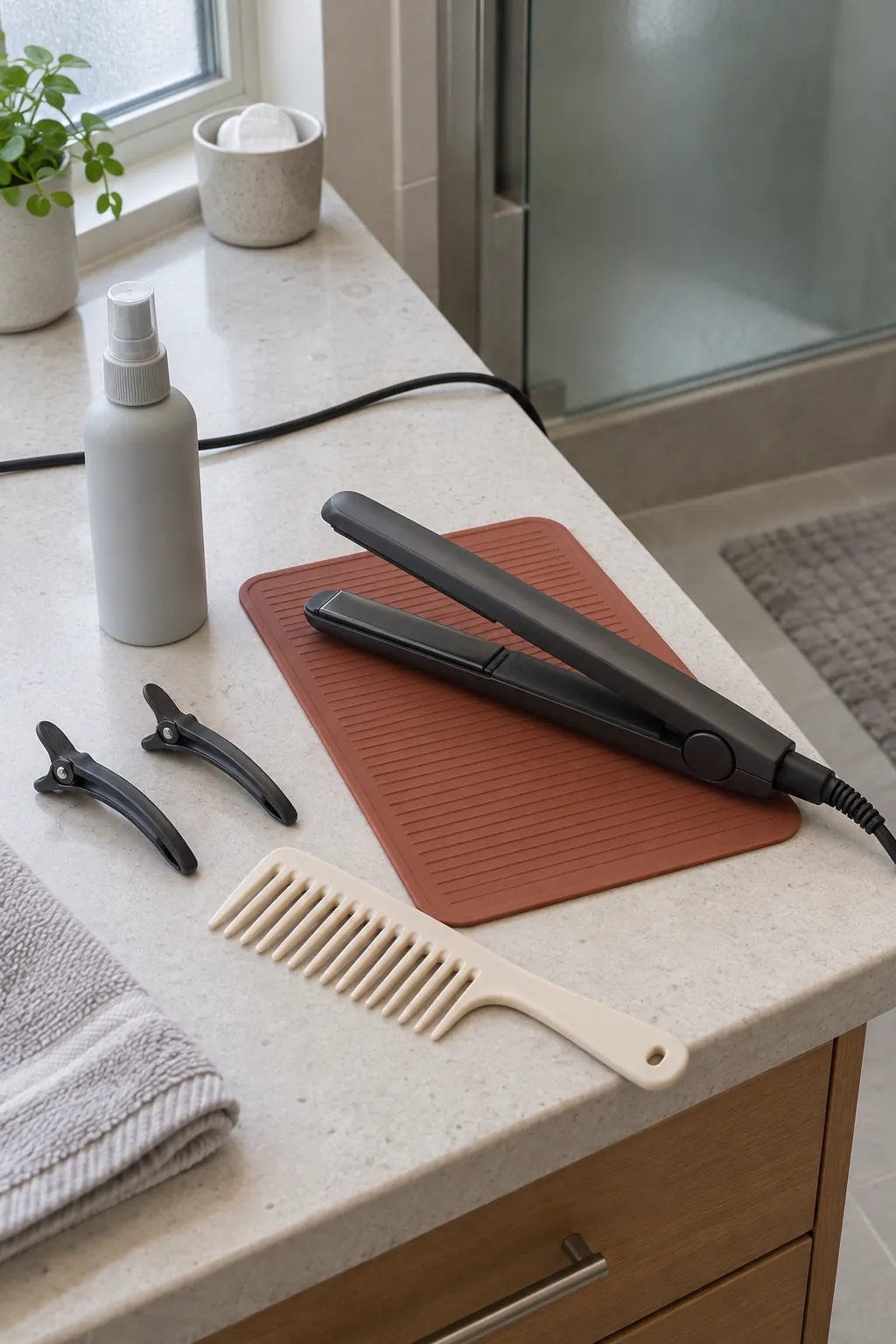
Section the bob before you increase the heat
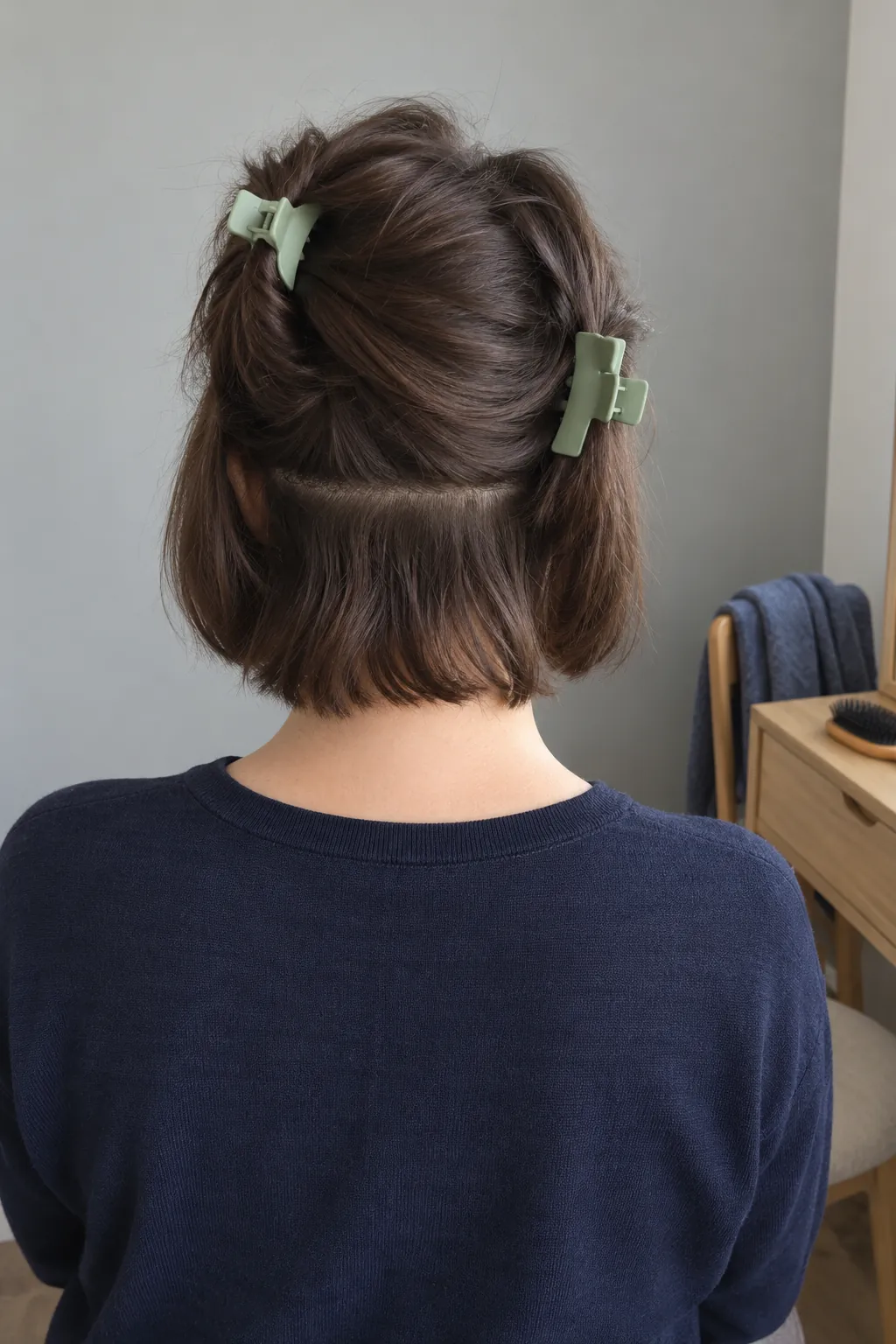
Clip the upper hair out of the way and begin with the lower layers. Take a thin section that fits inside the plates without spilling over their edges. The plates need to reach the whole section evenly; a thick bundle encourages you to keep repeating the same pass.
Start at the lowest setting your tool offers that can style your hair, following its instructions and any advice from your stylist. Fine, lightened, fragile, or already damaged hair needs particular caution. There is no single temperature that is safe for every bob. Test one discreet section with a continuous pass, let it cool, and assess the result before adjusting anything.
Practice the hand movement with the iron unplugged and cool if the short layers make you nervous. Keep a comfortable gap from the scalp, ears, and neck. If hair snags, smells scorched, or produces unexpected steam, release the plates and stop rather than increasing the temperature.
Glide straight for a sleek finish
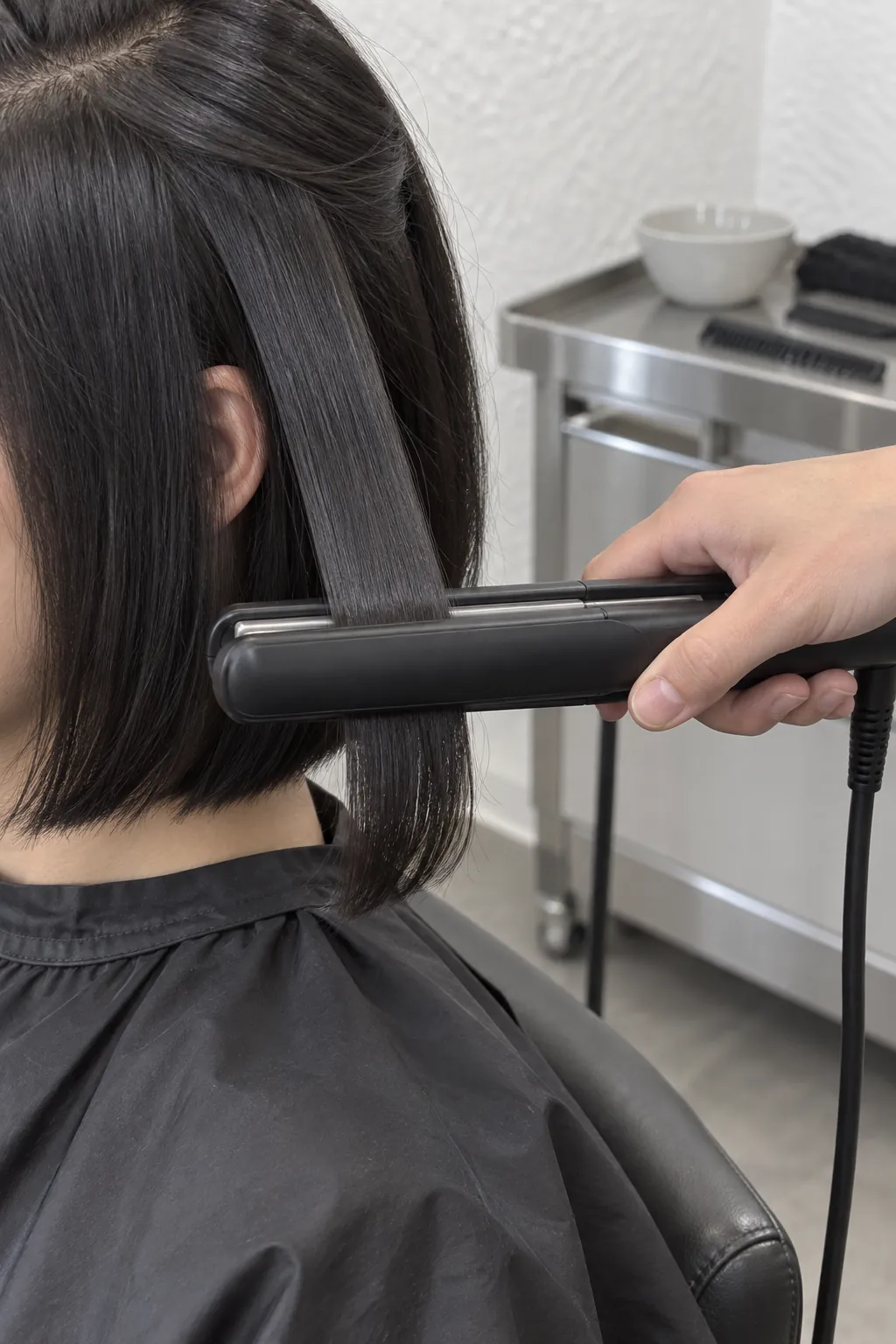
For sleek bob styling, hold a small section gently taut and glide the iron down its length in one continuous movement. Keep the plates aligned with the direction you want the hair to fall. Squeezing harder does not make the finish smoother; it can make the tool drag.
At the ends, follow the haircut’s natural line rather than flicking your wrist away from your face. A slight inward movement is enough if you want the edge to sit softly. Release the hair before you pause, then leave that section alone while it cools. Work upward through the clipped layers and check the back with a second mirror instead of repeatedly ironing areas you cannot see.
Turn the ends gently for a curved bob
A curled under bob needs a small change in direction near the ends, not a full rotation from the root. Glide through the upper length as you would for a straight finish. As you approach the final part of the section, turn your wrist slightly inward while continuing to move. Release smoothly so the ends form a rounded edge rather than a tight hook.
The shorter the section, the smaller the turn usually needs to be. Try one side section first and check its shape after it cools. If the edge looks too curled, use a smaller wrist movement on the next section instead of immediately applying more heat to the first one. Hair that lands on your shoulders may still flip as you move, so do not chase an immovable shape with extra passes.

Make loose waves with rotation and movement
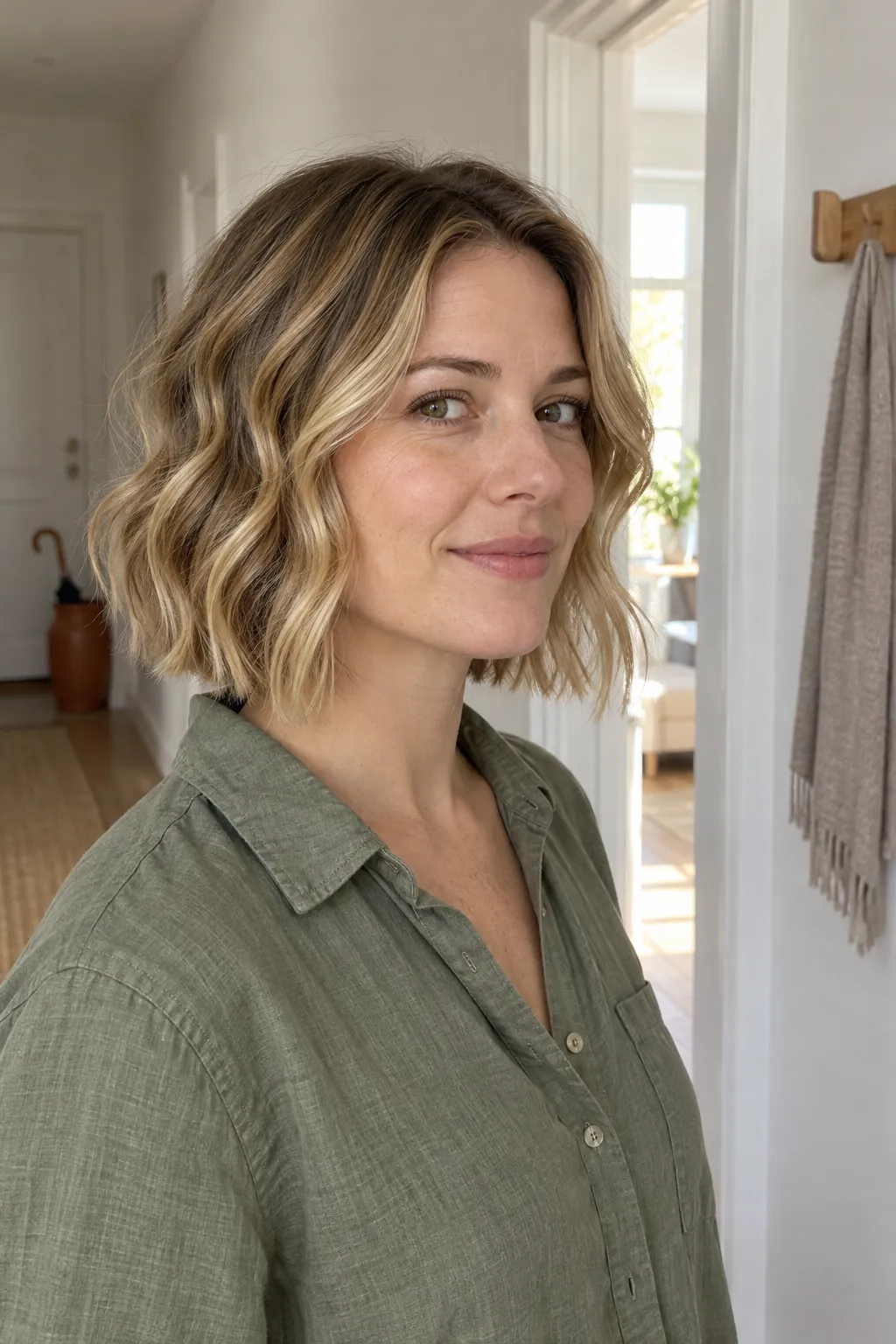
For straightener waves in short hair, take a narrow section and begin below the root so the top stays relaxed. Close the plates gently, rotate the tool partway away from your face, and slide toward the ends without stopping. A larger turn makes a stronger curl, while a smaller turn produces a softer bend. Leave a little of the tip straighter if you want a less rounded finish.
Work on one practice section before committing to the whole head. Around the face, turn away from the face if that gives the shape you prefer; farther back, alternating directions can keep the waves from gathering into one uniform curl. Keep the amount of hair small enough that the tool moves freely. Let each wave cool before you separate it with your fingers.
Very short nape sections may not have enough length for a comfortable rotation. Leave those pieces smooth, or give the ends a slight curve instead of forcing a wave beside the neck. The goal is a coherent silhouette, not a matching curl on every strand.
Fix the cause of a crease and protect the finish
A sharp line often appears when the plates pause in one spot or the hand changes direction abruptly. If you notice one, allow the section to cool and review your grip and movement before trying again. Practice a lighter closure and an uninterrupted glide on a different small section. If a section needs repeated attempts, stop and use a gentler styling approach rather than reheating it until it complies.
Once the hair is cool, loosen waves with your fingers or brush a sleek finish lightly. Use only a small amount of finishing product at first, especially on fine hair that loses volume easily. Apply hairspray according to its label after the hot tool is finished, and avoid spraying flammable products near a hot iron.
For the next day, check which pieces actually need attention before plugging the tool in. A shifted part, a gentle brush, or a clip may restore the shape without another full styling session. Heat protectant does not remove all risk from frequent hot tool use. If your ends become brittle or your natural texture changes, reduce heat styling and ask your stylist about a cut and routine that work with your hair.