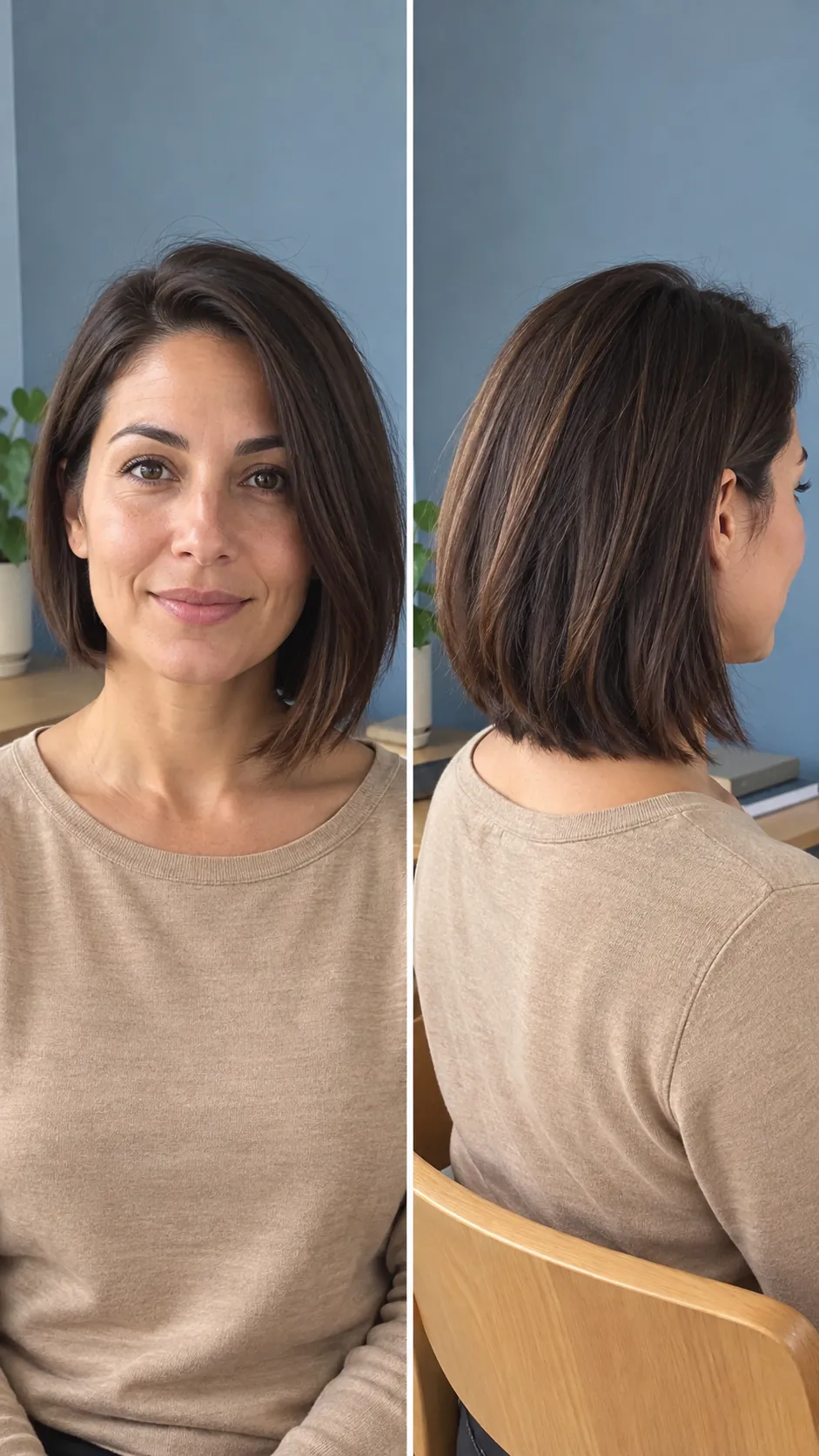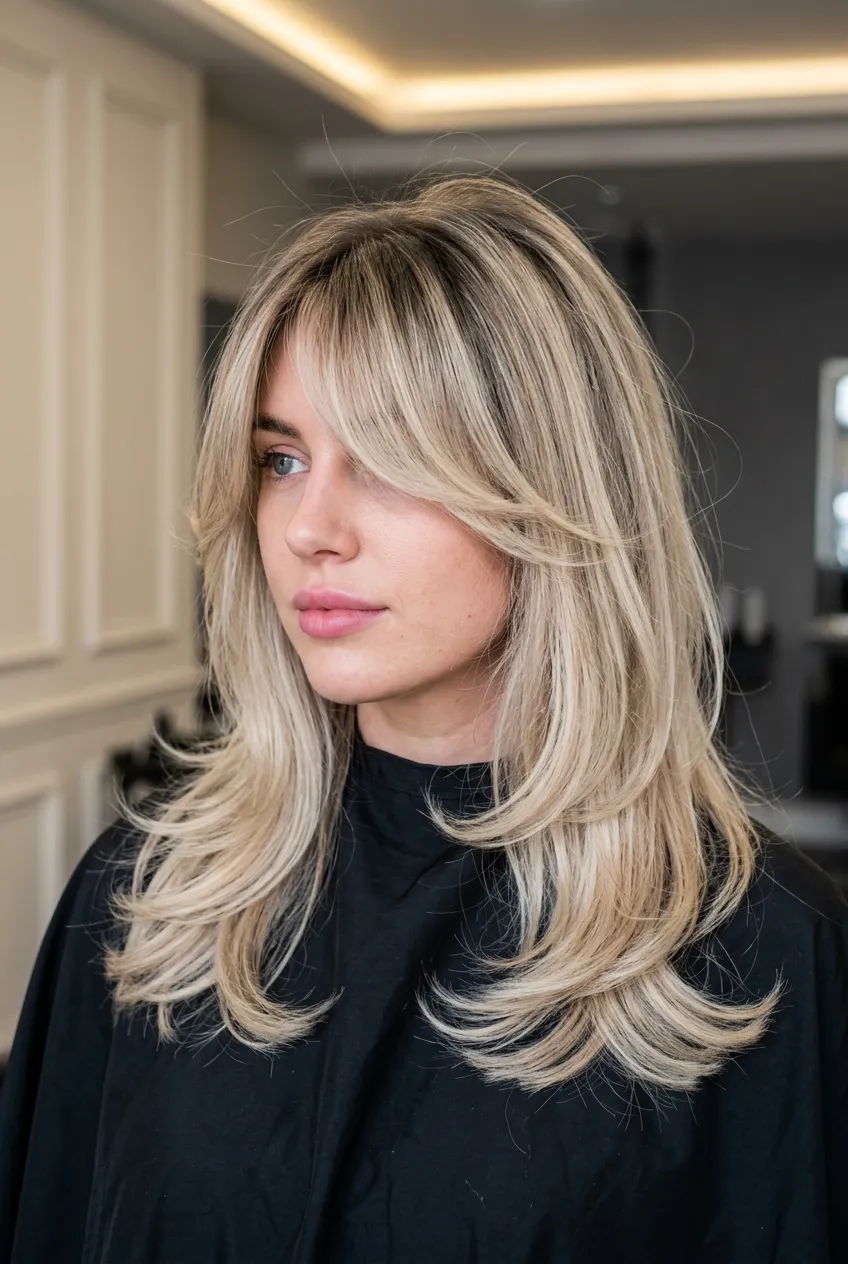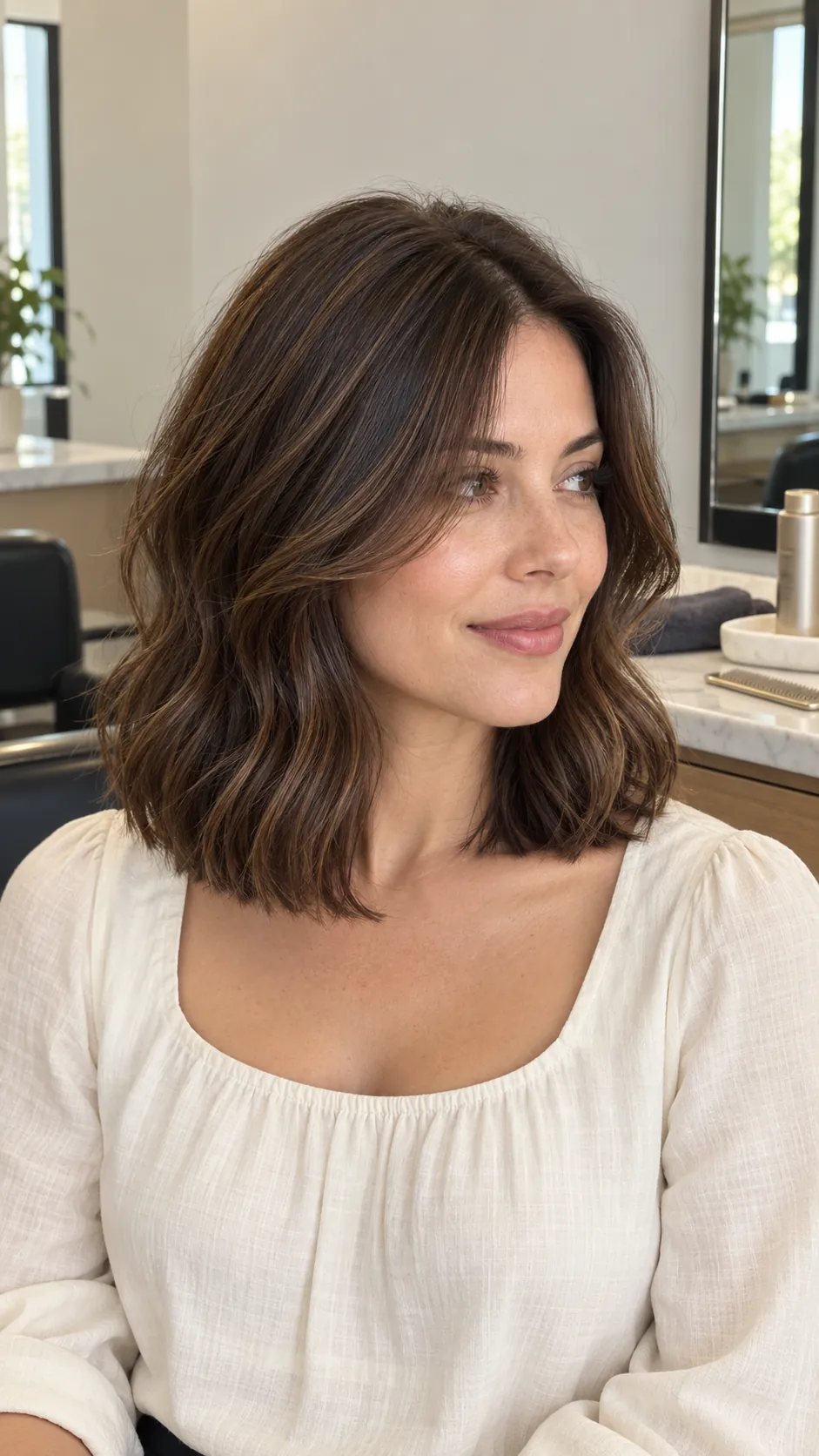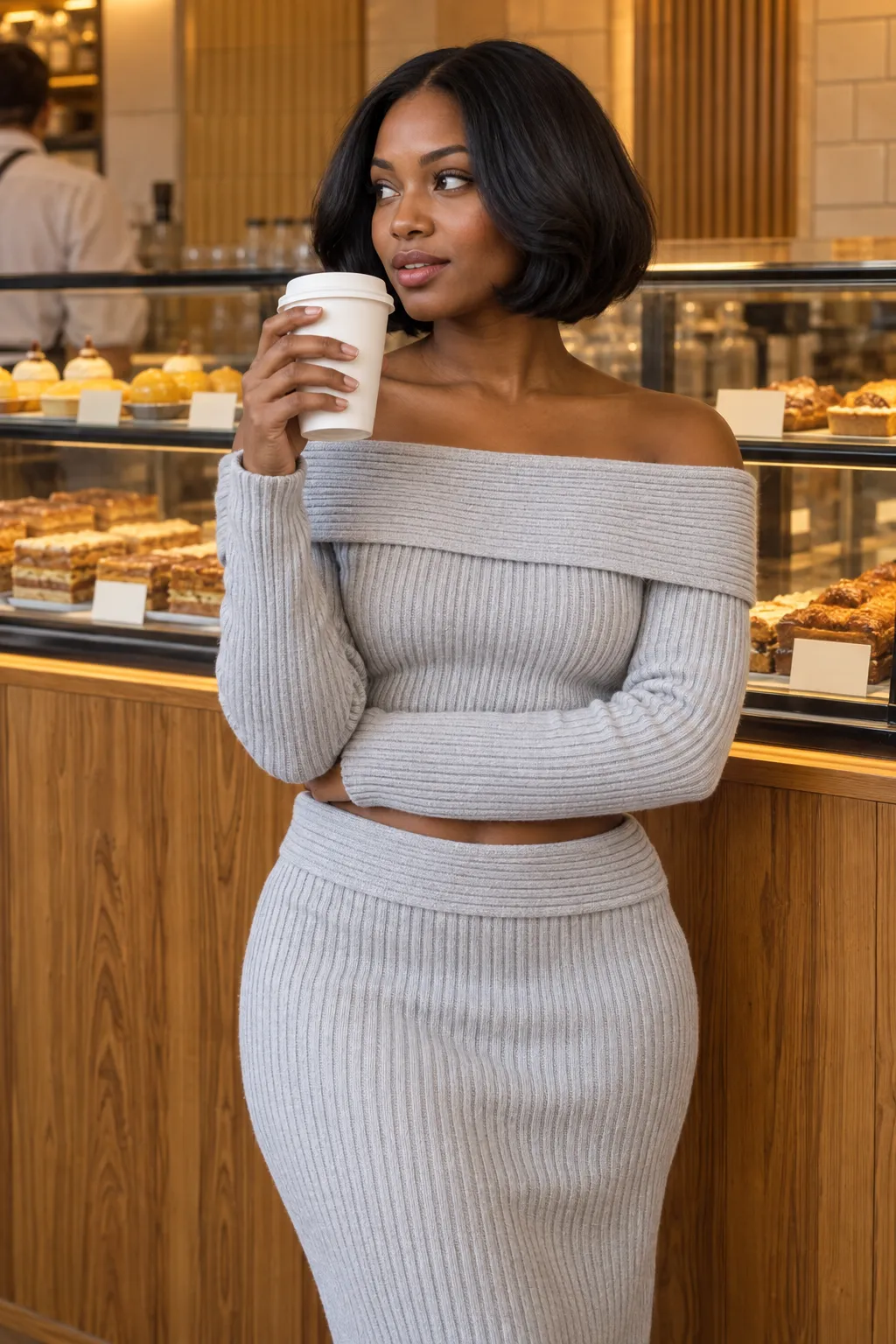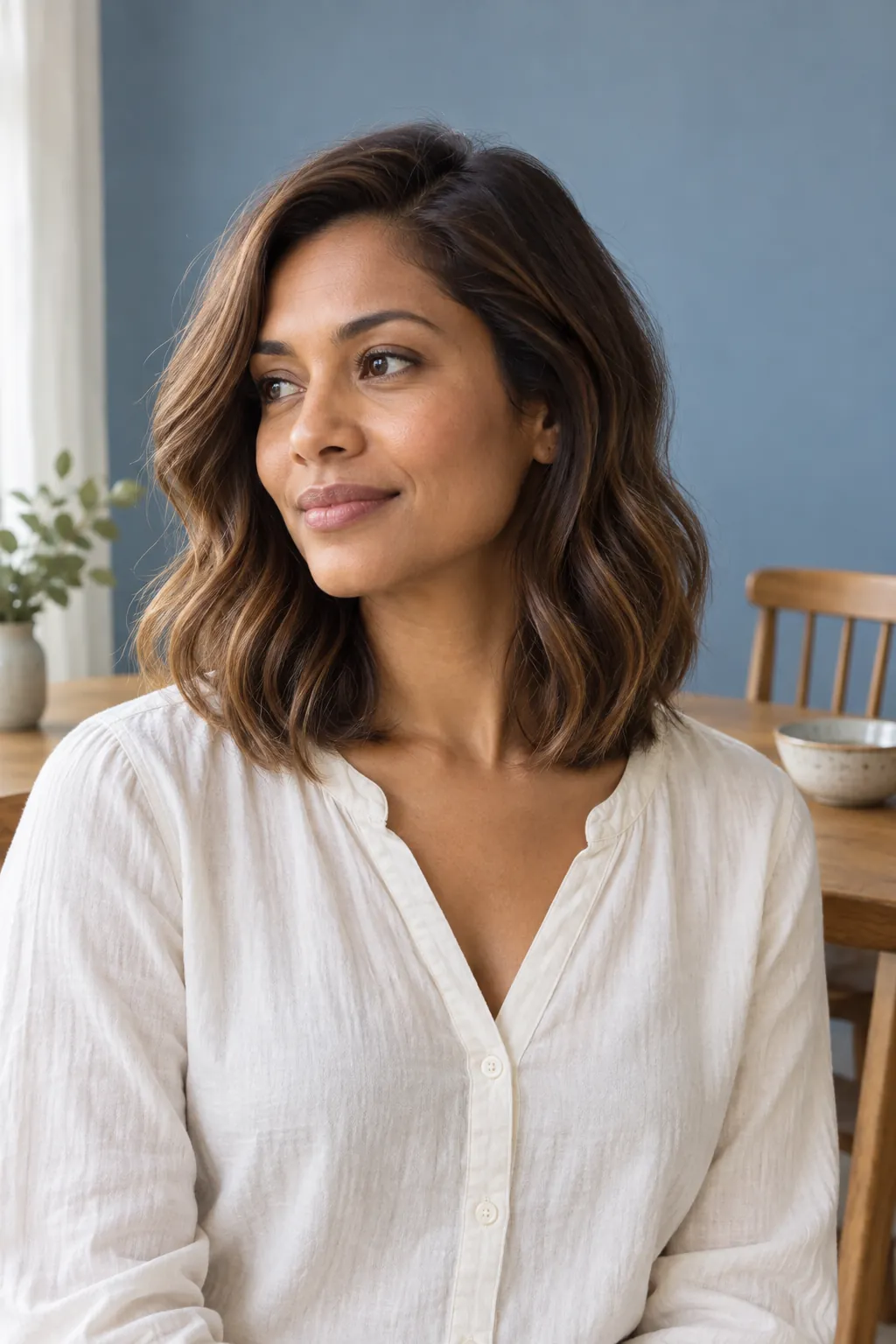
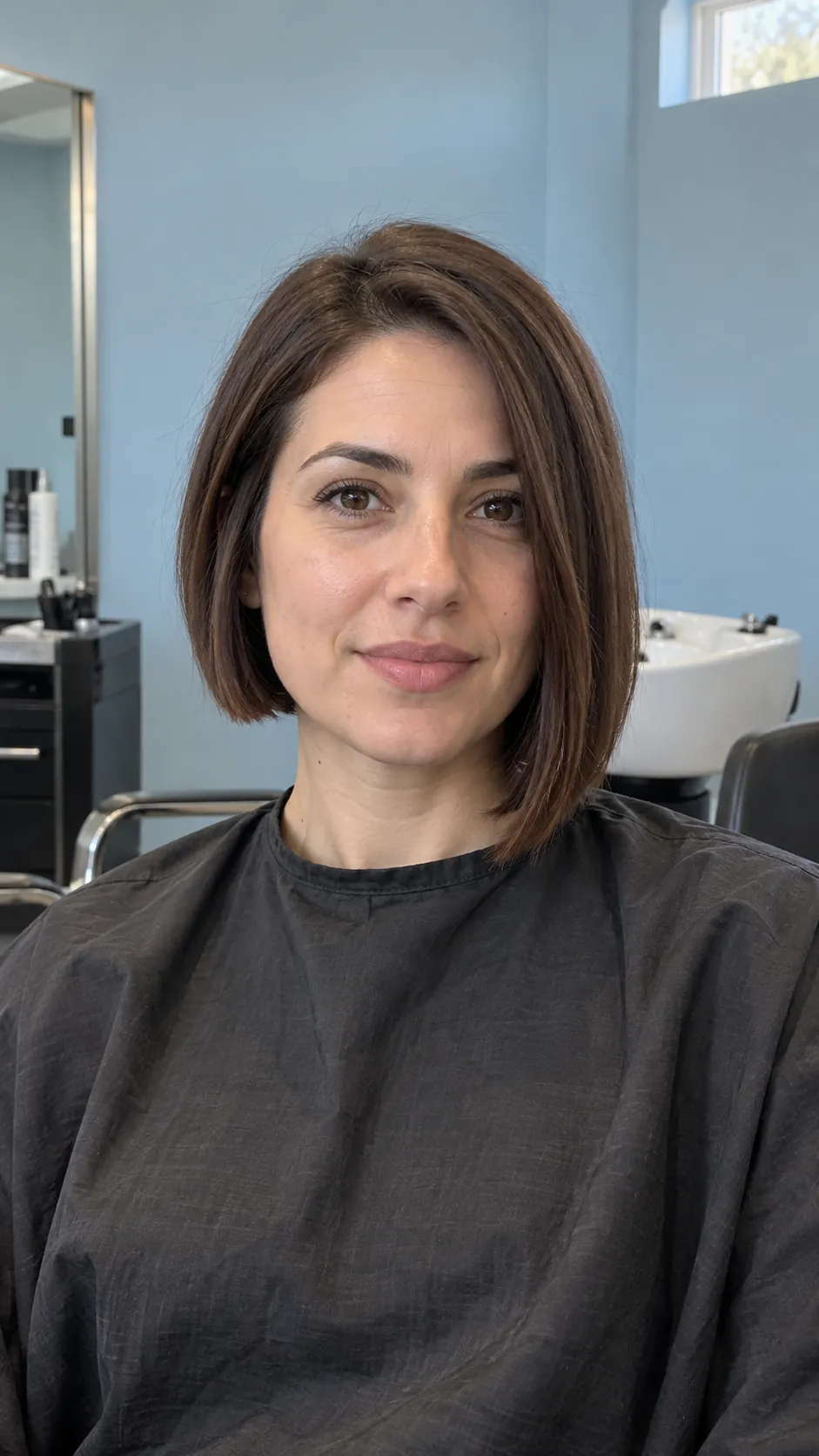
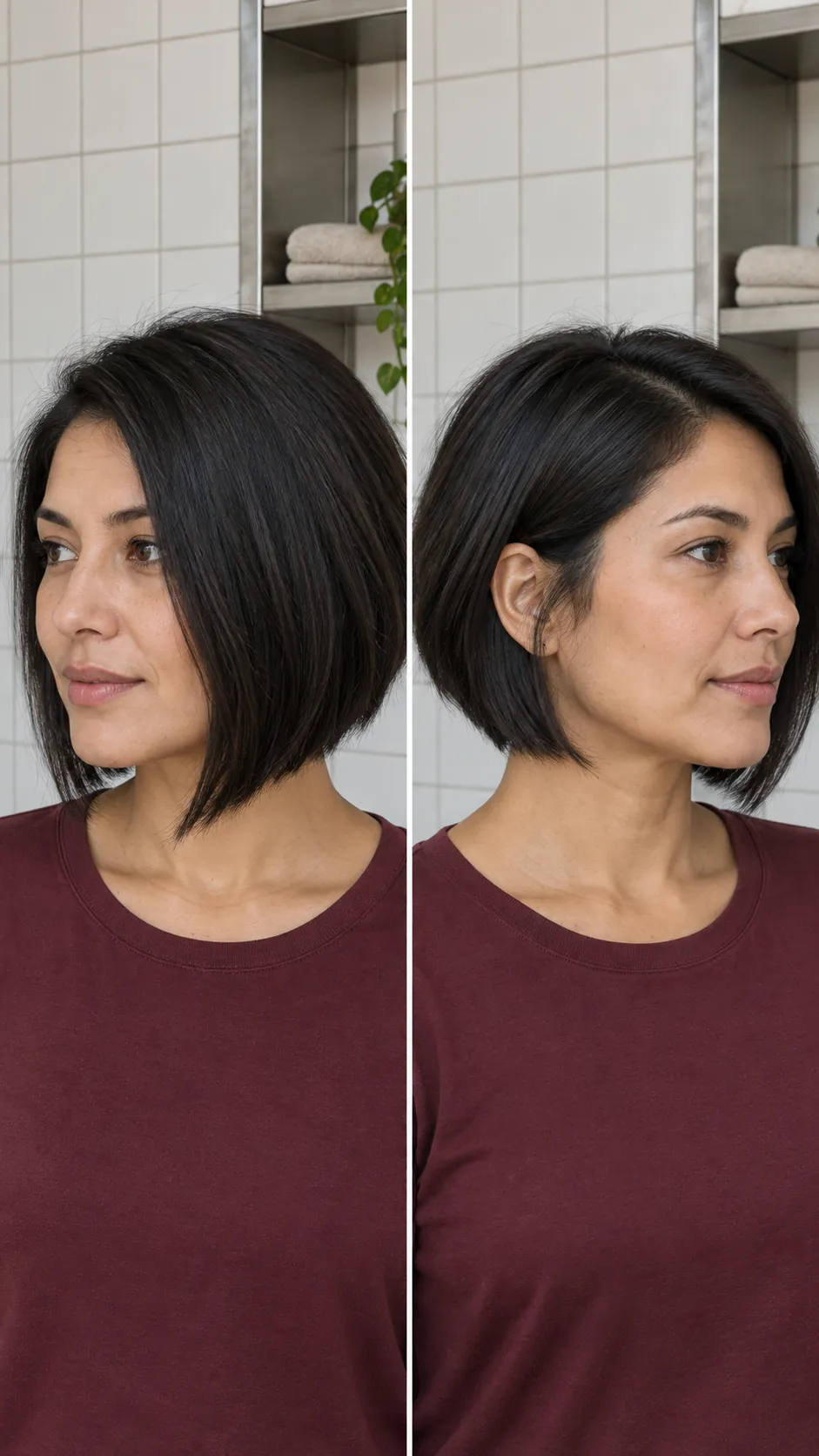
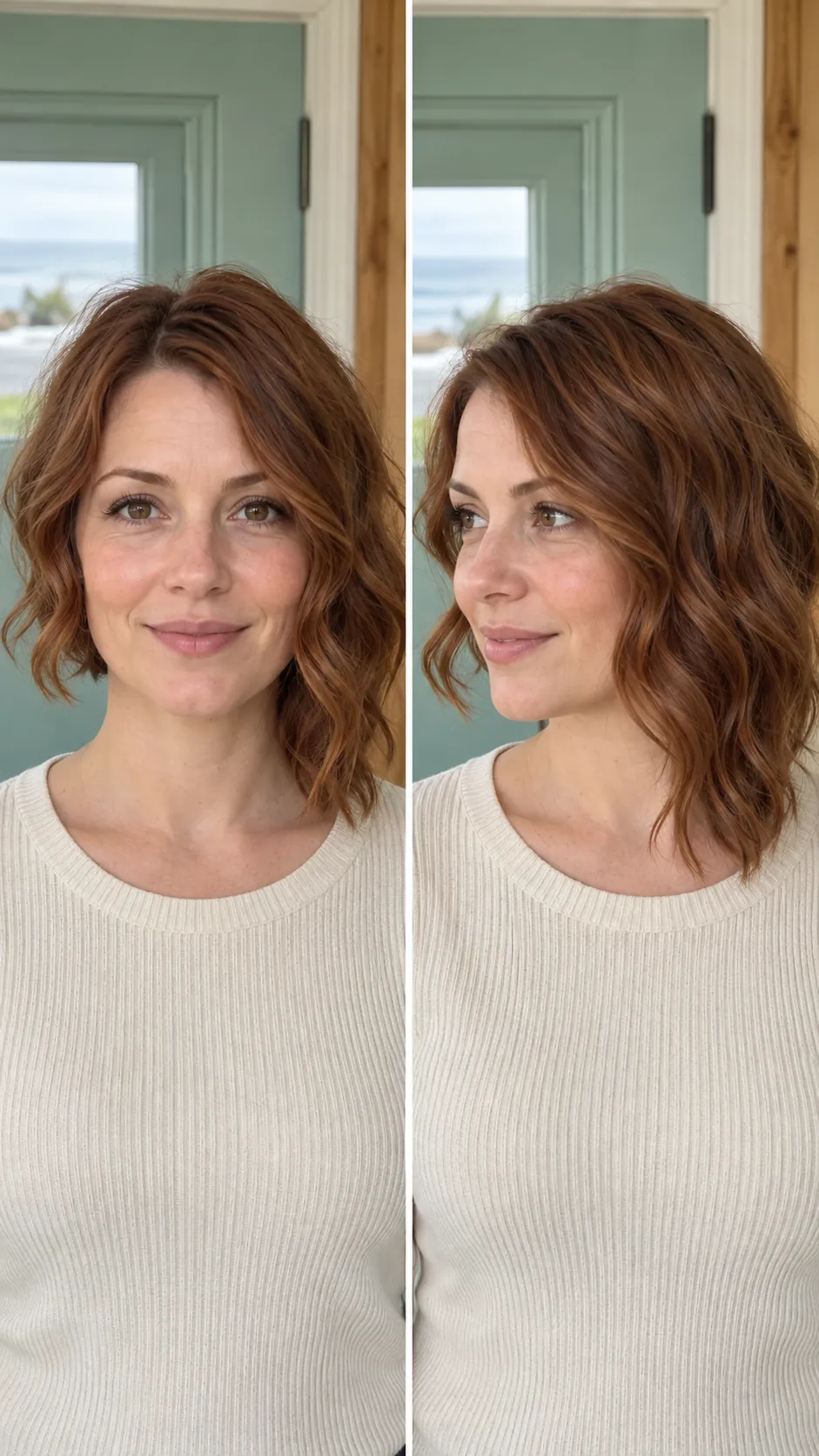
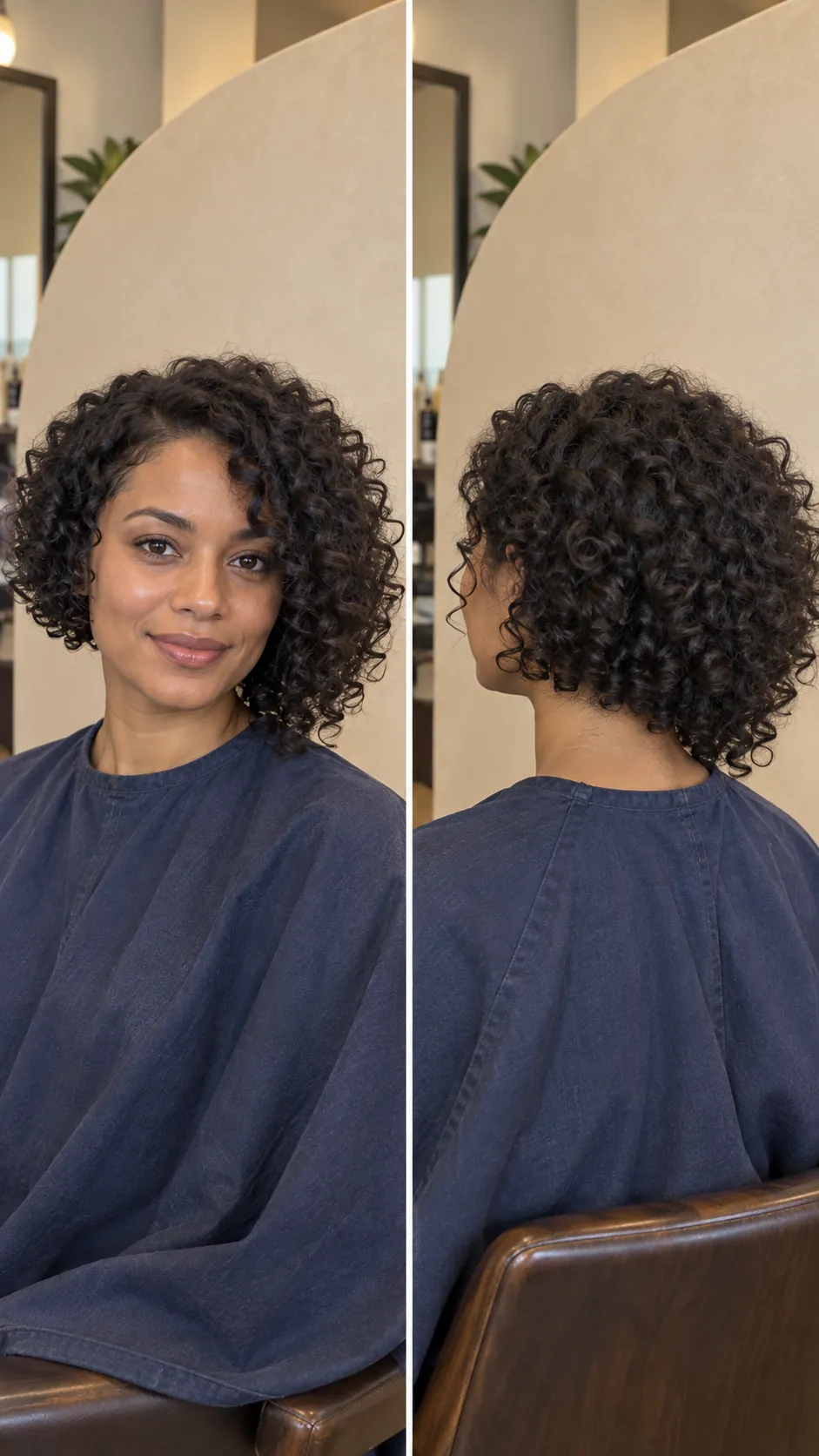
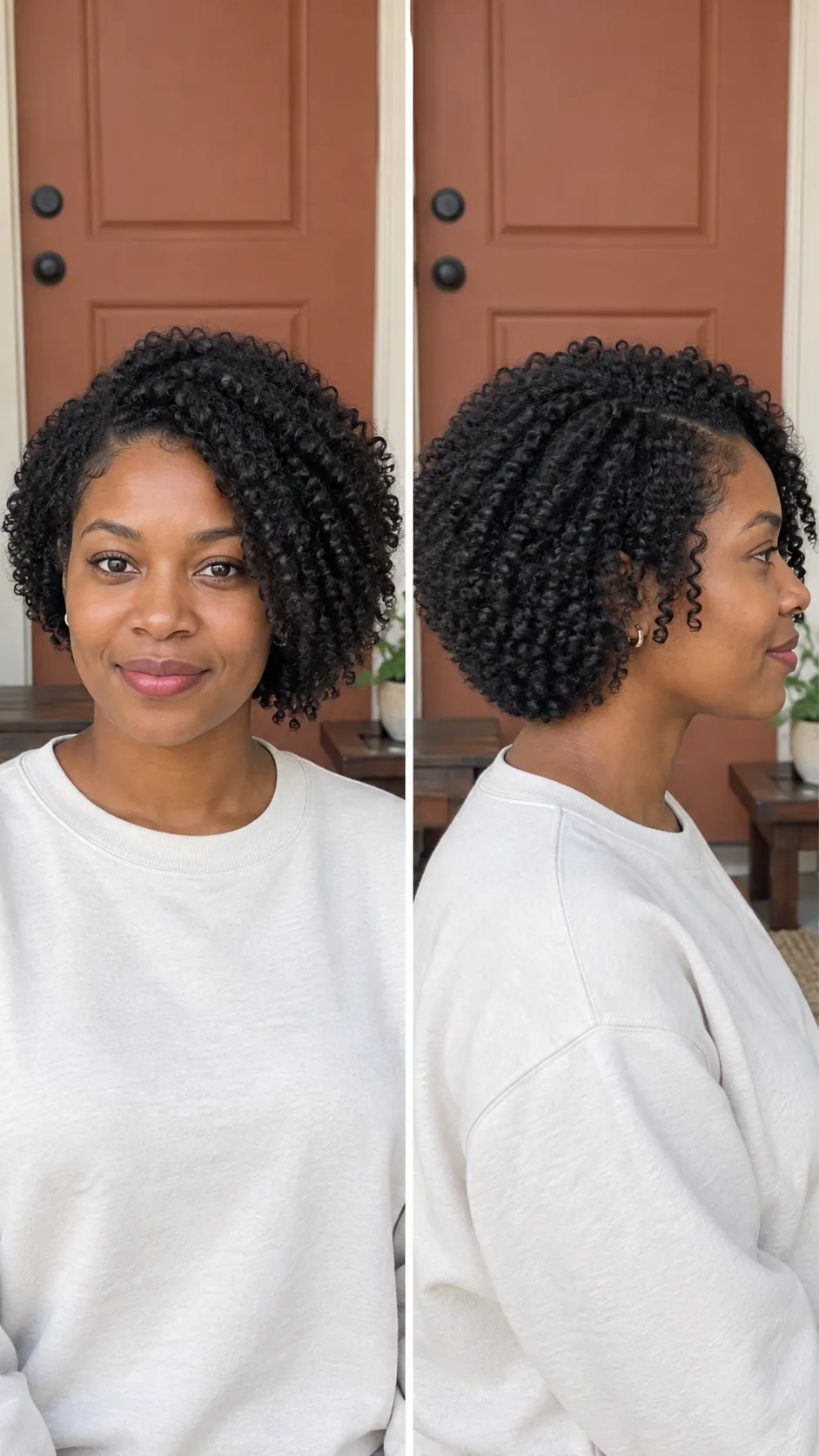
A front view can hide the biggest decision in an uneven cut: exactly where each side ends. Before choosing a reference, compare the shorter side, longer side, and back with your own texture and daily styling routine. The illustrations below are generated hairstyle references, not photographs of salon clients or guarantees of a result; each paired view shows the same proposed cut from two useful angles.
A subtle chin length difference
A small difference between the two sides gives you an uneven bob haircut without a dramatic change in silhouette. Ask for one side to finish at the chin and the other just below it, then agree on the outline with your head level. A blunt edge keeps the variation visible even when the hair is straight. Compare both profiles before leaving the chair, because a habitual head tilt can make a balanced cut look more uneven than intended.
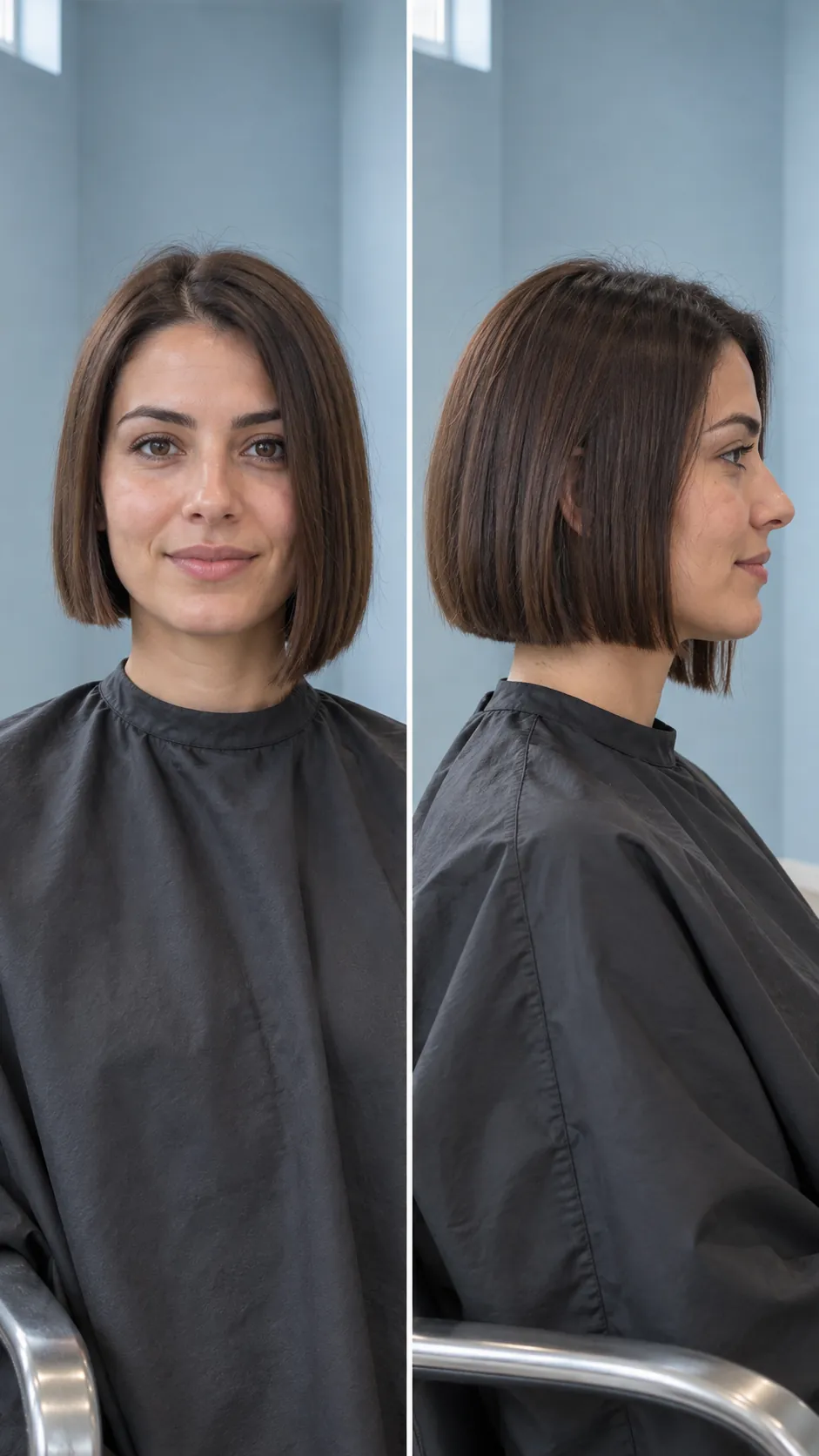
A strong jaw to collarbone contrast
Choose this shape when you want the longer side to be the defining feature rather than a minor detail. The short side exposes the jaw, while the opposite side reaches toward the collarbone. Tell your stylist which side you want long and check whether that choice works with your usual part. You may be able to tuck the longer side behind an ear, but a full ponytail is unlikely when the short side sits this high.
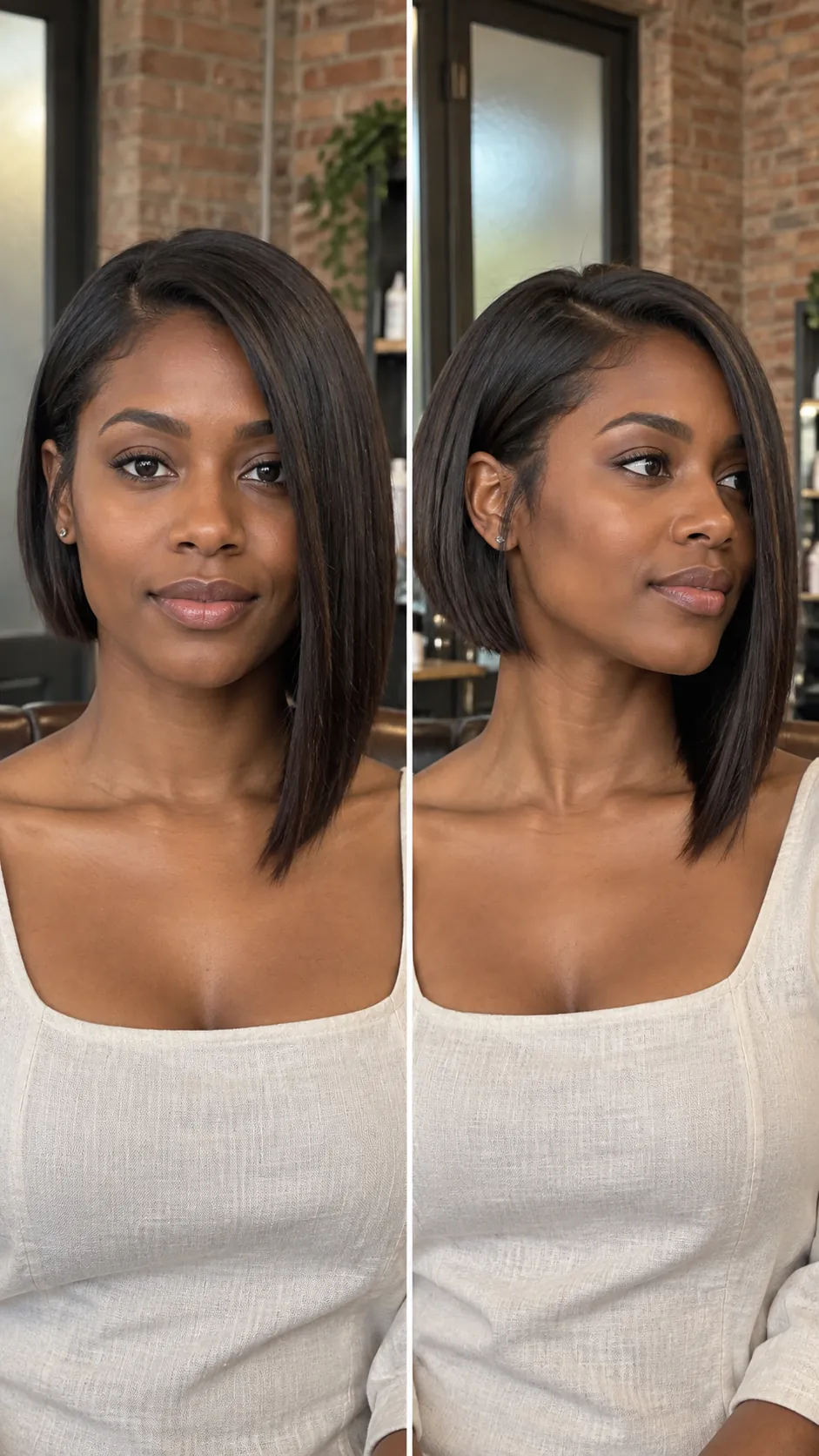
A long bob with a gentle diagonal
A long asymmetrical bob keeps more length around the face and makes the first big chop feel less abrupt. Set the shorter side below the chin and leave the longer side near the shoulder, with a clear but gentle diagonal. Shoulder contact can flip the ends outward, so compare the reference with your own drying habits. Ask your stylist to show the shape without stretching the hair straight if you normally wear it wavy.
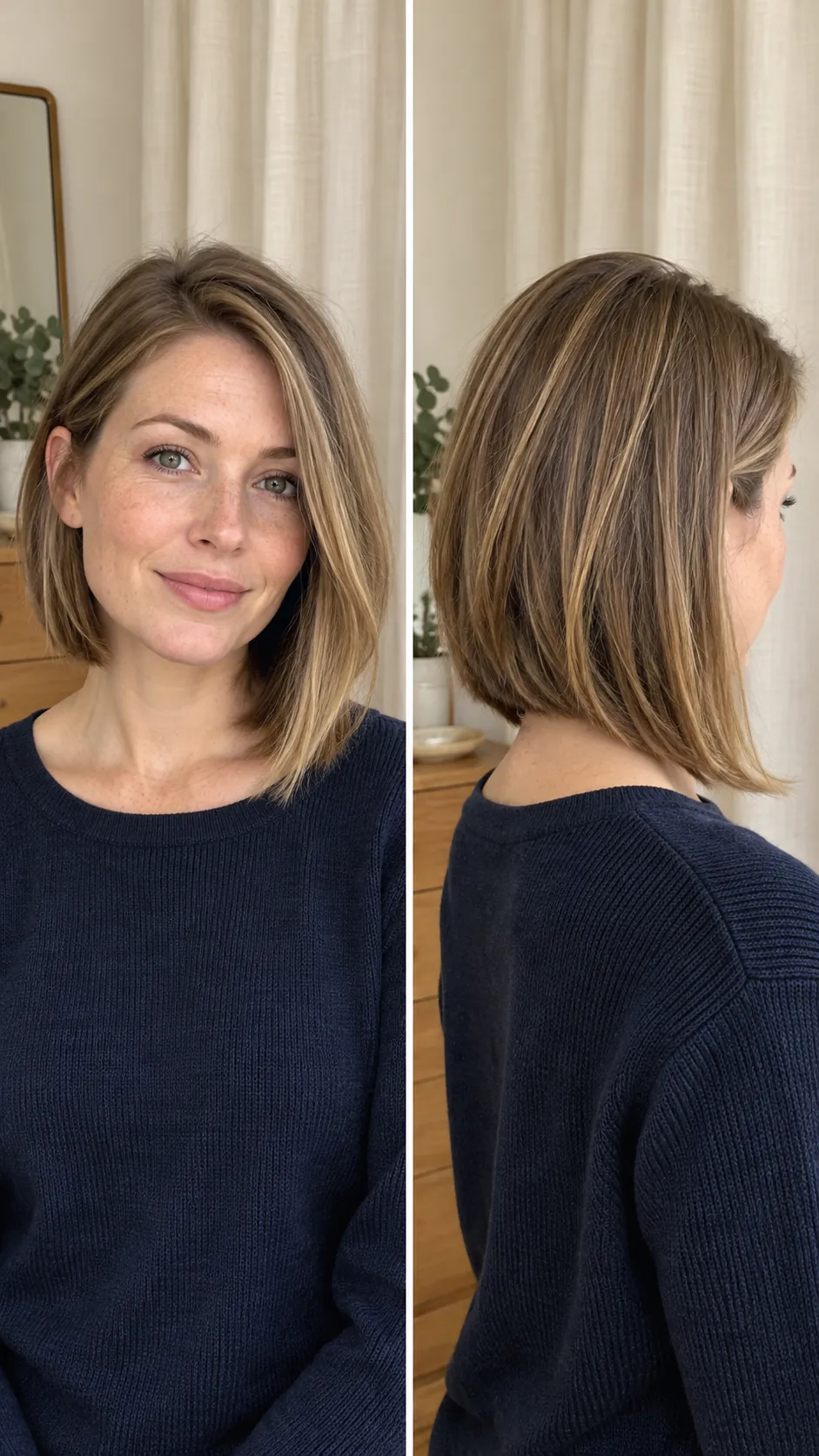
A rounded nape with a longer front corner
The rounded back gives this cut a compact shape, while one front corner extends beyond the other. Bring a rear view as well as both side views so the stylist can see how much graduation you actually want. Excessive stacking can create more volume than a softly curved nape requires. Check the back in a second mirror and ask how often the neckline will need tidying.
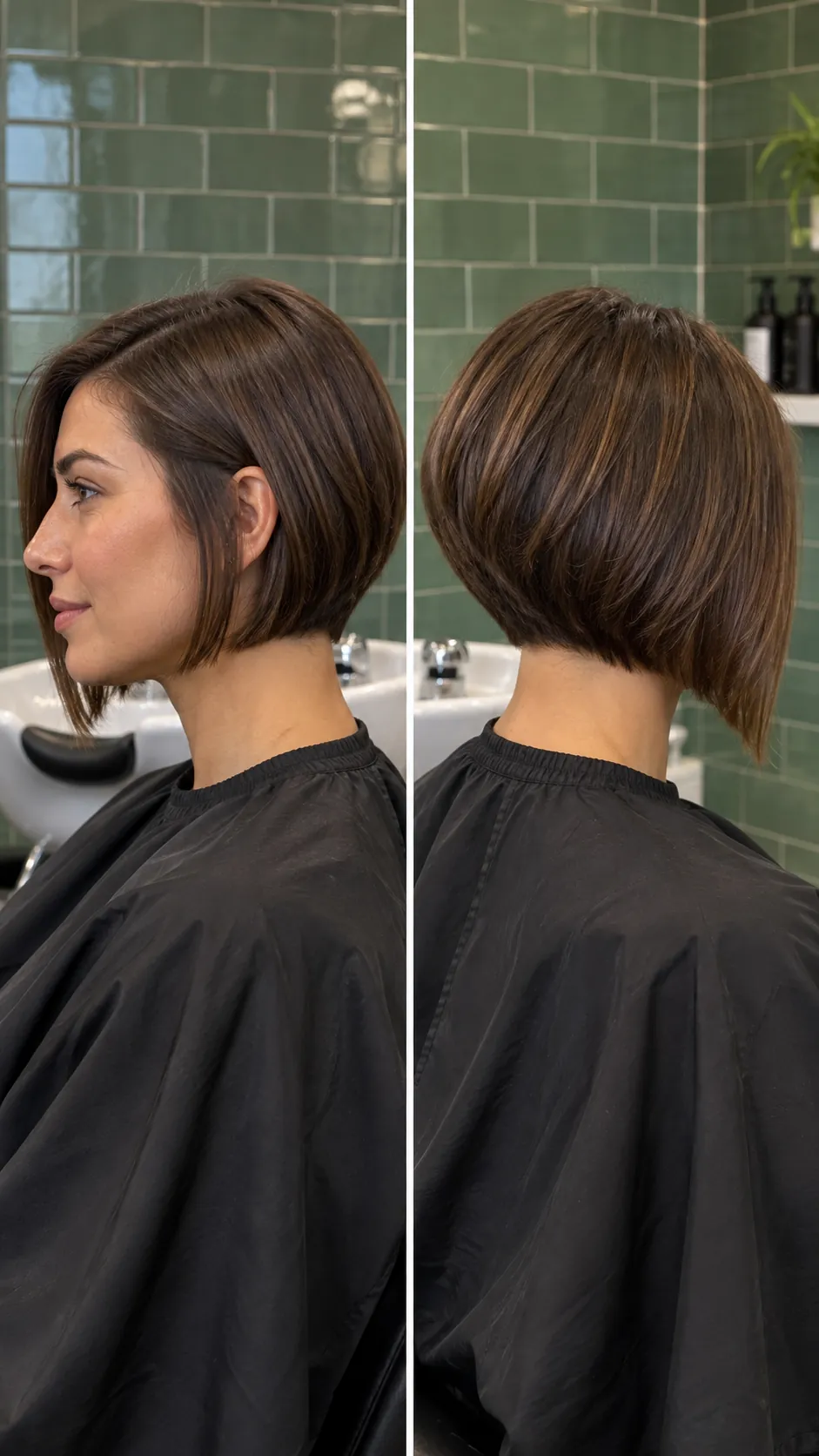
A blunt edge for fine straight hair
A solid perimeter can make fine straight hair look more substantial at the ends. Keep the asymmetry in the outline rather than removing a large amount of hair through the lengths. A light smoothing product can help the edge read clearly without flattening the roots. Tell your stylist if your hair separates into sparse sections, because the final length should preserve the fullest visible baseline.
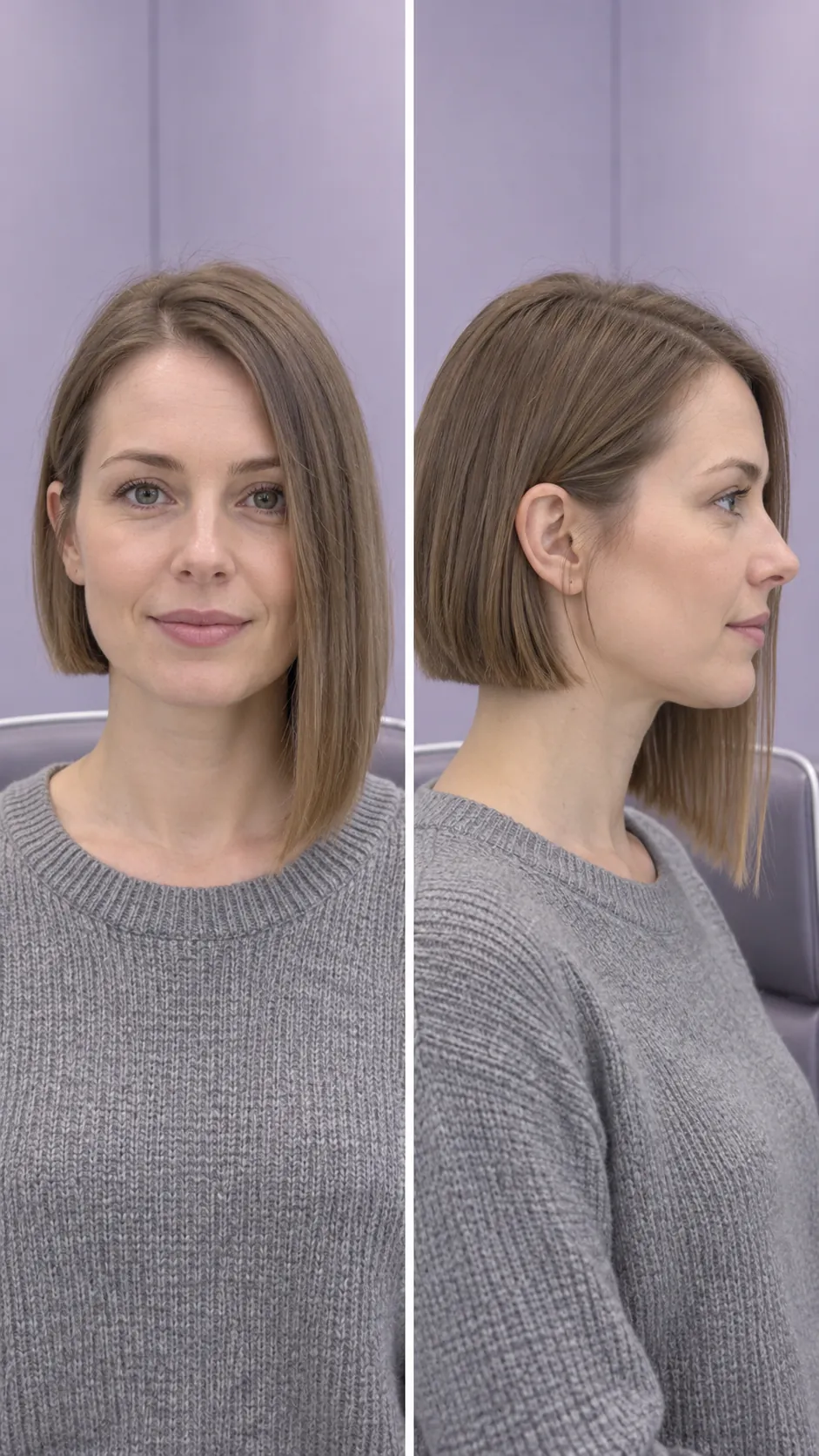
A softened outline for dense hair
Dense hair can hold a strong diagonal, but the bulk near the shorter cheek may need careful shaping. Ask for weight removal inside the cut while keeping enough surface hair to protect the outline. Aggressive thinning at the ends can make the longer side look frayed instead of deliberate. Compare the profiles after the hair settles naturally, rather than judging only a polished salon blowout.
Loose waves with unequal face framing
Loose waves make the length difference feel relaxed rather than sharply geometric. Keep the shorter face framing section distinct and avoid curling both ends into identical shapes. Waves reduce apparent length, so agree on the finished dry position before cutting. A few irregular bends through the longer side can show the asymmetry without requiring every strand to follow the same pattern.
A curly bob shaped in its dry state
Curly hair needs the asymmetry planned around how the curls actually spring up. Discuss the shorter and longer sides while the hair is dry, then ask how the stylist will account for different shrinkage across your head. A rounded curl shape can keep the shorter side from becoming a thin wedge. Compare the result with minimal stretching so the reference matches the way you will wear it at home.
A coily shape with a longer cheek line
A coily asymmetrical bob can place the strongest contrast around the cheeks rather than the neckline. Define the intended silhouette with your stylist, including where the longer side should sit after the coils contract. Avoid using a straightened photograph as the only guide for a cut you intend to wear in its natural texture. Keep the longer corner full enough to read as part of the shape, and discuss detangling access before shortening the opposite side.
A sweeping fringe over the longer side
A diagonal fringe can connect the forehead to the longer edge and create one continuous sweep. Decide how much of the eye you want visible, since a photograph may show a fringe placed differently from daily wear. Ask for a demonstration of drying the fringe from the root rather than forcing only the ends into position. If you frequently change your part, check how the shorter pieces behave on the opposite side.
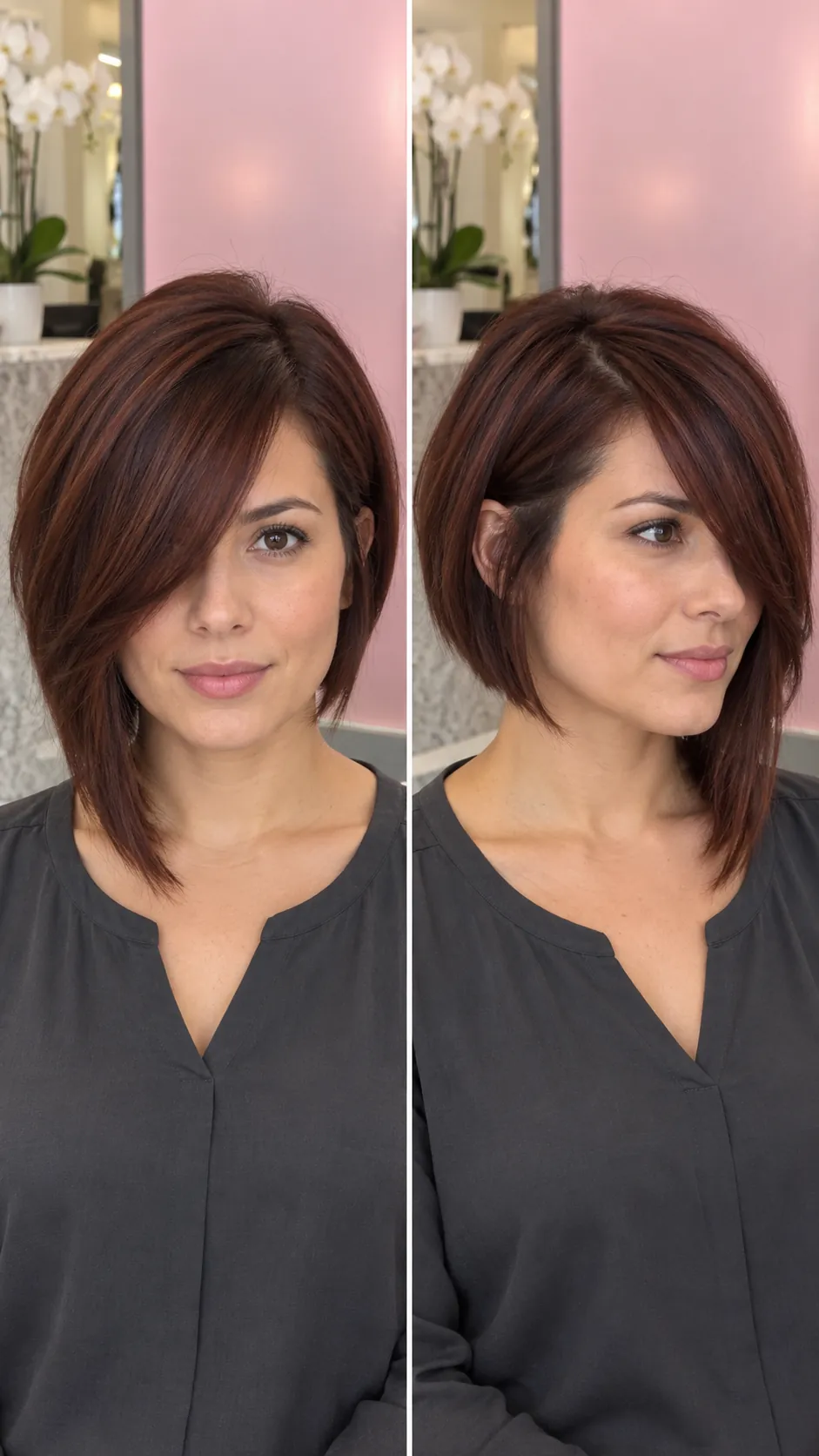
A short fringe with a sloping perimeter
A compact fringe creates a clear contrast with a longer diagonal side section. The fringe line and the outer cut line should be discussed separately so neither becomes shorter by accident. A forehead cowlick may lift one end of the fringe and change the intended balance. Bring a photograph showing the fringe at rest, and agree on a comfortable length before choosing the more dramatic outer shape.
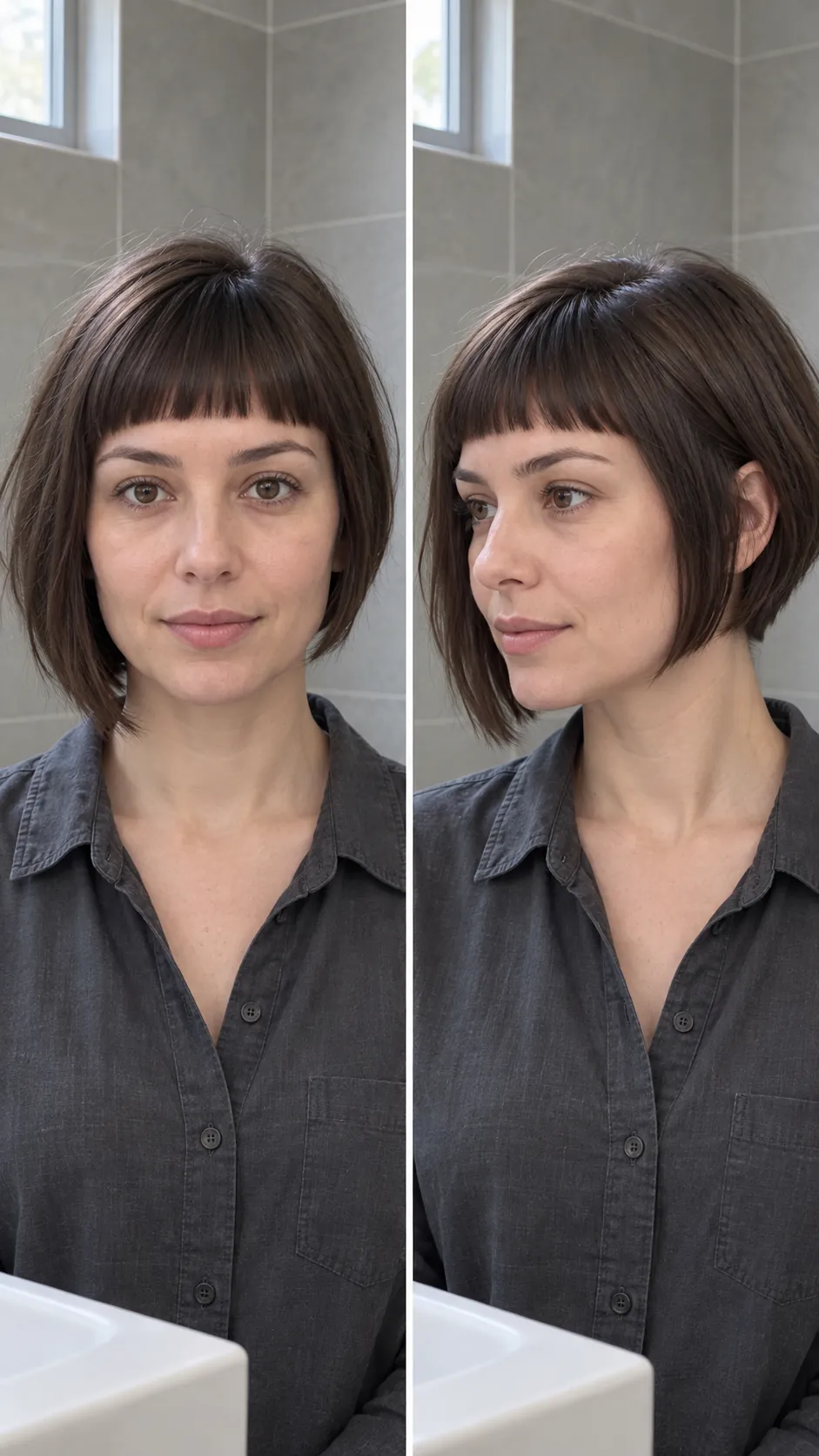
An exposed ear with a longer opposite panel
An ear revealing short side gives this bob a strong profile even without a shaved section. Keep the opposite side long enough to retain a recognizable bob outline. Explain whether you want the ear permanently exposed or only visible when tucked, because these require different lengths. Glasses and hearing devices can affect where the short pieces sit, so wear them during the consultation if they are part of your routine.
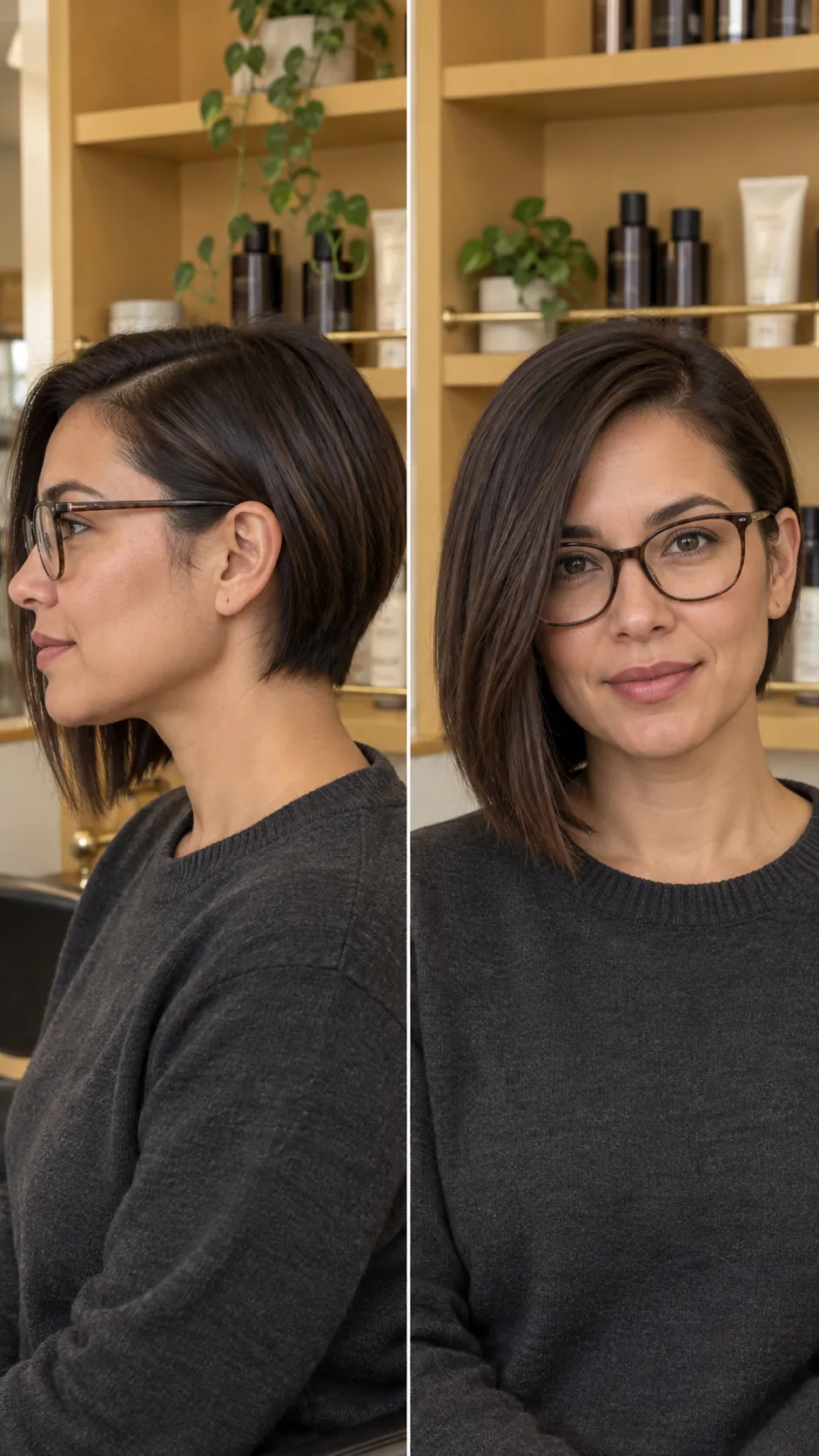
A discreet undercut beneath the short side
A small hidden undercut can reduce density under the shorter side while leaving the surface outline intact. Ask the stylist to show its exact boundary before any clipping begins. The shaved area becomes more visible when the surface hair is tucked or lifted. Discuss the growing out stage as well as the first appointment, because that hidden section will eventually need to blend back into the rest of the cut.
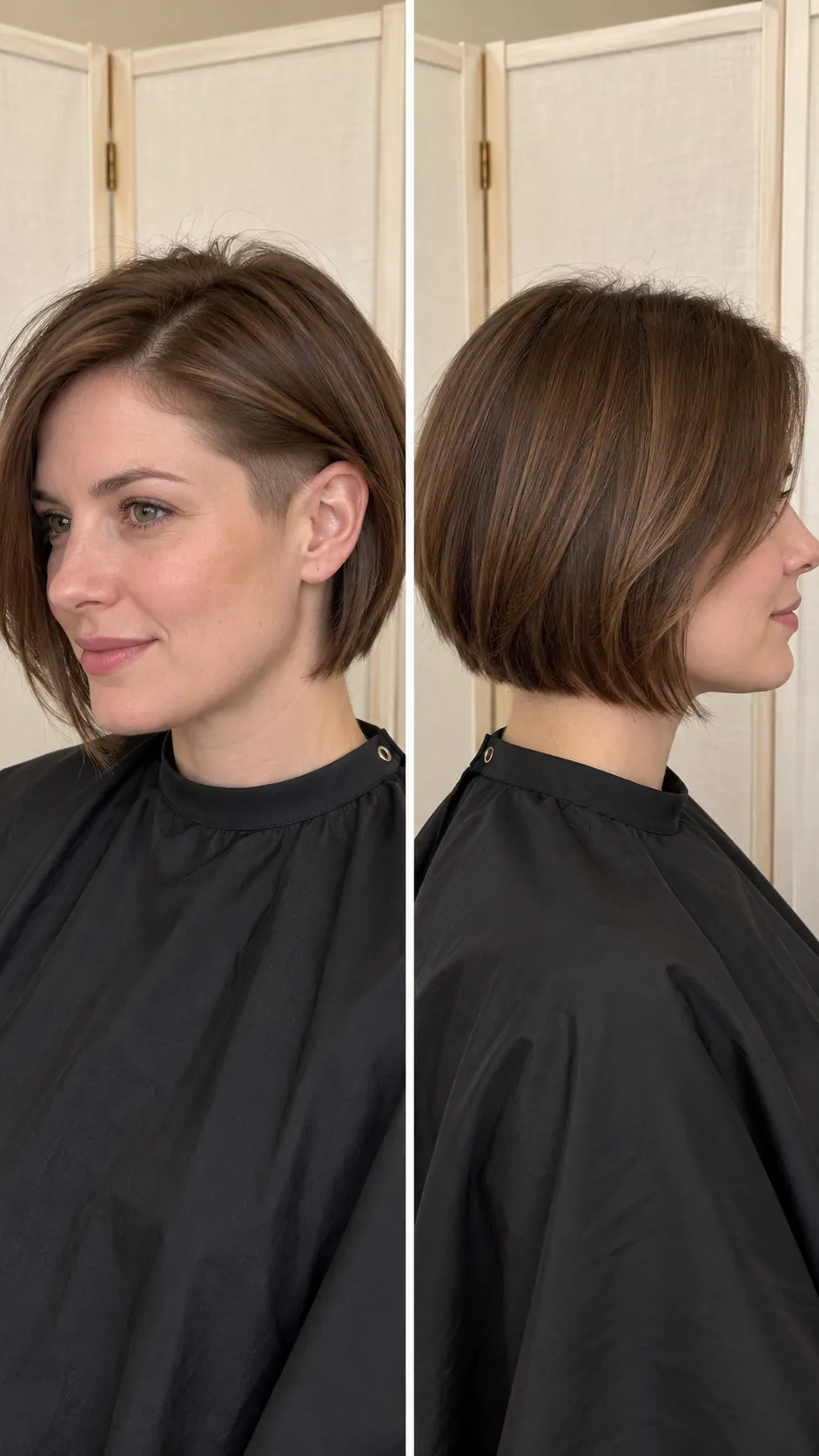
A bold clipped side with a bob panel
This version makes the clipped area visible and leaves a substantial bob panel on the opposite side. Agree on the clipper length and the transition into the longer hair instead of asking only for an edgy bob. A clean boundary will need attention as the short side grows. If you are unsure about exposing the scalp, start with a longer clipped section and assess the contrast before going shorter.
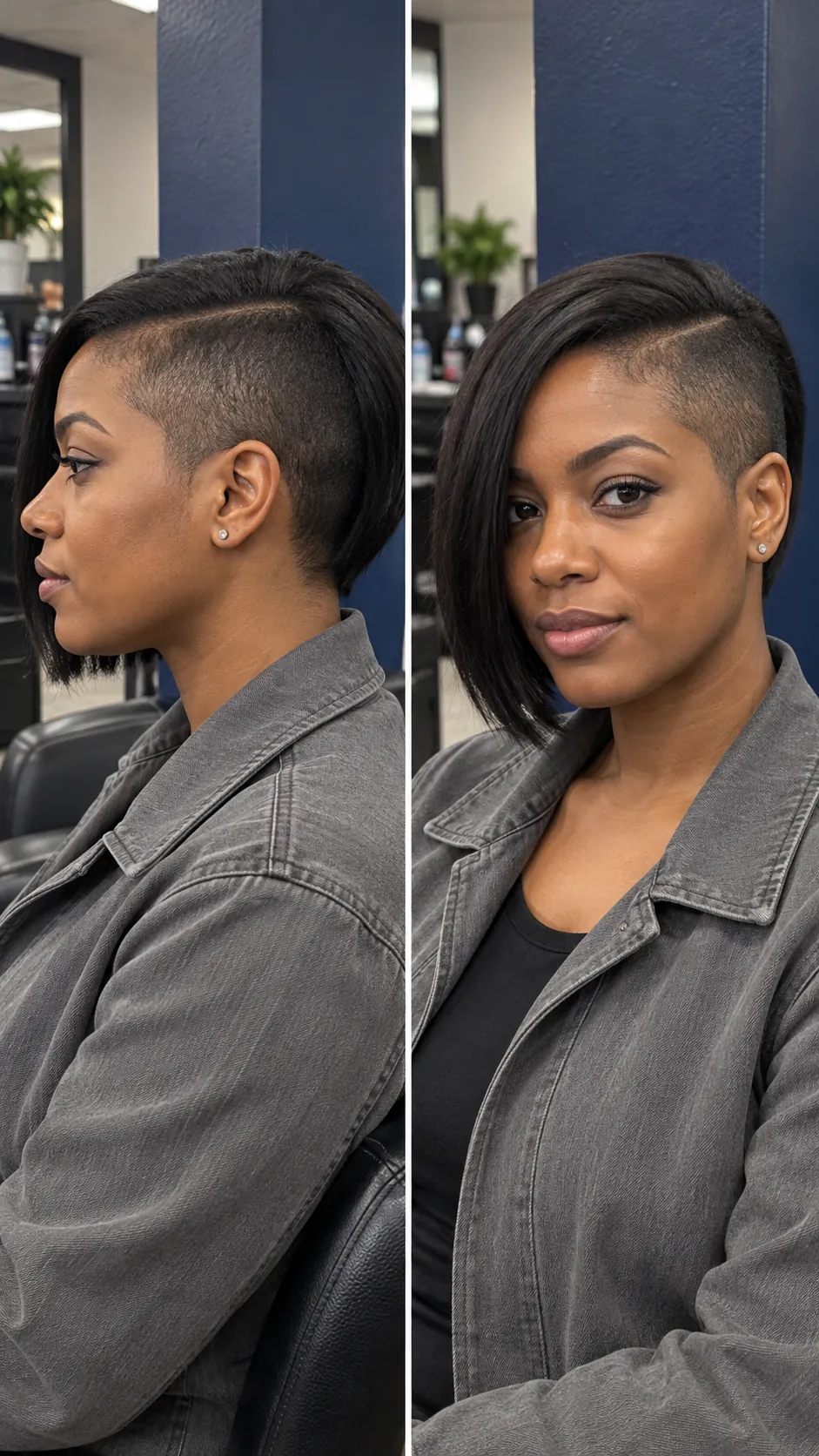
A feathered edge with a long front piece
A feathered finish softens the ends while a longer front piece preserves the directional shape. Ask for movement that suits your density, rather than assuming a razor is necessary to achieve it. Fragile or very fine ends may need a more restrained approach to texturizing. Style the longer piece away from the cheek once during the appointment to check that the outline still works without a perfect forward sweep.
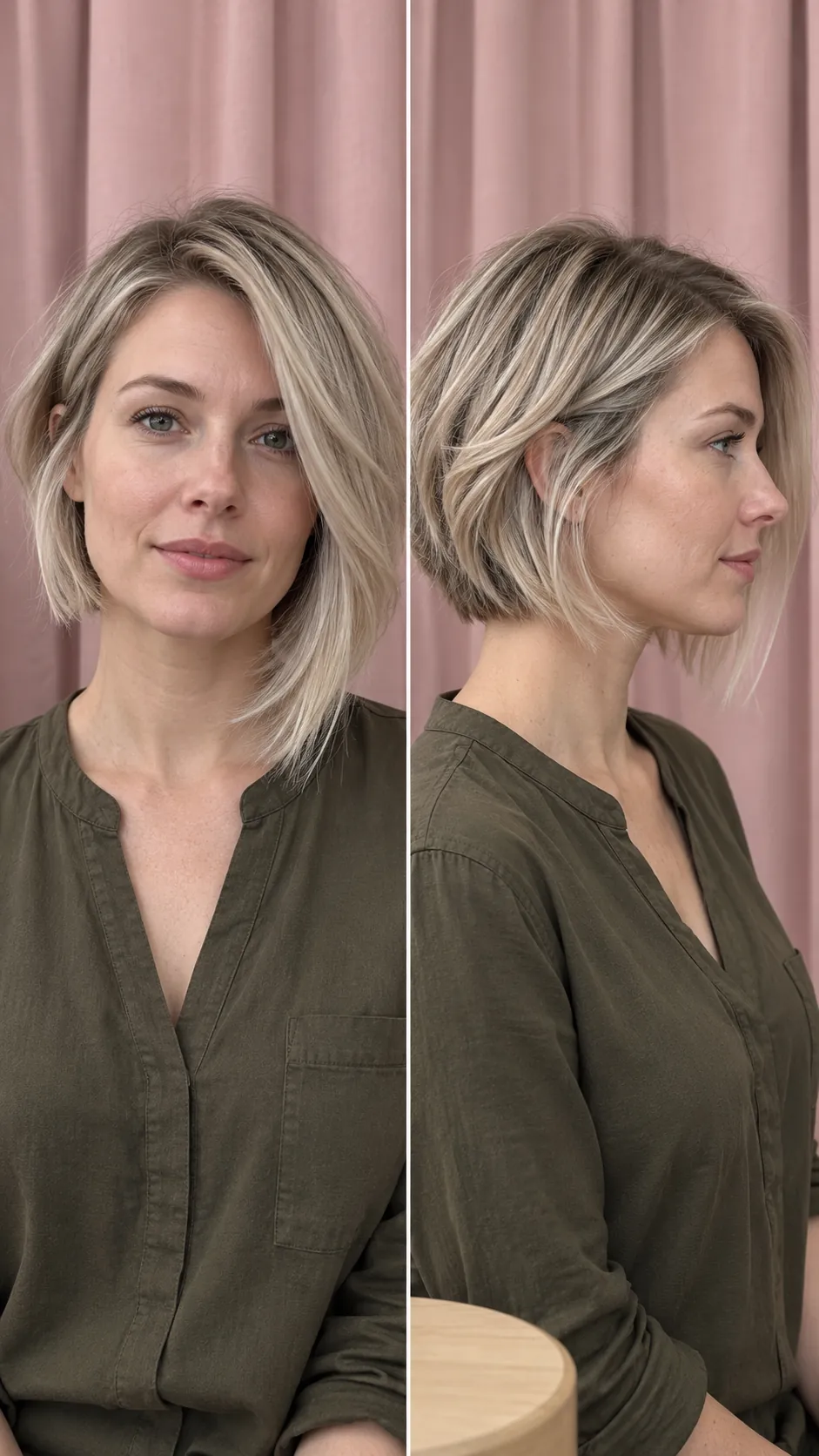
A graduated bob with controlled crown lift
Graduation can add lift behind the head while the two side lengths remain different. Specify how high the volume should sit, because a steep stack creates a different silhouette from a small nape curve. The shorter side should connect into the back without a sudden shelf. Ask your stylist to demonstrate a manageable drying direction so the shape does not depend on constant teasing.
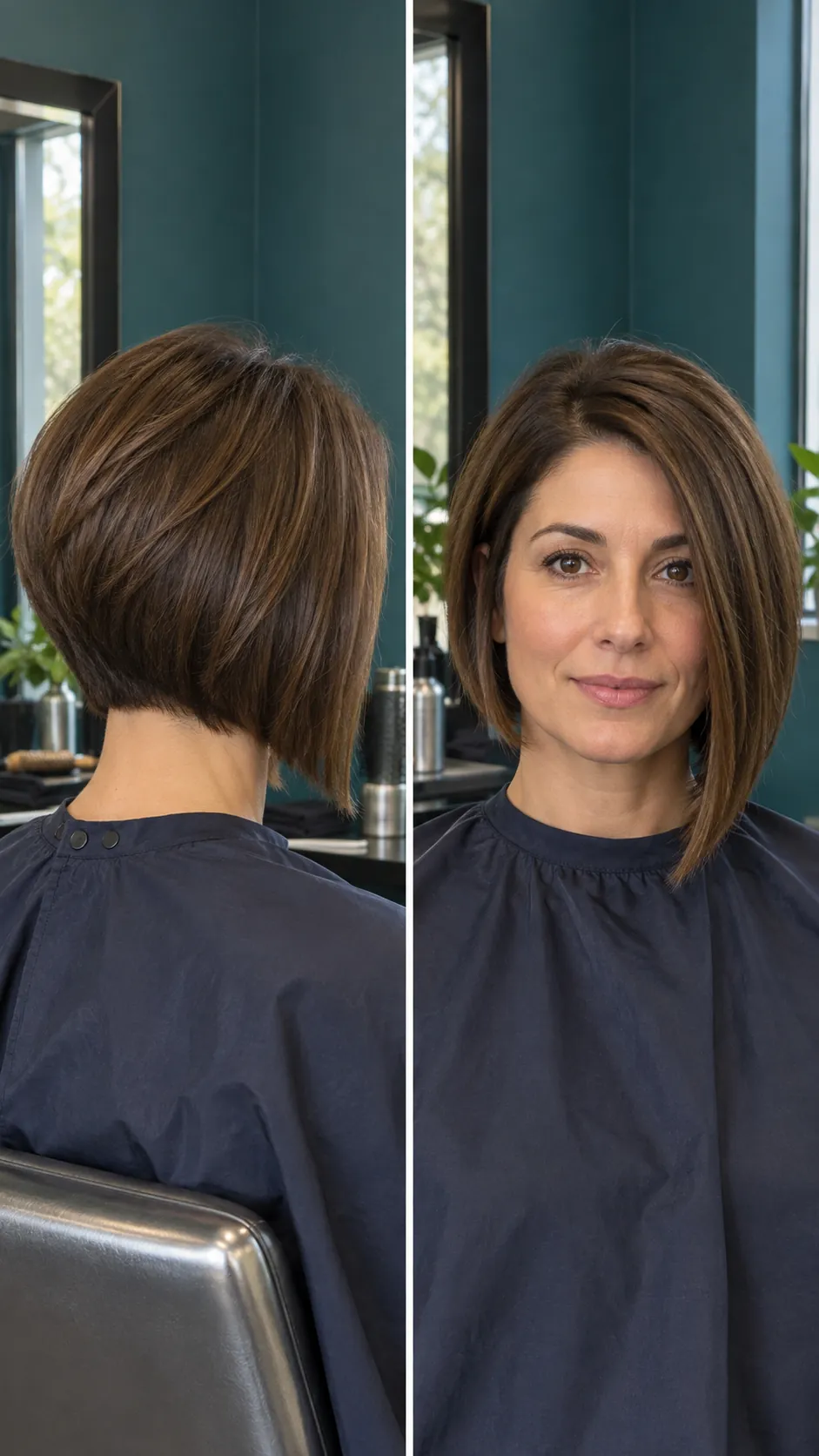
A compact bob with a sharp front point
A short back and a defined long front point create a focused, angular outline. The point should be a substantial section of hair rather than a few isolated strands. Check where it lands when you speak or turn your head, since a very long corner can fall forward repeatedly. A precise cut benefits from regular reshaping, so discuss your realistic appointment schedule before committing to the sharpest version.
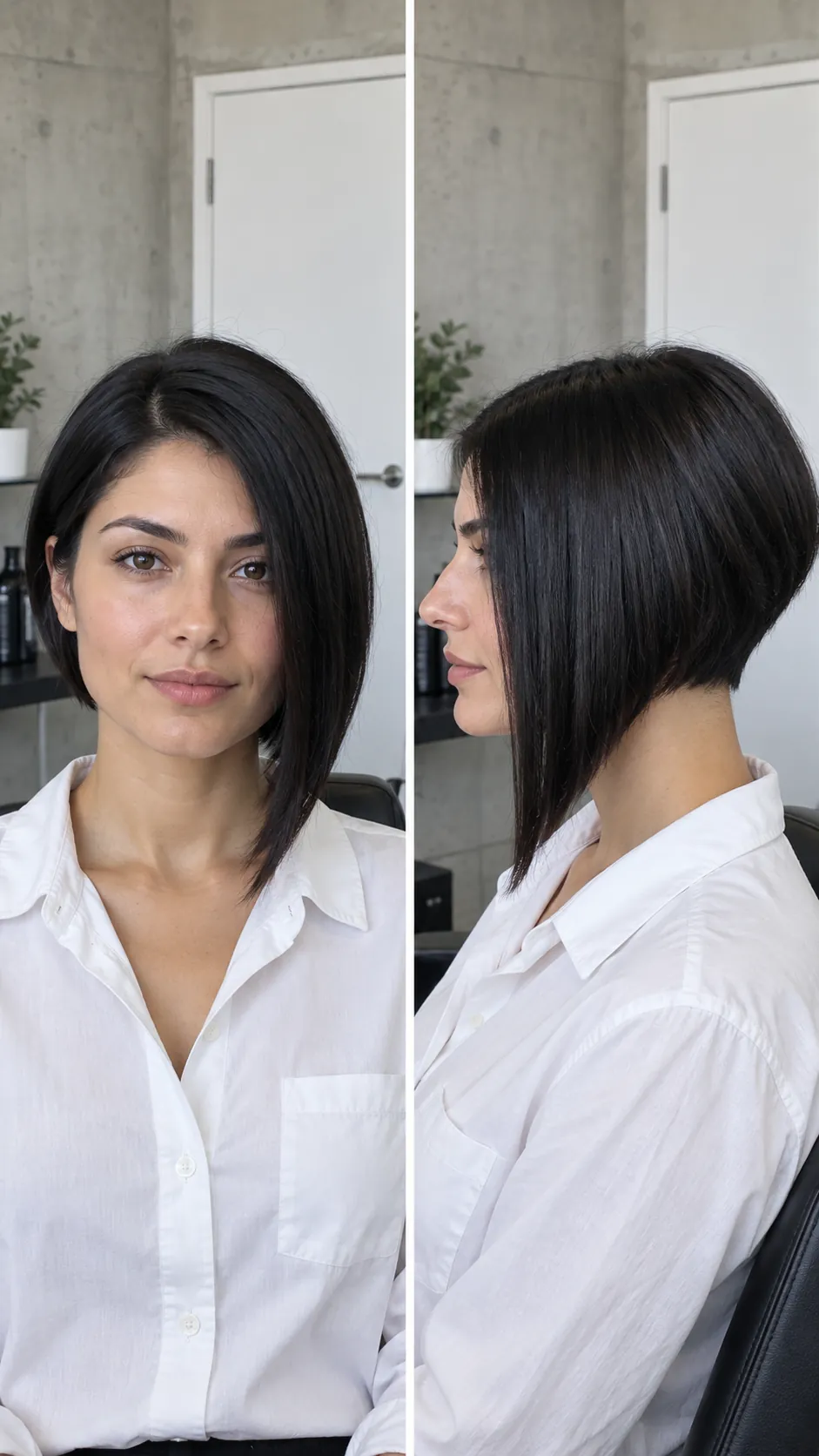
A relaxed air dried asymmetric shape
An air dried finish works best when the cut respects your natural bends and root direction. Ask the stylist to assess those patterns before smoothing them out for the final photograph. A soft difference in side length can tolerate movement better than a perfectly straight diagonal. Test a simple drying routine during the appointment and accept that the two sides may settle slightly differently from day to day.
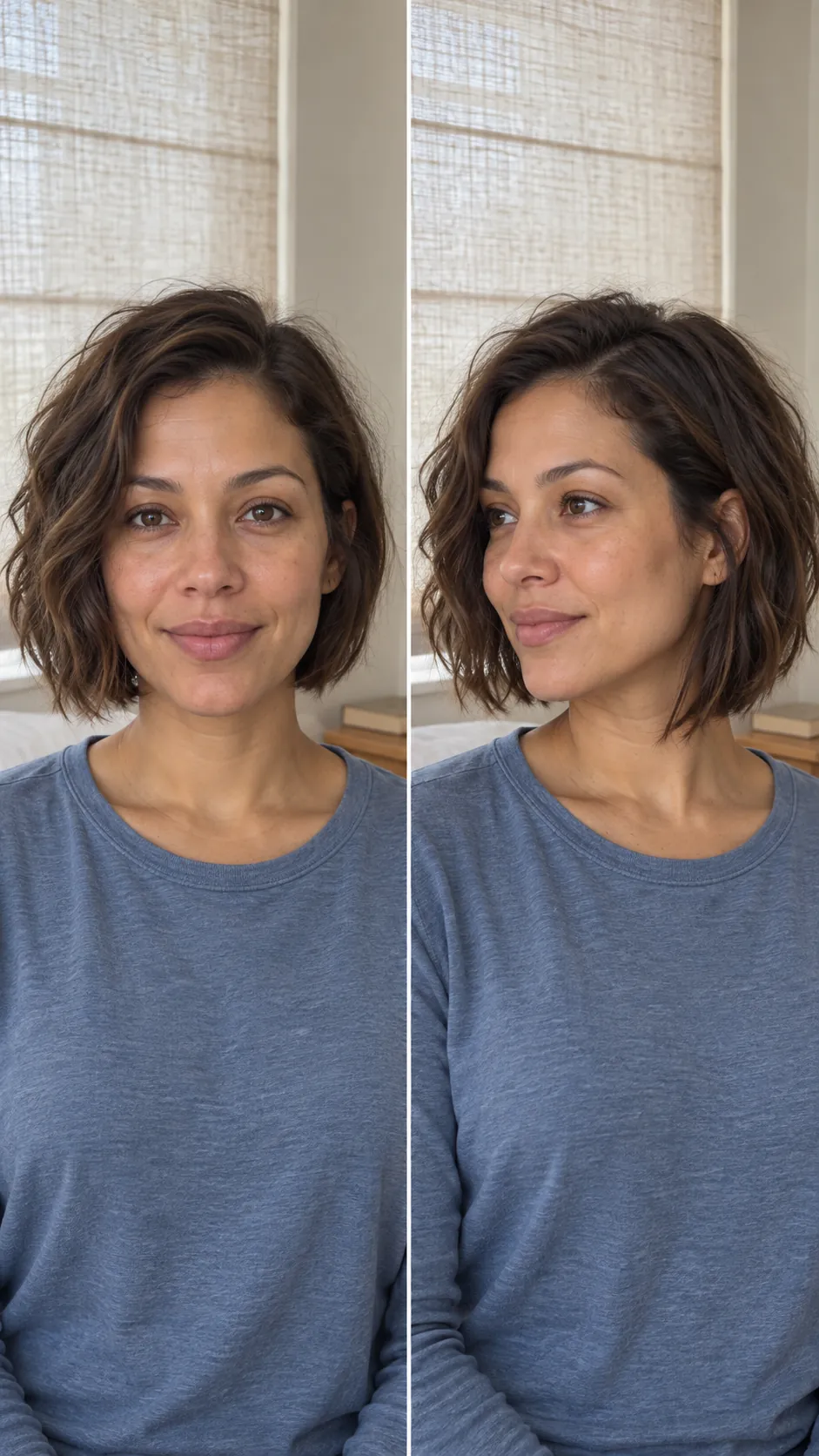
A tucked short side with a visible long edge
Tucking the shorter side makes a gentle asymmetry more obvious without changing the haircut itself. Leave enough hair around that ear for a comfortable tuck rather than cutting it close automatically. The longer side can stay loose to show its separate endpoint. Compare the tucked and untucked shapes so your reference photo does not accidentally promise a permanent length difference that is mostly created by styling.
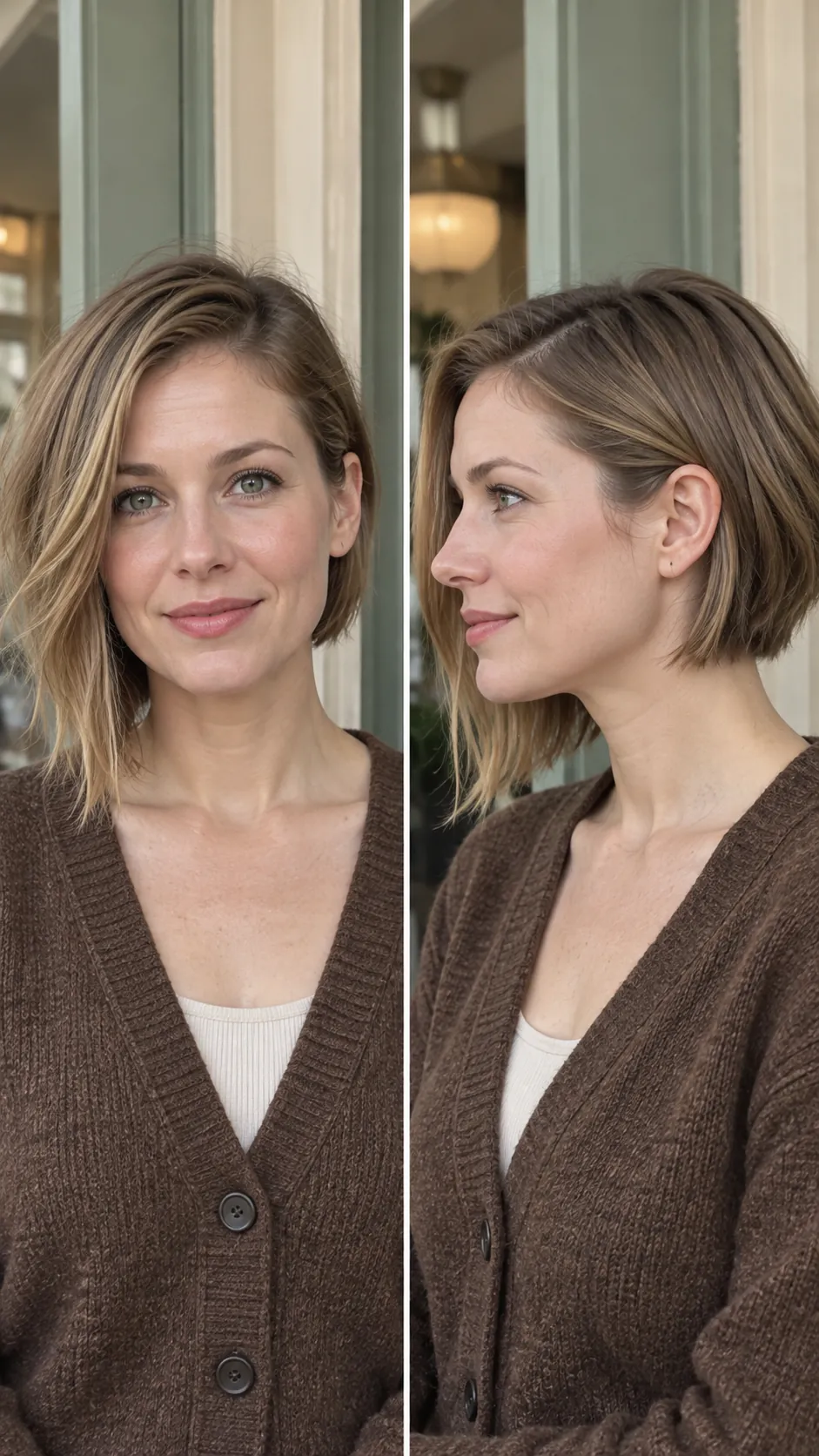
A growing out shape that keeps its intention
You can keep asymmetrical short hair looking deliberate while gradually returning to a more even outline. Ask the stylist to preserve the shorter side while trimming only enough from the longer side to narrow the difference. Texture and growth patterns will affect how quickly the endpoints appear to meet. Keep fresh photos of both profiles between appointments and use them to decide when the remaining contrast no longer serves the shape.