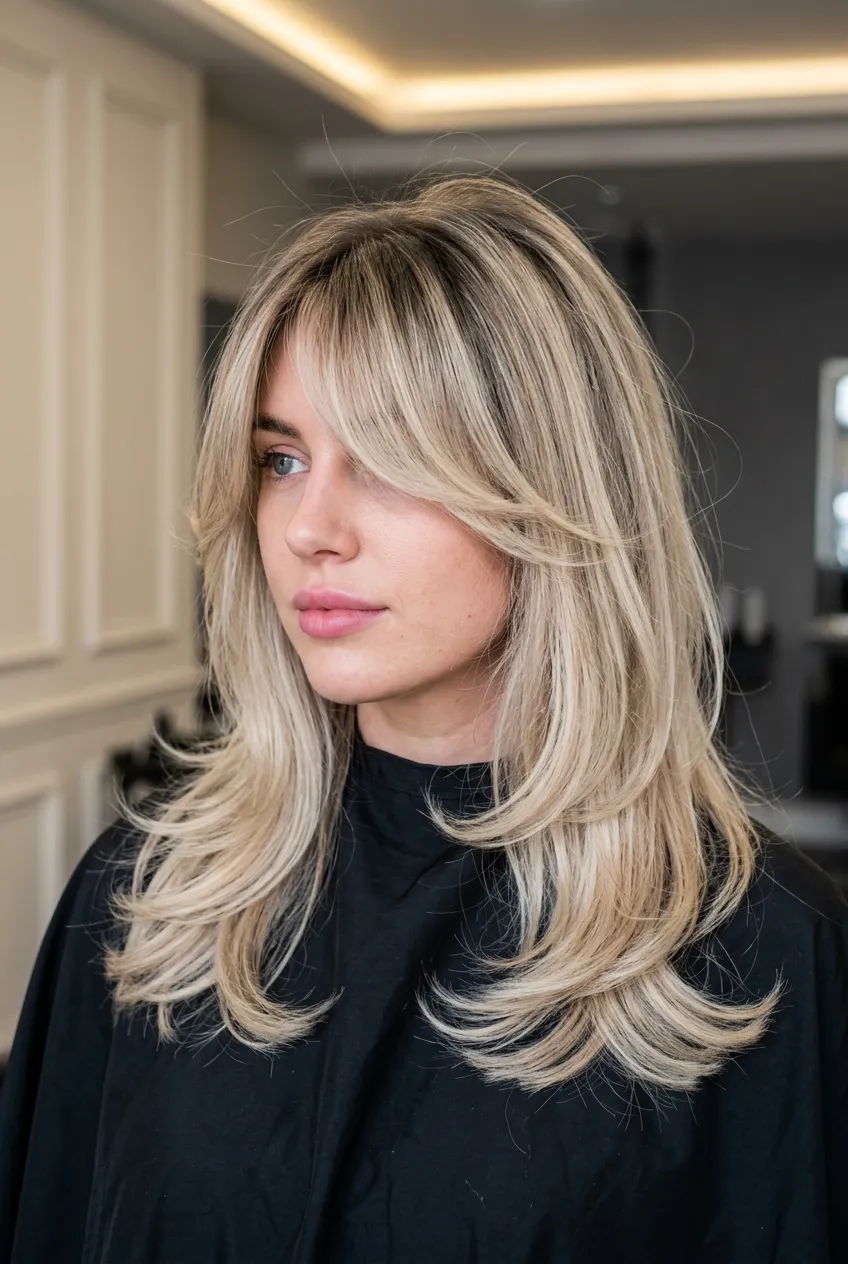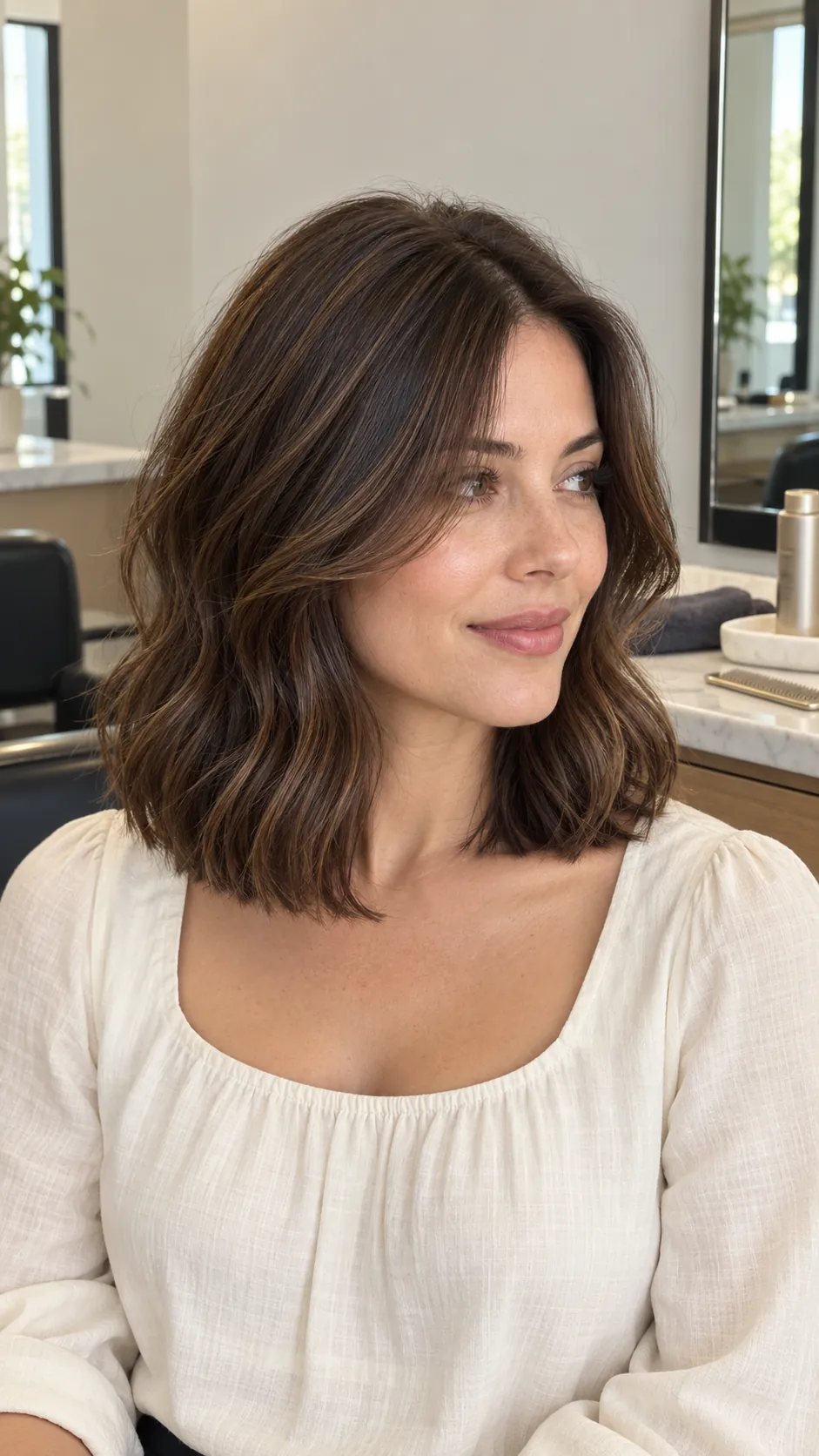
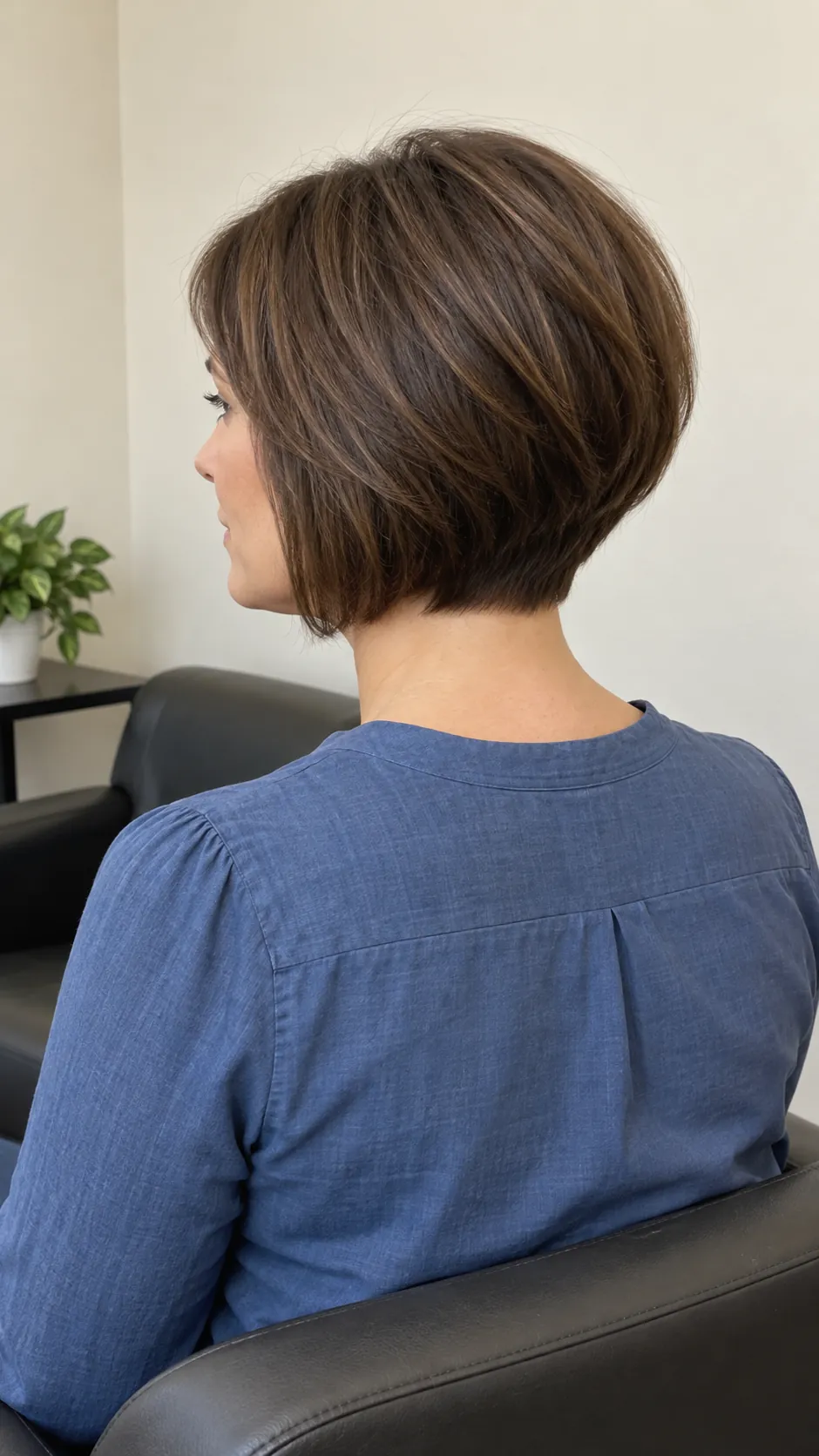
The front of a bob can look right while the back feels too bulky, too exposed, or split into shelves. A rear photograph answers questions that a face framing reference cannot: where the fullness sits, how short the nape is, and whether the layers connect. Set those details before agreeing to more layering.
Stacking refers to graduation through the back, while an angle describes the change in length toward the front. They can appear together, but they are separate choices. Use these examples to compare the shape and discuss how your natural texture will behave after the salon finish wears off.
A Low Stack With a Rounded Nape
A low stack keeps most of the fullness near the lower back of the head. Ask for a gentle graduated curve rather than a high mound at the crown. The bottom line can stay soft without looking disconnected from the longer hair above it. A rear reference helps the stylist see how much neck you want exposed.

A Compact Stack Above the Collar
A compact shape clears a shirt collar and keeps the back visibly shorter than the sides. Check the hem against the clothing you wear most often, because contact with a collar can encourage the ends to turn outward. The layers should flow into each other rather than sit as separate shelves. Ask to see the finished back while your head rests in its normal position.
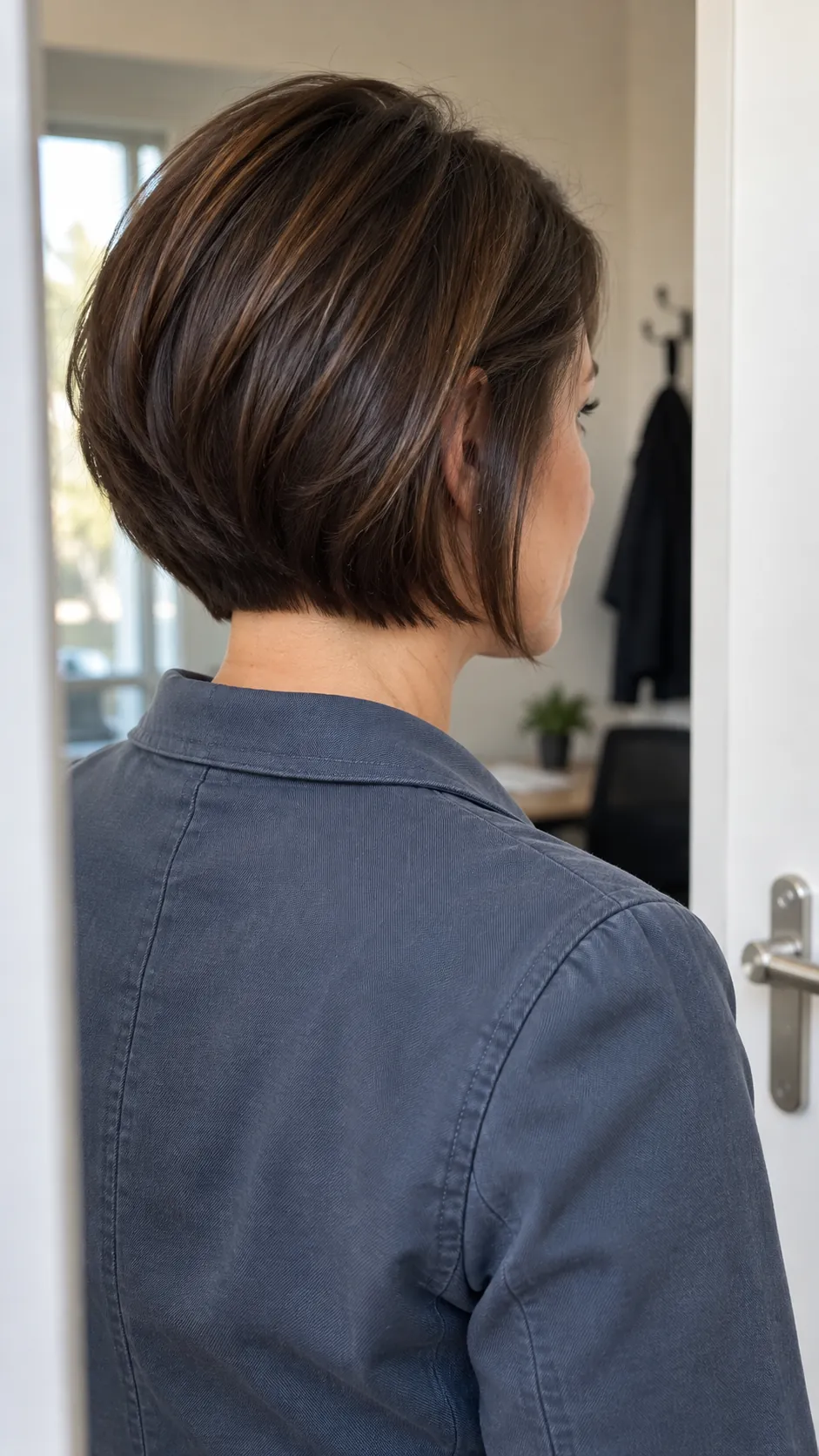
A High Rounded Stack With a Soft Edge
A higher stack places more visible fullness at the back of the head and creates a stronger profile. This is a larger shape decision than simply adding texture to the ends. Tell the stylist whether you want the surface smooth or visibly piecey, since both can sit over graduation. A pronounced curve usually needs more attention to drying direction than a flatter shape.
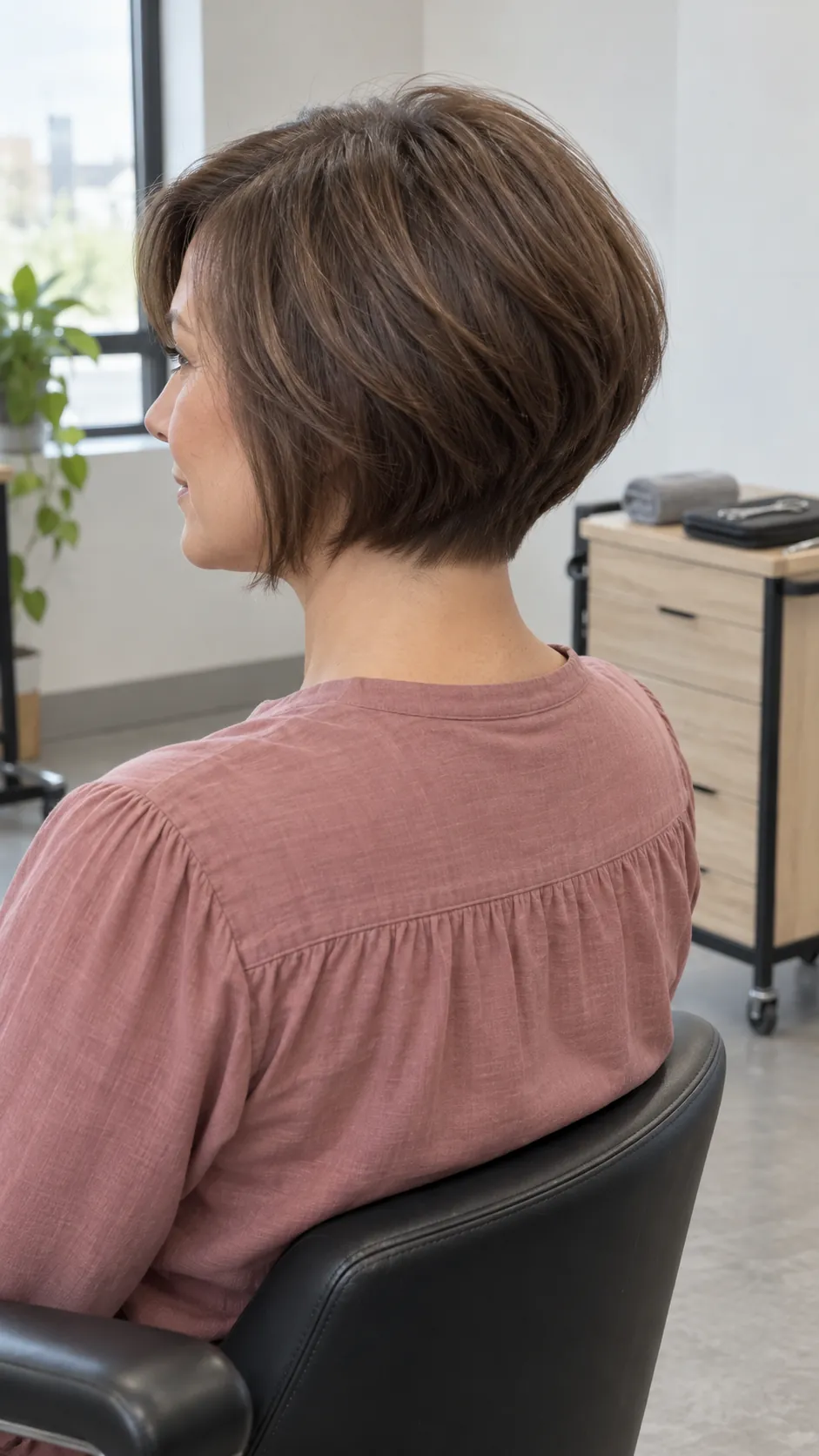
Fine Hair With a Dense Lower Line
Fine hair can show graduation without losing all its weight at the nape. Keep the lower edge substantial and avoid assuming that more layers always mean more volume. Ask which sections will remain long enough to cover the interior. Compare the result when dry, since a wet cut does not show how sparse the ends might become.
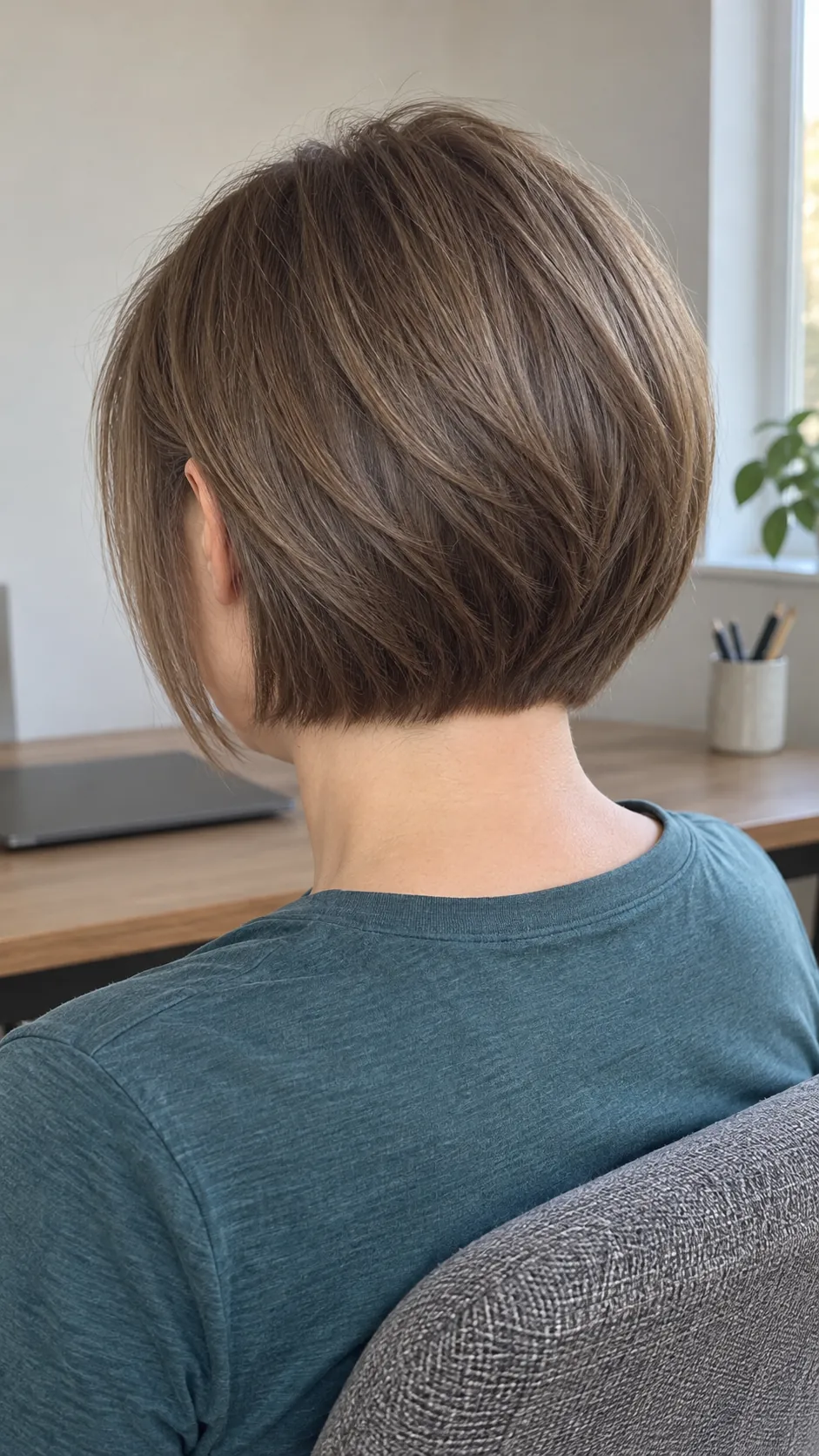
Thick Hair With Controlled Interior Bulk
A dense back can look heavy even when the perimeter is short. Controlled internal weight removal may help the layers settle, but the outer shape should remain connected. Ask where the stylist plans to reduce bulk before agreeing to extensive thinning. Review the cut in its natural texture as well as its styled finish.
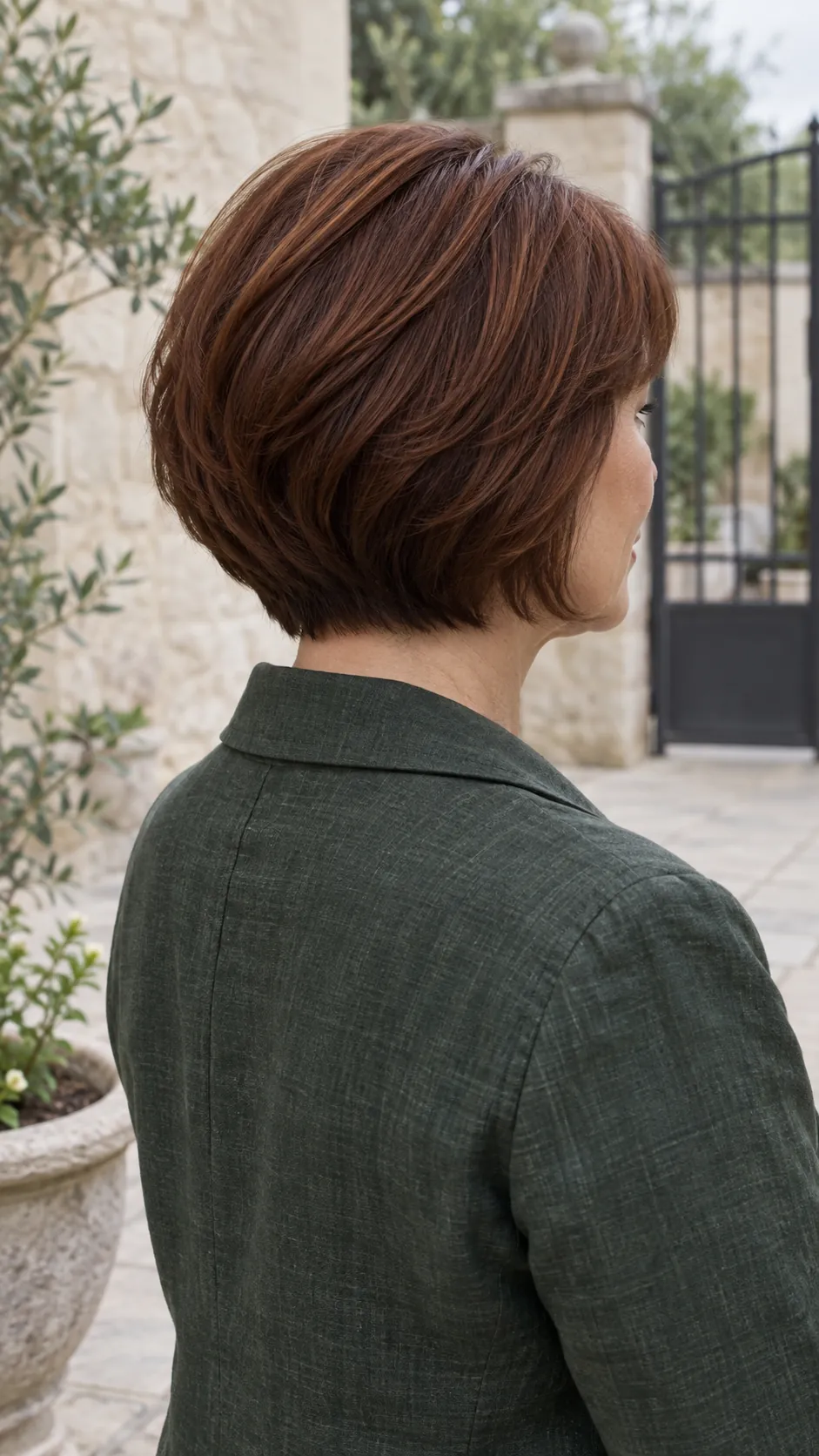
A Soft Stack That Follows Natural Waves
Natural waves make the back outline less precise than a straight blowout. Choose the dry nape length with shrinkage in mind, especially if the curl pattern changes across your head. The graduated sections should support the waves rather than interrupt them with abrupt gaps. Let the stylist see how the back dries before deciding whether it needs more layering.

Curly Graduation With Room at the Nape
A curly stacked bob needs enough space for the lower curls to form without crowding against the neck. Discuss how short the nape will look after drying, not only while the curls are stretched. The back should connect into the sides even when individual curls sit at different heights. Avoid judging the shape from one fully straightened reference if you plan to wear it curly.
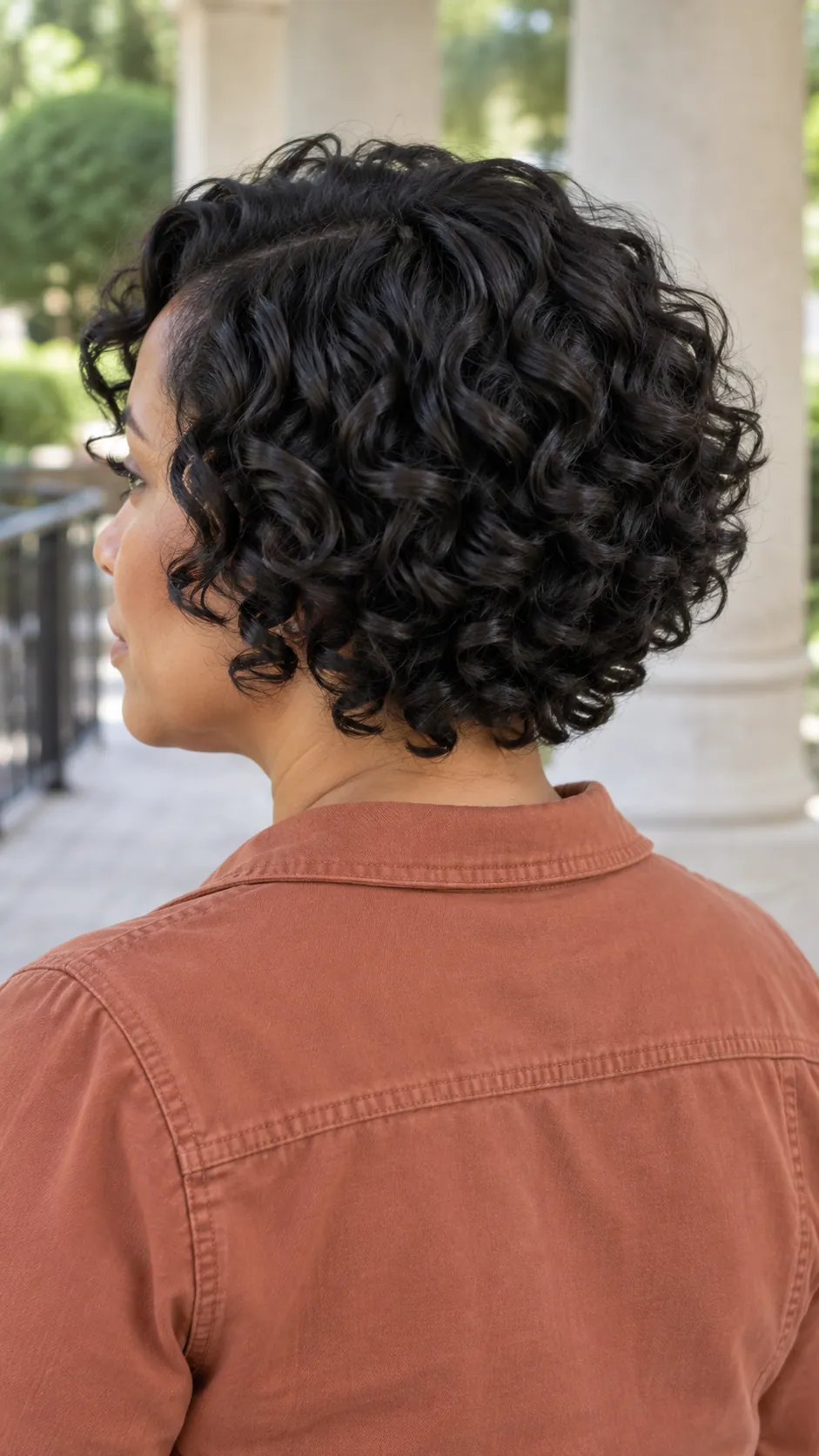
A Tapered Nape Without a Shaved Panel
A tapered nape narrows the bottom of the shape while keeping hair over the neck. It can look cleaner than a broad square finish without committing to a clippered undercut. Ask how the hairline and any nape cowlick will affect that taper. The shortest sections need to lie comfortably rather than being forced into place with heavy product.

A Short Stack With a Discreet Undercut
A small undercut can reduce density beneath the rounded back while the longer outer hair covers it. Decide whether you want that panel visible during ordinary movement or only when the hair lifts. The area will need its own maintenance as it grows. Show a precise rear example, since the phrase undercut does not specify width, height, or how closely it is clipped.
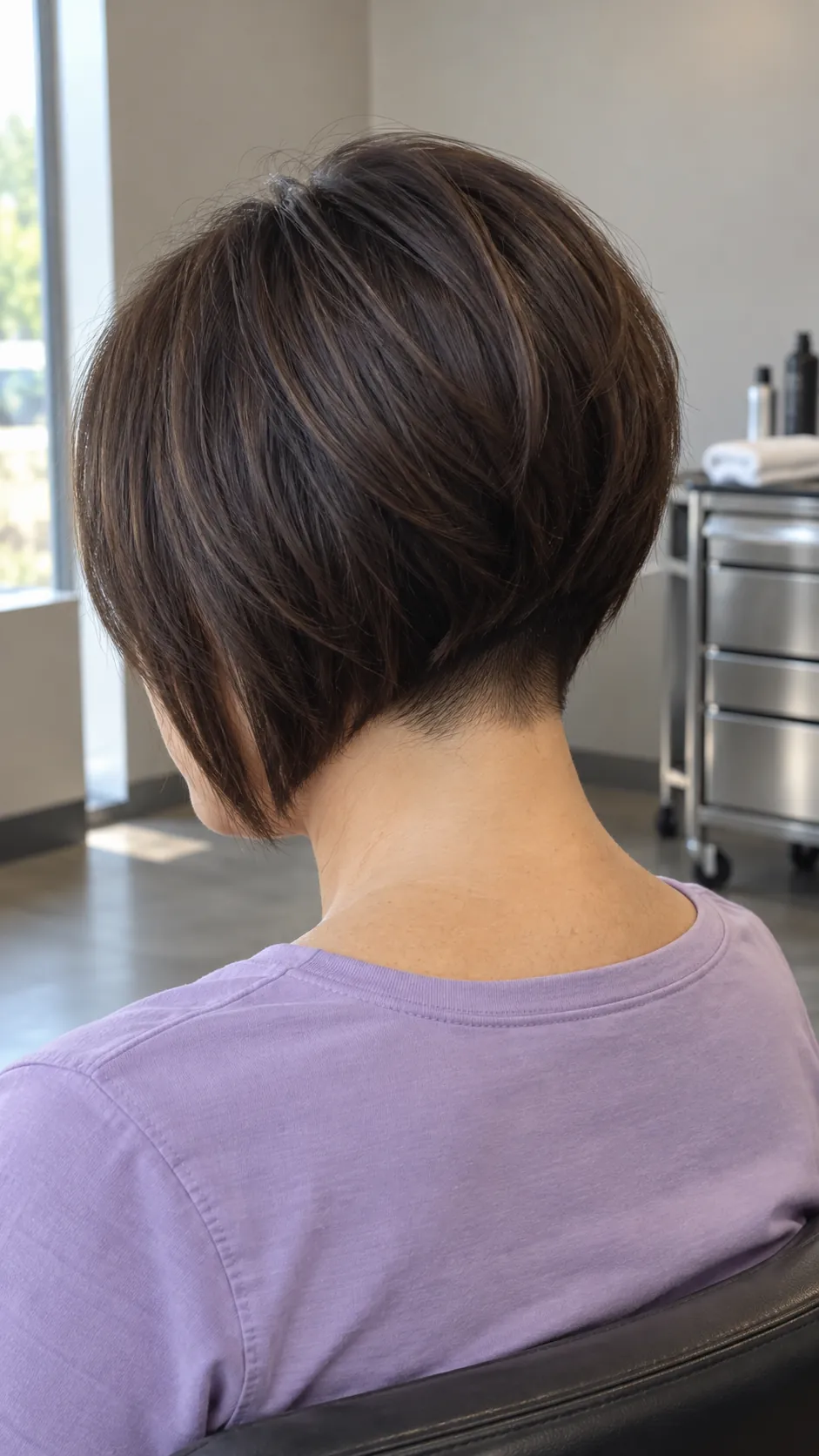
A Longer Front With a Clearly Graduated Back
A longer front and shorter graduated back create two separate design choices in one haircut. Use a side view to show the angle and a rear view to show the stack. Keeping the front longer does not automatically make the back less rounded. Confirm the front length when your hair is dry and resting beside your face.

A Gentle Angle With a Low Rear Curve
A mild slope toward the front offers direction without a dramatic point at the jaw. The rear curve can stay low, making the transition into the sides feel quieter. Ask the stylist to preserve the connection behind the ears, where a gap can make the outline look broken. This shape is useful if you like graduation but want a less sculpted profile.

A Crisp Nape With a Smooth Surface
A clear lower edge makes the back look defined even when the top is softly rounded. The surface layers should blend without a visible step between levels. Check the line before adding lots of shine product, which can make different hair groups harder to assess. A precise nape may need regular tidying if you want the edge to stay equally sharp.
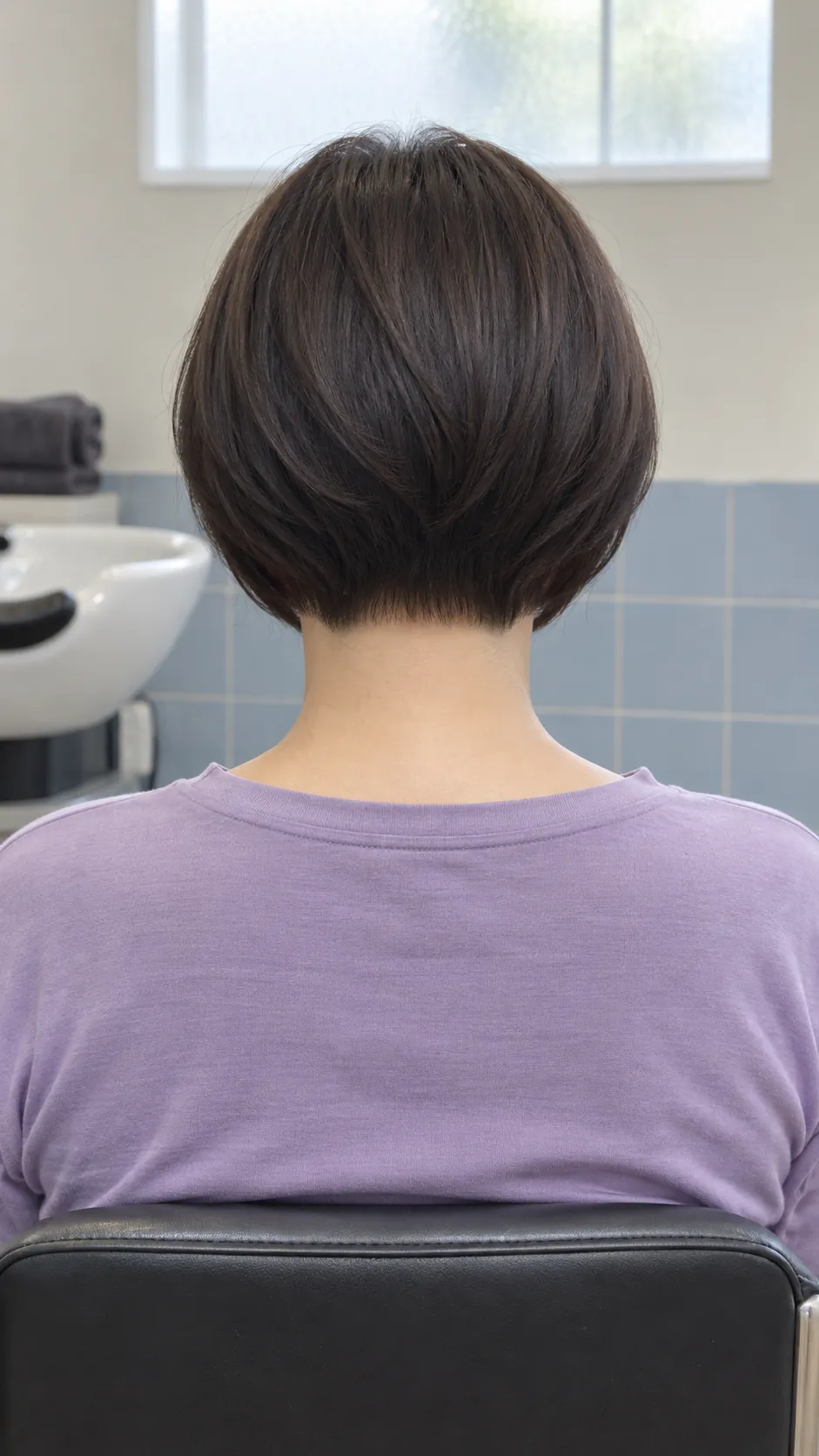
A Piecey Stack With Connected Layers
A piecey finish separates the surface into small groups while the underlying graduation still holds together. The difference from an uneven shelf is continuity: the groups should overlap instead of leaving a gap across the back. Start with a restrained amount of styling product so separation does not become stringy. Ask for movement at the surface rather than indiscriminate thinning through every layer.
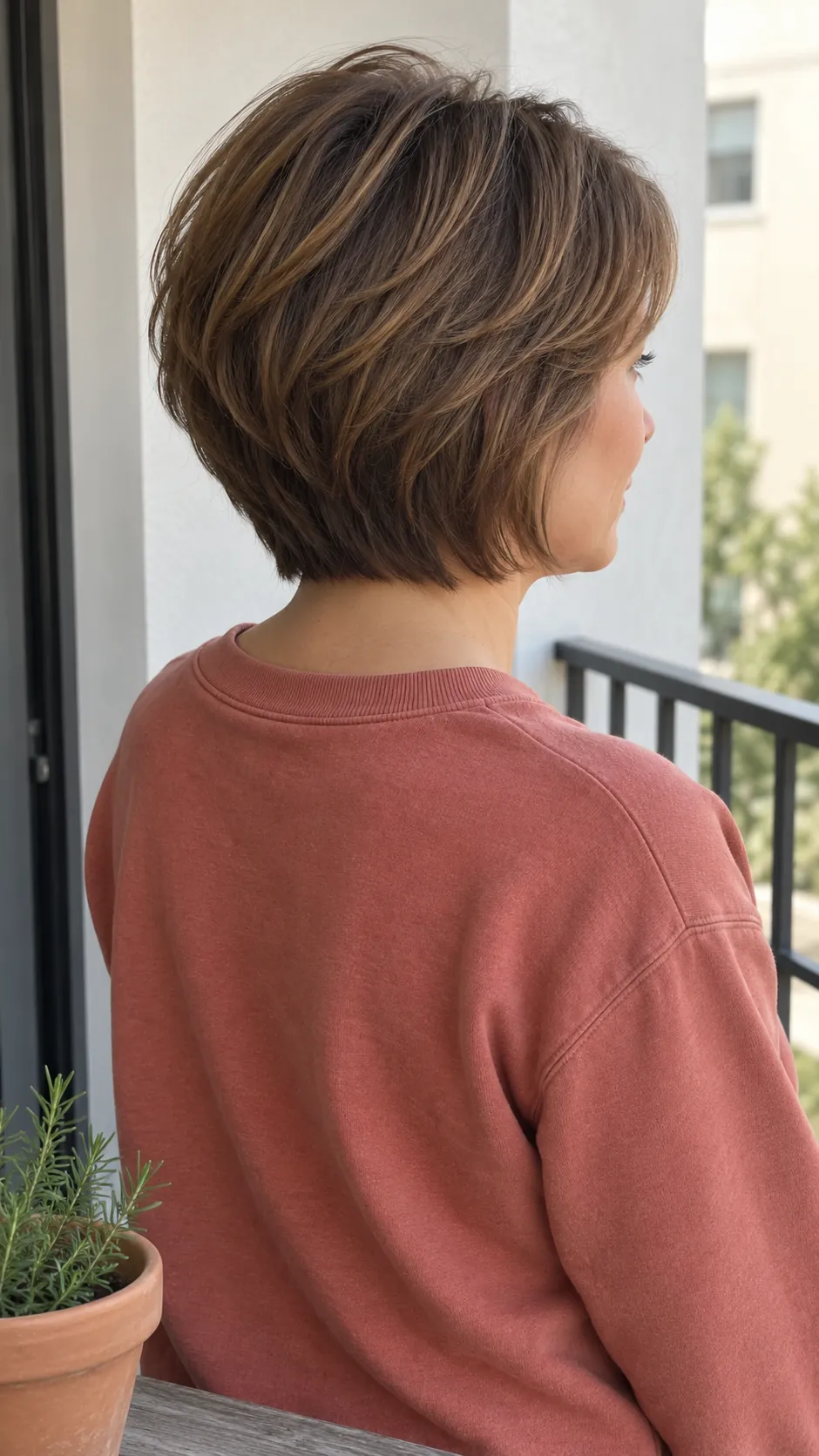
A Rounded Back With Longer Ear Coverage
Keeping more length around the ears softens the side transition and can preserve a useful tuck. Ask to see how that length joins the shorter rear sections. A deep notch behind the ear can make the nape look disconnected from the sides. Test your glasses and normal part before deciding how much coverage you want.
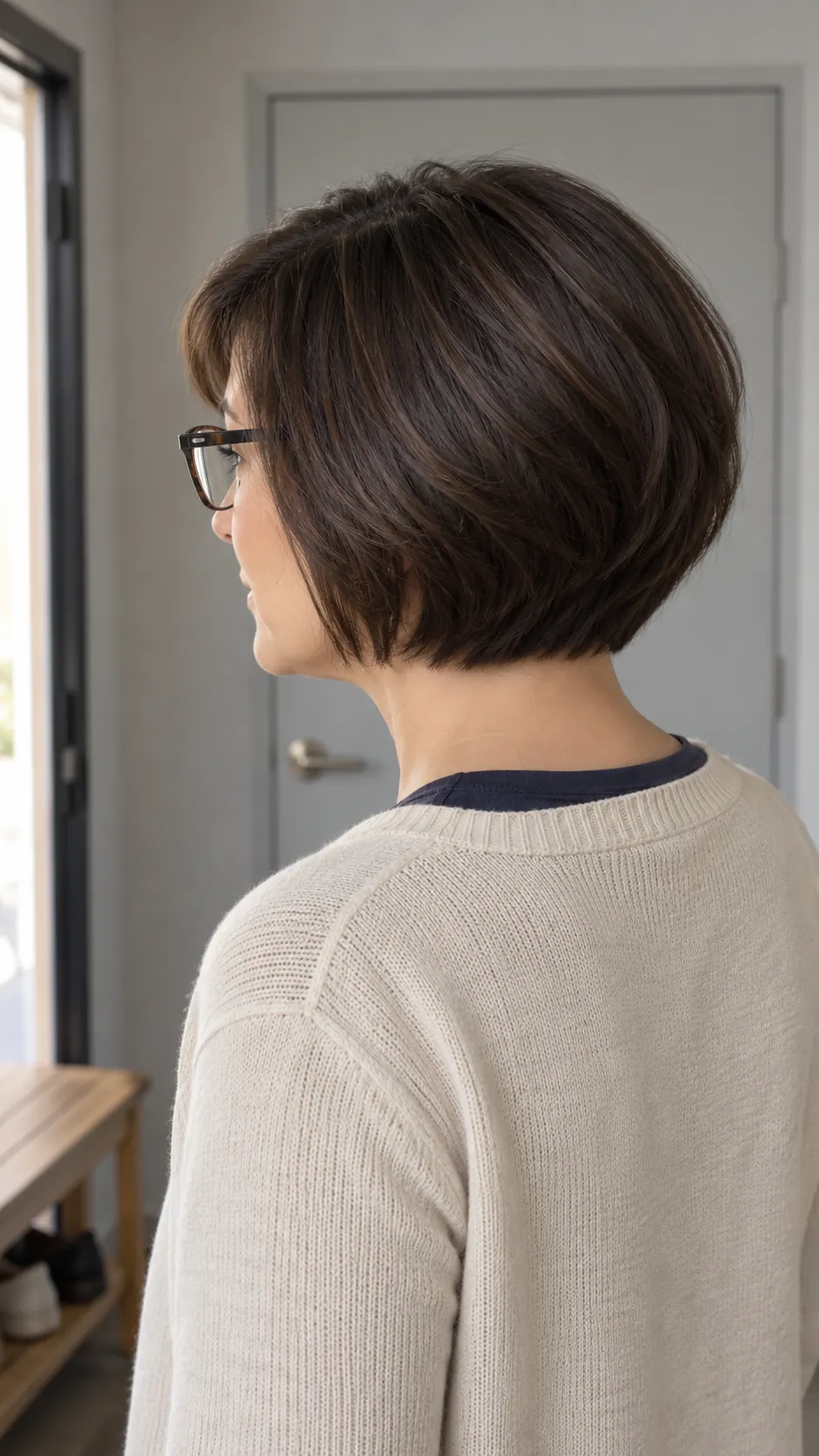
A Short Nape With an Airy Crown
A shorter nape and a lifted crown create a more vertical silhouette. Some of that height can come from drying rather than the cut itself. Ask what the crown will do without a round brush so your expectation matches your routine. Keep the lowest sections directed downward if they tend to stick out.
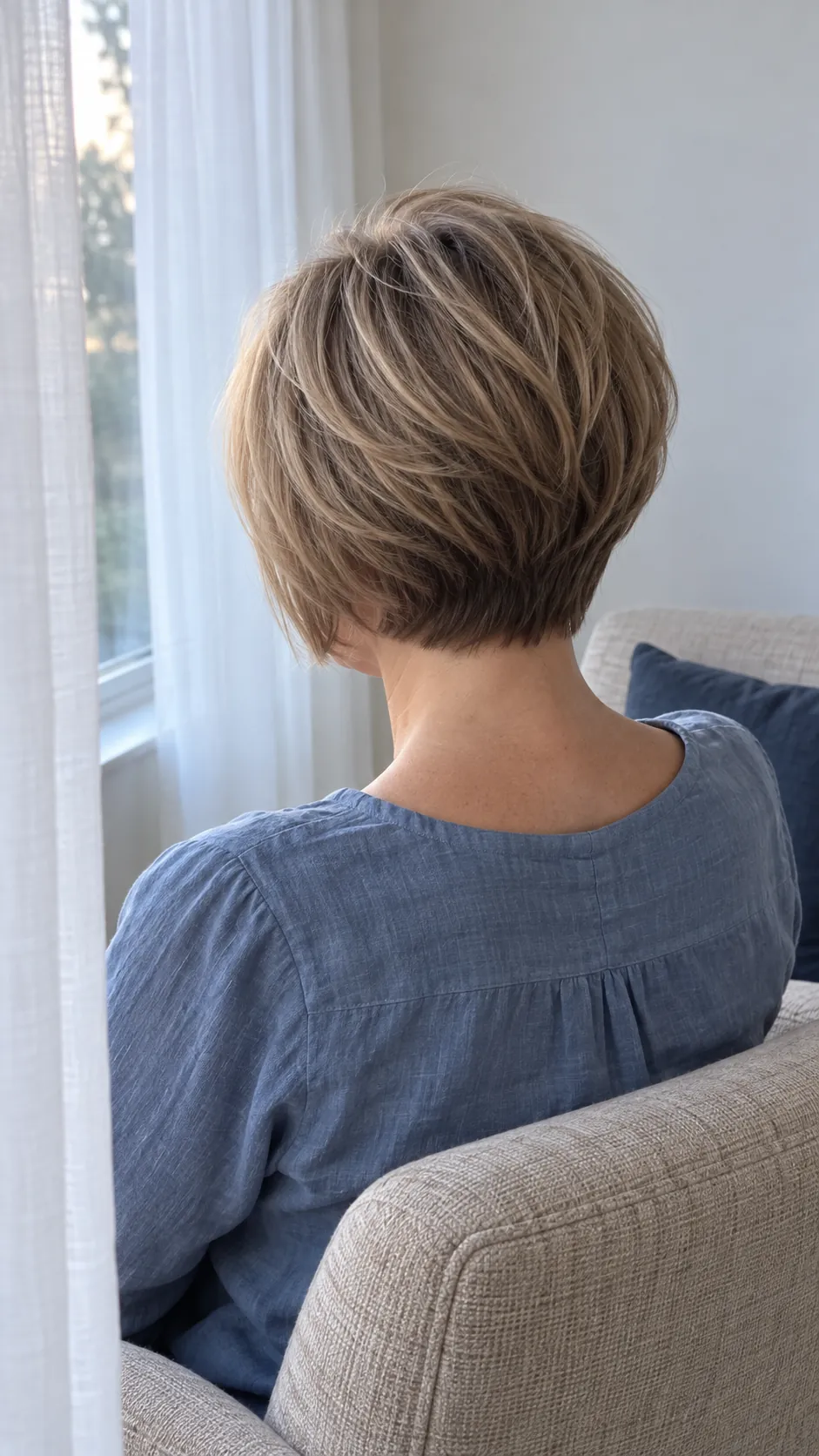
Silver Hair With Visible Layer Blending
Silver and gray strands can make the curves of graduation easy to see in a rear photograph. Choose the shape for the way your hair bends, rather than expecting color alone to create fullness. If the texture varies between the crown and nape, discuss both areas during the consultation. A soft finish can preserve natural strand variation while keeping the layers connected.
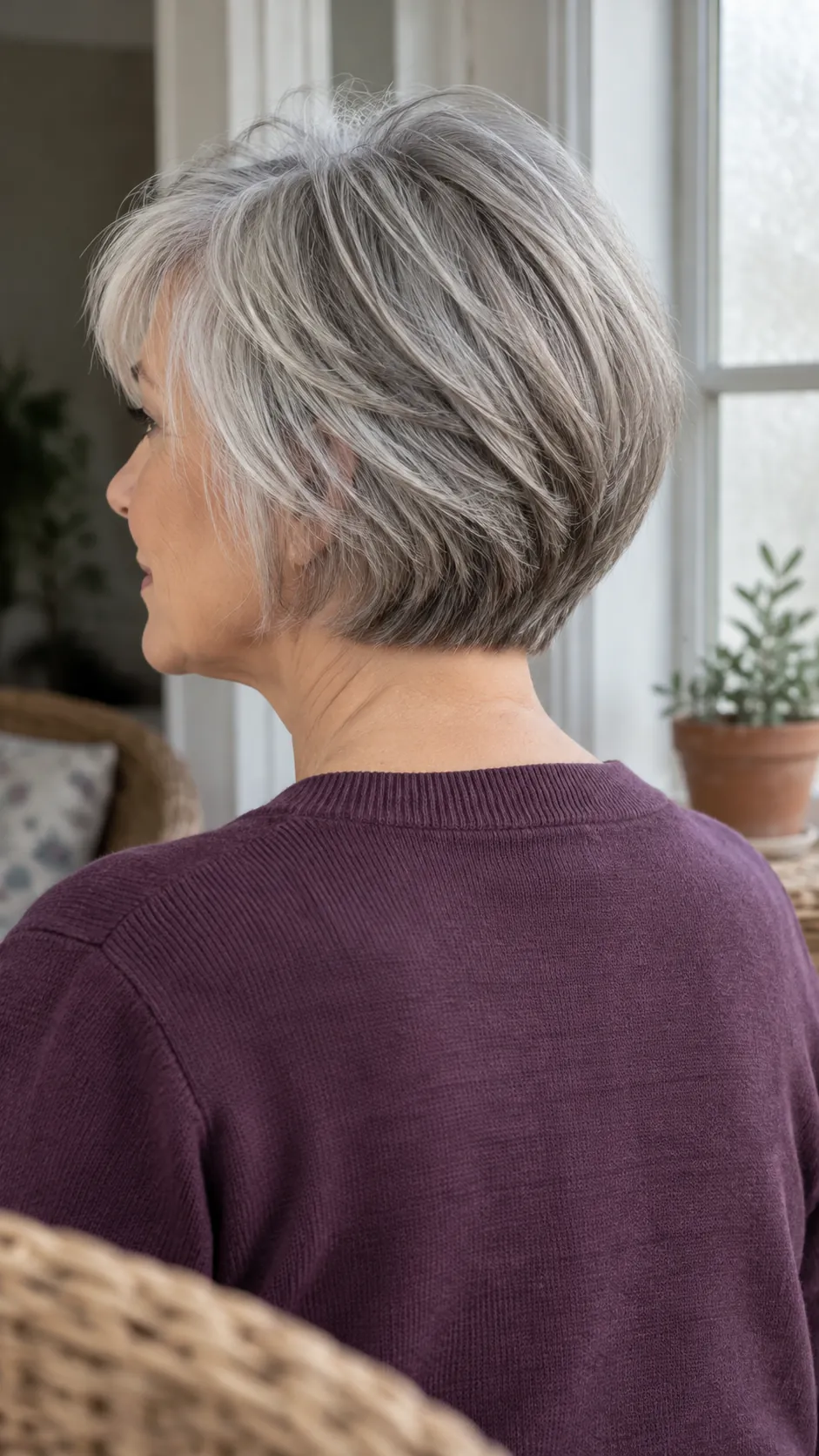
A Stack With Subtle Color Dimension
Small changes in color can show how the back layers overlap, but they cannot repair an uneven cut. Keep the rear shape as the first decision and use color as an optional second choice. Ask how the lighter sections will appear when the bob moves rather than only under salon lighting. Choose maintenance that suits your routine before committing to a strongly contrasted pattern.
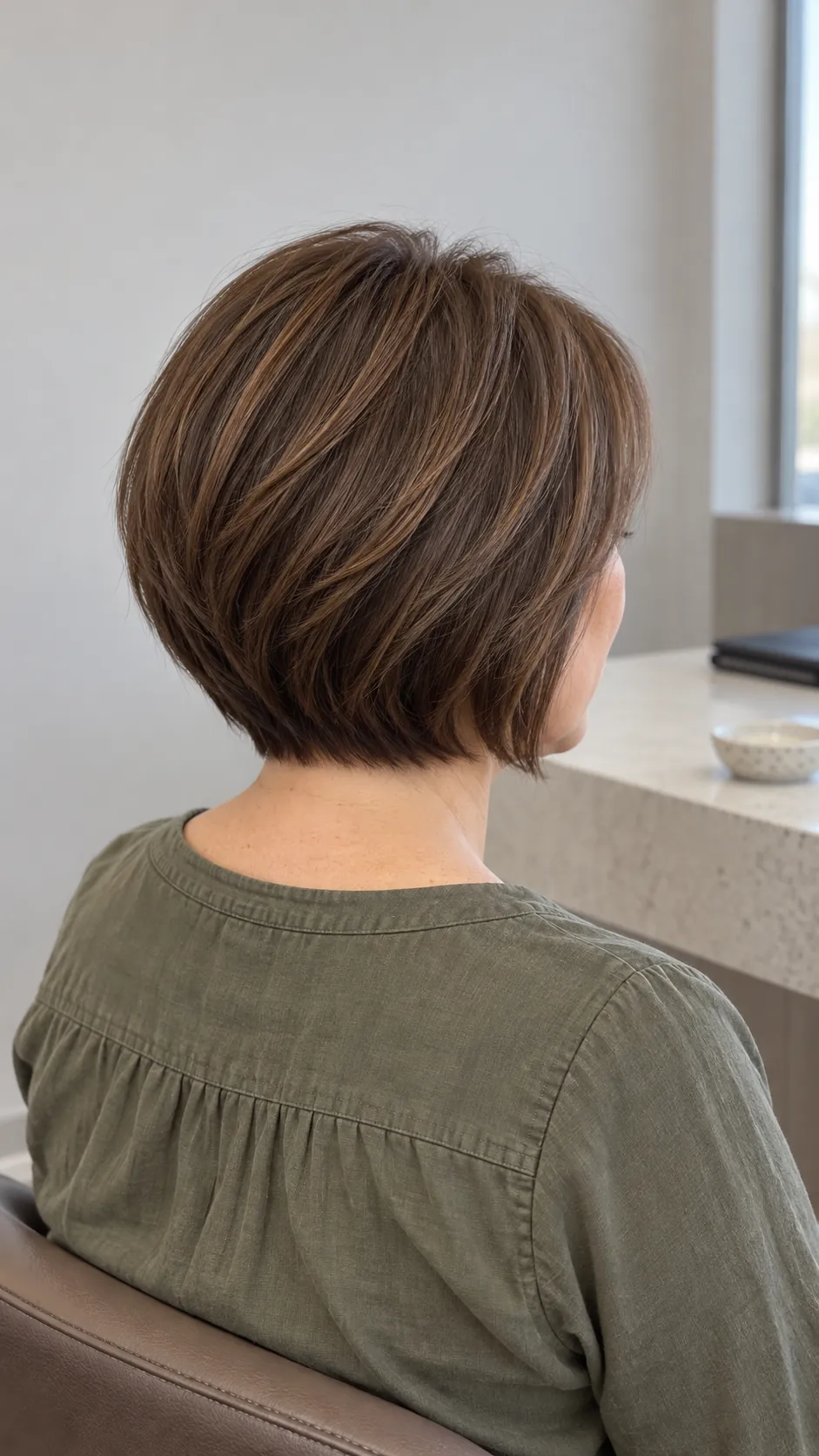
A Longer Nape for a Softer Outline
Leaving more length at the nape gives the stack a less exposed lower edge. The rounded shape is still created above it, so longer does not have to mean completely flat. Check whether the ends meet your collar and how they react when you turn your head. This can be a useful compromise when a very short neck line feels unfamiliar.

A Soft Stack With a Relaxed Dry Finish
A relaxed finish shows whether the shape works without a highly polished salon blowout. Let the surface settle into its usual direction and look for a continuous connection through the back. A cowlick may change where fullness appears, so mention it before the shortest layers are cut. Bring an ordinary unstyled photo of your hair to help set a realistic maintenance plan.

A Balanced Stack Seen From Behind
A direct rear view lets you compare the two sides, the center nape and the height of the rounded section. Hold your head naturally, since tilting it can make one side appear shorter. The image should be a consultation reference rather than a demand for identical density on both sides. Before leaving the appointment, agree on the nape length, the amount of graduation and how you will dry the shape at home.