
The hardest part of choosing a short cut is knowing which detail you actually like. A soft wave, a short fringe, and a compact nape can look like one decision in a photograph, but they ask different things of your hair. Separate the length from the styling finish before you ask a stylist to copy the shape.
The images below are AI generated hairstyle illustrations, not photographs of salon clients. Use them to discuss proportions, texture, and fringe options, then ask your stylist what is practical for your own hair. A reference should start a conversation about your routine rather than promise an identical result.
Classic Chin Length French Bob
A chin length perimeter and a brow skimming fringe make the classic shape easy to identify. Ask where the ends will sit when your hair is dry, because a small change in length can move the line away from your chin. Keep the fringe width separate from the side length in your consultation. If you like a softly bent finish, show that detail rather than asking only for a French bob.

Short French Bob Above the Jaw
Taking the ends above the jaw exposes more of the neck and makes the haircut feel compact. This version leaves little length for tying the hair back, so think about how you manage hair during exercise or work. A stylist should check the nape growth pattern before agreeing on the shortest line. Start slightly longer if you are unsure, since more can be cut at the same appointment.
French Bob With a Longer Front
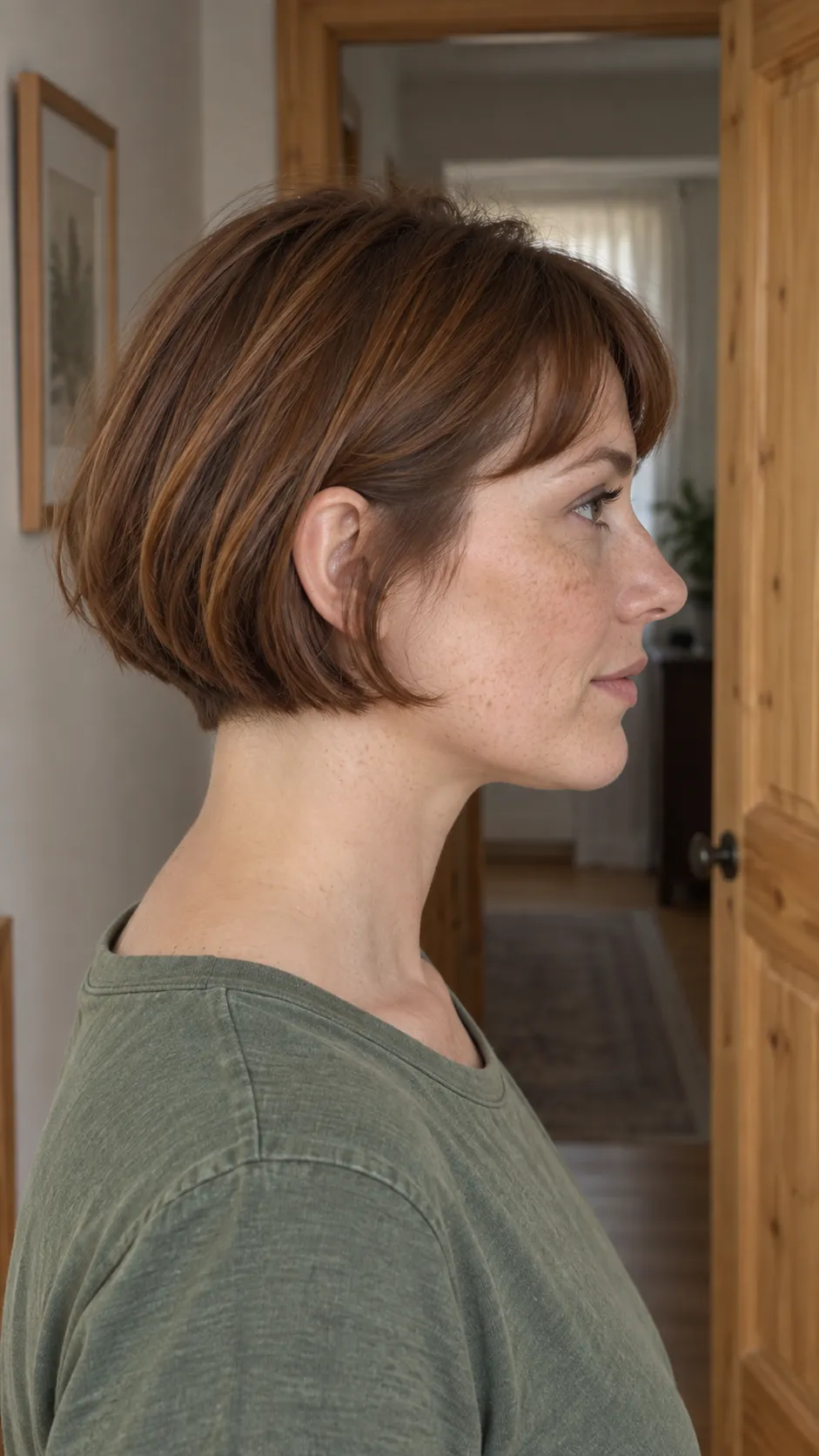
A slightly longer front keeps the cheek framing pieces while the back stays short. The difference can be subtle; it does not need the steep angle of an inverted bob. A side view is especially useful for showing the transition you want. Tell your stylist whether the front should touch the jaw or fall below it. This choice offers more front coverage without turning the overall shape into a long bob.

Straight French Bob With Blunt Bangs
A solid fringe creates a clear horizontal line above the eyes. It also uses hair that would otherwise fall toward the sides, which matters when the front hairline has less density. Ask the stylist to assess the fringe section before cutting a wide band.
A crisp fringe may need drying or smoothing even when the rest of the bob behaves easily. Discuss how often you are willing to return for fringe trims. Longer gaps between appointments can change where the front line sits relative to your eyes.
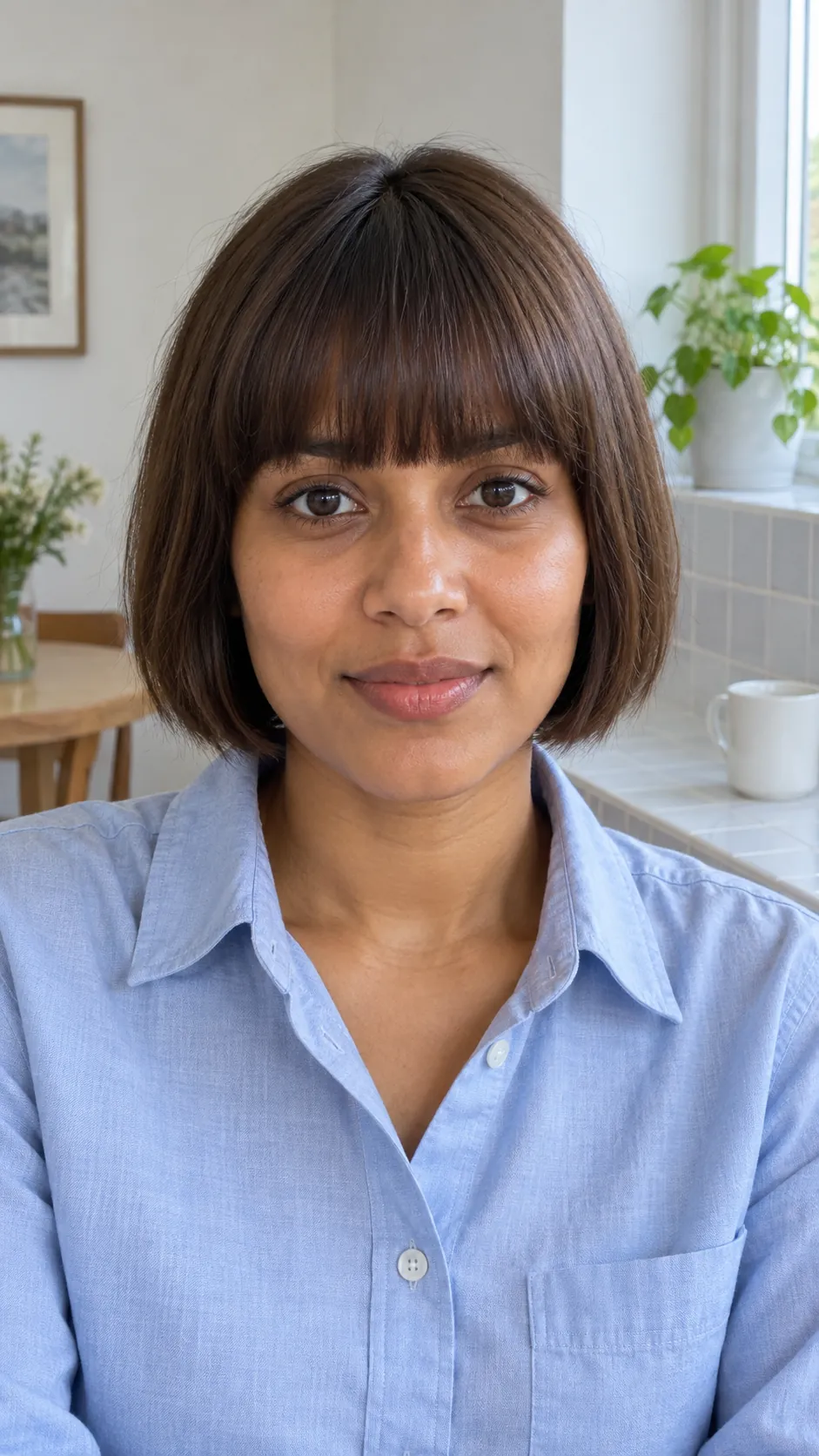
French Bob With an Airy Fringe
Small gaps between fringe sections soften the front without removing the bob outline. The useful detail is the amount of forehead you can see, not simply the word wispy. Bring a reference with a similar front hair density so the stylist can judge how much separation is realistic. An airy fringe can still split at a cowlick and is not a guarantee of effortless styling.

French Bob With Short Micro Bangs
Micro bangs sit clearly above the brows and leave more of the forehead visible. Their short length makes small changes in the cut easy to notice. Ask for a cautious first pass if you have never worn them. Check the dry position before making them shorter, especially when the fringe has a wave. This is a deliberate fringe choice rather than a requirement of the French bob.
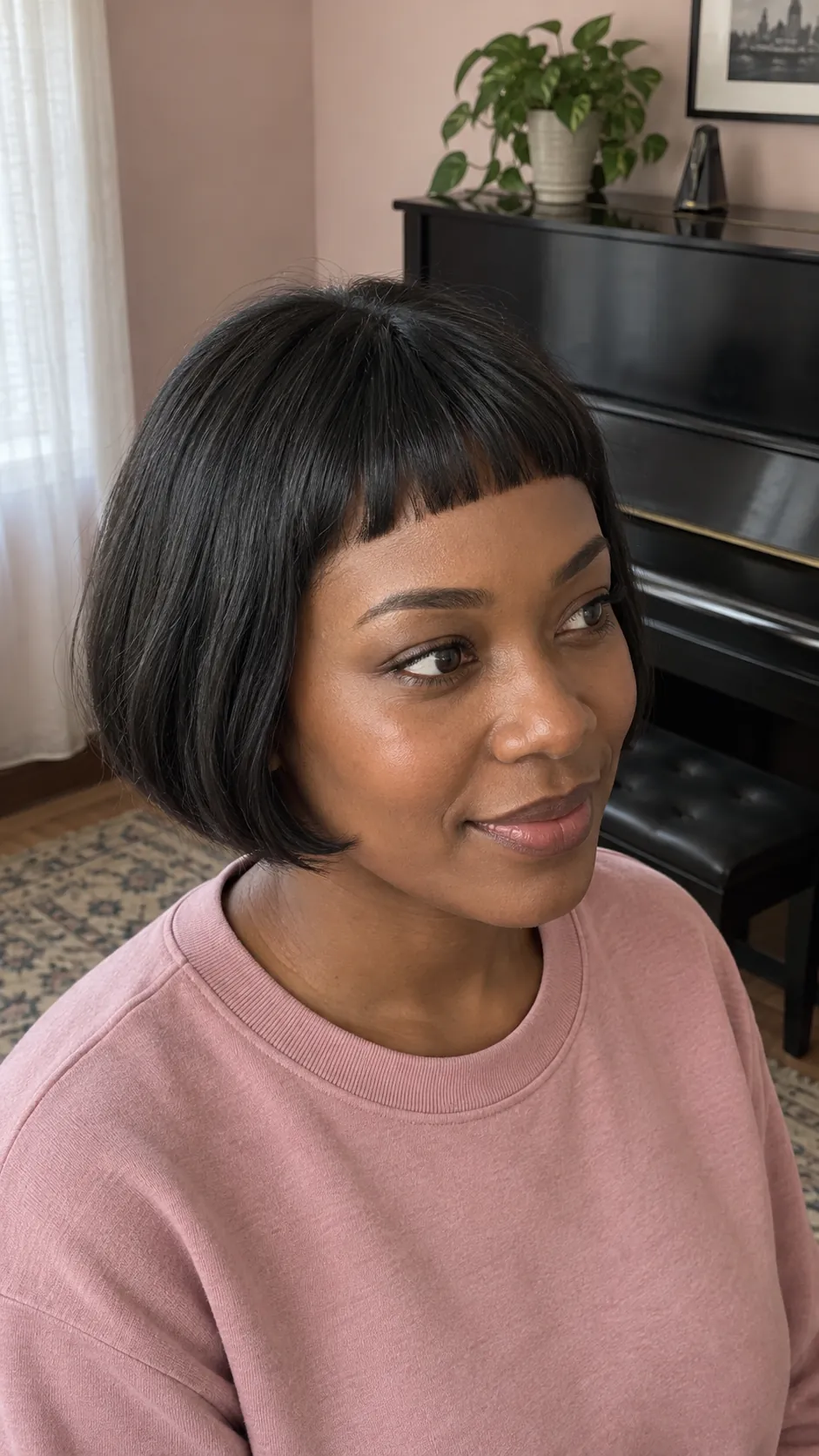
French Bob With Curtain Bangs
A divided fringe creates an open center with longer pieces toward the temples. The shorter center pieces still need enough length to move away from the face. Show the point where the longest fringe should meet the side hair.
Your stylist can help distinguish a true fringe from longer face framing pieces. A center cowlick may assist the split or make one side sit differently, so assess both sides while dry. Test the split in the direction you usually wear it rather than only in the salon finish.
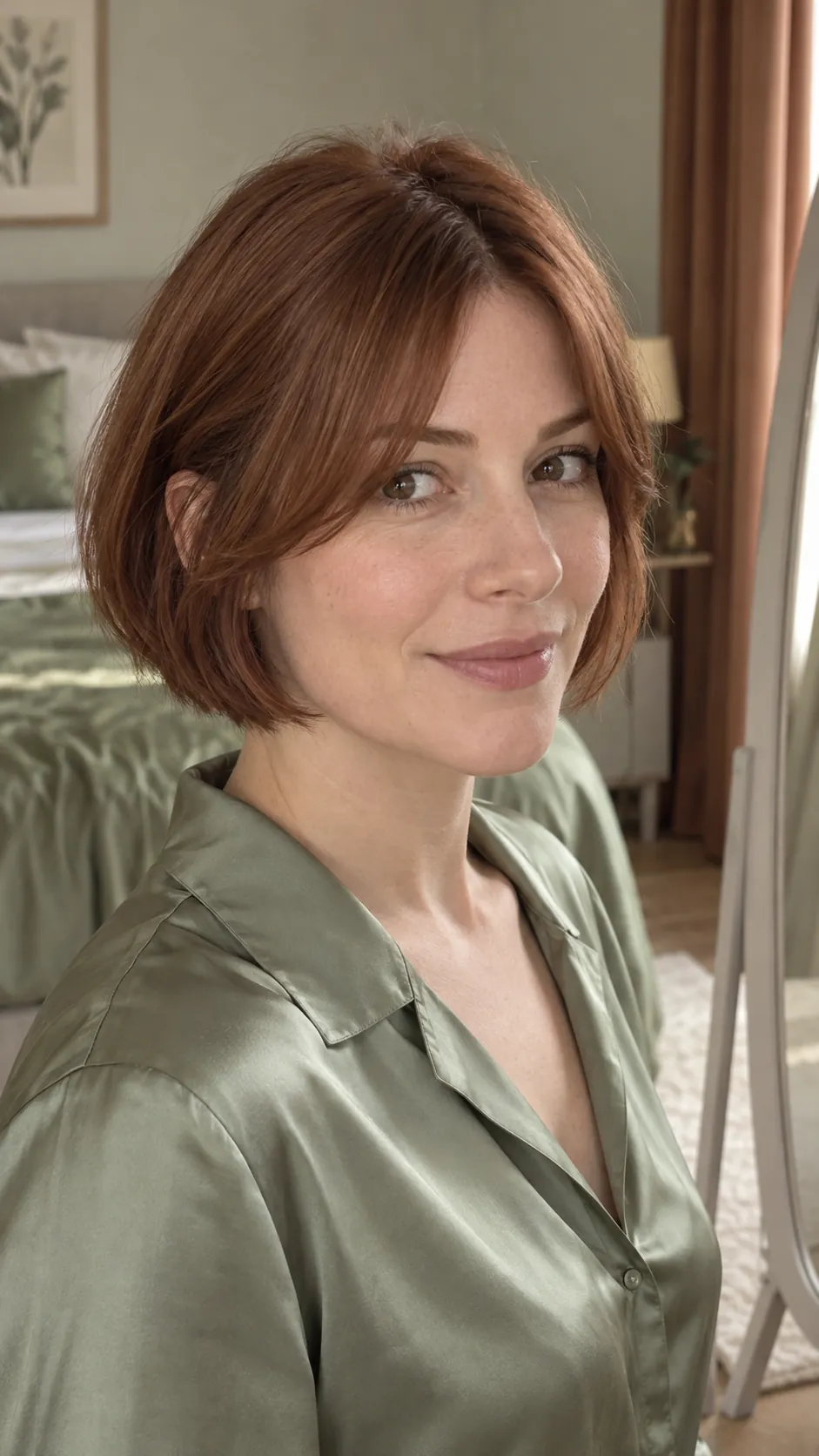
French Bob Without Bangs
Leaving out the fringe keeps more hair in the front corners of the bob. That can be useful when you want an open forehead or prefer not to style a separate short section. The compact length and shape still provide the reference point for a French inspired bob. Decide on the length first, then evaluate the front framing before committing to bangs.

French Bob With a Side Part
A side part shifts the front weight and changes how the same perimeter frames the face. Wear your usual part during the consultation so the cut is not balanced only for a center part. Moving it afterward can make one side appear longer or fuller. This is also a useful way to see whether you prefer more forehead coverage before cutting a fringe.

Wavy French Bob With Soft Bangs
Natural bends give this bob its rounded but irregular outline. The fringe can carry a little wave instead of being forced completely straight. Ask to see how the fringe behaves as it dries, since its curl pattern may differ from the sides.
If you use a diffuser, have the stylist demonstrate a gentle routine with the dryer kept at a comfortable distance. The goal is to work with the bends you have rather than copy someone else’s exact wave pattern. A reference with comparable wave size helps make that discussion specific.
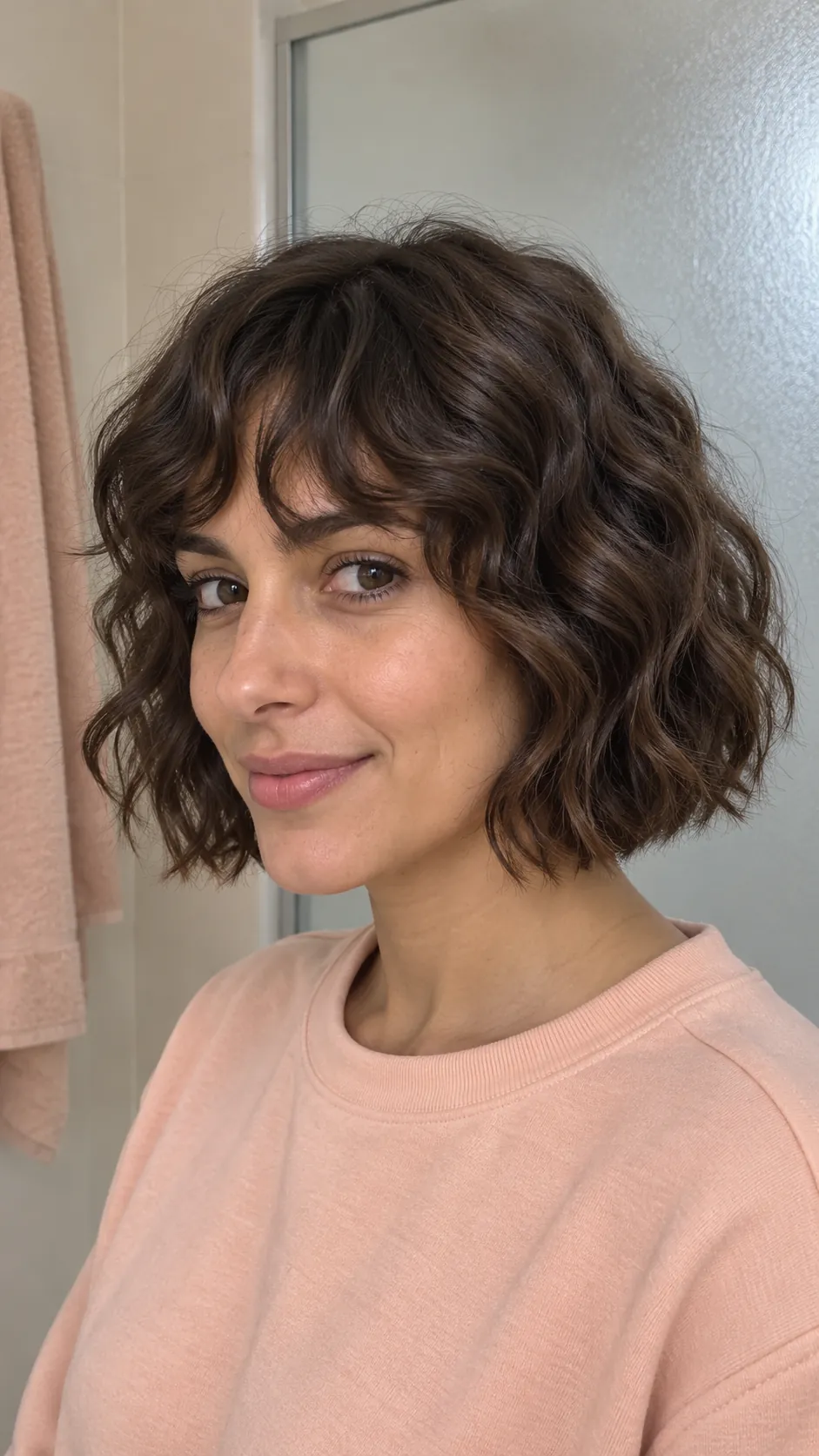
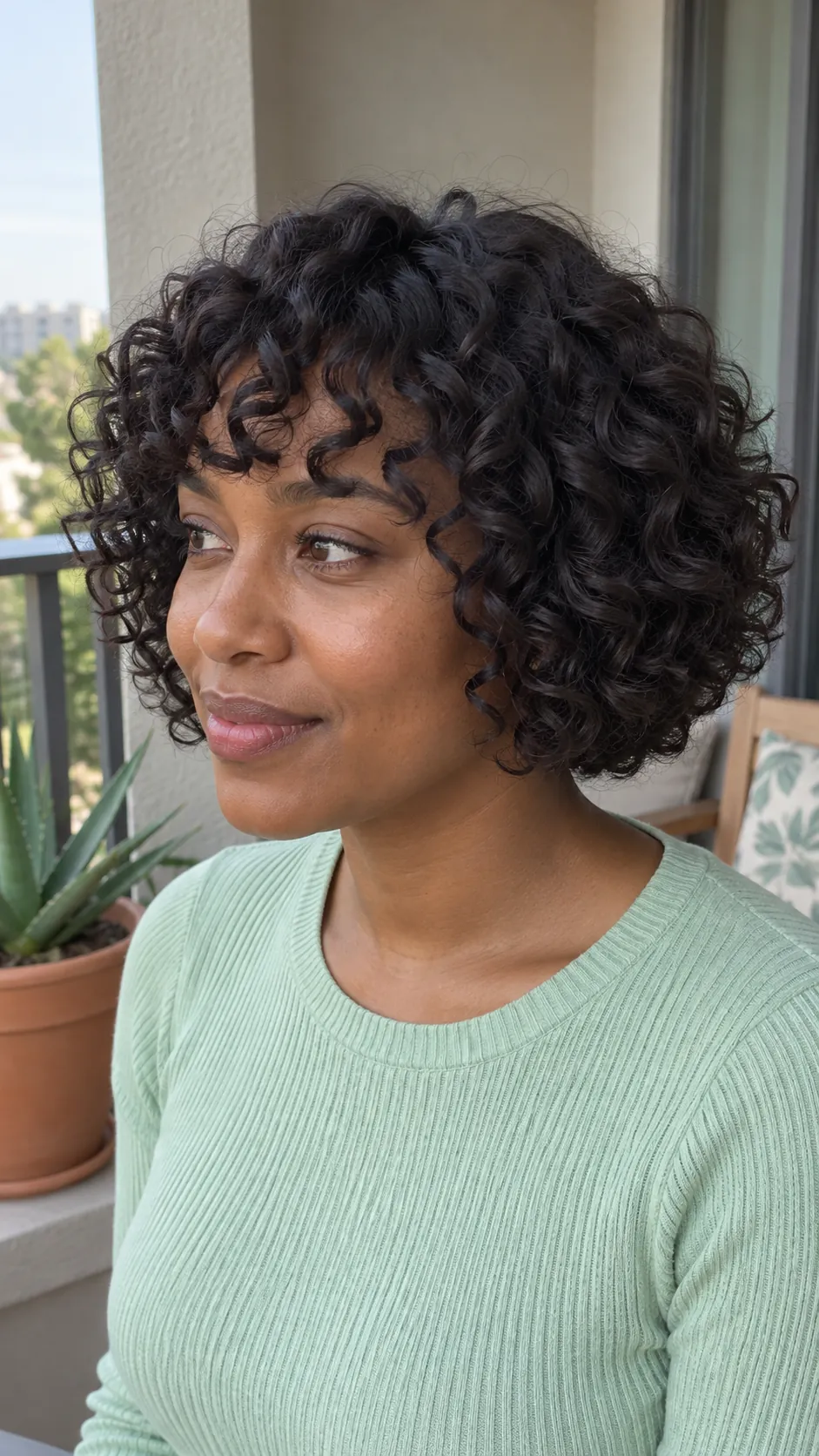
Curly French Bob With a Rounded Shape
A short rounded bob can frame curls while keeping the neck visible. Its apparent length depends on shrinkage, so a wet measurement alone is not enough. Discuss the dry silhouette and the amount of width you want near the cheeks. A stylist experienced with your curl pattern can decide where shaping is needed. Bring references with similar curl size, not just similar hair color.
French Bob for Fine Straight Hair
Fine describes strand thickness, while density describes how many strands you have. Keeping a reasonably full perimeter can help fine straight hair show a clear bob line. Avoid assuming that extra layers will always create more visible fullness at the ends. Ask which sections need shaping and which should retain their length. Choose a light styling finish if heavier products make your hair separate into flat sections.

French Bob for Dense Hair
Dense hair can build a broad shape at the sides of a short bob. Internal weight adjustment may help the outline sit closer to the head, but the method should depend on your texture and growth pattern. Ask the stylist to preserve the visible perimeter if you want solid ends.
Removing too much weight can change the surface movement and the way the bob grows out. A dry check gives a more useful picture of width than a photograph of wet hair. Look at the rear outline as well as the front before deciding that more weight must be removed.
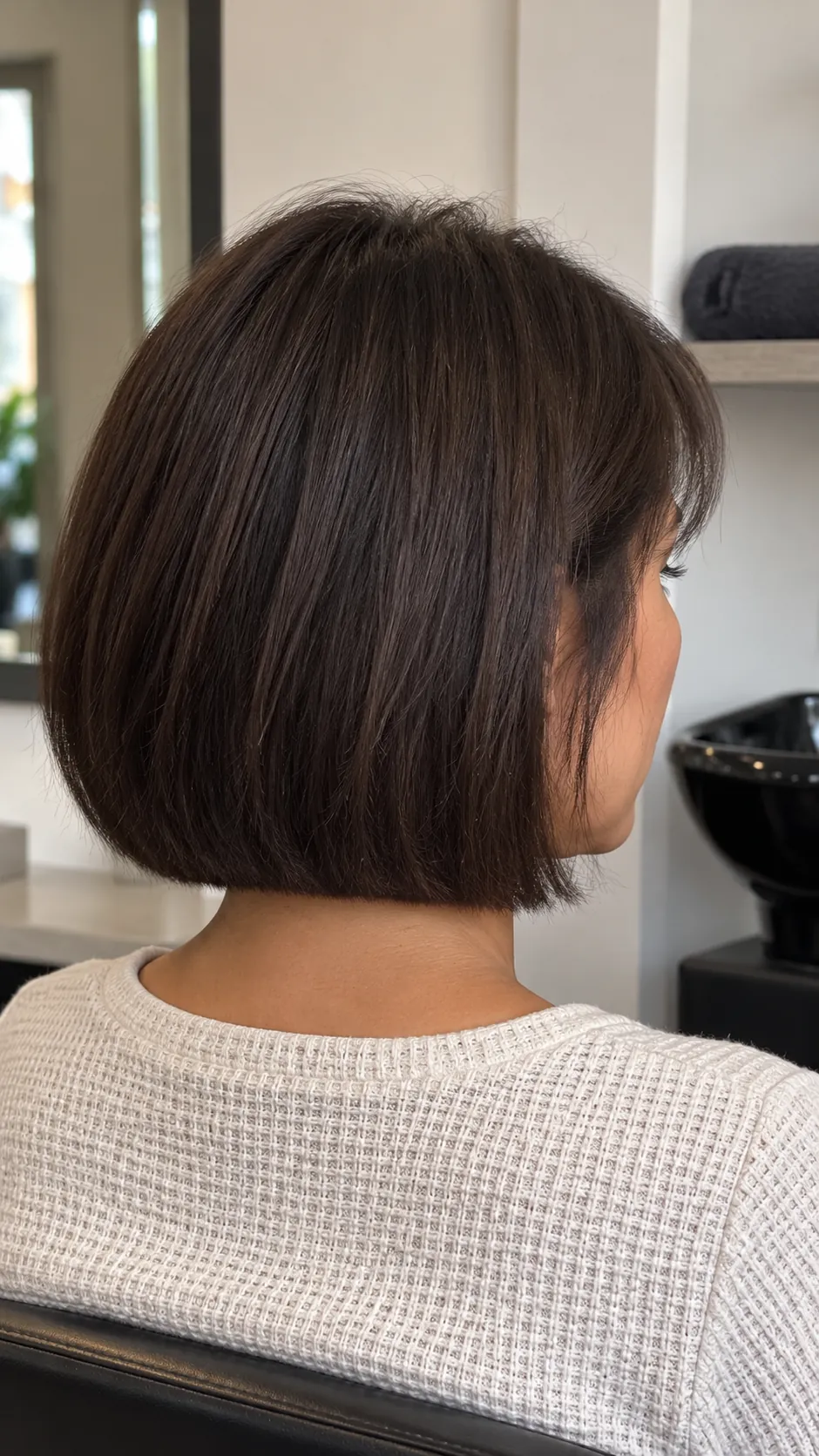
Tousled French Bob With Soft Ends
This finish breaks the edge into small pieces while keeping the overall short shape recognizable. Light separation differs from heavily thinning the perimeter. Show how much visible texture you want at the bottom, especially if you also want the ends to look substantial. A small amount of styling product can change the separation, so ask which part of the reference comes from the cut.

French Bob With a Smooth Tucked Under Finish
A gentle bend under makes the perimeter look compact and rounded. A large round brush can exaggerate that curve, which may produce a shape you do not like. Ask for a demonstration that keeps the bend mostly near the ends.
This smooth finish may require heat on naturally wavy hair. Compare it with your ordinary drying routine before choosing it as your daily reference. You can still use a smooth photograph to discuss length while choosing a different finish for home.

French Bob With a Relaxed Air Dried Finish
An air dried version shows small bends and uneven movement that come from the hair itself. The cut should be assessed in that state if you intend to avoid regular blow drying. Air drying does not make every hair type behave the same way, and the fringe may still need attention. Tell the stylist how your roots, sides, and nape usually settle without tools. A realistic reference is more useful than a promise of zero maintenance.

French Bob With One Side Tucked
Tucking one side shows how the bob sits behind the ear while leaving the other side loose. The loose side gives you the true front length; the tucked side can appear shorter. Test the tuck before going very short if keeping hair away from your face matters. A clip may be needed when the front pieces do not reach comfortably behind the ear.

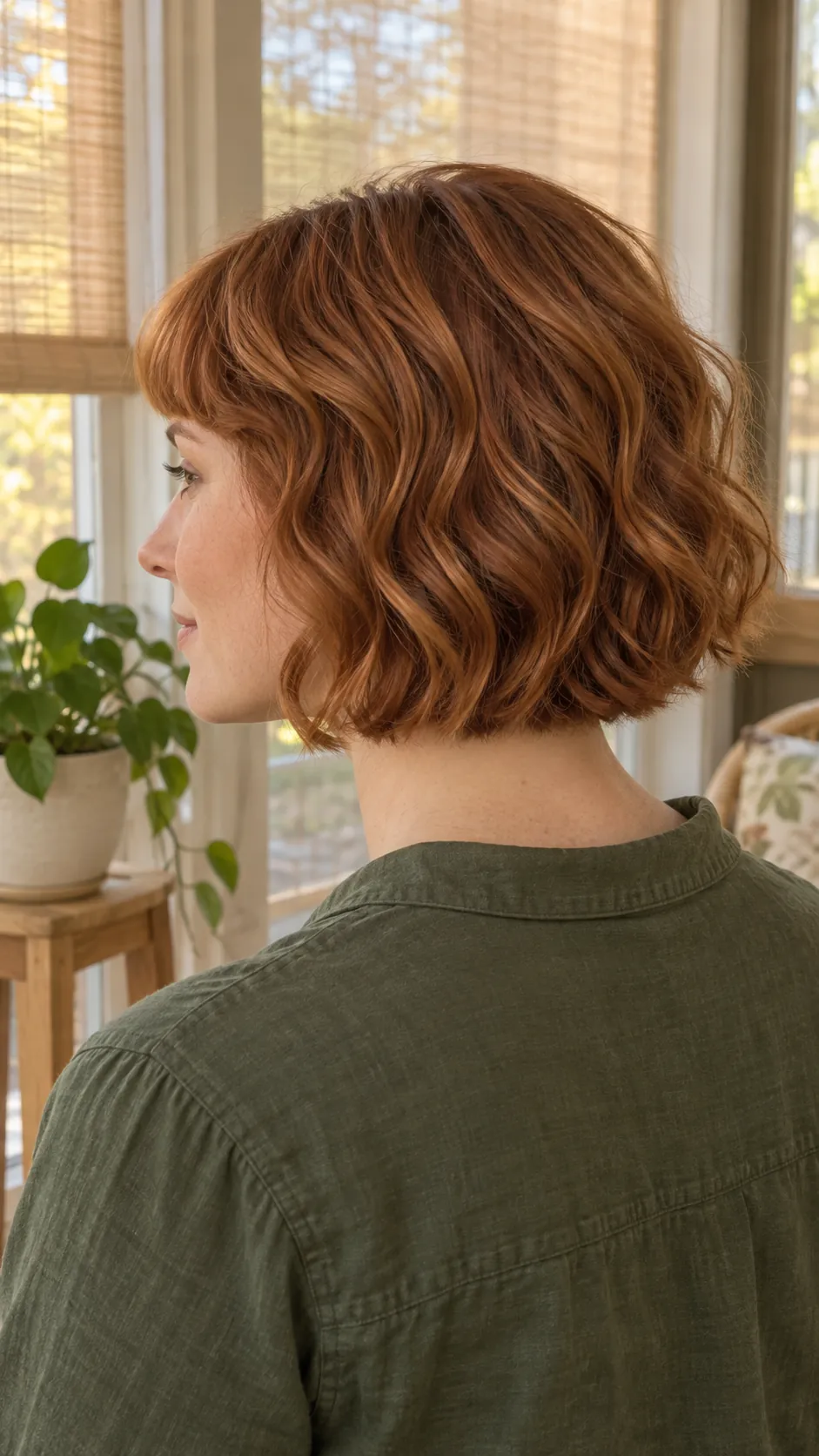
Copper French Bob With Visible Movement
Copper color makes bends and changes in direction easier to see in this reference. The shape still needs to work independently of the shade. Ask for the length and fringe you want before discussing color placement. Color maintenance and haircut maintenance are separate commitments, especially if the shade differs strongly from your natural hair. Take the reference as a shape option even if you prefer to keep your current color.
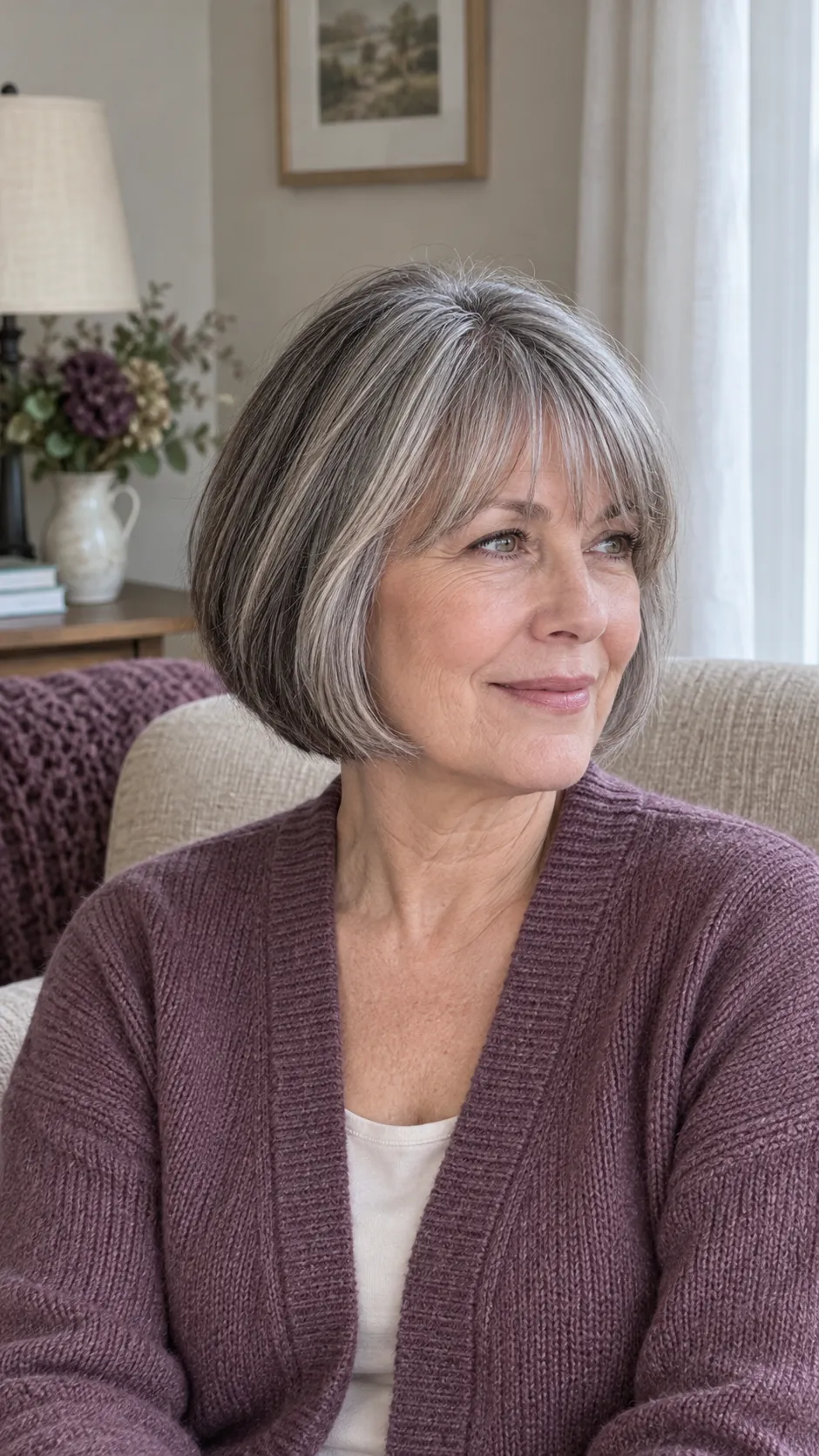
Silver French Bob With a Soft Fringe
Silver strands can give a short bob clear contrast without requiring a sharp fringe. A soft front edge keeps the focus on the haircut’s proportions. Texture can vary through a gray transition, so point out sections that feel coarser or bend differently. Your stylist can adapt the shape to those differences without assuming that every silver bob needs the same finish.
French Bob With a Clean Nape
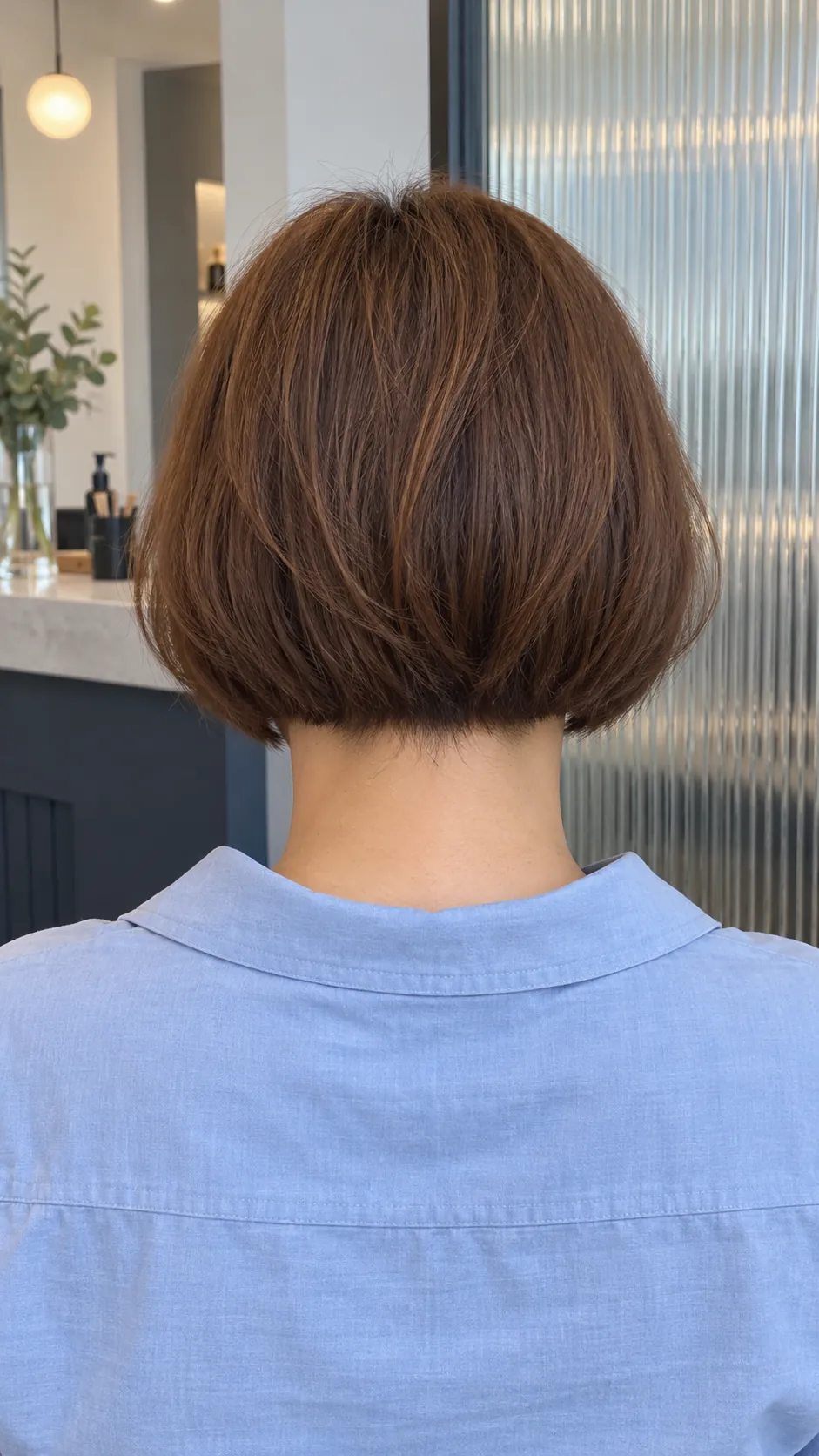
A rear view reveals the nape line that a front photograph can hide. Decide whether you want the hair to cover the natural hairline or sit higher with more neck showing. Cowlicks and upward growth can affect how a short back settles. Keep a rear reference alongside your favorite front view when you visit the salon. Before the appointment ends, check the dry back in a mirror and ask how the shape is likely to change as it grows.