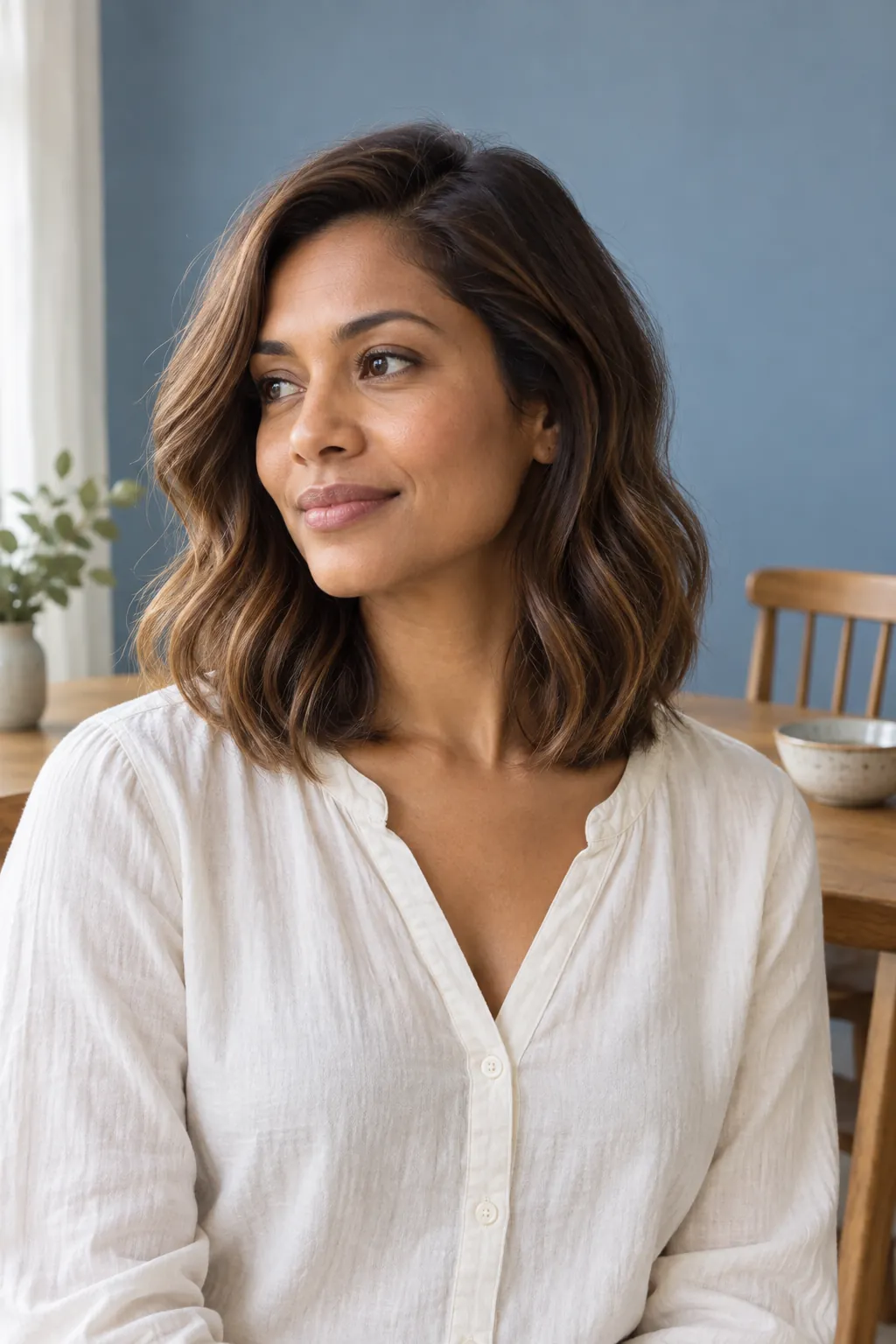
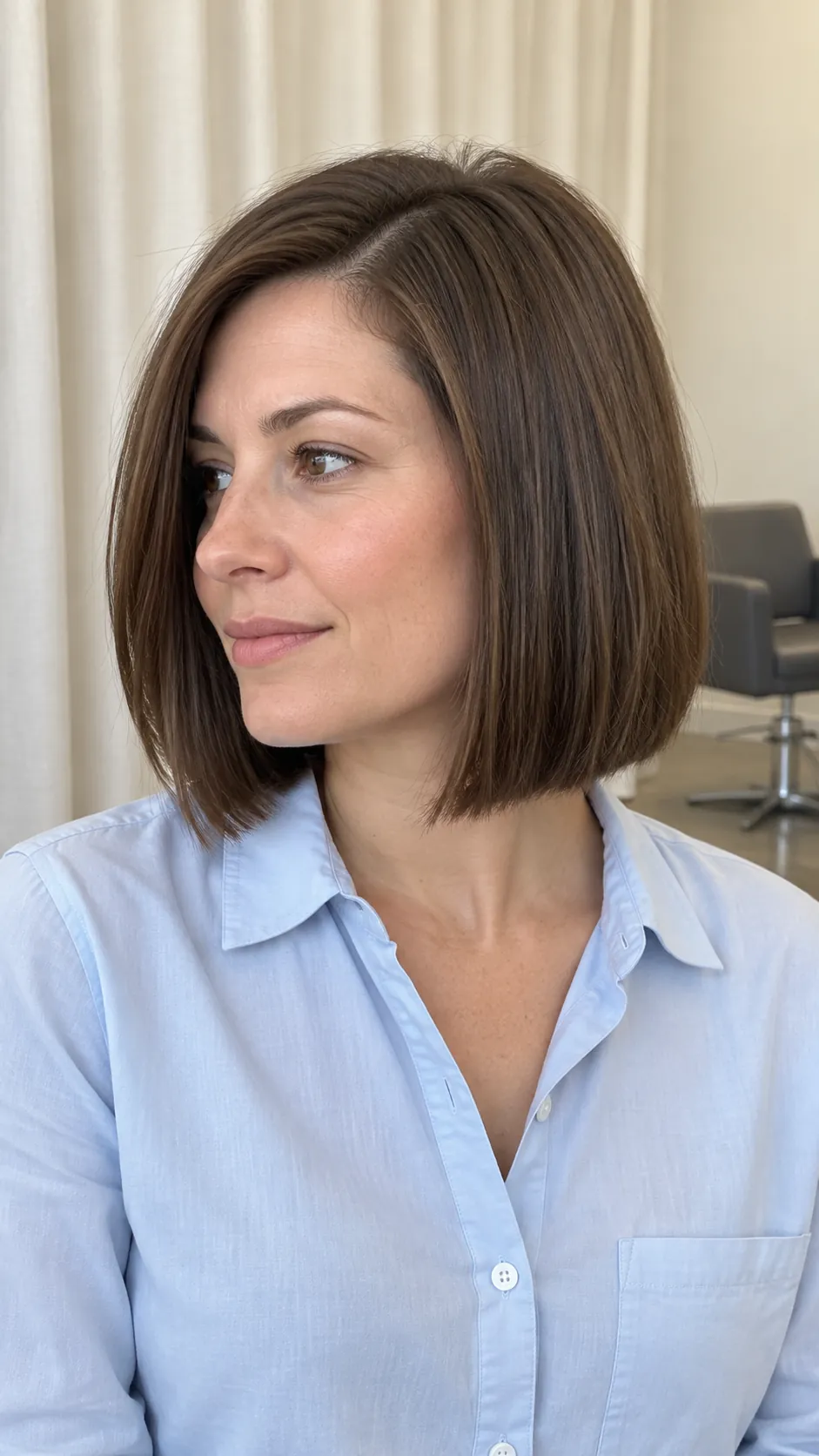
A straight cut line and a straight styled finish are different decisions. You can keep a solid perimeter while wearing waves, a side part, or gently turned ends. Start with the length you can live with, then decide which finish fits your usual routine.
The images here are AI generated hairstyle illustrations, not photographs of salon clients. Use them to point out specific details, then ask a stylist to adapt the cut to your density, natural texture, and growth patterns.
Ear Length Blunt Bob
An ear length edge exposes much of the jaw and makes the lower cut line a strong feature. It offers little spare length for a tuck, especially if the front is cut above the ear opening. Ask to see where the shortest front corner will sit before agreeing to this compact shape.
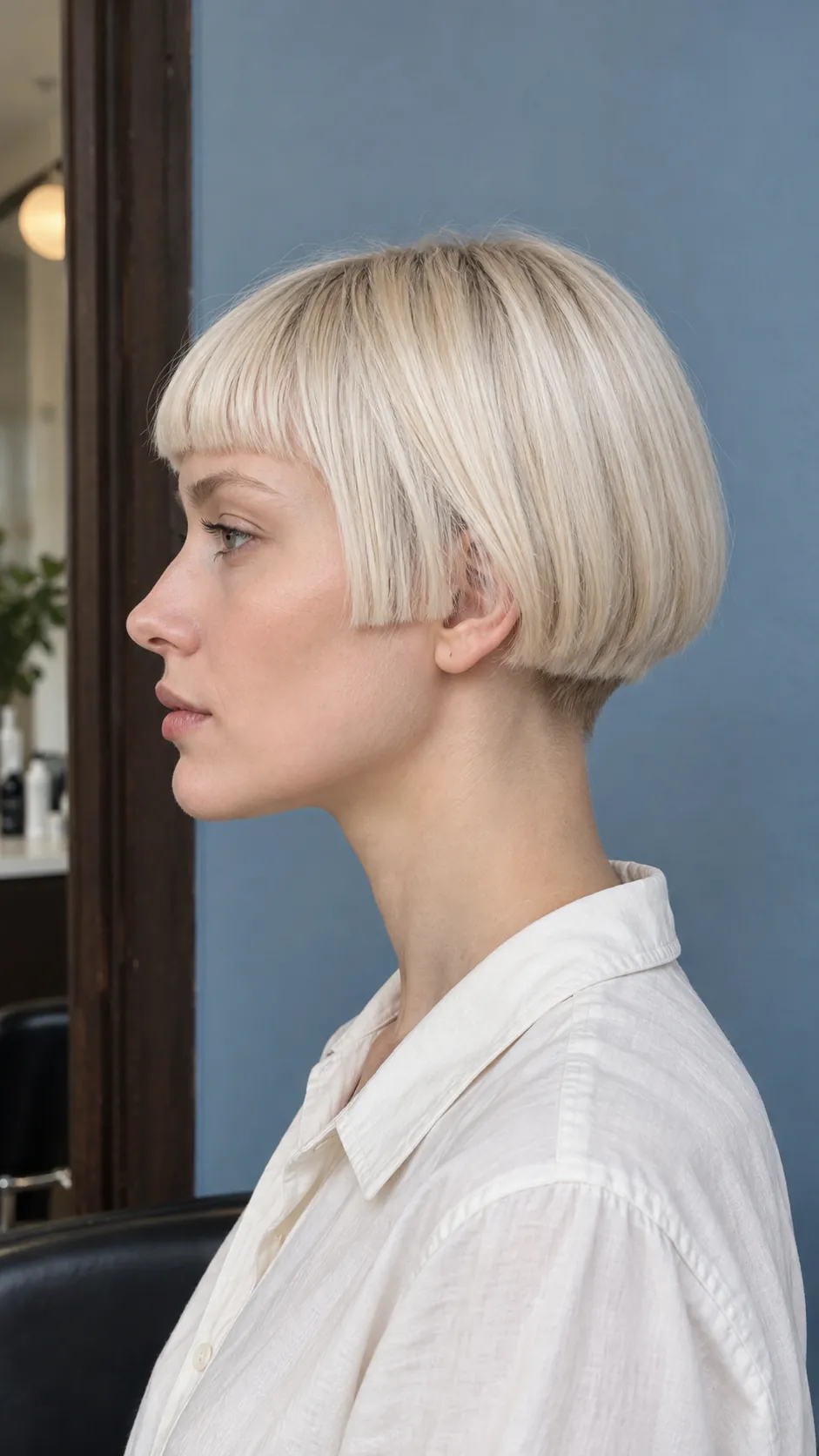
Jaw Skimming Blunt Bob
A line that skims the jaw gives a blunt bob a compact outline with more side coverage than a micro cut. The exact landing point changes when you lower or raise your chin. Have the stylist check the dry edge with your head in a comfortable upright position. Keeping your usual part during that check helps avoid a surprise when you style it at home.
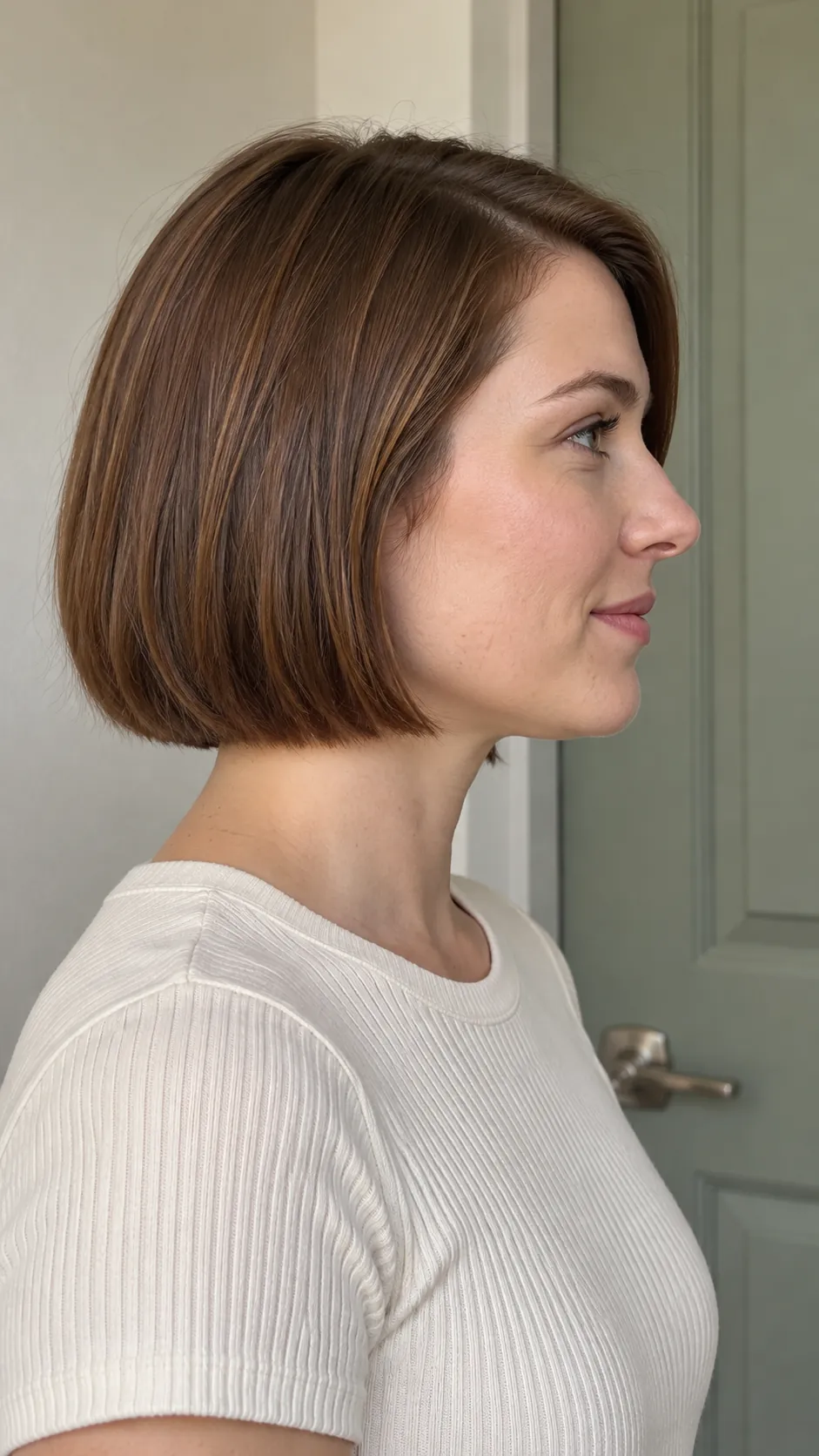
Chin Length Bob With a Level Edge
A chin length bob lets you compare the perimeter directly with a familiar facial landmark. A continuous level edge is the defining detail, while surface smoothness is a separate styling choice. Show a front and side reference so the intended back length is clear too. Avoid describing the cut only as short because that leaves a large range of possible lengths.
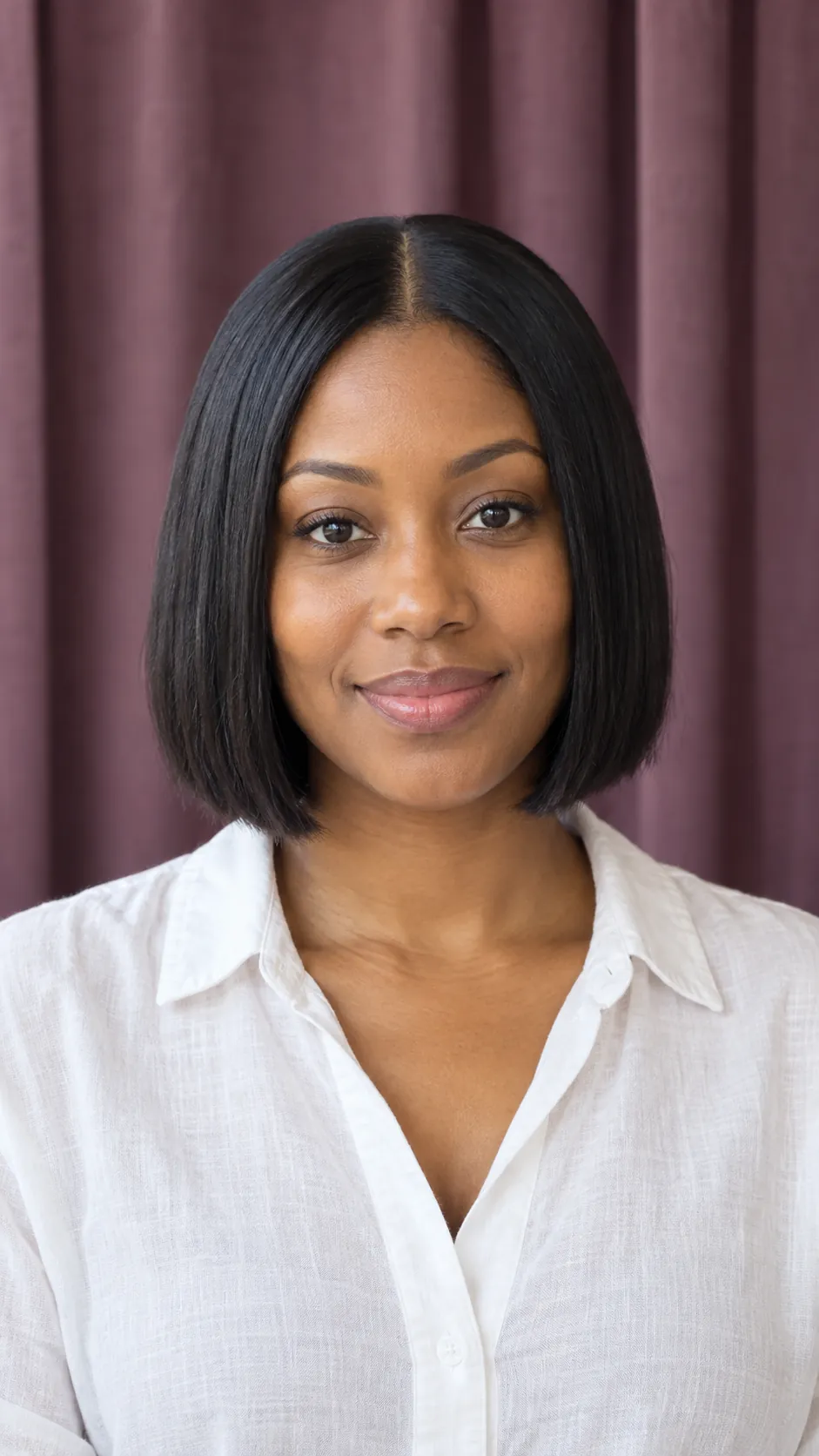
Below Chin Blunt Bob
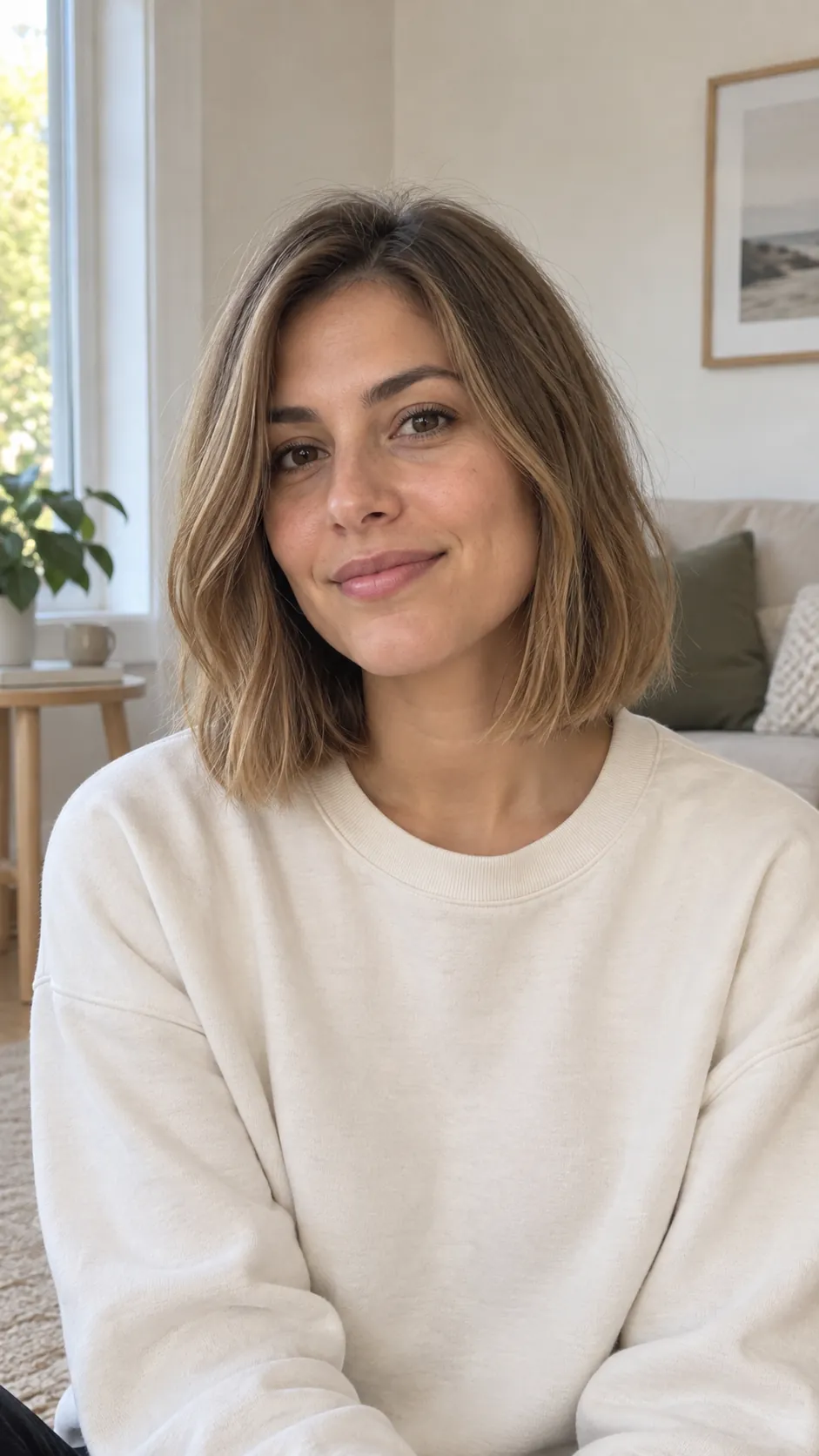
Moving the line a little below the chin keeps the strong edge while allowing more room around the face. That extra length may make a front section easier to tuck, but ear position and strand fall still matter. Check the cut with both sides loose before trying a tuck. You can start here if a jaw length change feels too abrupt.
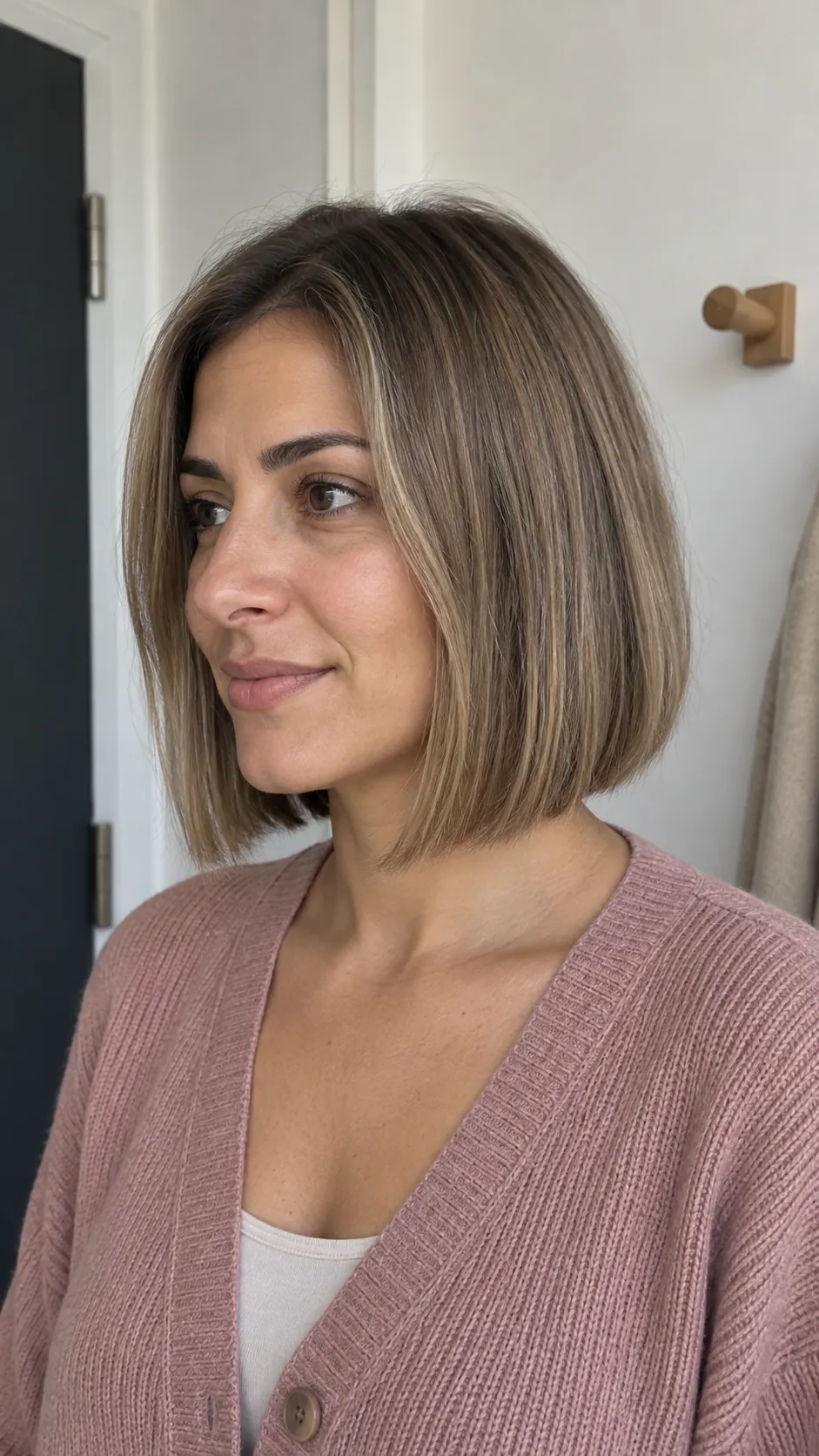
Mid Neck Blunt Bob
A mid neck perimeter sits between a compact chin cut and a shoulder length lob. It can cover the nape while keeping the ends clear of most necklines. Thick collars may still push the back outward, so consider the clothing you wear most often. Bring a rear view reference if you want the back to remain level rather than heavily stacked.
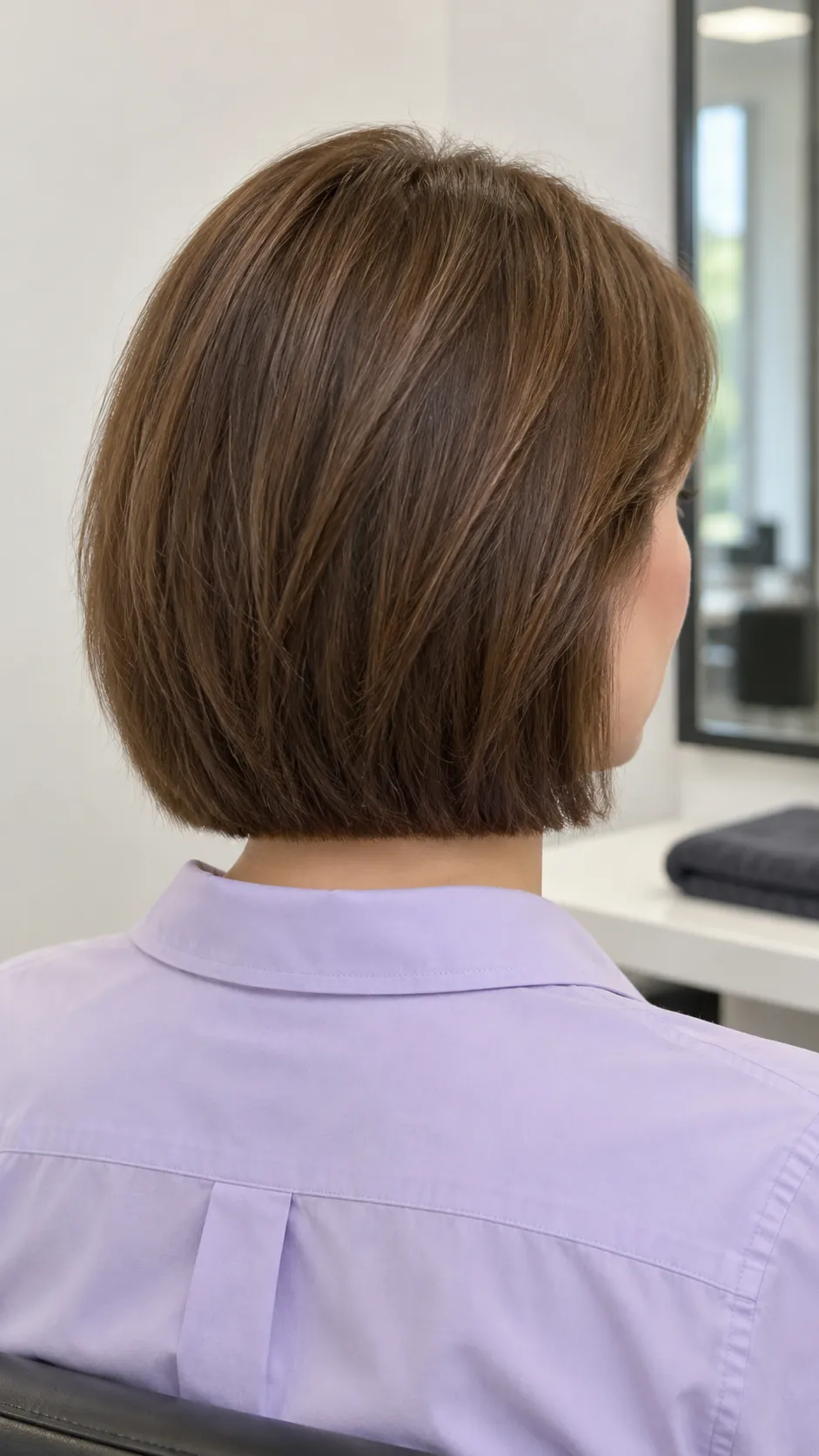
Shoulder Brushing Blunt Bob
Shoulder contact can turn the ends of a straight bob outward even when the line is cut evenly. Treat that bend as part of the length decision instead of assuming it means the cut is wrong. If a straight hanging finish is essential, discuss stopping above the contact point or keeping more length. Styling can influence the bend but may not remove it permanently.
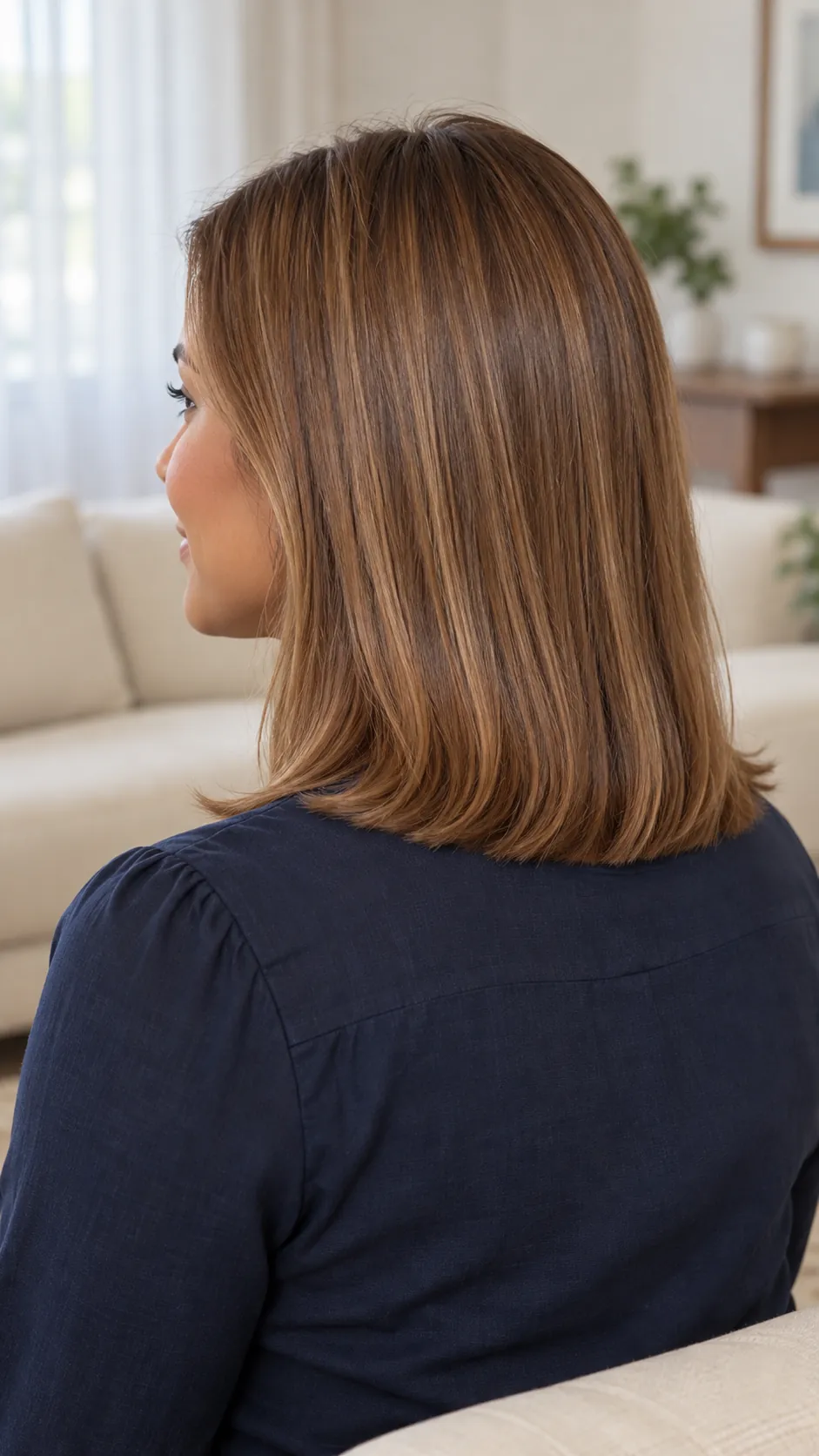
Collarbone Blunt Lob
A collarbone lob keeps a substantial lower edge with a less compact overall shape. It gives you more room for styling than a chin length bob, though the shortest pieces still determine what can be tied back. Ask whether any front shaping will reduce that practical length.
The edge should remain visibly connected rather than dissolving into many short layers. A long blunt outline may look flatter at the roots if the hair is fine. Separate that root issue from the condition and density of the ends when choosing products.

Subtly Angled Blunt Bob
A blunt perimeter can run on a gentle slope, with the front slightly longer than the back. Blunt describes the solid edge, so it does not require every point to sit on one horizontal plane. Agree on the size of the length difference before cutting. A mild angle is easier to compare accurately when the head is level in the reference.
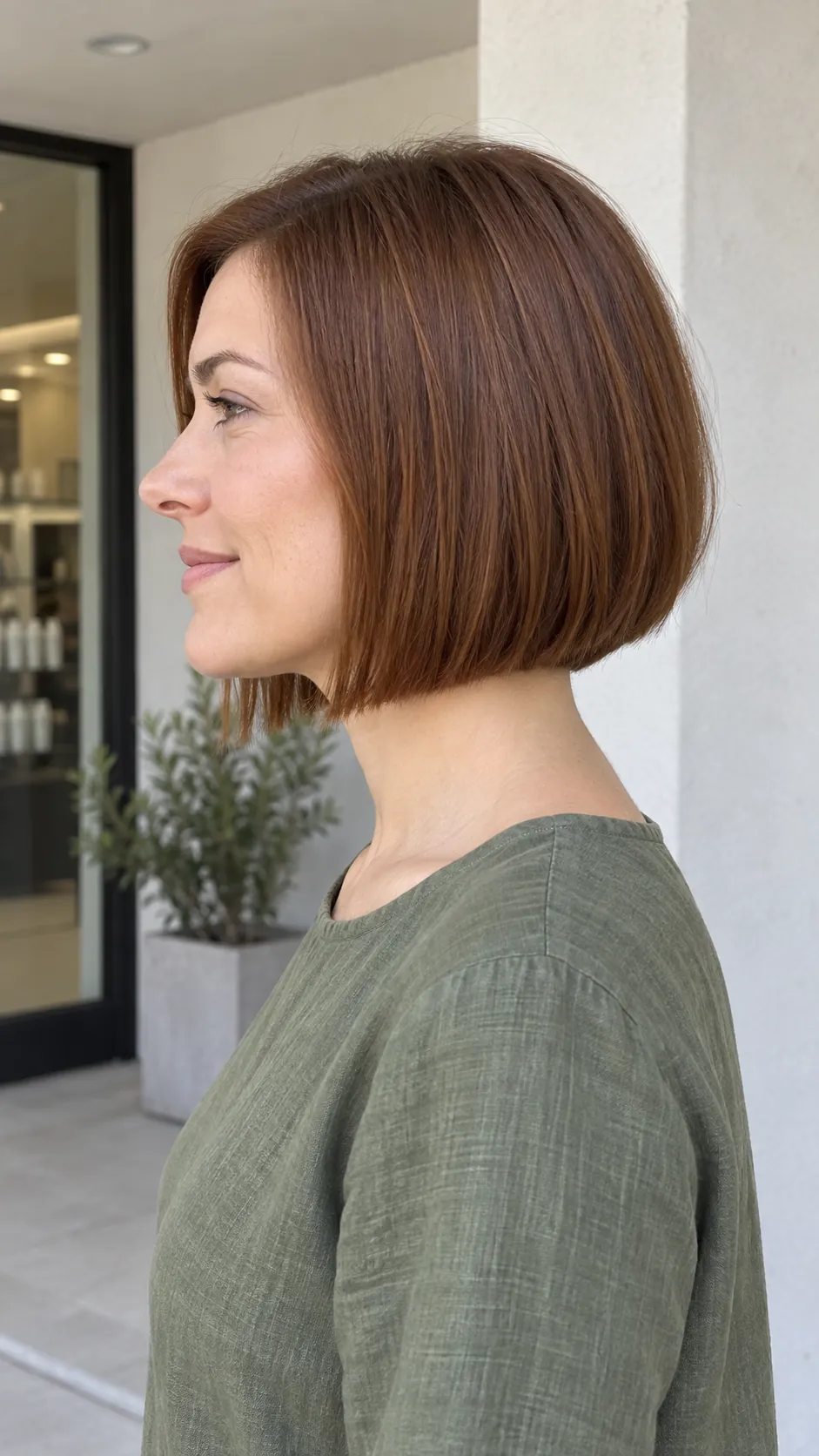
Fine Hair Bob With Preserved Ends
Keeping a solid perimeter can prevent fine ends from looking overly scattered. This does not create new density, and very fine hair can still reveal the background between strands. Request restraint with thinning at the lower edge. A lightweight root product may suit this cut better than applying a heavy cream throughout the lengths.
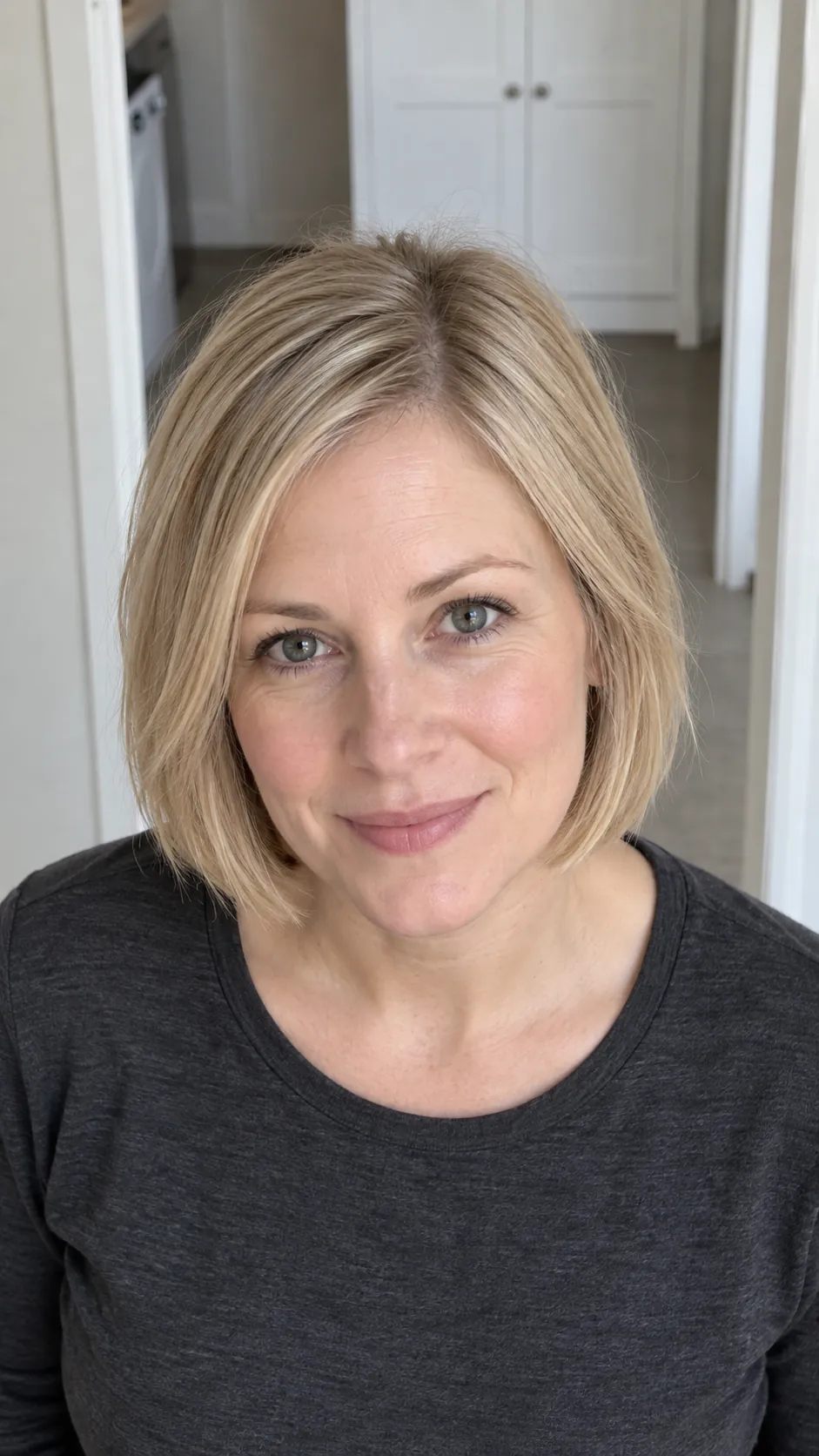
Dense Hair Bob With Interior Weight Control
Dense hair may need weight management inside the shape while the outer edge remains blunt. Fine describes strand diameter, while dense describes how much hair you have, so hair can be both. The stylist should choose the technique according to strand thickness, texture, and how the hair expands when dry. Explain whether your main concern is width at the sides or heaviness at the nape. Removing weight indiscriminately can produce ends that no longer look like the solid reference.
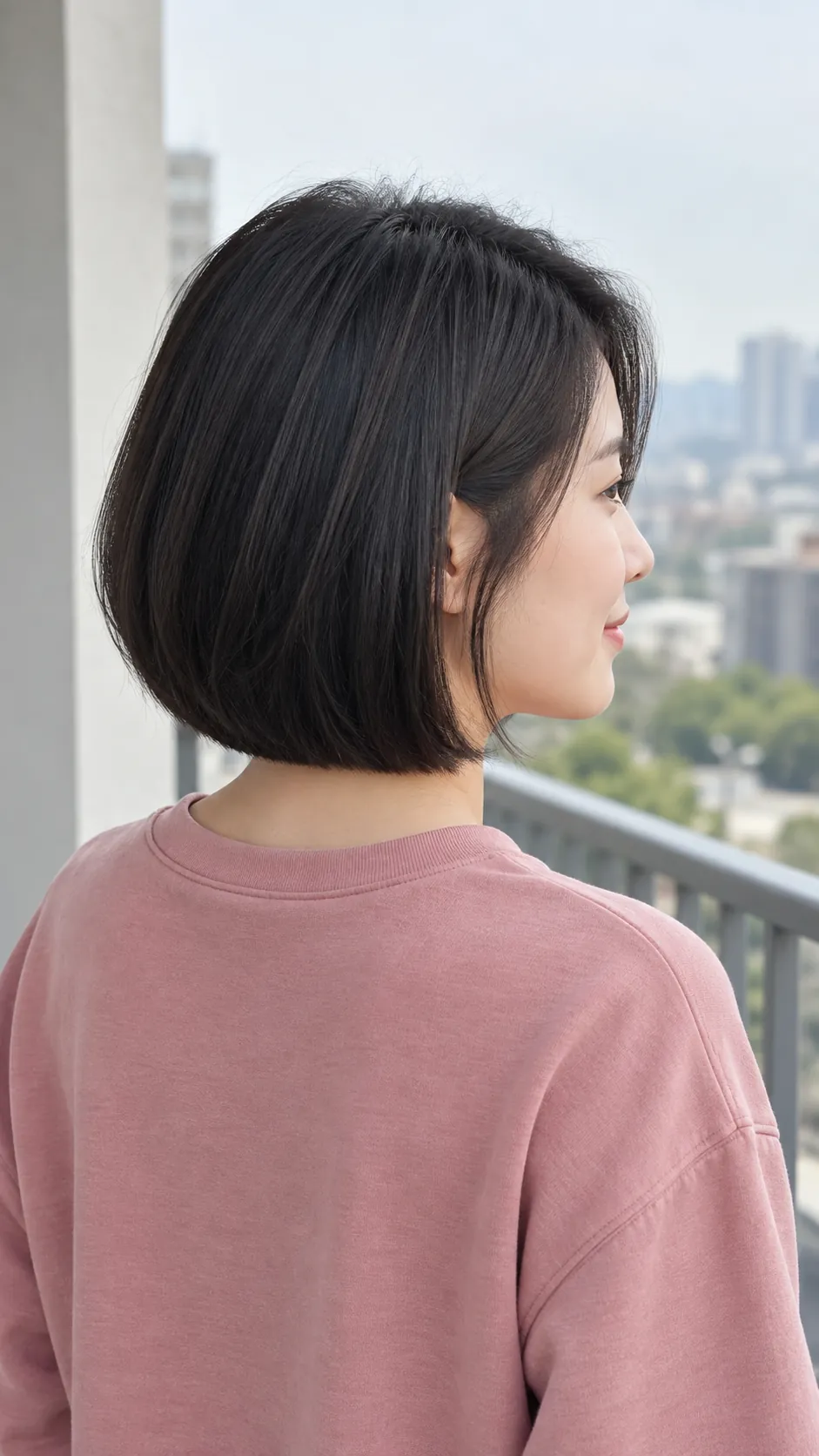
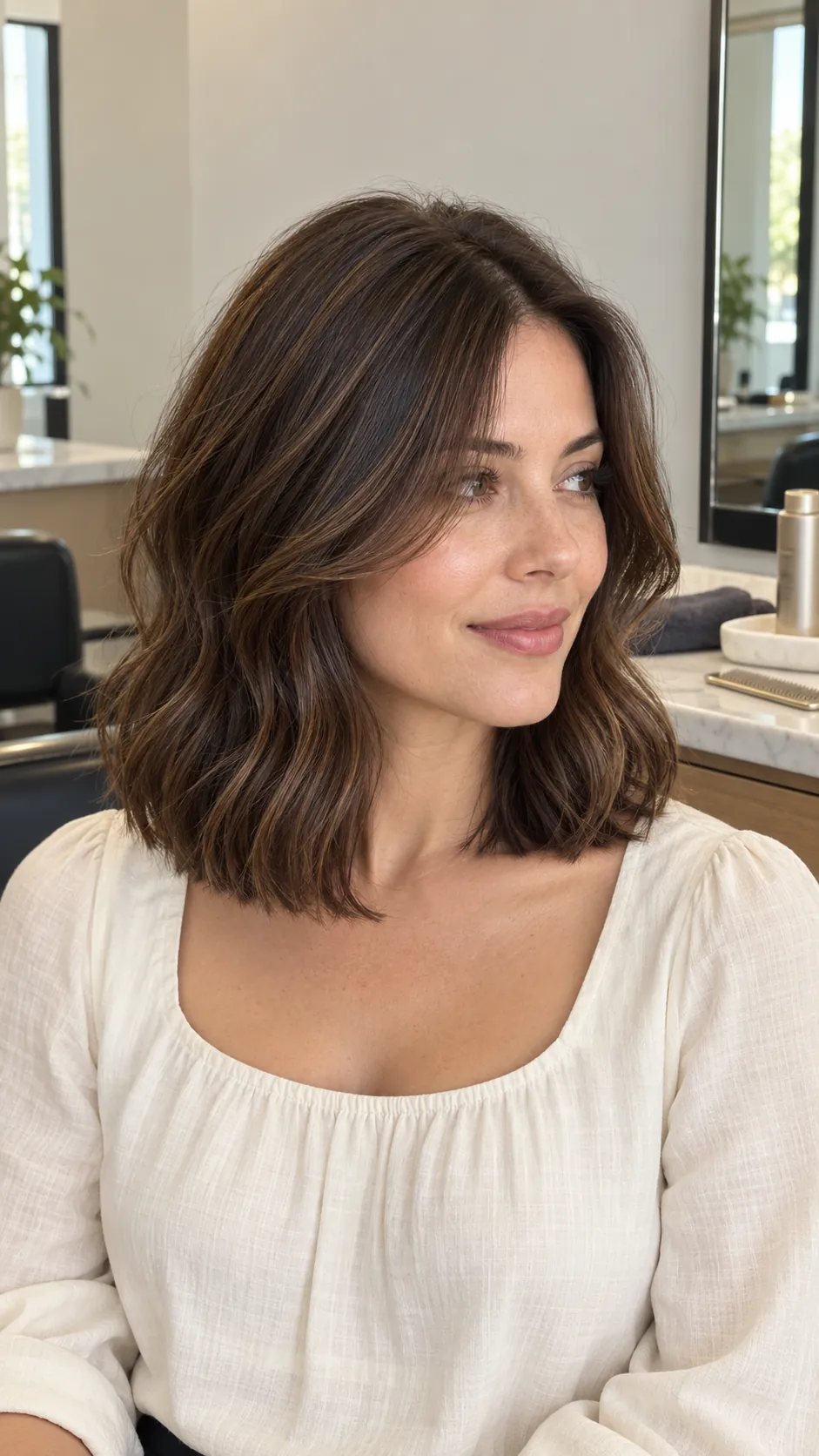
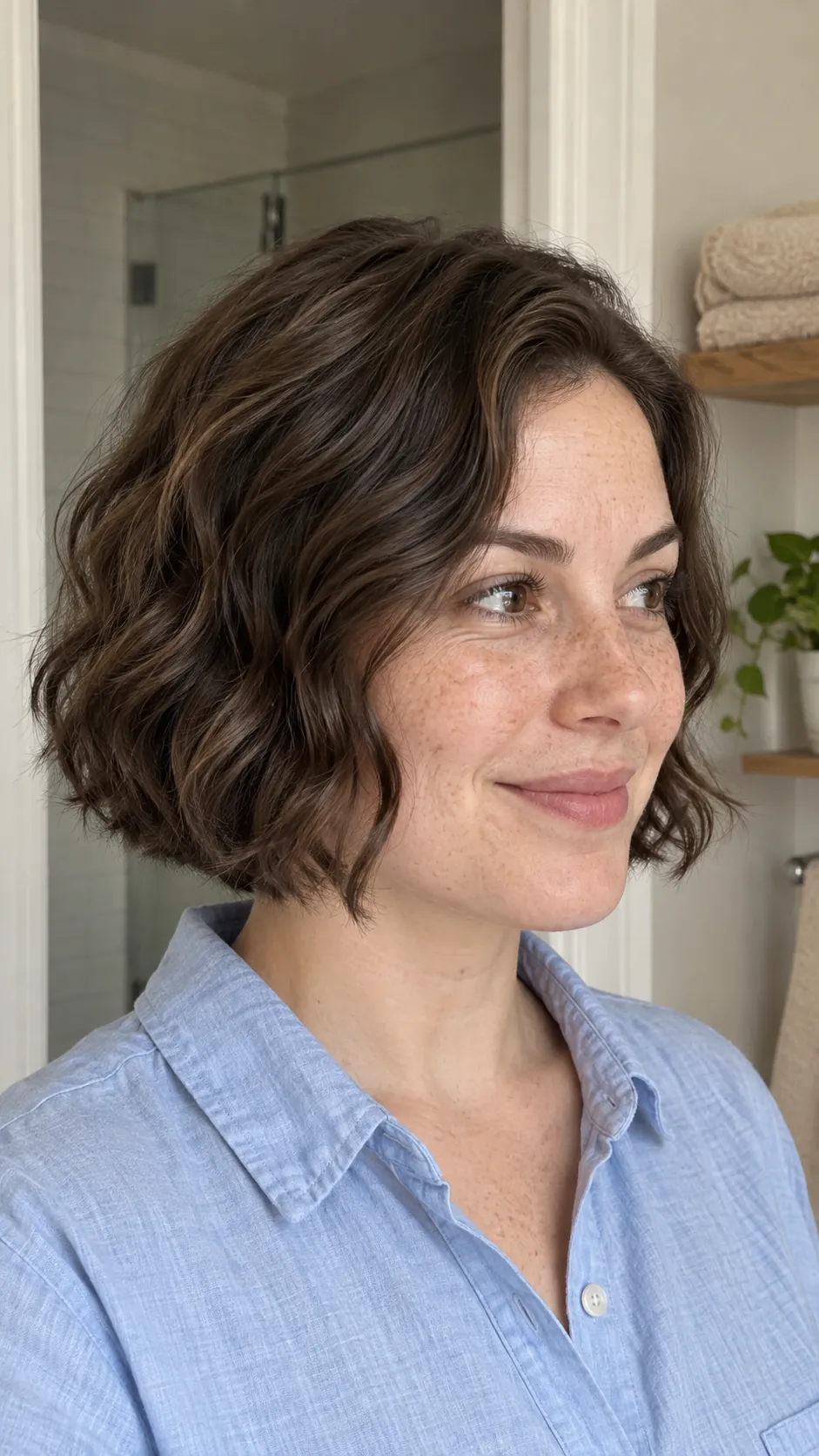
Wavy Blunt Bob With a Dry Perimeter
Natural waves can bend a blunt edge into small rises and dips without changing its basic cut structure. Judge the finished length in a dry state so shrinkage does not hide how short it will look. Ask the stylist how the line will read when you wear your ordinary waves. A smooth salon finish alone cannot answer that question.
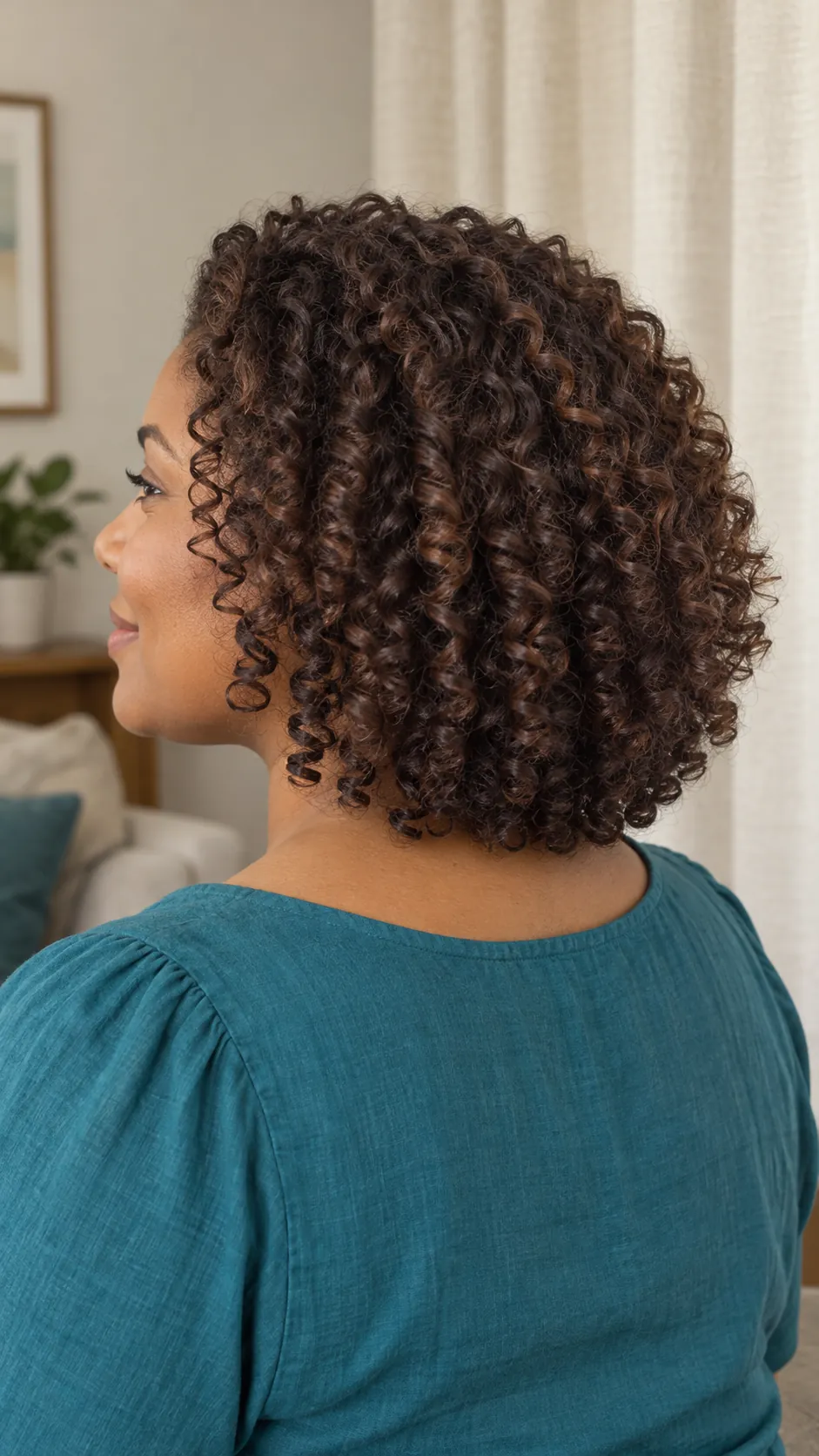
Curly Bob With Full Lower Ends
A curly bob can retain fullness at the lower outline even when the visible edge is not ruler straight. Curl groups spring differently, so the dry silhouette matters more than identical stretched lengths. Work with a stylist who can assess the pattern you normally wear.
Keep the bottom from becoming sparse through unnecessary thinning. Some shaping may still be needed to balance the sides and back. Discuss that balance separately from asking for a blunt looking finish.
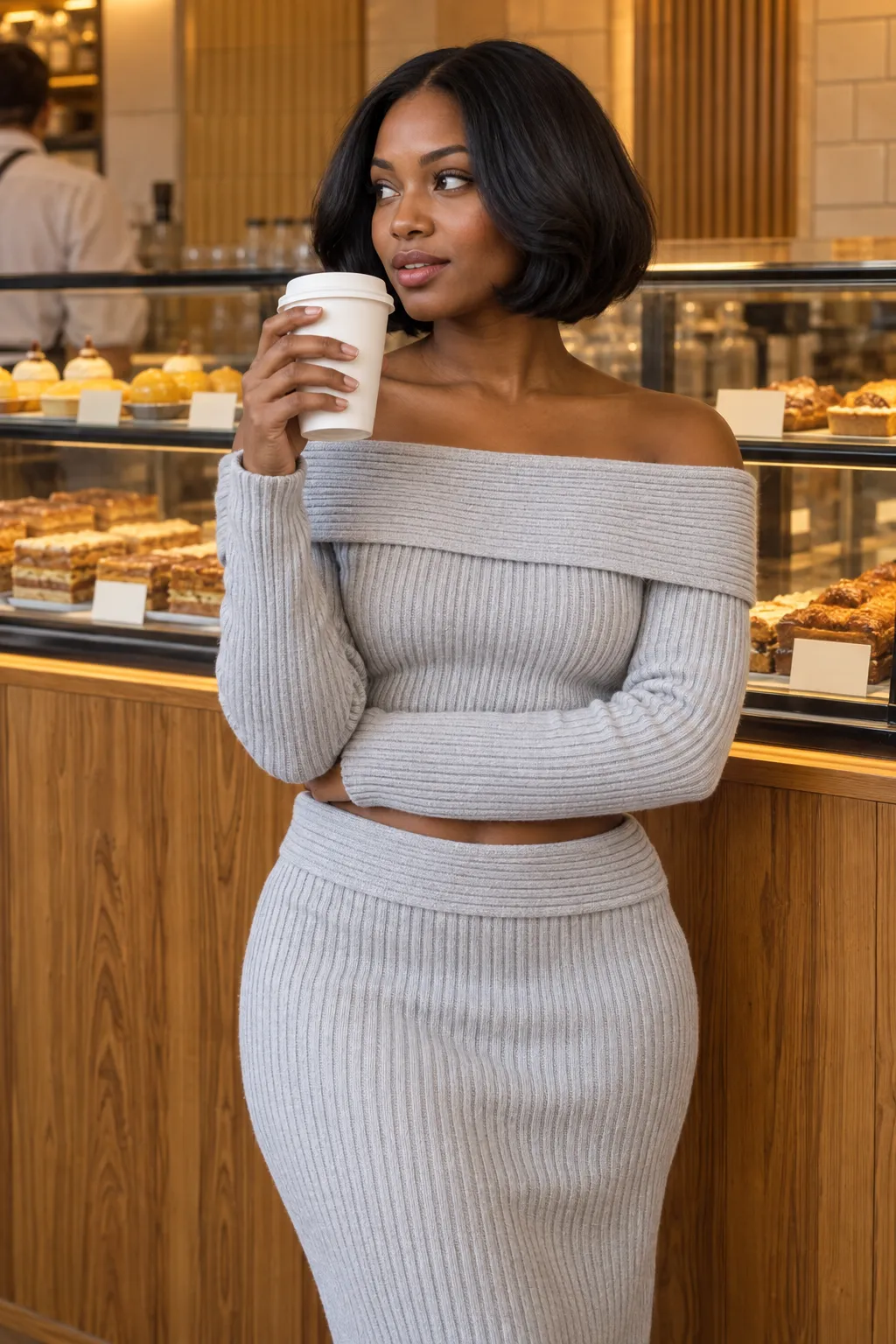
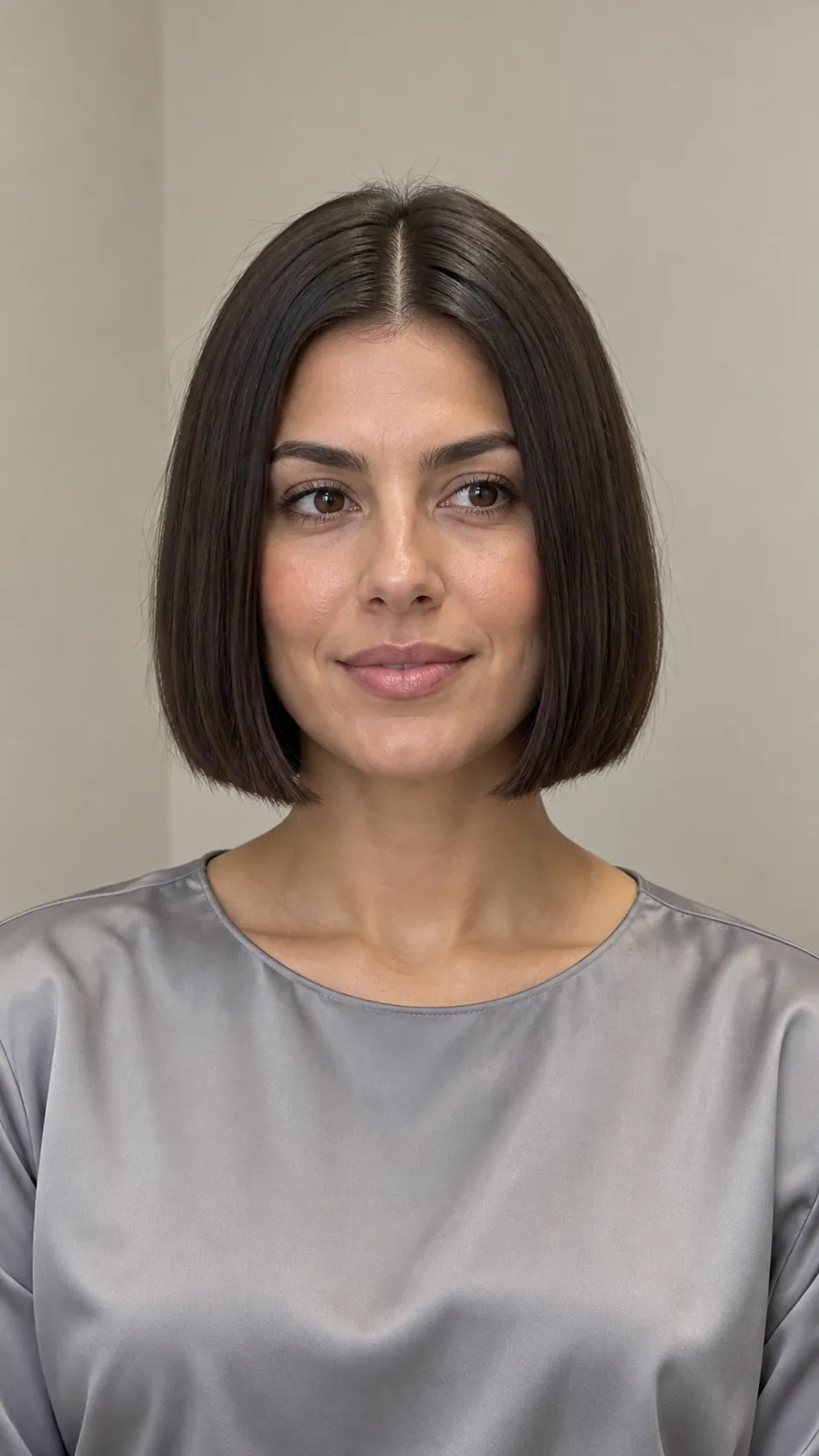
Sleek Bob With a Central Part
A central part displays the two front corners of a sleek bob at the same time. Smooth roots and a clean perimeter create the finish together. Use appropriate heat protection if your texture requires tools to achieve it. The cut itself will not guarantee that every wash dries straight.
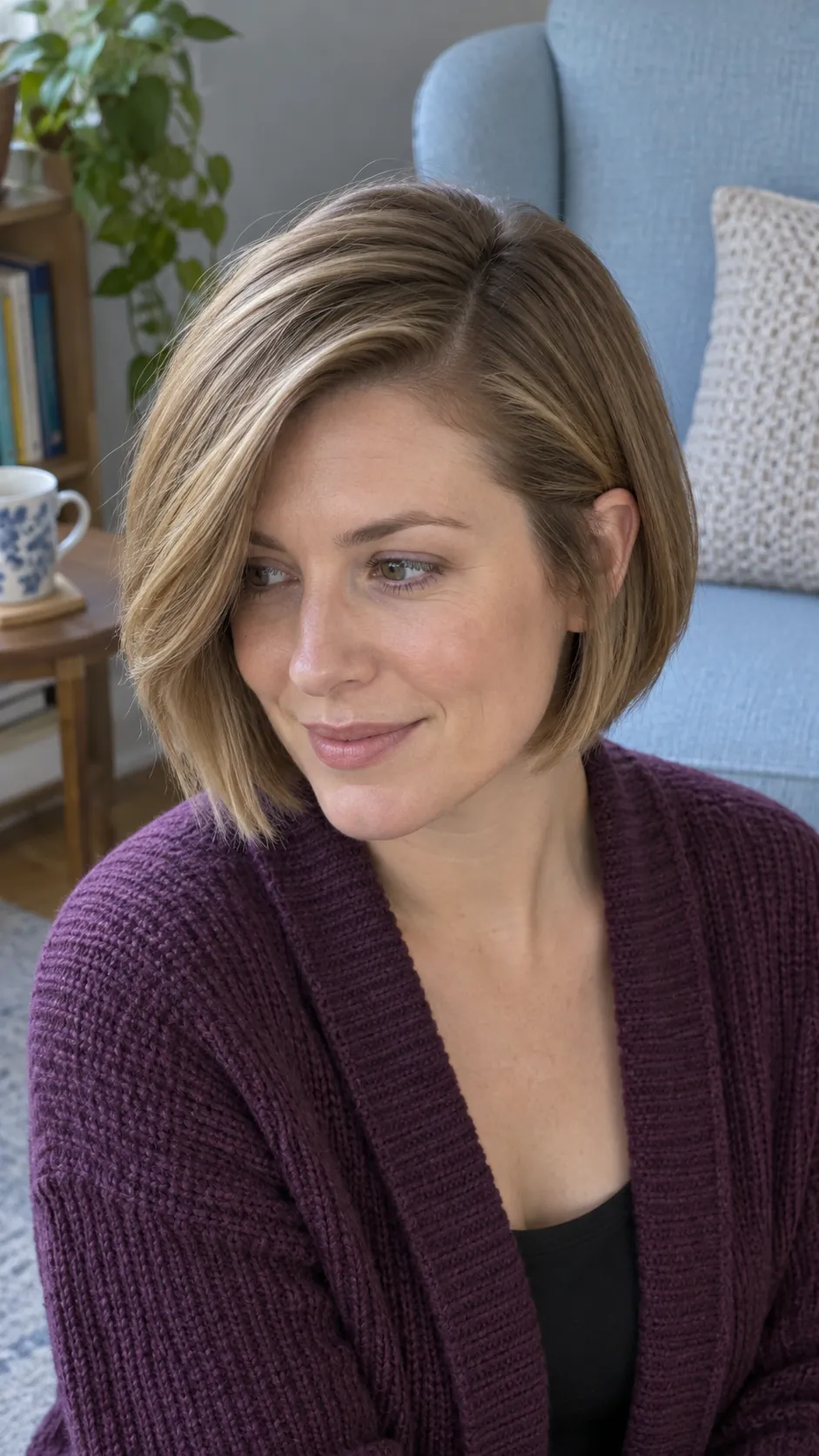
Side Part Blunt Bob With a Sweeping Front
A side part shifts more hair to one side without changing the underlying perimeter. It can create a fuller front sweep while leaving the opposite side quieter. Cut and check the hair in the part you expect to wear most often. Moving it later can expose a different apparent edge around the face.
Blunt Bob With an Ear Tuck
A loose ear tuck changes how much of the cut is visible on one side. It works best when the front section has enough length to stay in place without pulling. Check that length before removing more hair near the cheek. The opposite loose side can still show the blunt line clearly.
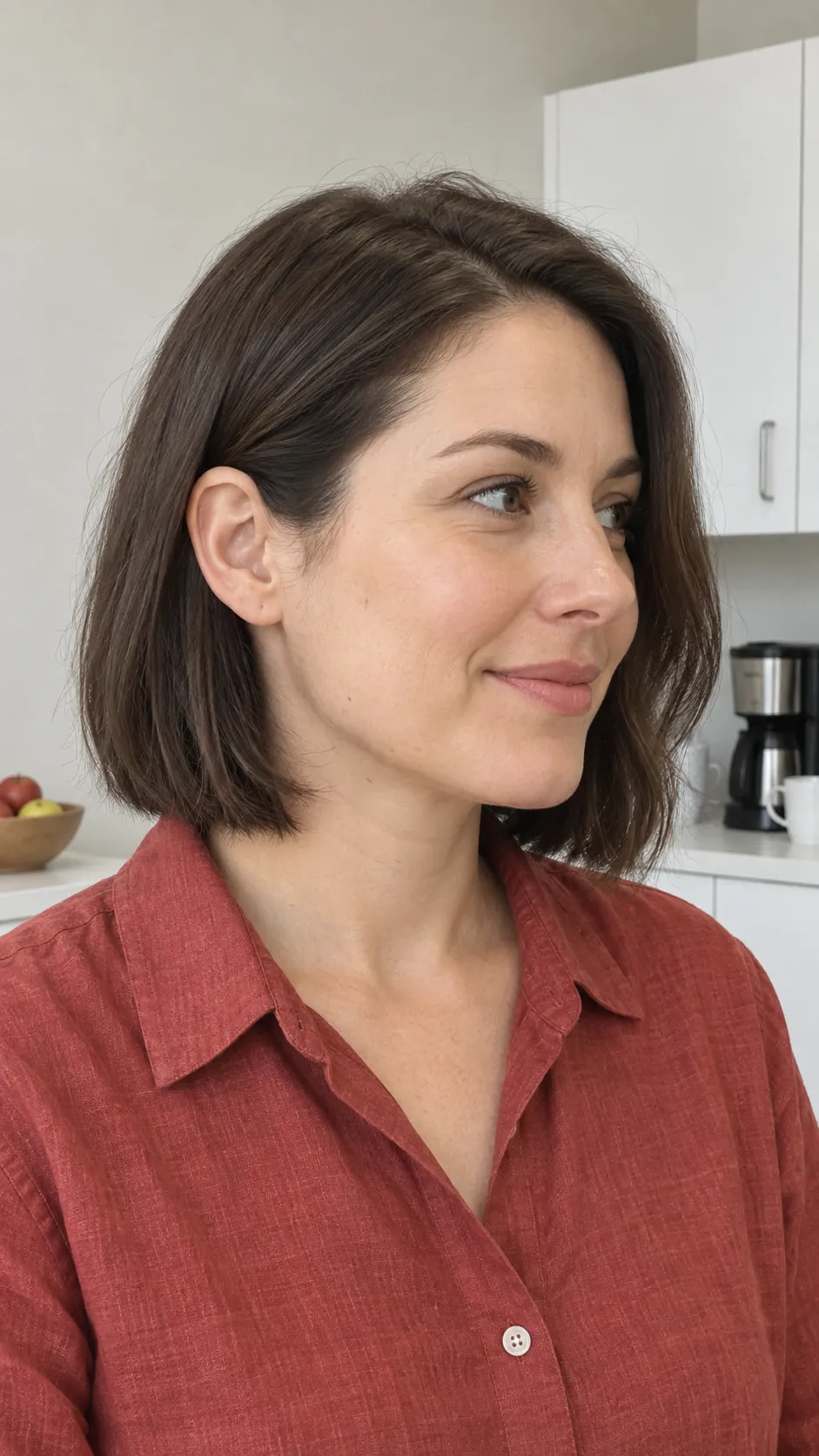
Blunt Bob With a Full Straight Fringe
A full straight fringe adds a second clear line across the front of the haircut. Its width and length deserve their own discussion rather than being treated as a small finishing detail. A cowlick can split the fringe or lift one side after drying. Agree on a dry landing point that keeps your eyes comfortable.
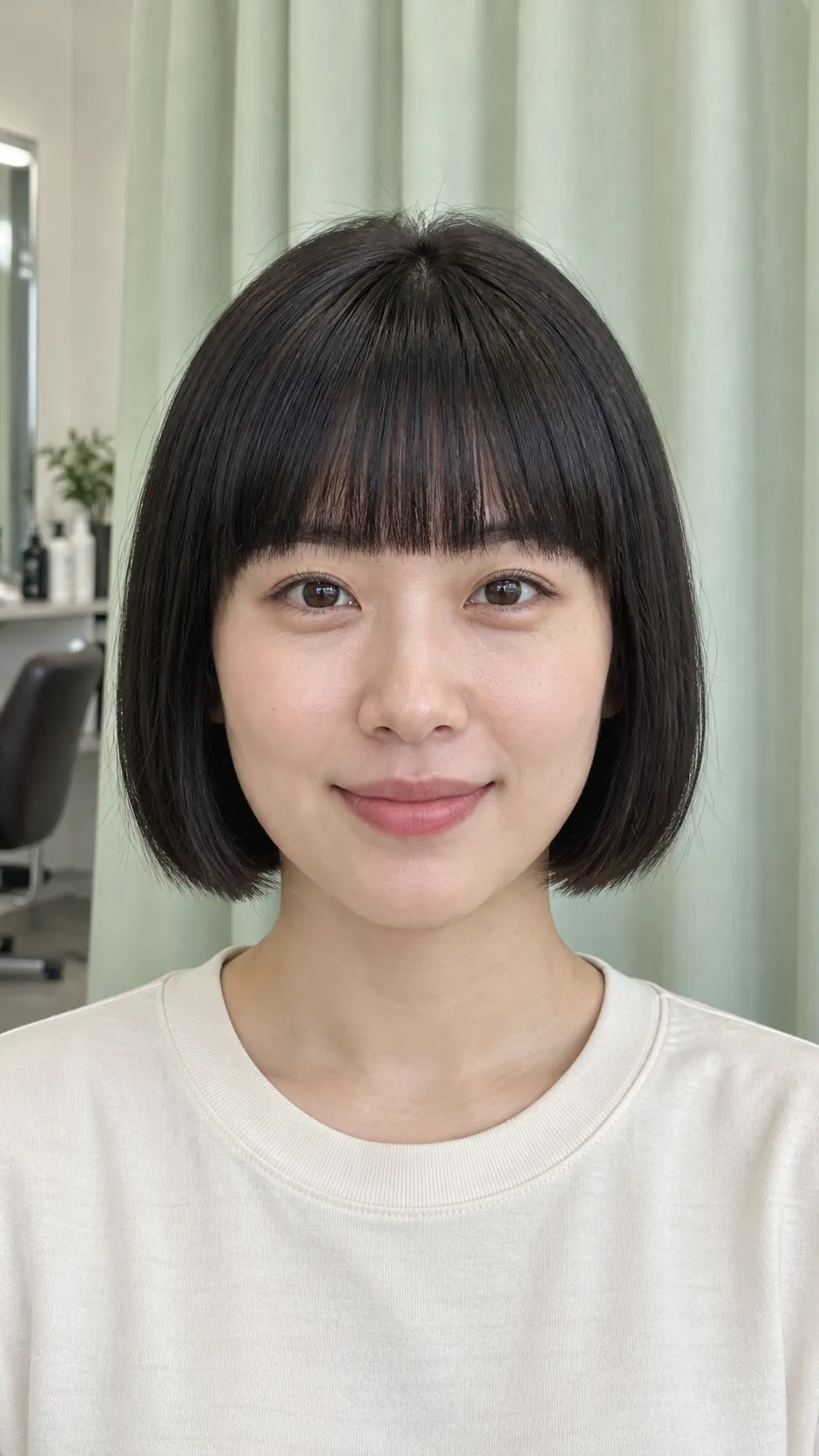
Blunt Bob With a Light Fringe
A light fringe can soften the forehead while keeping the bob perimeter substantial. Small gaps are intentional, but the fringe should not consume so much side hair that the front corners become thin. Ask where the fringe section starts at the crown. This choice usually needs some attention as oil or humidity changes the way the pieces separate.
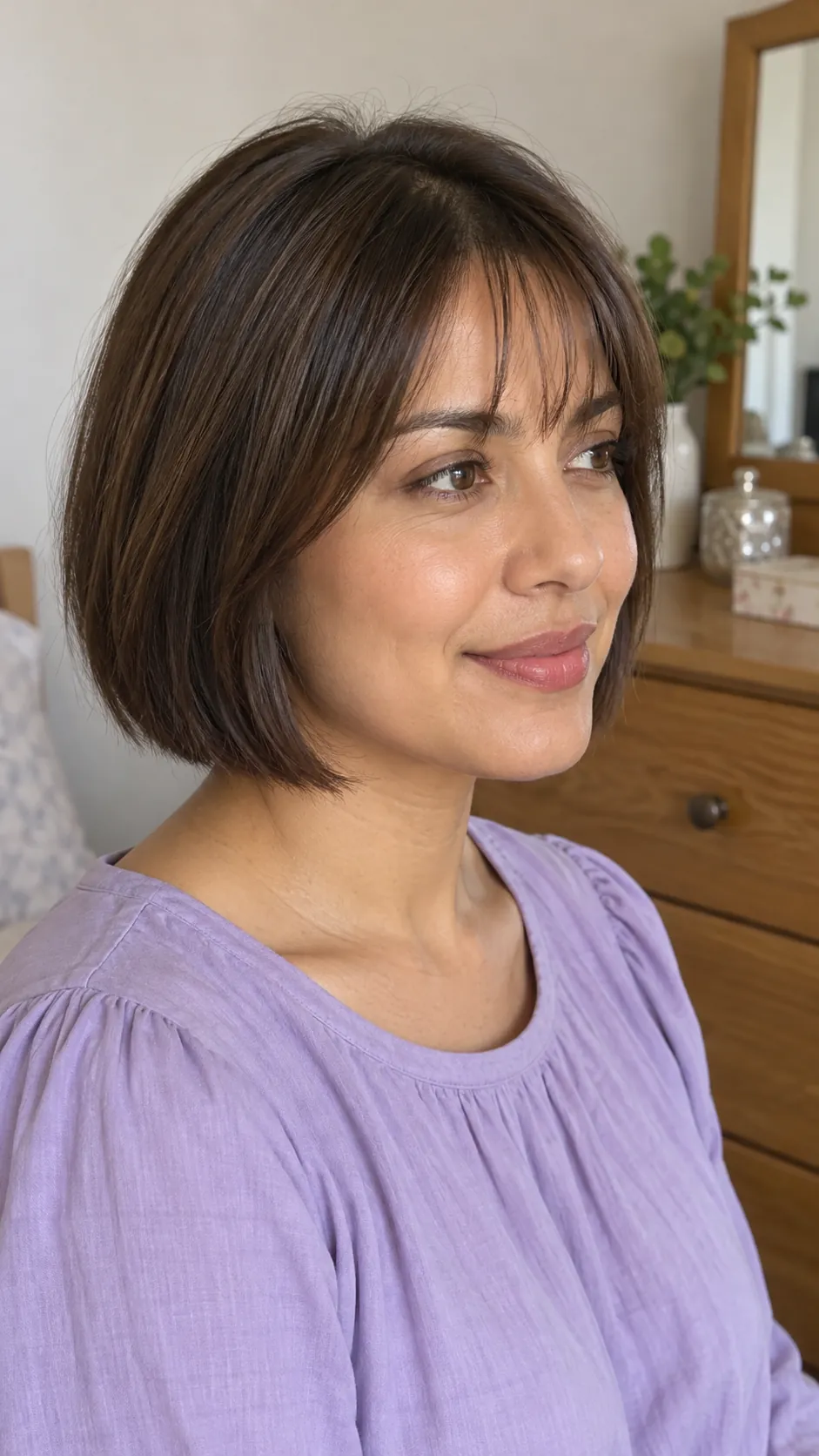
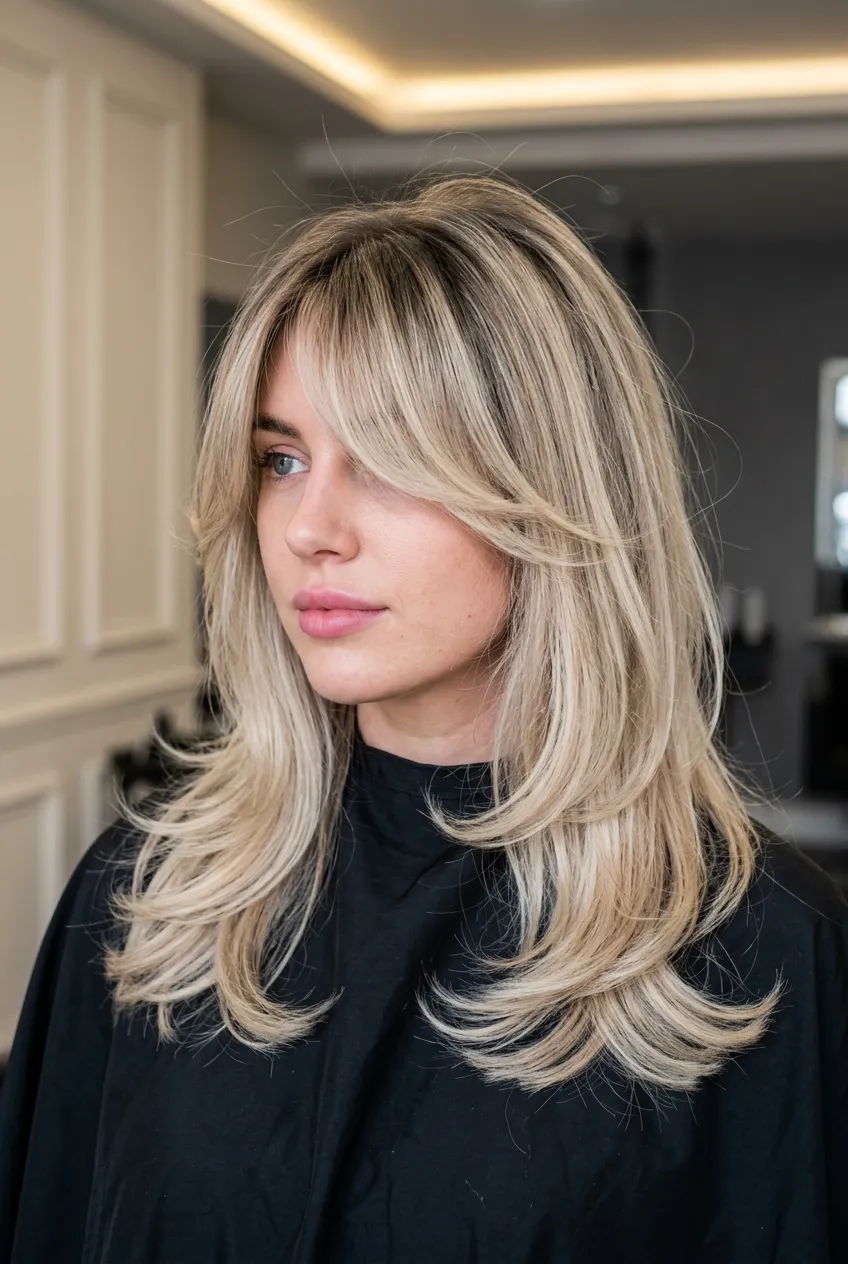
Blunt Bob With Long Curtain Pieces
Long curtain pieces open around the face while the rest of the bob stays solid. Their shortest point should be chosen according to how much face coverage you want. A cheek level opening behaves differently from bangs ending at the brow.
Leave the lower perimeter intact if that dense edge is the detail you like most. A brief directional dry at the roots can help the front open. Check whether the shorter pieces will remain loose when you tie the rest back.
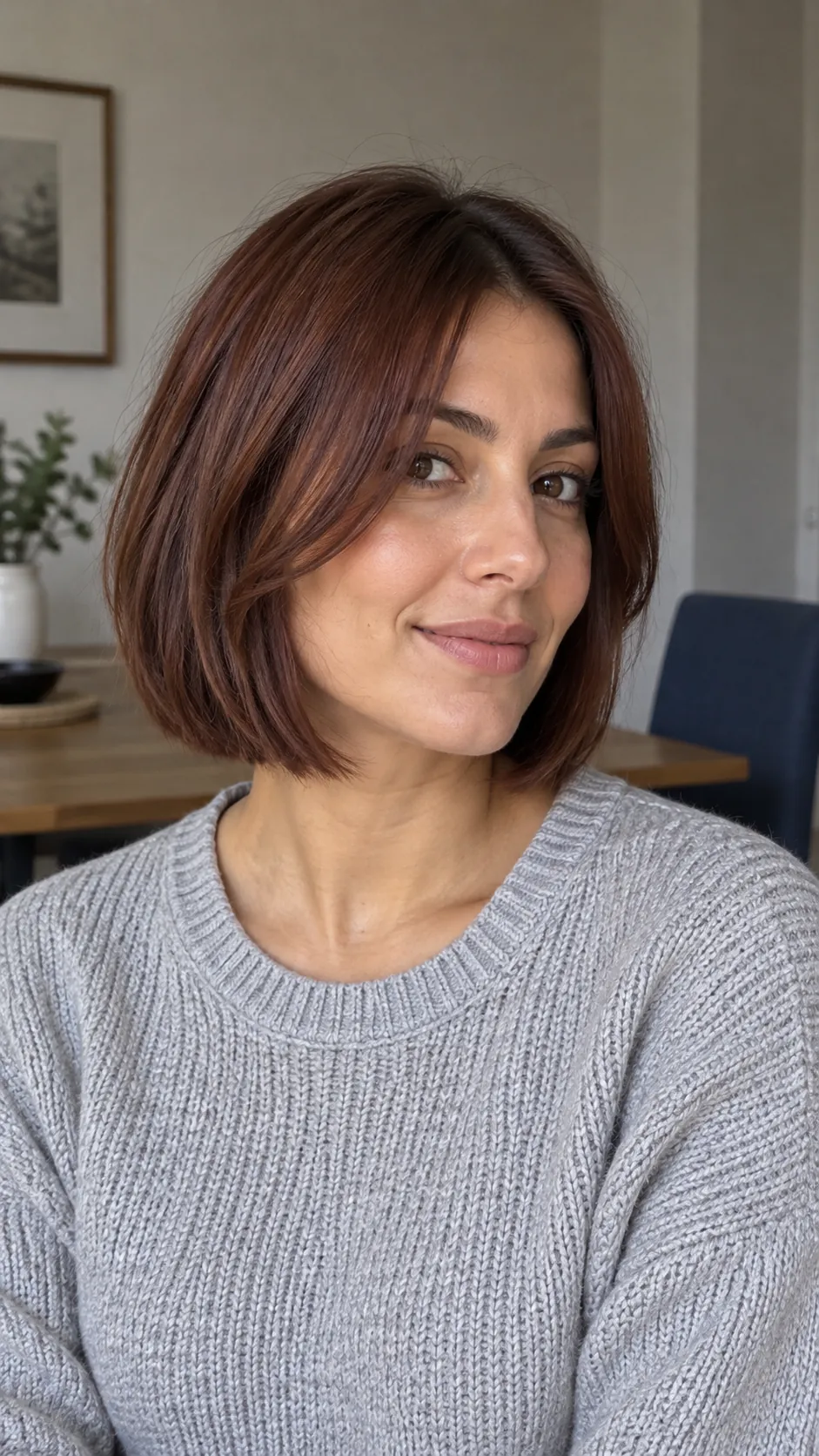
Rounded Under Blunt Bob
Turning the ends inward gives a blunt bob a rounded finish without necessarily adding graduation. Use a brush size that suits the available length rather than forcing a large tool against the neck. A small controlled turn is enough to show the shape. Compare the line before and after styling so you know which detail comes from the haircut.
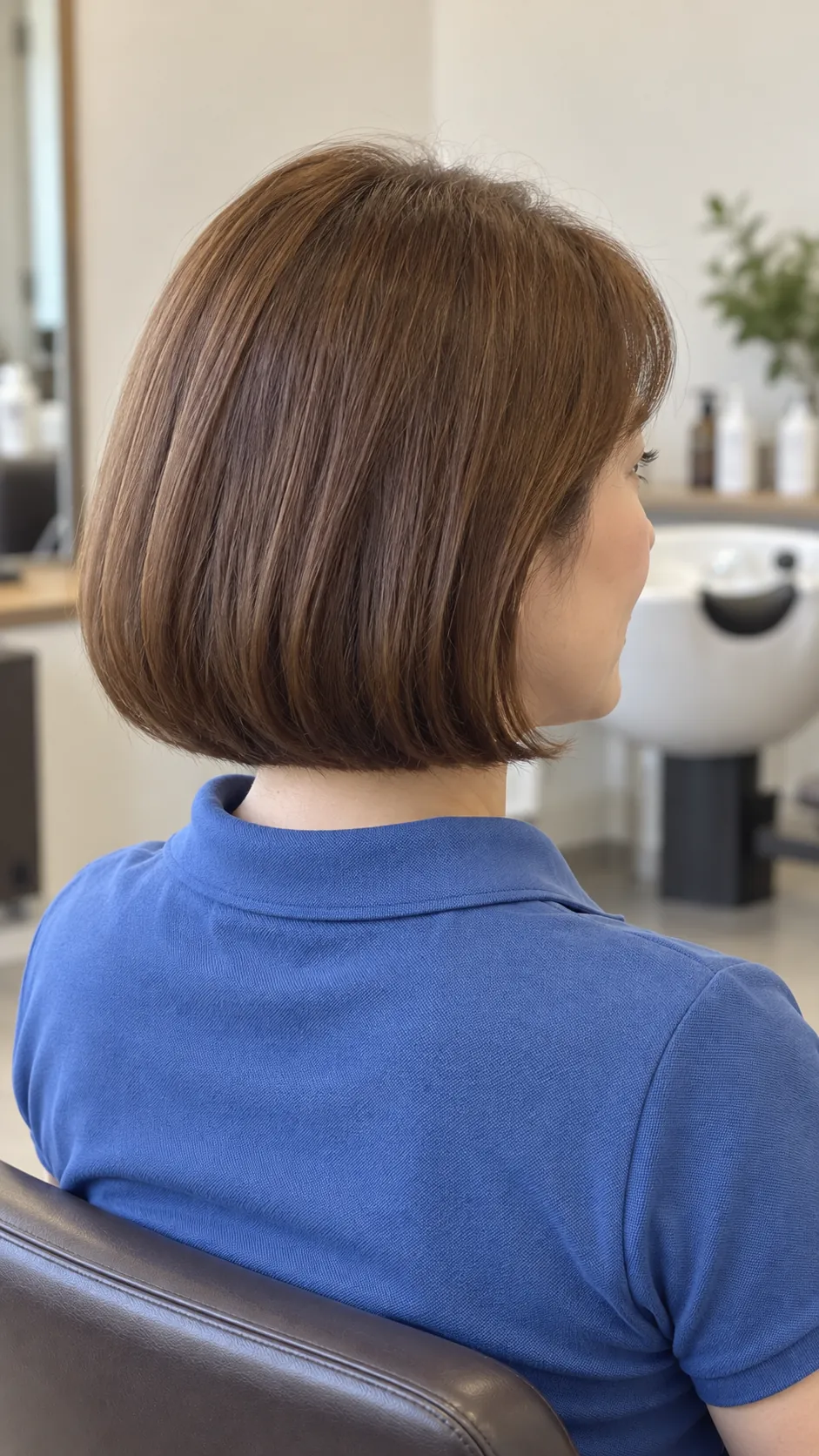
Blunt Bob With a Soft Outward Bend
A soft outward bend opens the lower silhouette and leaves the upper lengths relatively calm. It can be a useful way to work with ends that naturally meet the shoulders. Direct only the last part of each section outward if you use a tool. Check the rear view to keep the two sides from turning in unrelated directions.
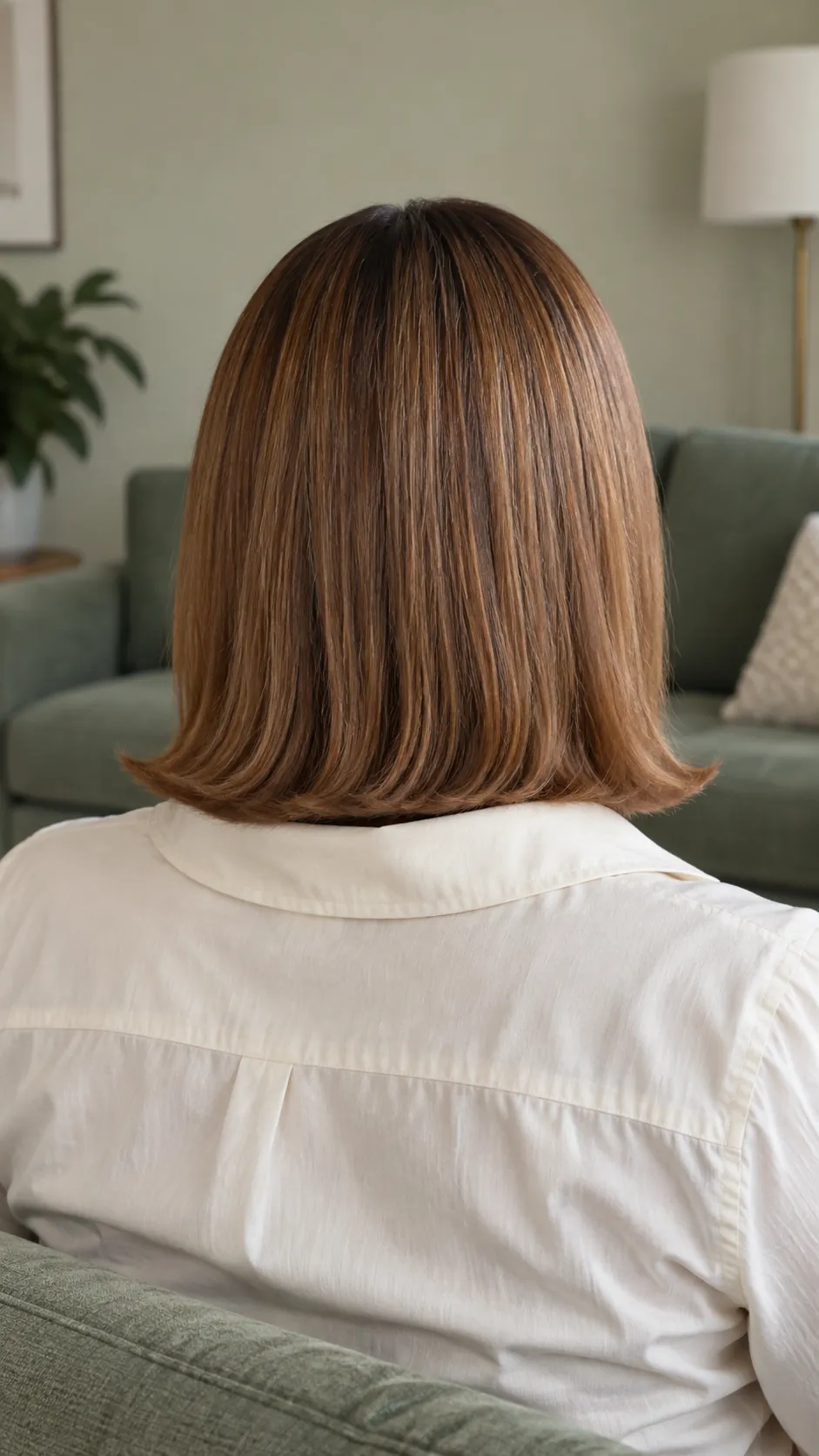
Blunt Bob With Loose Flat Waves
Broad flat waves add movement while letting the solid ends remain visible. Leaving the tips less curled helps distinguish this finish from a ringlet style. Let any heat styled bends cool before separating them gently. If your own waves already create the effect, a small amount of definition may be enough.
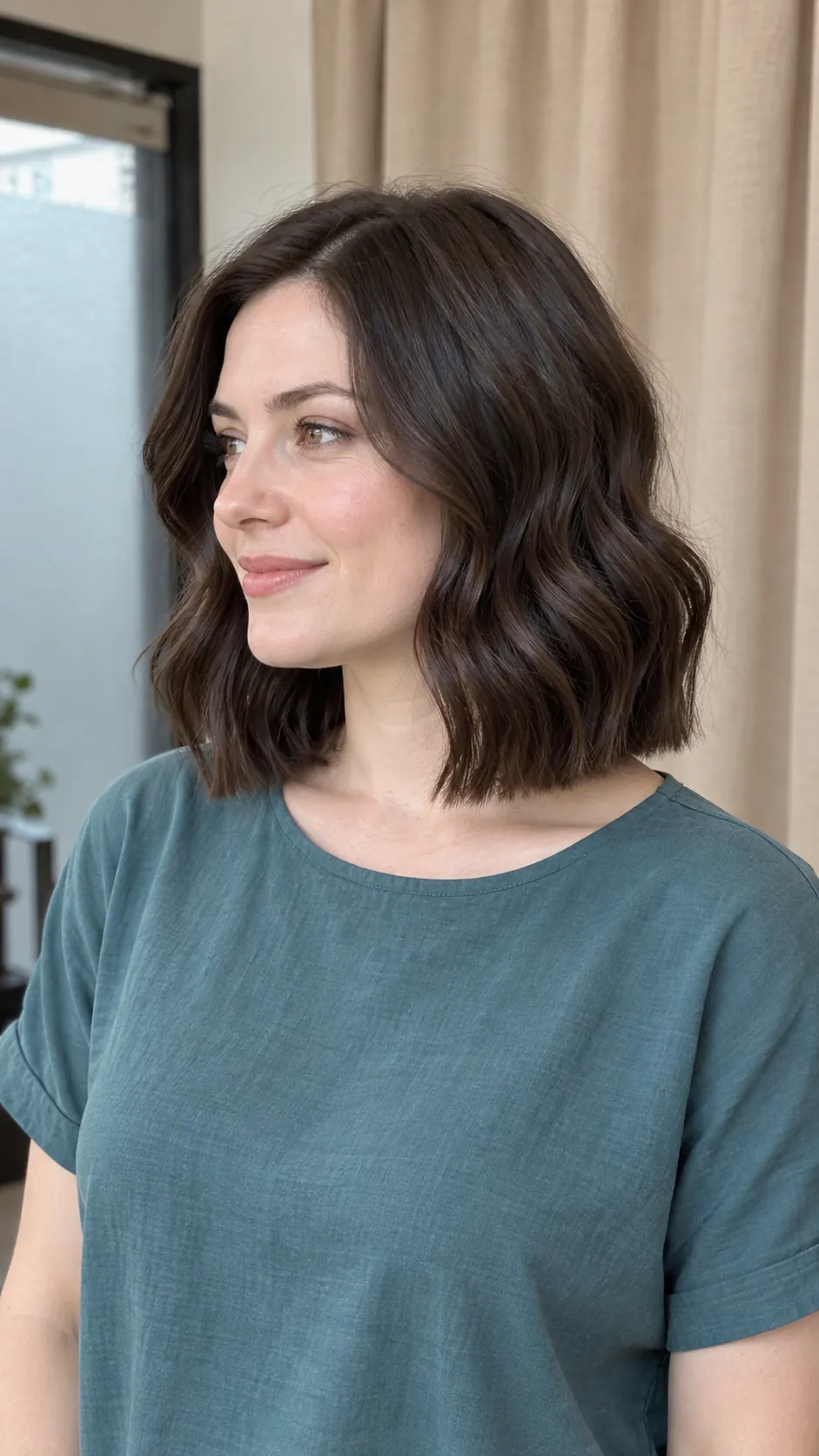
Blunt Bob With a Natural Matte Finish
A matte finish shows the cut without a highly polished reflection across every strand. The hair should still feel flexible rather than coated in dry residue. Use less texturizing product at first, especially on fine lengths. A connected perimeter is easier to see when the ends are not separated into stiff clumps.
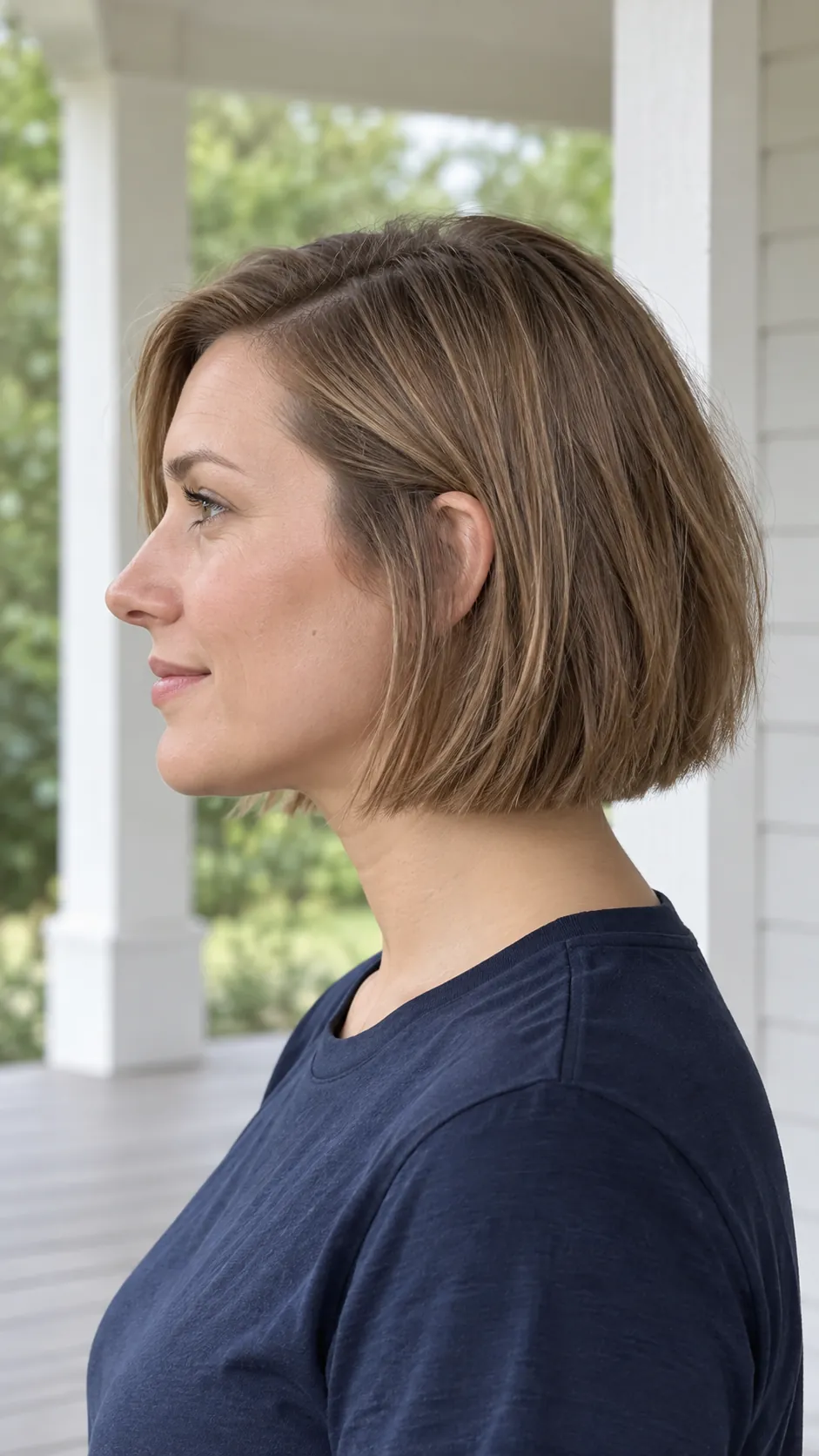
Blunt Bob With Subtle Highlight Contrast
Subtle highlights can make a solid outline easier to read by adding tonal contrast through the lengths. Color does not replace density or repair a weak perimeter. Ask your colorist how any lightening will affect the condition of already fragile ends. Keep the haircut decision separate from the upkeep needed to maintain the shade.
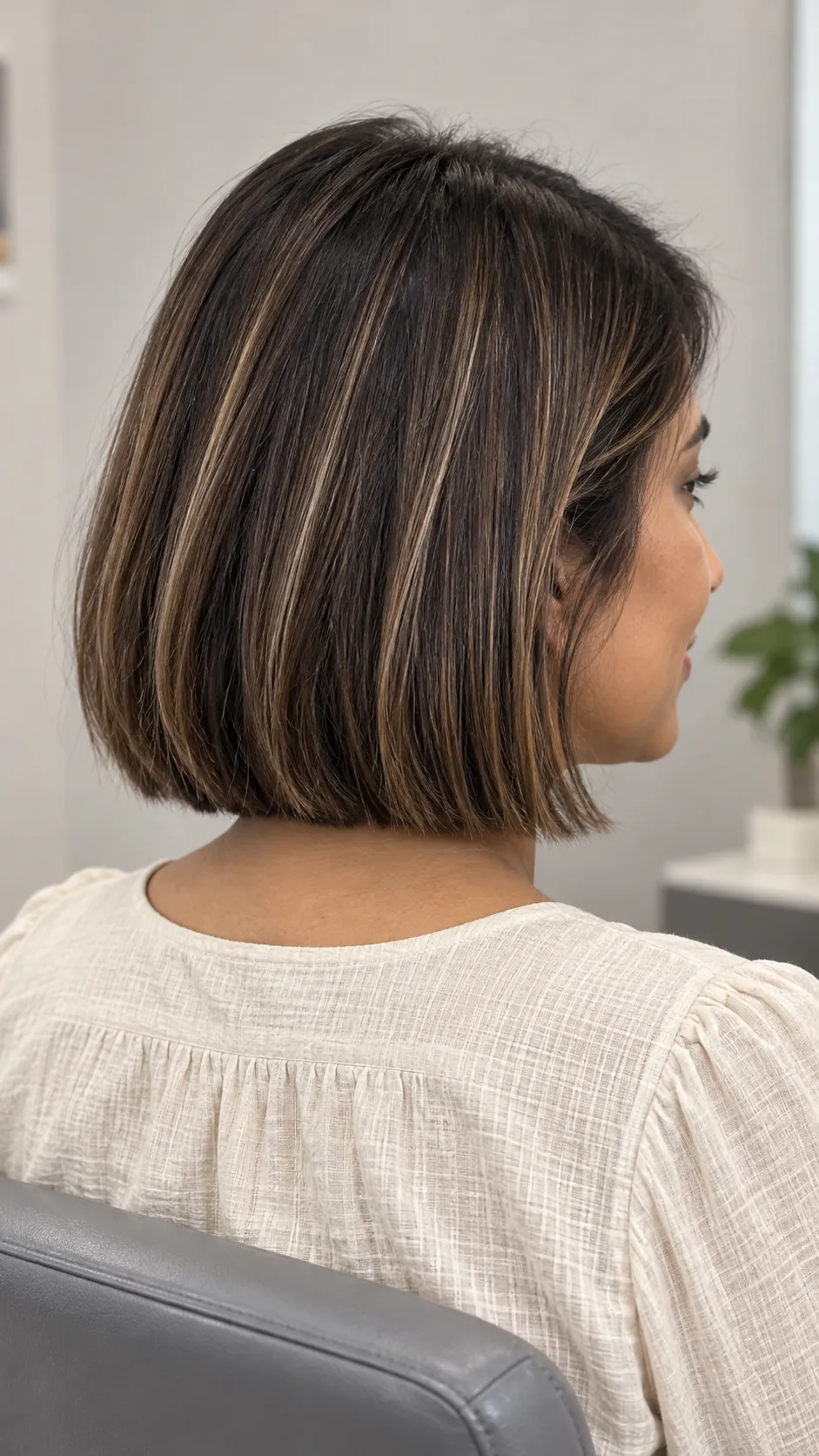
Silver Blunt Bob With Natural Variation
Silver and darker strands can sit together within a clean blunt edge. A consistent cut line does not require a uniform color result. Pay attention to texture changes around the hairline or crown when discussing styling. Choose conditioning and smoothing steps according to those strands rather than assuming all gray hair behaves the same way.

Longer Blunt Bob for a Cautious First Cut
A longer starting point lets you experience a solid bob perimeter before deciding to go shorter. The best reference is one you can explain in terms of retained length, front coverage, and finish. Ask the stylist to confirm the shortest point while you can still adjust the plan. The useful choice is the one whose daily routine you are willing to keep.