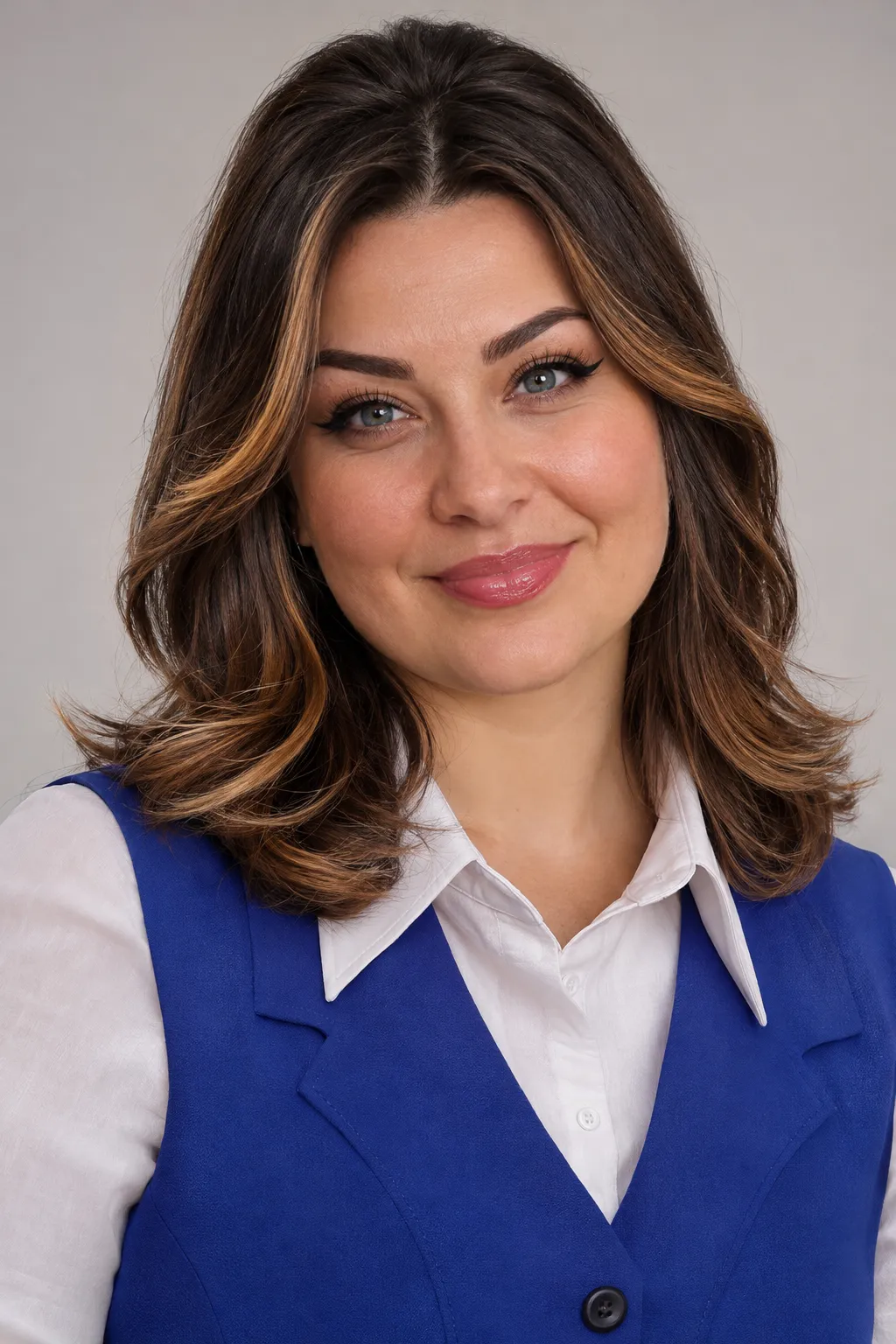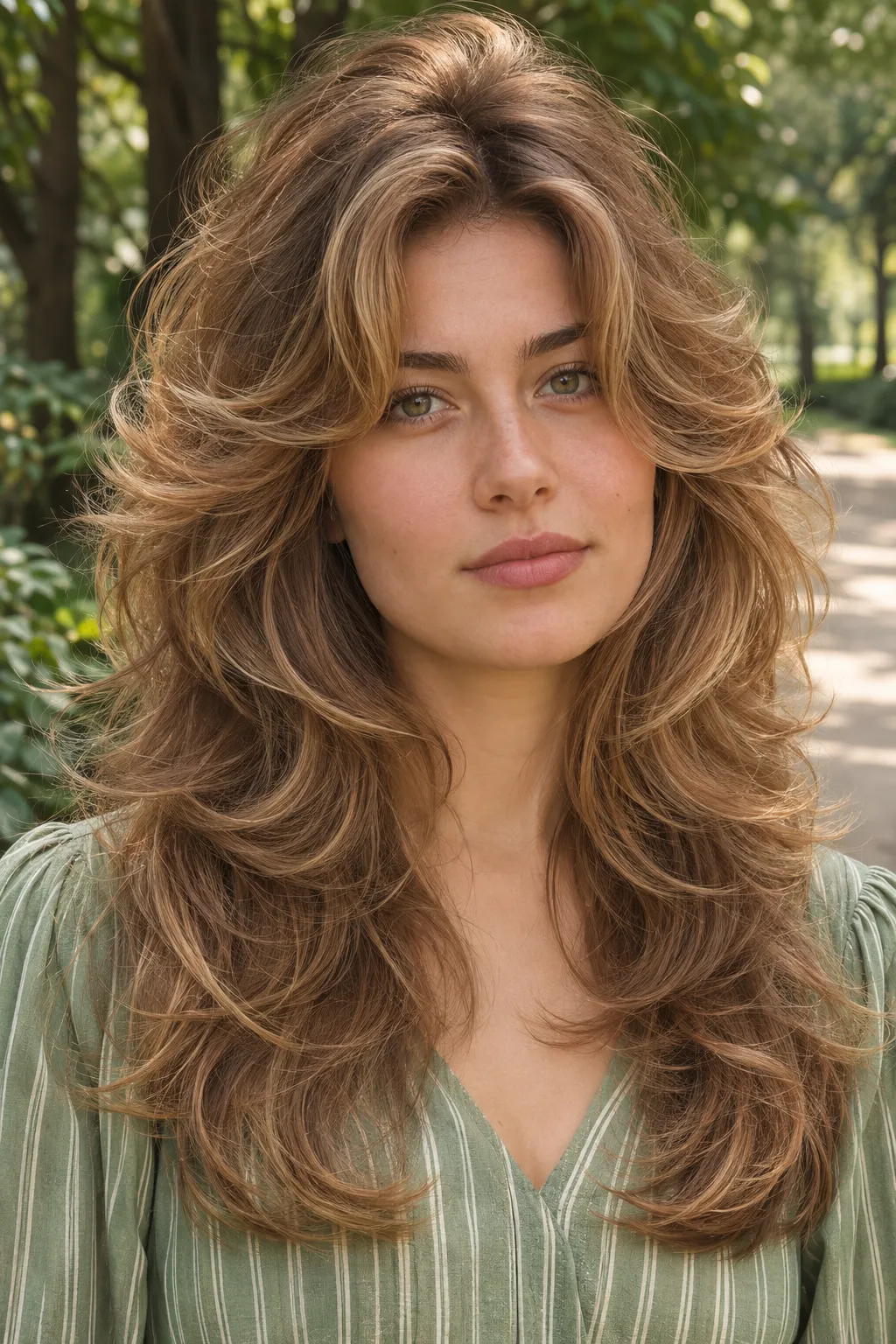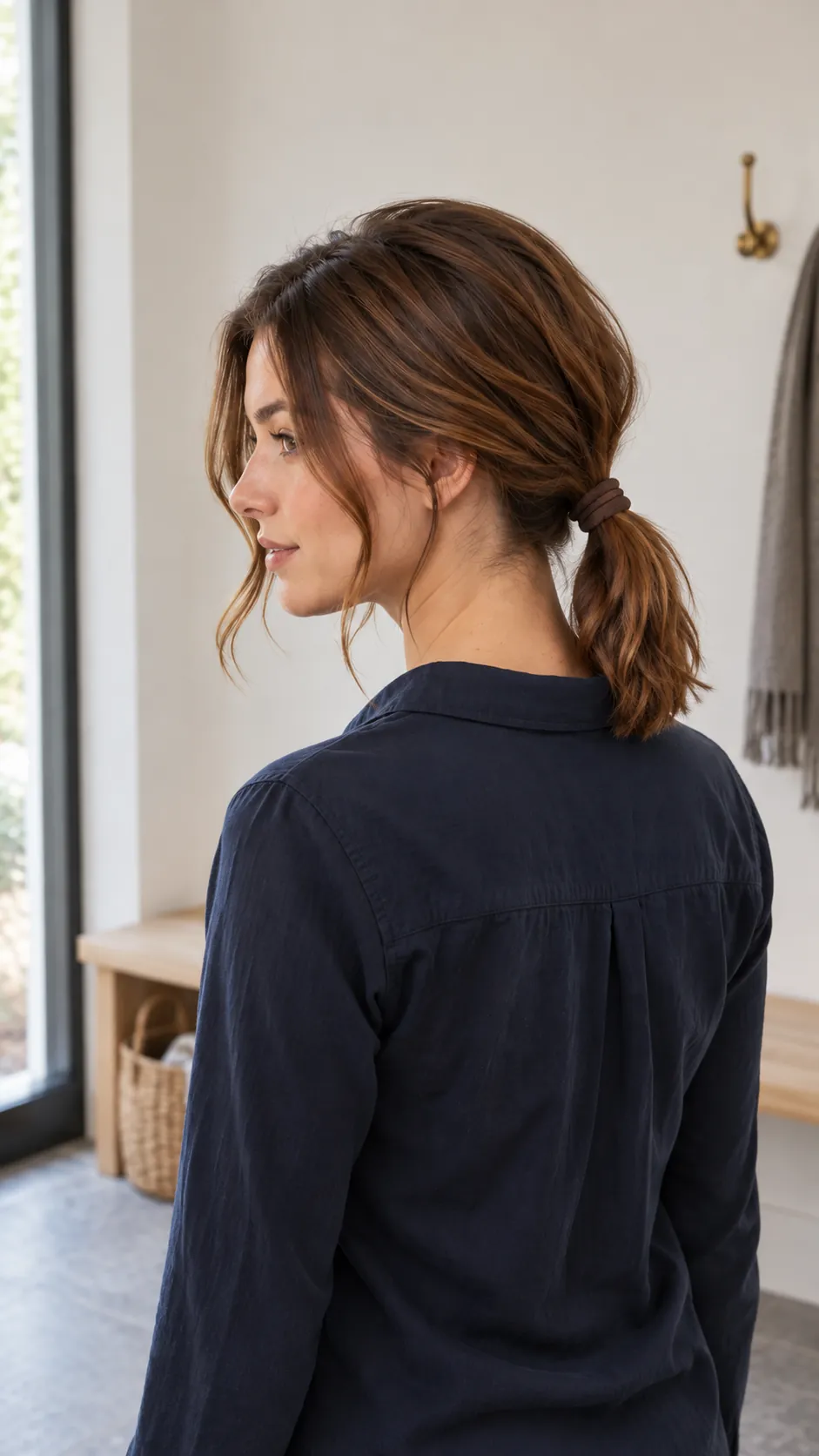
A round face does not need to be hidden or corrected. A useful haircut creates the movement, part direction, fringe opening, and maintenance level that you prefer. At medium length, small decisions about where a layer begins can matter more than the trend name you use.
Indexed hair discussions show recurring concerns about bangs cut too short, layers that remove end density, and reference photos that depend on a daily blowout. Readers also advise bringing clear pictures because terms such as long face framing can mean different things. The ideas below explain what to request and how each shape behaves after the salon finish is gone.
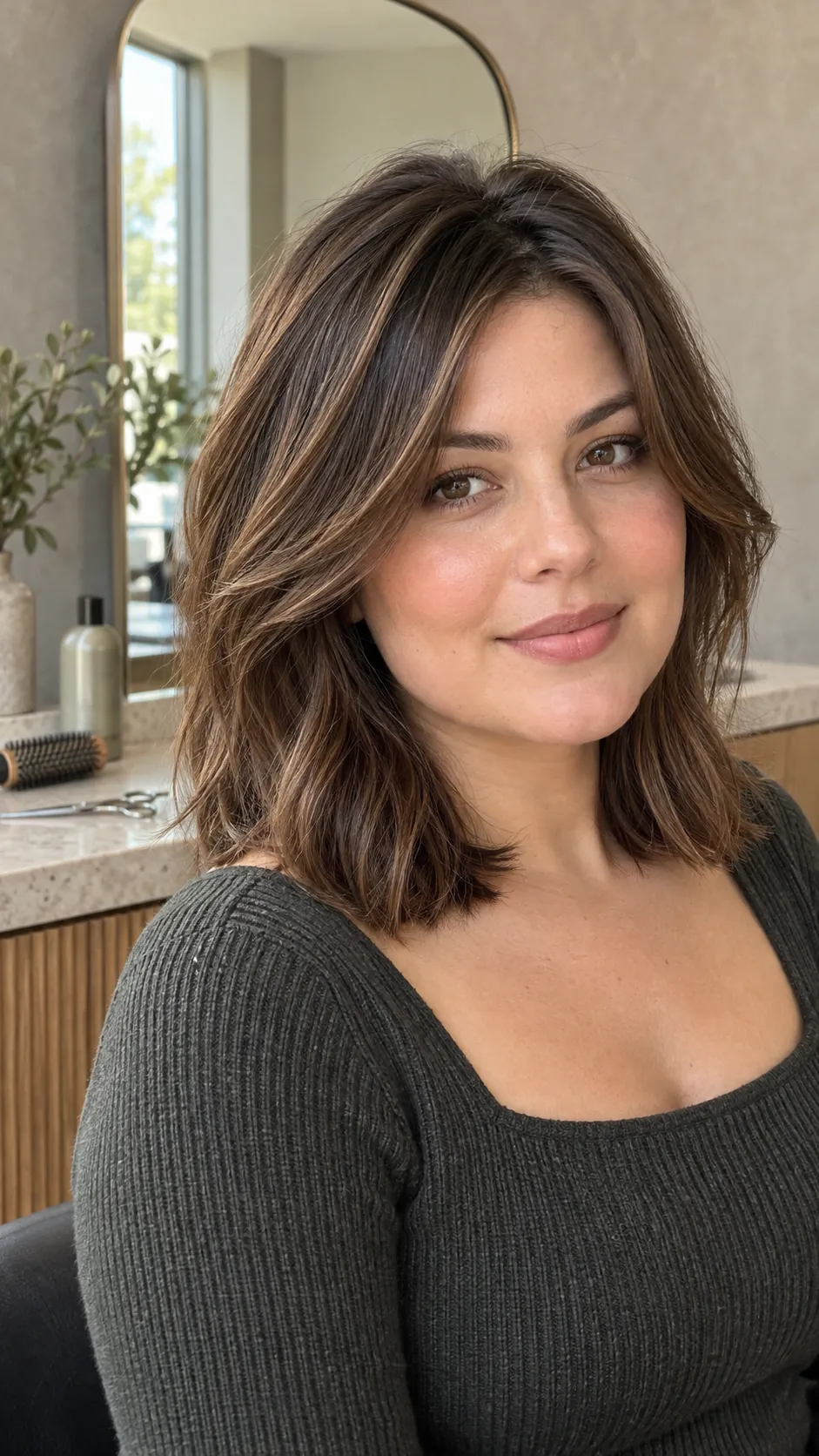
Collarbone Lob With Off Center Part
The diagonal part breaks bilateral width while the length below the chin draws the eye down. A compact baseline keeps the style polished on fine or medium hair.
Ask the stylist to place the front piece below the widest point of the cheek. Dry the roots across the part, then return them to their natural side for light lift.
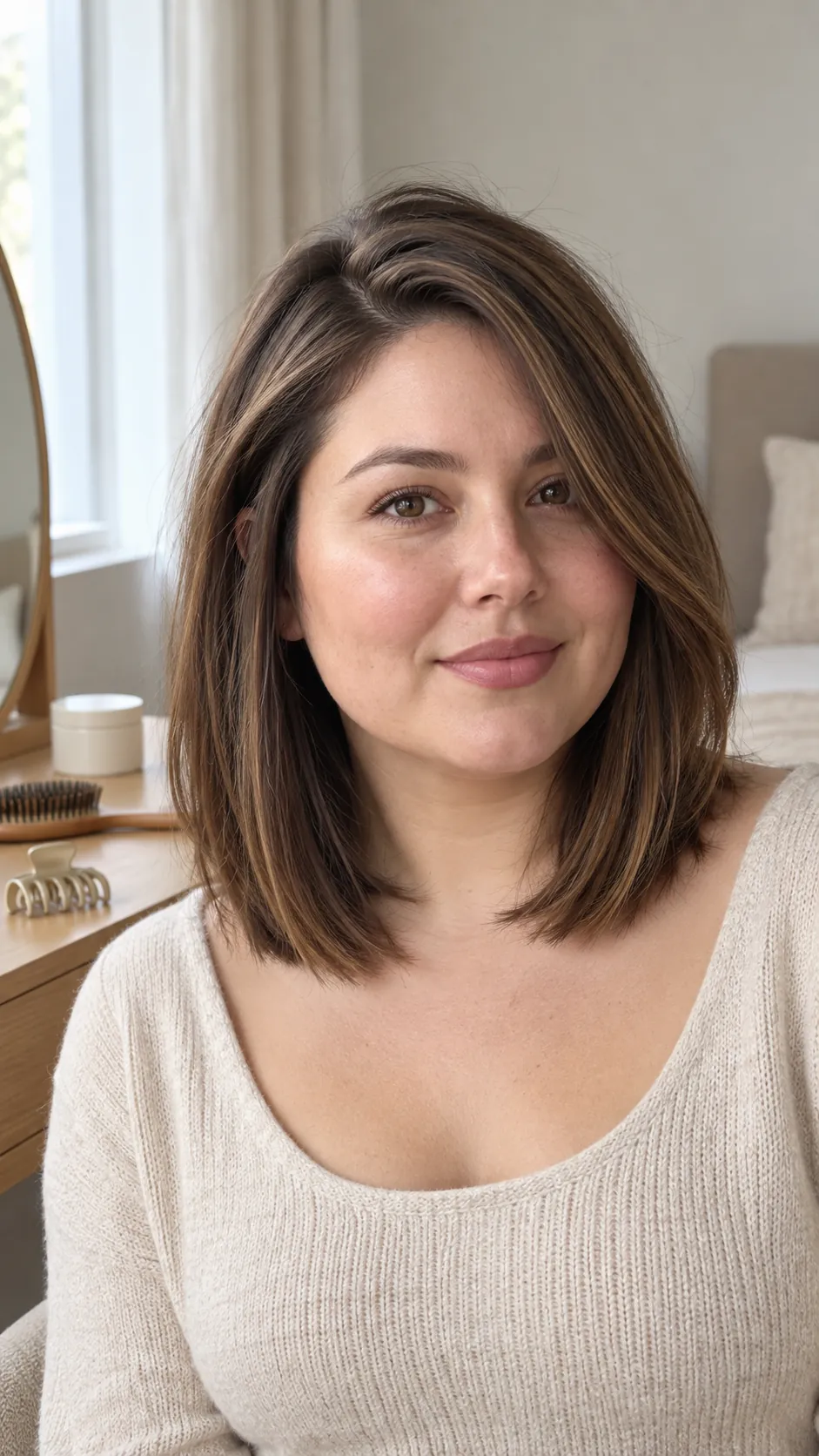
Long Bob With Subtle A Line
The gentle forward angle creates two vertical lines beside the face without looking severe. It also preserves enough length to tuck or tie back.
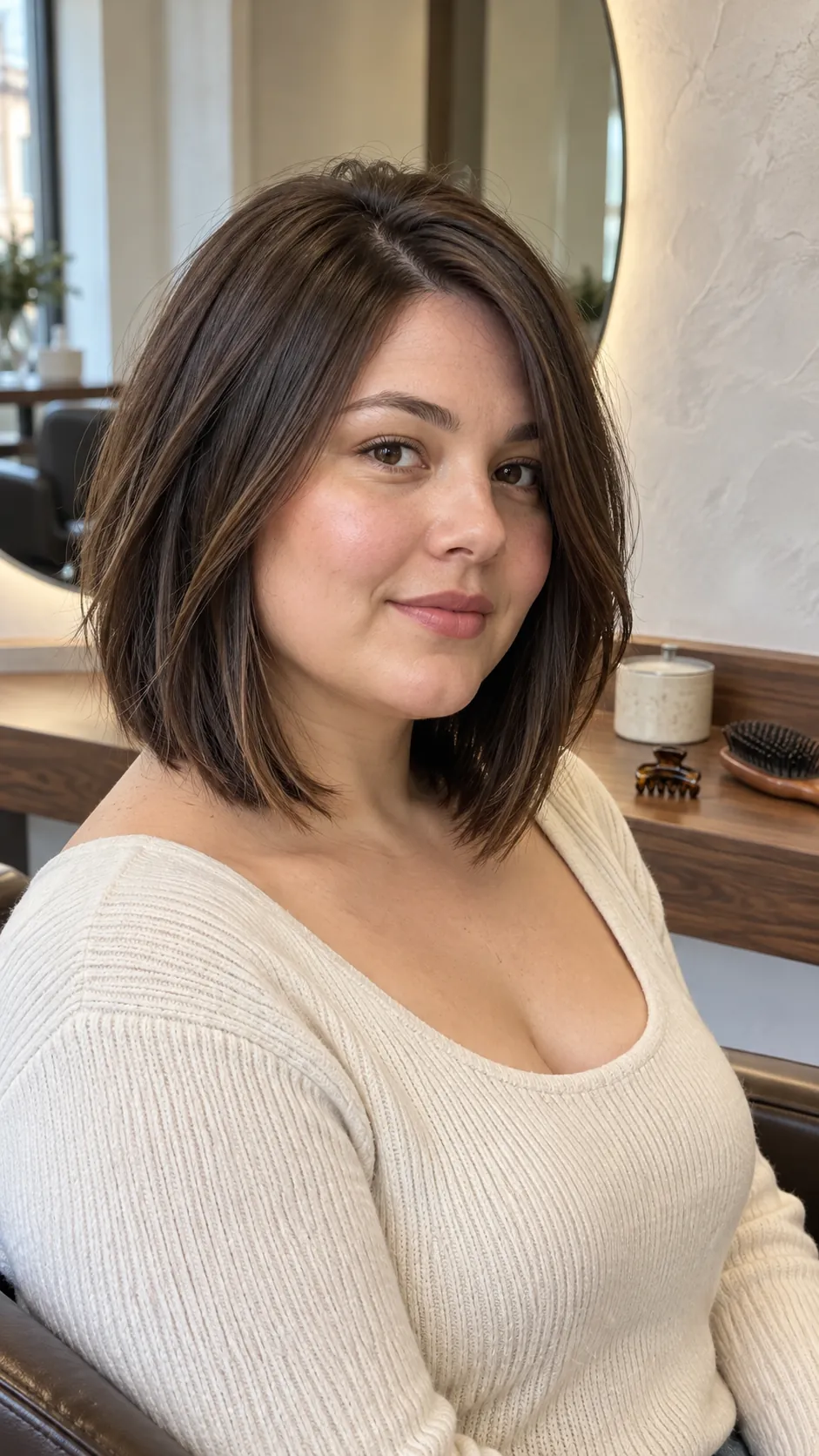
Keep the angle modest and confirm the shortest back point before cutting. Smooth the ends with a large brush and avoid turning every section under.
Shoulder Cut With Long Face Framing
Long front pieces soften the cheek area while the shoulder perimeter maintains density. This is a practical option when short layers tend to puff.
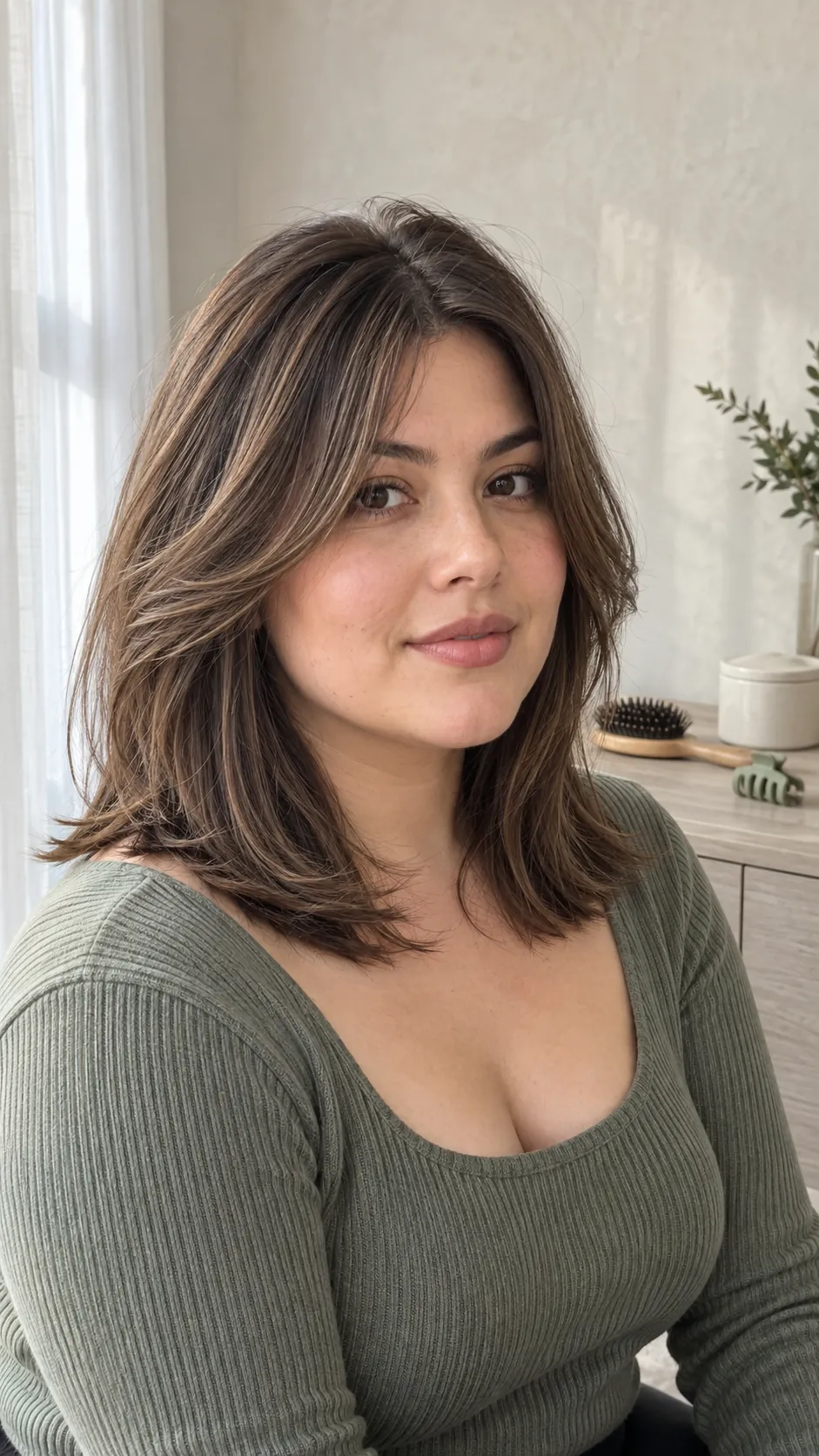
Show a reference for the exact landing point because the phrase face framing is vague. Style the pieces away from the face and leave the lower edge relaxed.
Side Part Lob With Root Lift
Height near the part adds a vertical cue, while the diagonal sweep interrupts a broad horizontal outline. The opposite side needs enough weight for balance.
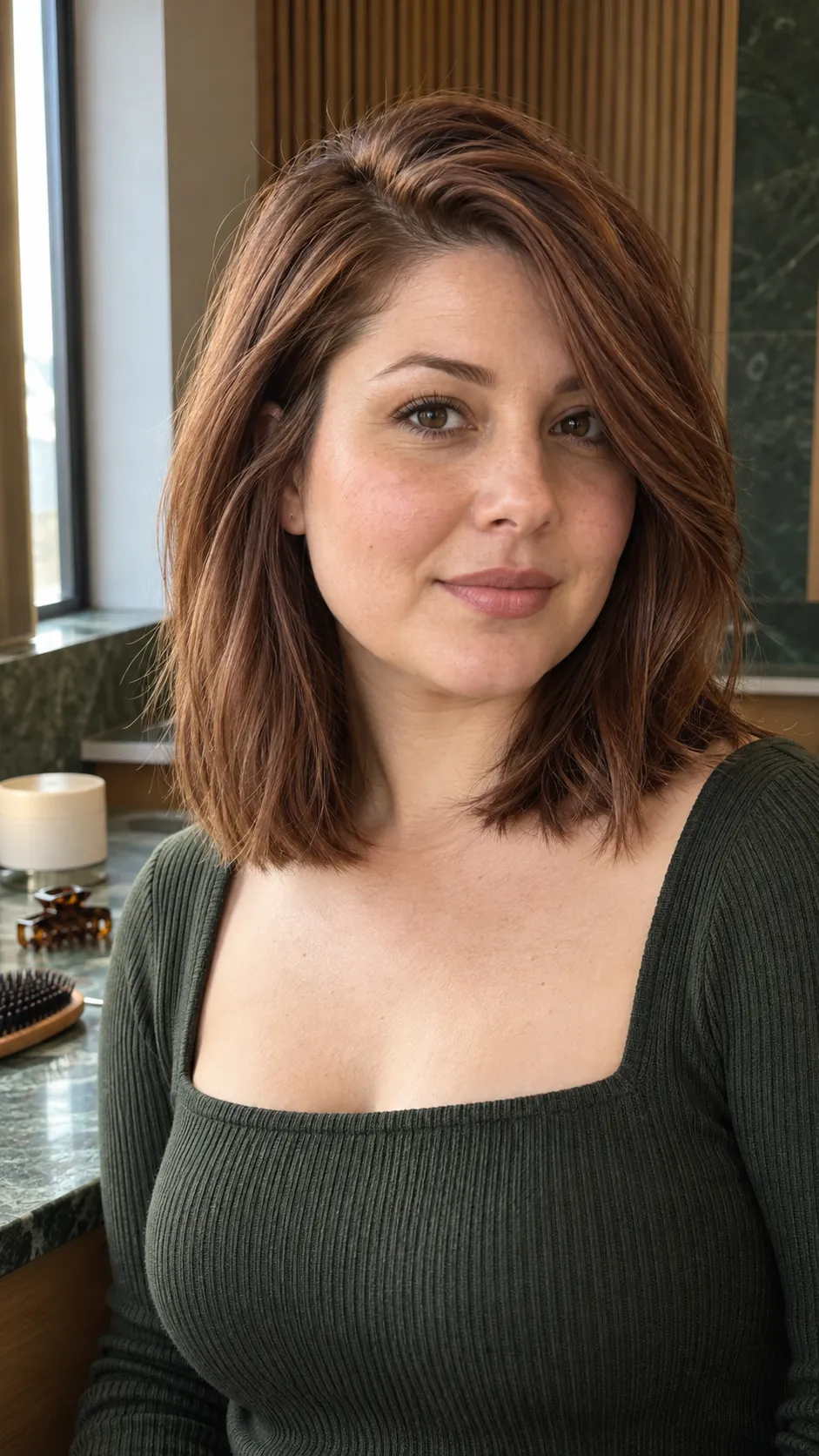
Plan the cut around the real cowlick and preferred part. Dry the root against its normal direction, let it cool, and then sweep it back.
Curtain Fringe With Collarbone Layers
A narrow opening keeps the forehead visible while the outer fringe leads into longer cheek and jaw pieces. The result frames without closing in the face.

Keep the shortest fringe long enough to move to either side. Dry it forward first, split it gently, and use only a small amount of flexible product.
Bottleneck Bangs With Medium Layers
The tapered fringe gives coverage without forming a heavy straight line. Connected side pieces create length beside the cheeks.
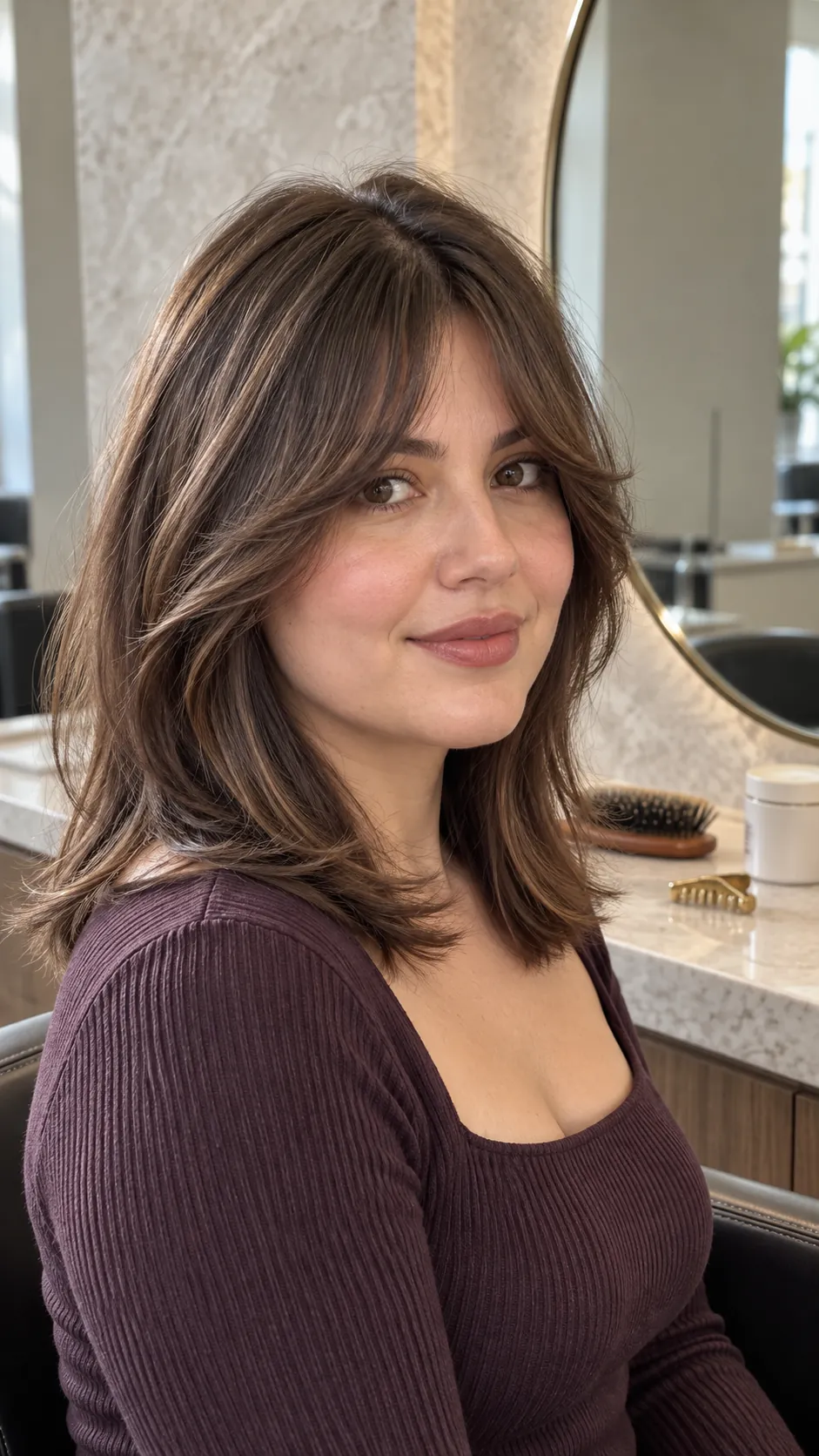
Discuss shrinkage and cowlicks before selecting the center length. Request soft outer corners that can tuck as the fringe grows.
Wispy Side Swept Bangs
A light diagonal fringe changes the balance around the forehead without adding a dense horizontal band. The fuller perimeter protects the look of density.
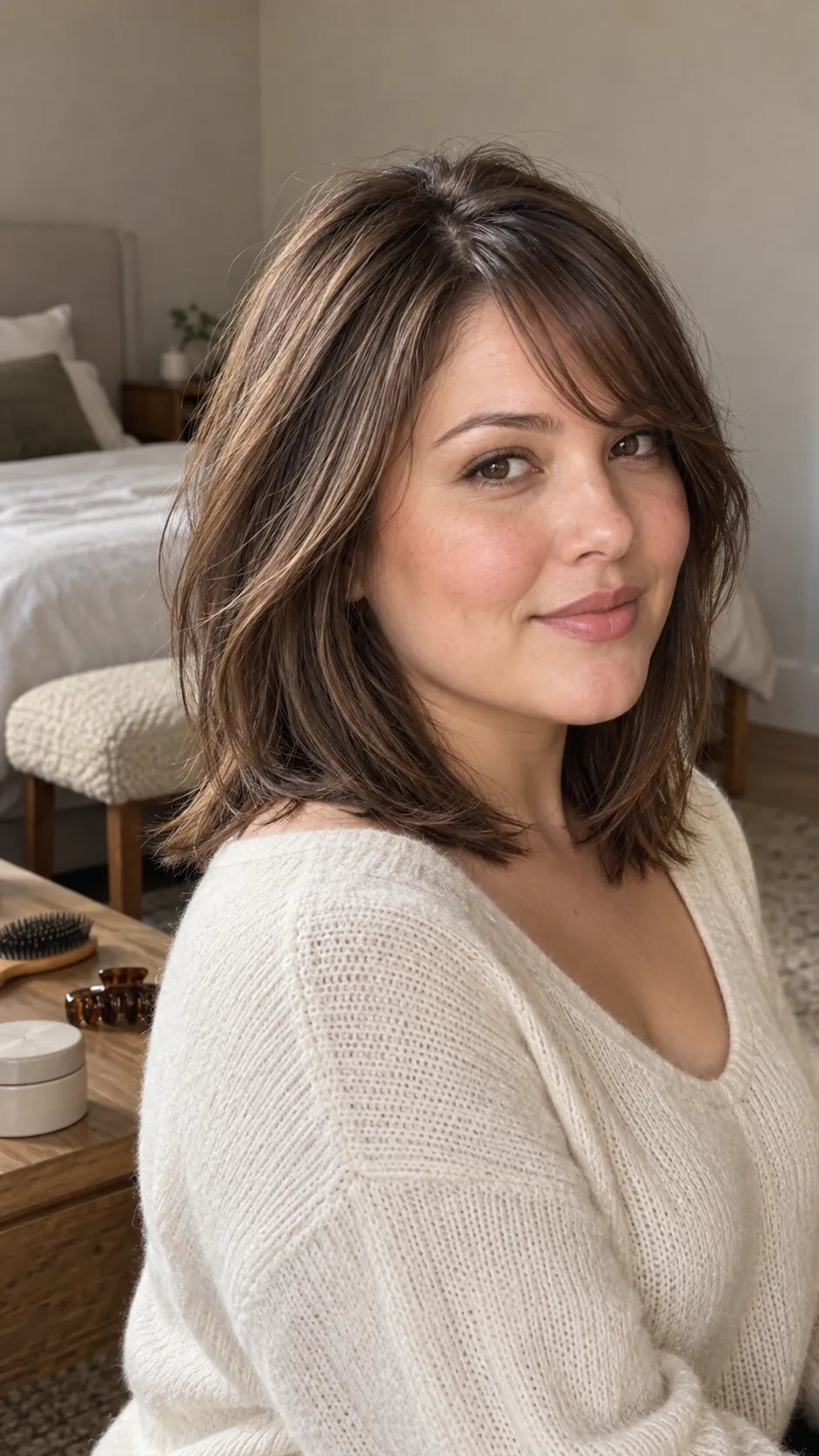
Ask for a movable fringe instead of a fixed heavy side bang. Dry it from side to side at the roots and finish in the preferred direction.
Center Part Cut With Cheekbone Wings
Balanced wings can highlight the eyes while leaving open space through the center of the face. Slight natural asymmetry keeps the result from looking rigid.
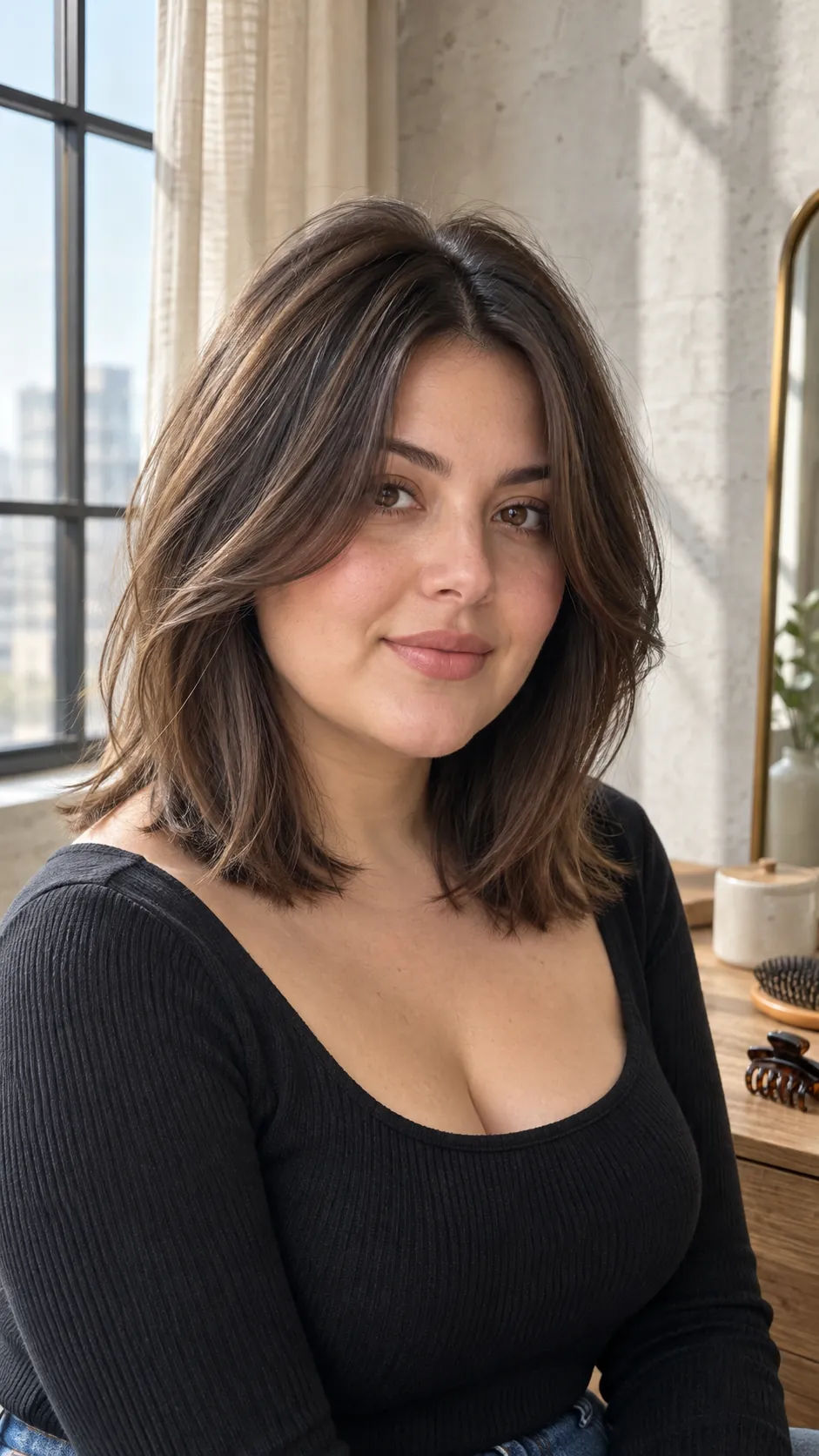
Agree on where each wing should bend when dry. Use a large brush to direct the front away, then separate it with fingers.
Butterfly Layers At Medium Length
Sweeping front arcs add movement above a dense lower shape. They suit thick or medium density hair that can support several connected tiers.
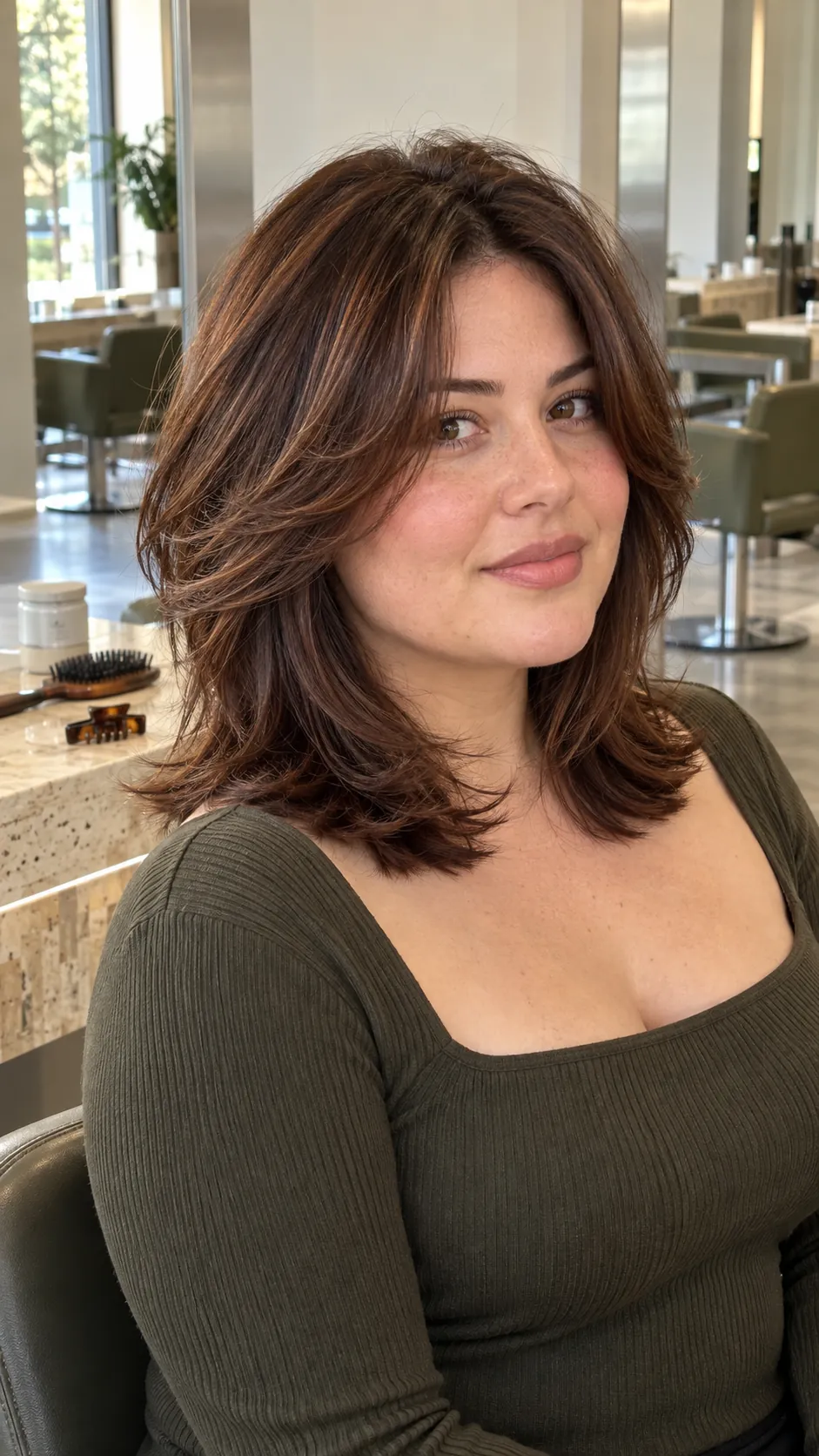
Keep the shortest guide conservative at medium length. Brush only the front layers into broad curves so the style does not become overly round.
Soft Shag With Long Curtain Bangs
Long fringe and restrained crown layers create movement without removing too much weight around the face. Natural waves make the shape easier to maintain.

Ask for connected layers and a strong perimeter. Apply foam on wet hair, diffuse with low air, and avoid breaking the wave pattern before it dries.
Wavy Lob With Vertical Texture
Elongated bends lead the eye downward and avoid a wide triangular silhouette. The length also gives waves room to form below the jaw.
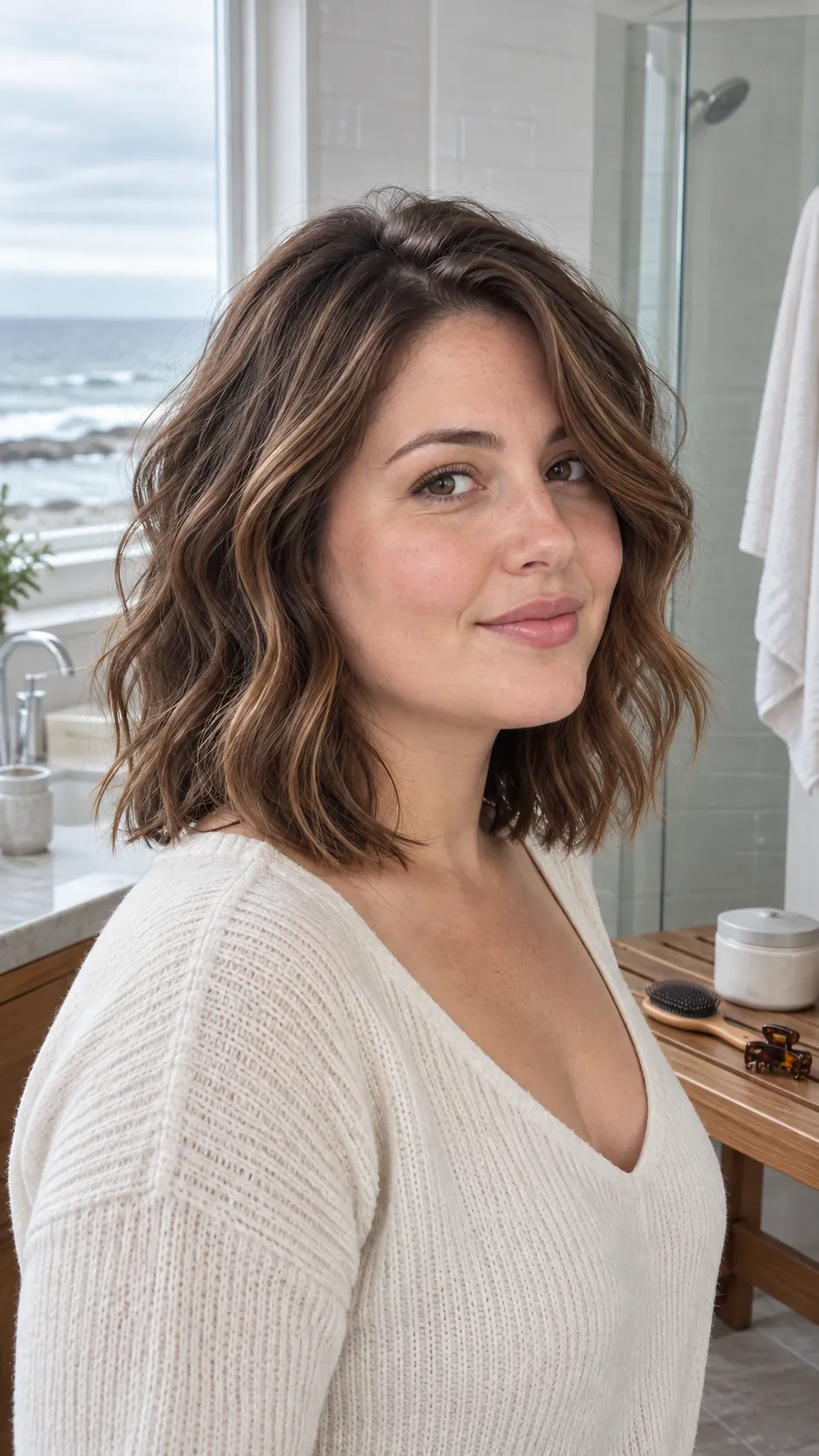
Have the stylist assess shrinkage and uneven wave zones. Encourage lengthwise clumps with gel or foam instead of brushing the dry hair wide.
Curly Shoulder Cut With High Crown
Crown height and graduated curl tiers can lengthen the overall silhouette while preserving the natural fullness of curls. Shrinkage must guide every layer.
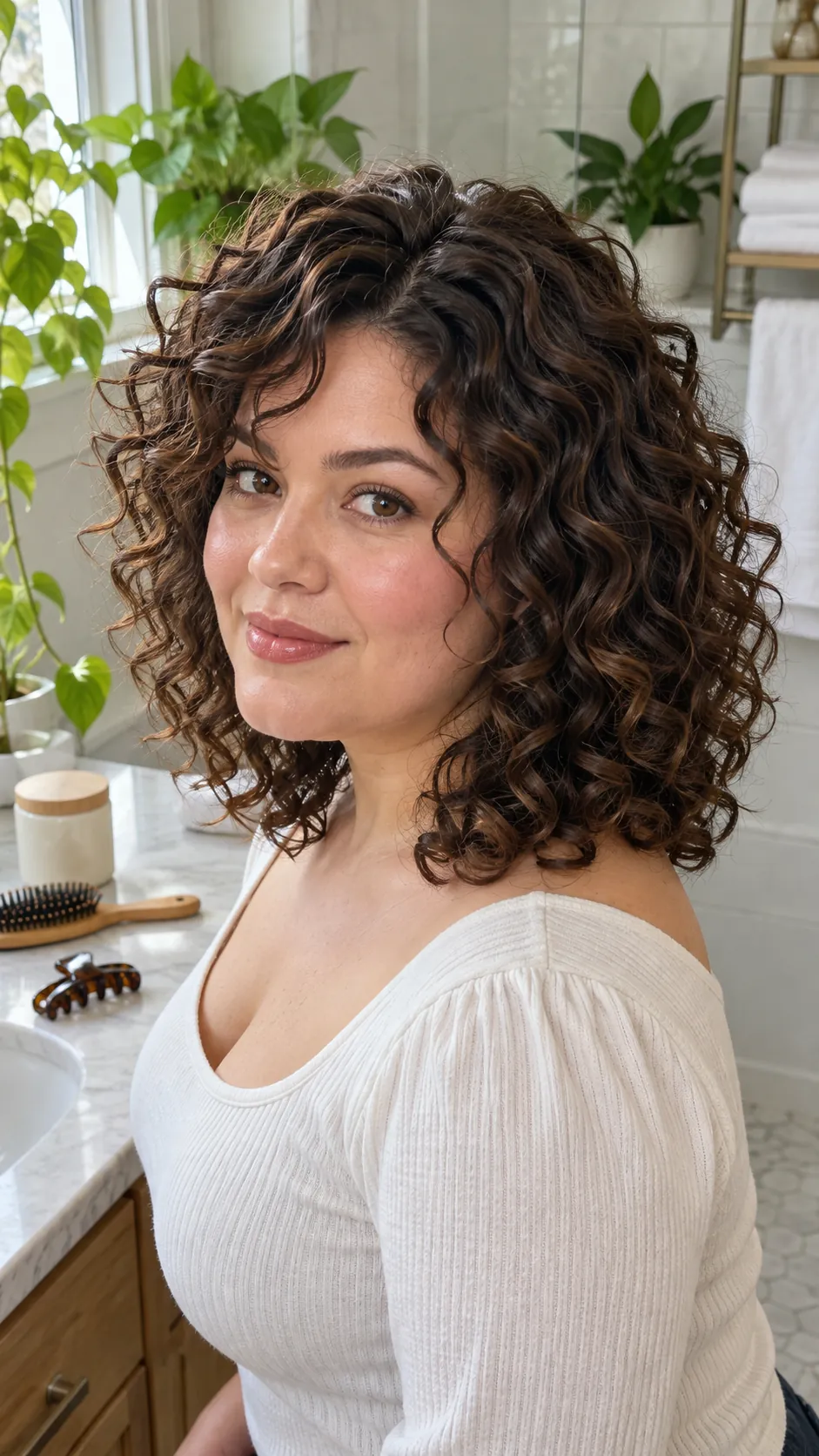
Consult on dry curl behavior and the shortest crown guide. Apply product in sections and diffuse without moving the curls until a cast forms.
Fine Hair Lob With Blunt Ends
A dense edge prevents fine hair from appearing sparse, while limited framing creates shape without sacrificing the perimeter.
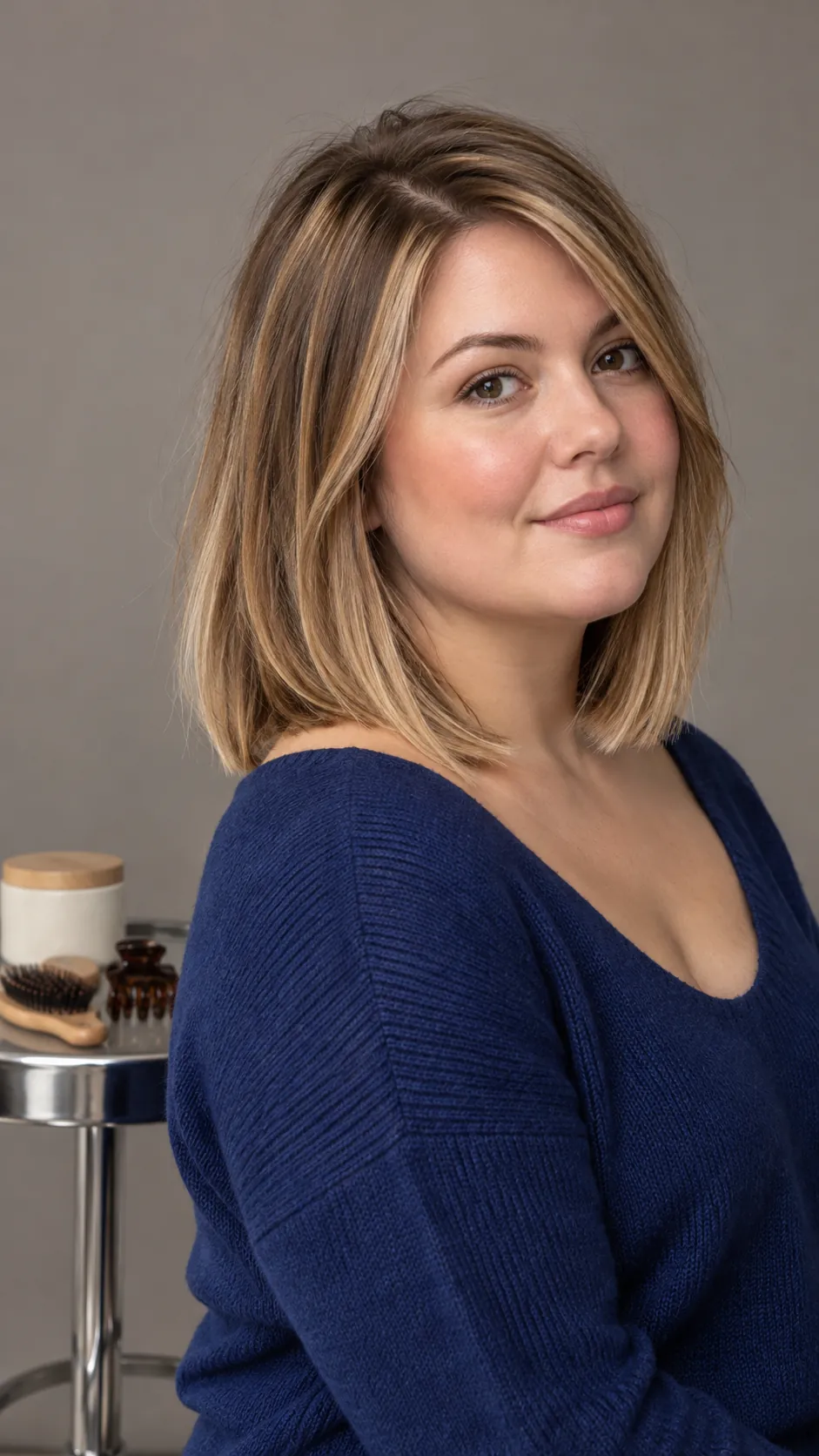
Ask the stylist to separate strand thickness from total density. Use root spray sparingly and keep oils away from the scalp and ends.
Thick Hair Cut With Hidden Layers
Internal weight removal can reduce bulk without creating short surface pieces that expand beside the cheeks. The visible outline stays calm and long.
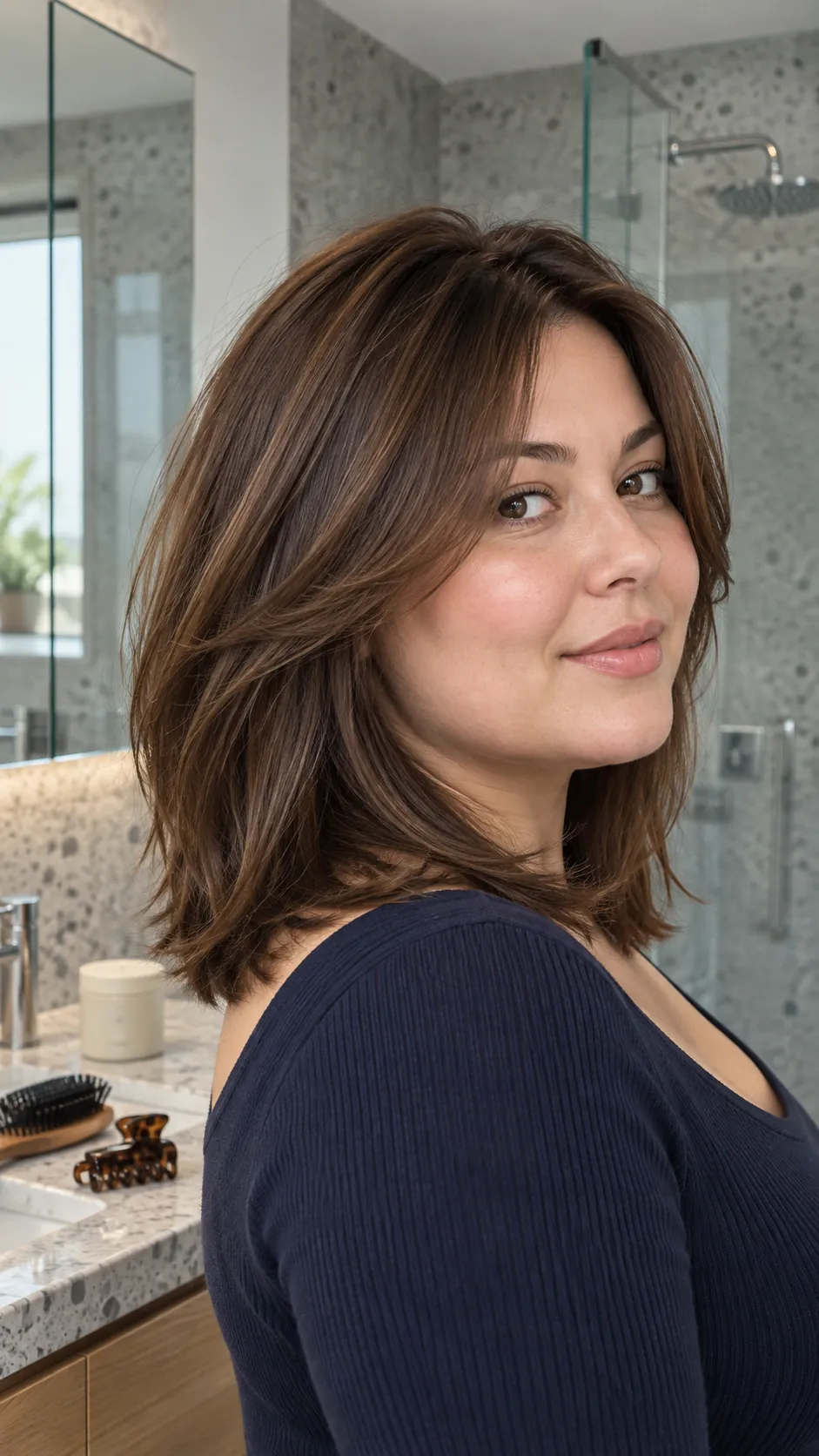
Ask where bulk will be removed and how the cut will air dry. Use smoothing cream through the middle lengths and keep the outer layer intact.
Straight Cut With Bent Ends
The clean length gives a strong vertical outline, while a small bend keeps the ends from looking rigid. The face frame begins below the cheek.
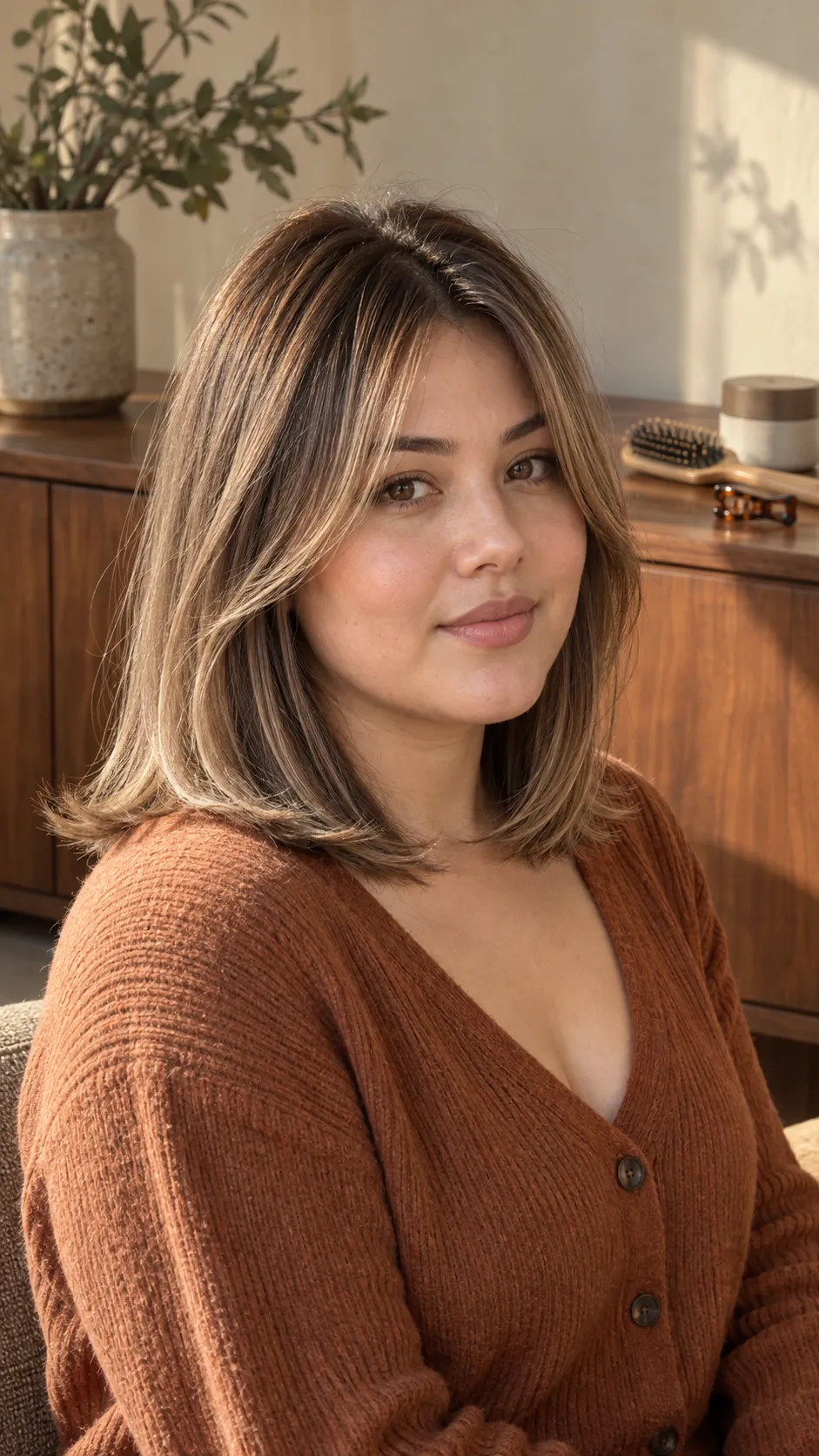
Use a large brush only on the final inches and set the bend with cool air. Regular trims keep the compact edge looking deliberate.
Polished Shoulder Cut With Tucked Side
The tuck opens one side of the face and the diagonal section creates useful asymmetry. Smooth shoulder ends make the style suitable for work.
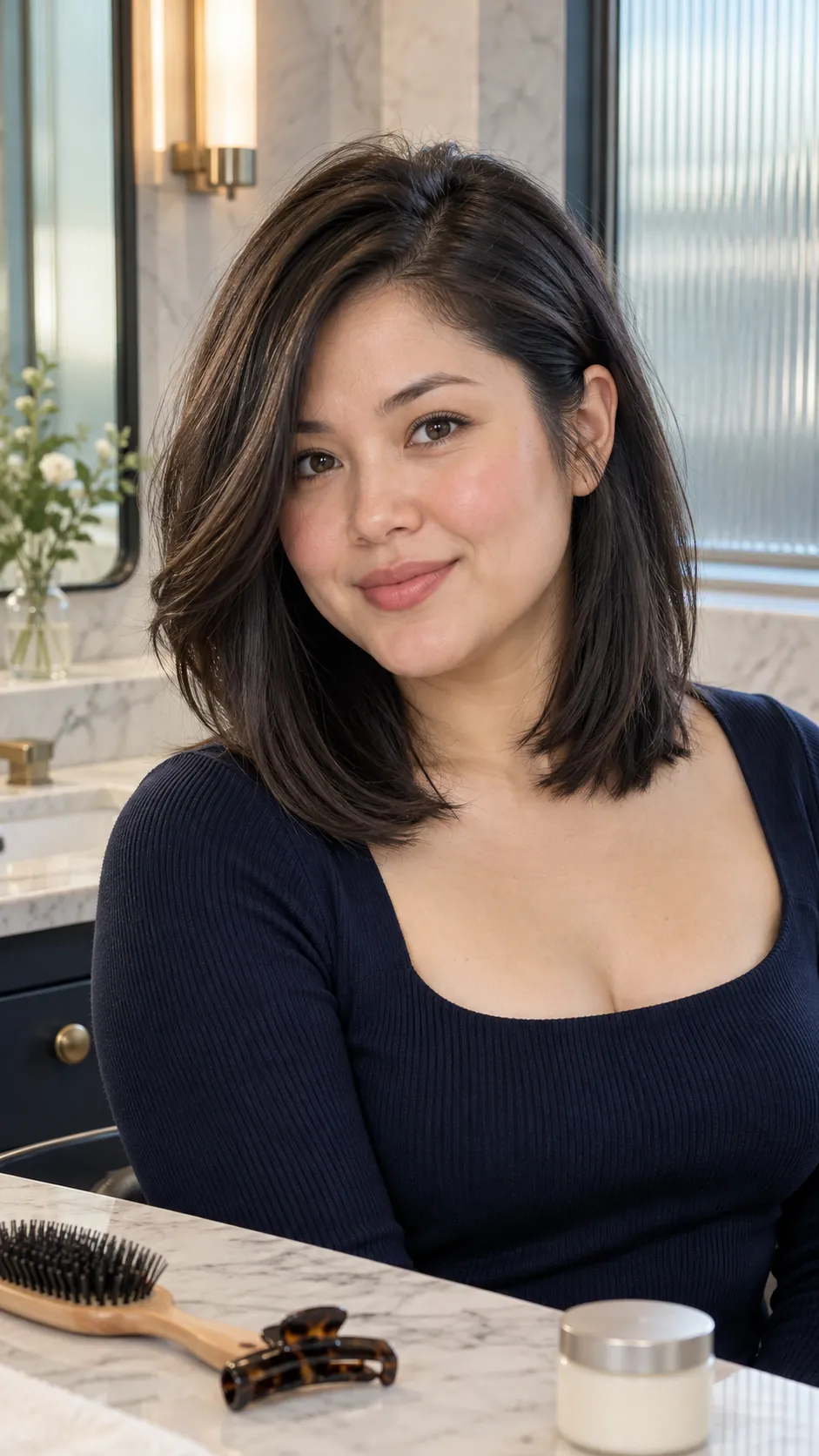
Choose the tucked side according to natural growth. Use light root lift on the open side and a small amount of cream on the tucked side.
Rounded Lob With Length Below Chin
Placing the main curve below the chin avoids concentrating volume at the widest part of the face. The lower edge remains full and soft.
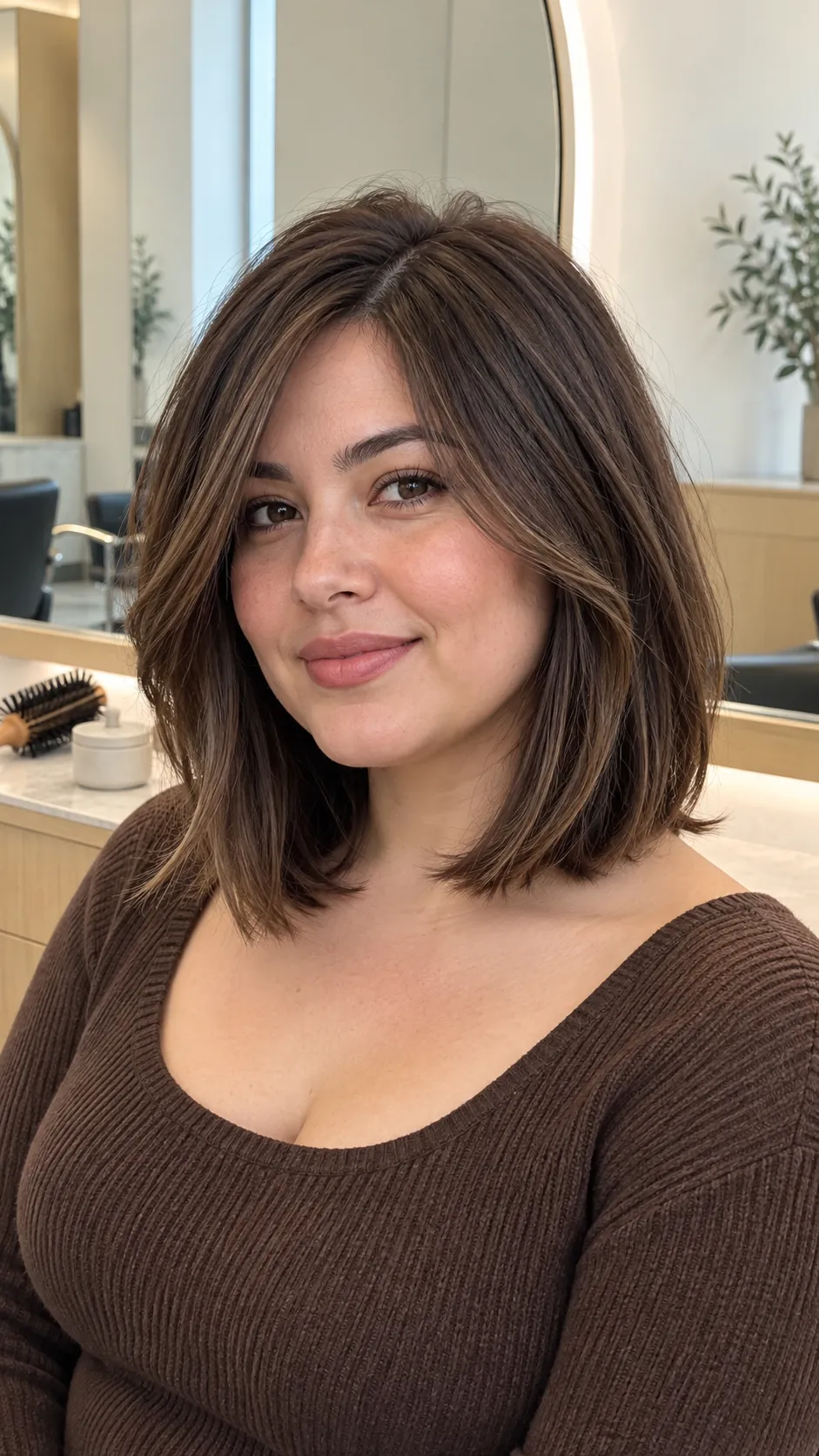
Request a low rounded shape rather than a short bubble silhouette. Use moderate brush tension and preserve lift at the roots.
Textured Clavicut With Piecey Ends
Piecey ends create movement without requiring short layers around the cheeks. The clavicle length keeps the overall shape elongated.
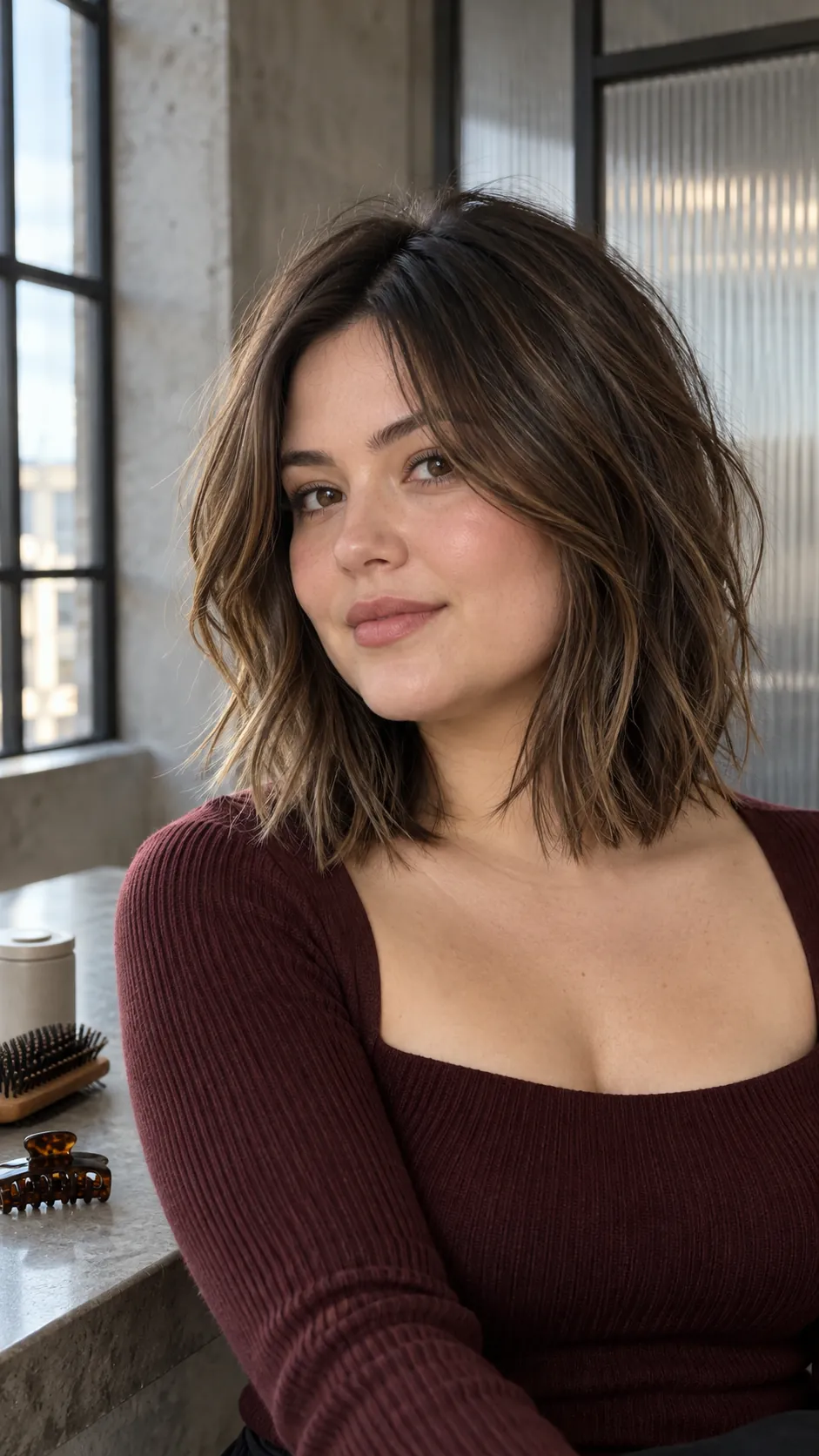
Ask for texture mainly through the last few inches. A small amount of dry paste can define selected tips without making the whole cut stringy.
Layered Lob With Jaw Skimming Pieces
The front pieces outline the jaw and lead into longer lengths, creating a clear vertical frame. Connection prevents them from looking like accidental chunks.
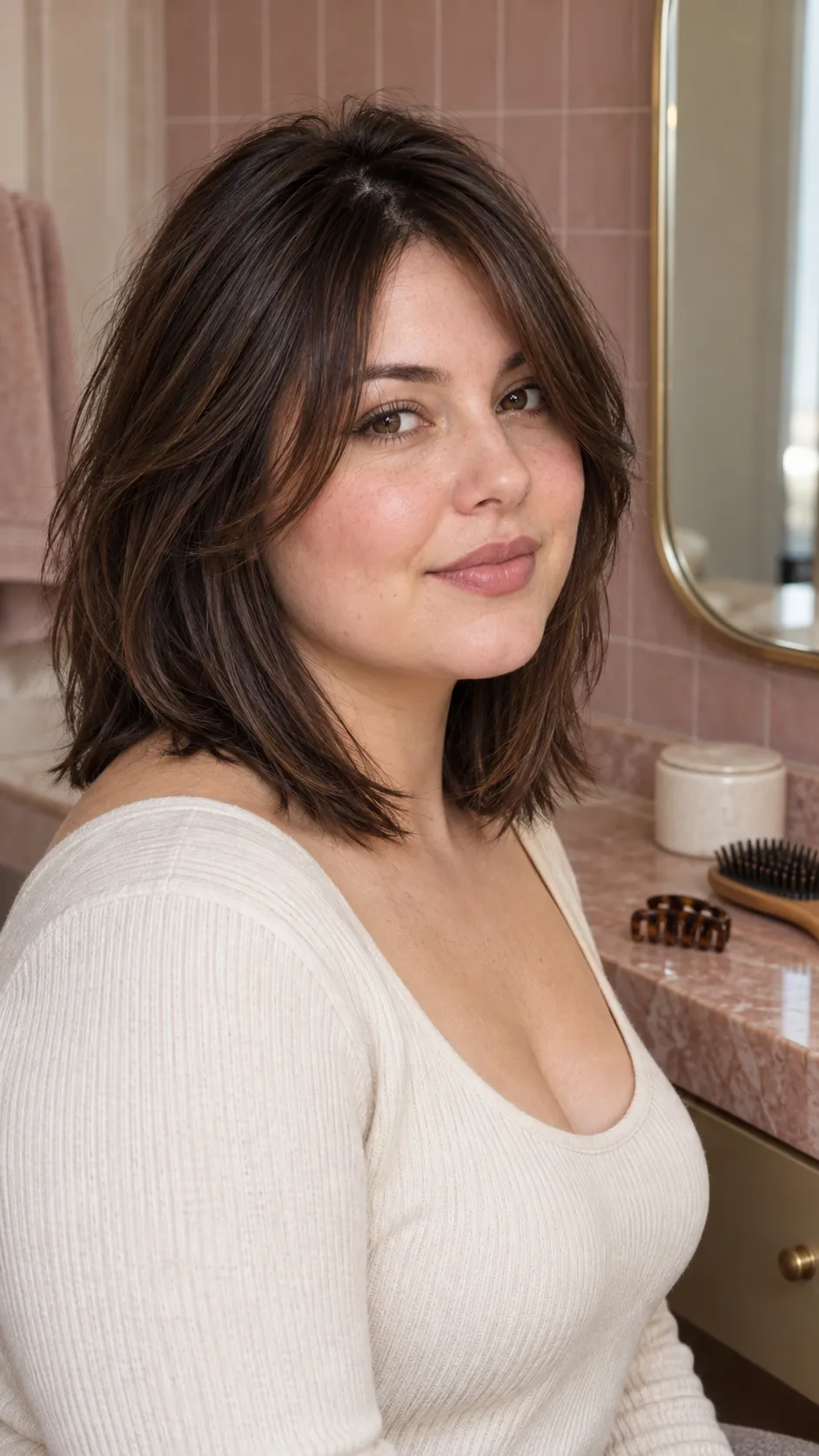
Set the shortest point after discussing how the hair springs when dry. Style the front pieces away while leaving the back more natural.
Medium Cut With S Curve Waves
Long wave arcs add motion while keeping most volume below the cheekbones. This pattern works well for naturally wavy hair and soft heat styling.
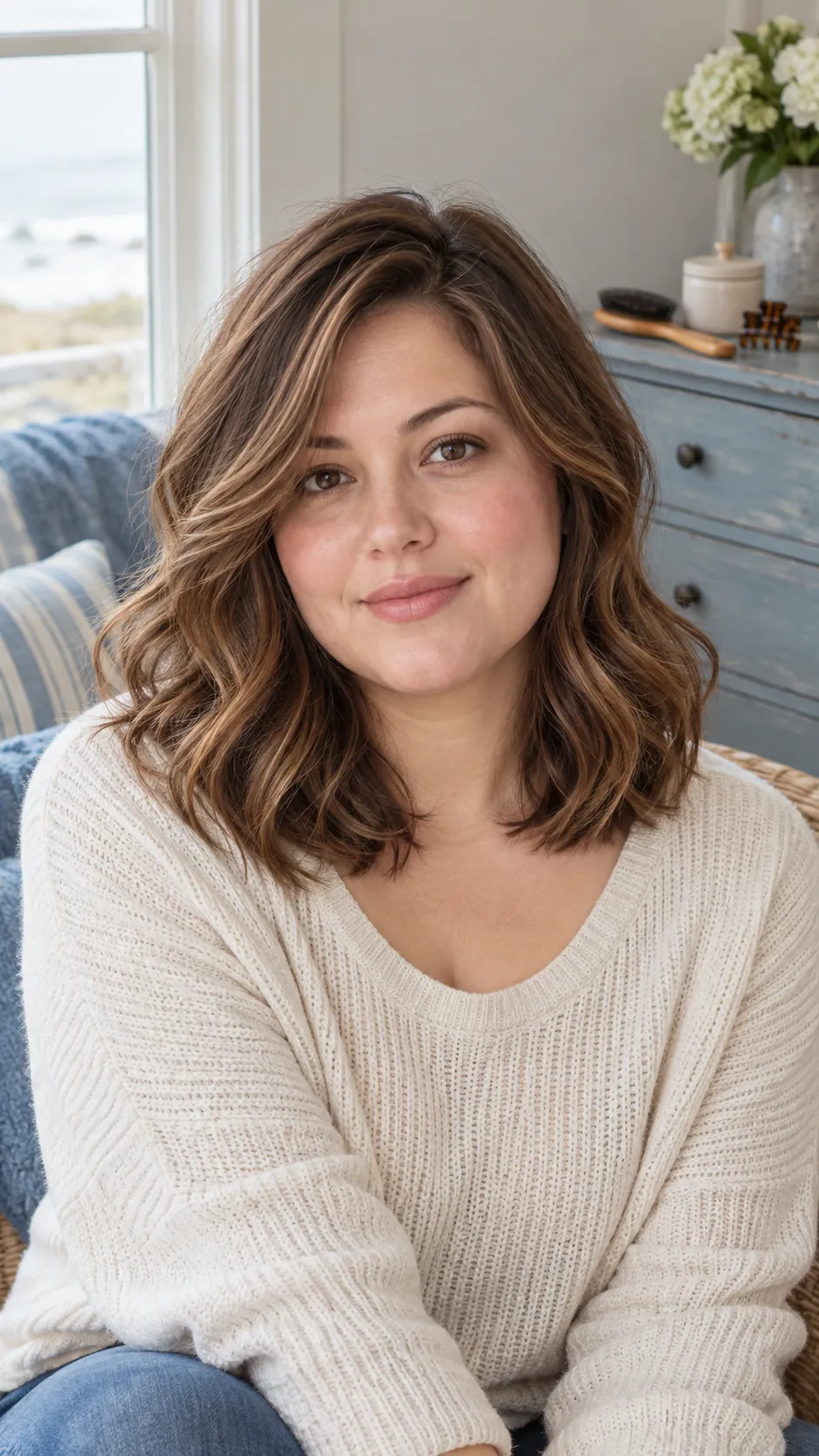
Build the wave in alternating sections and leave the ends less curled. Avoid uniform barrel curls that widen the entire silhouette.
Shoulder Shag With Airy Crown
A little height at the crown balances cheek width, while long fringe keeps the center open. The ends must retain enough density to anchor the cut.
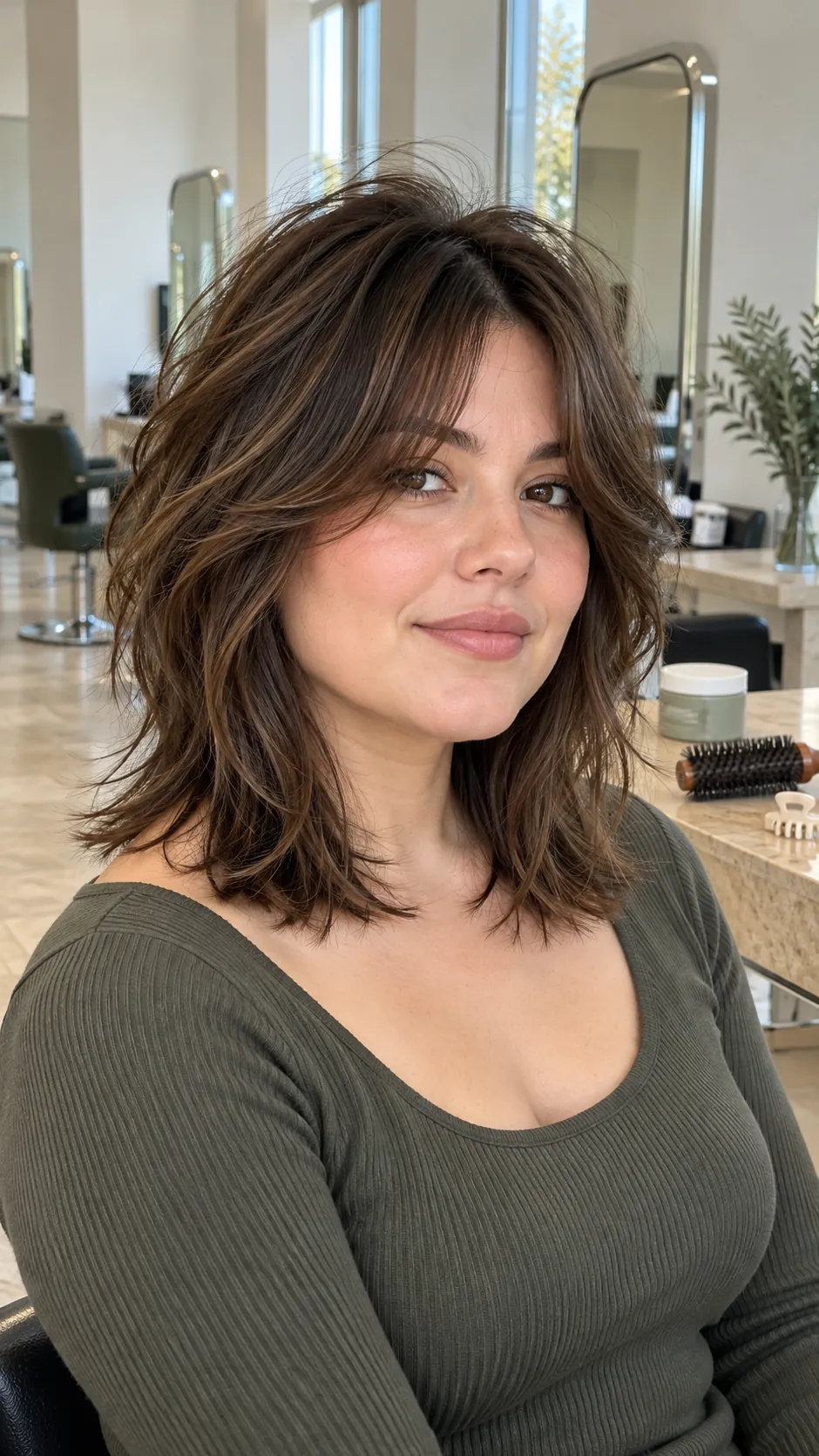
Choose the shortest crown guide on dry hair. Use mousse at the roots and scrunch only the sections that already have natural movement.
Asymmetrical Lob
Unequal lengths create a strong diagonal that breaks a round outline. A restrained difference feels modern without limiting daily styling.
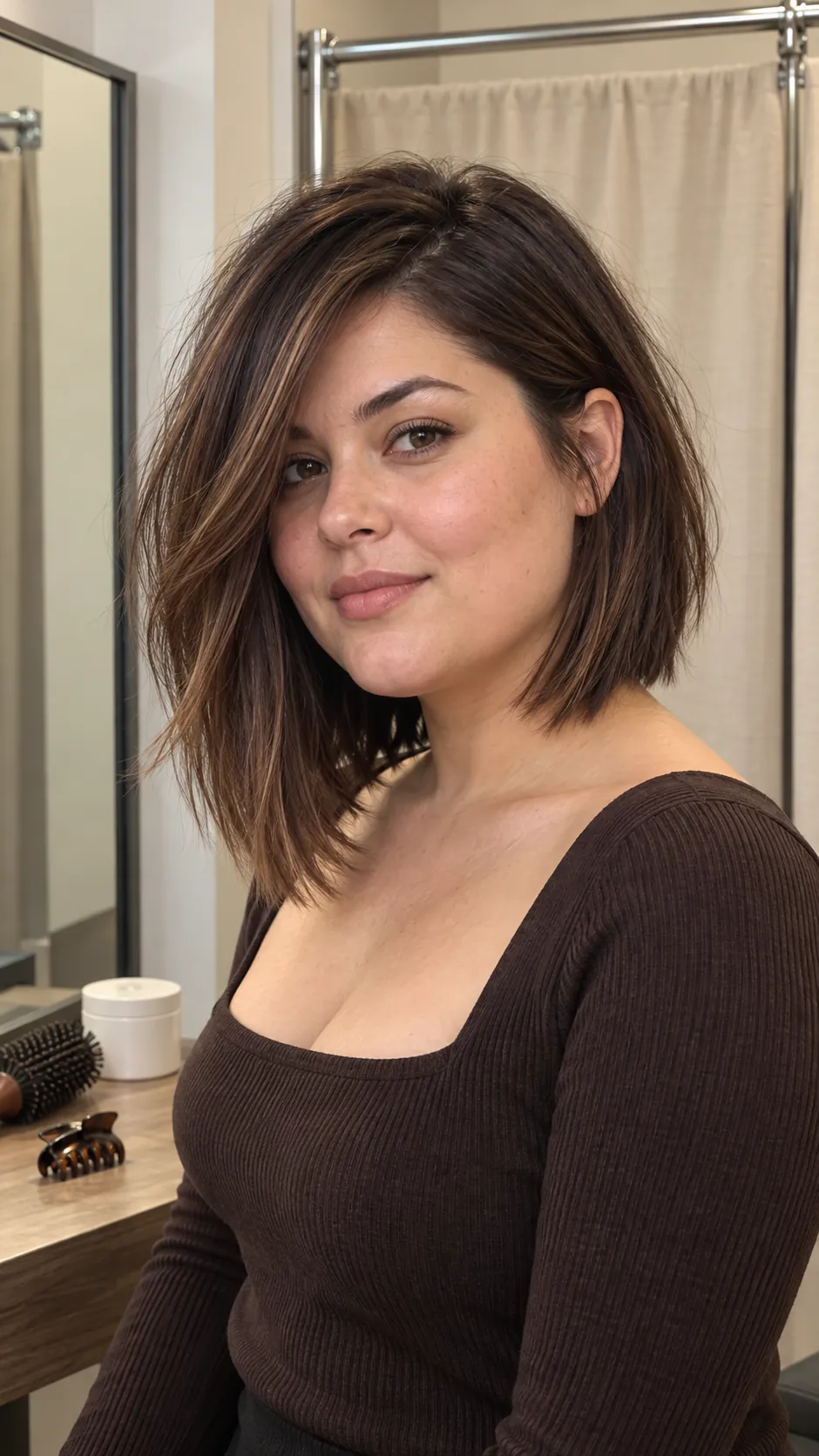
Confirm the back balance and the amount of difference from side to side. Style the longer side with movement and keep the shorter side close.
Medium Wolf Cut With Long Layers
Long wolf layers provide crown movement without creating a short round cap. The full lower line answers the common concern about thin ends.
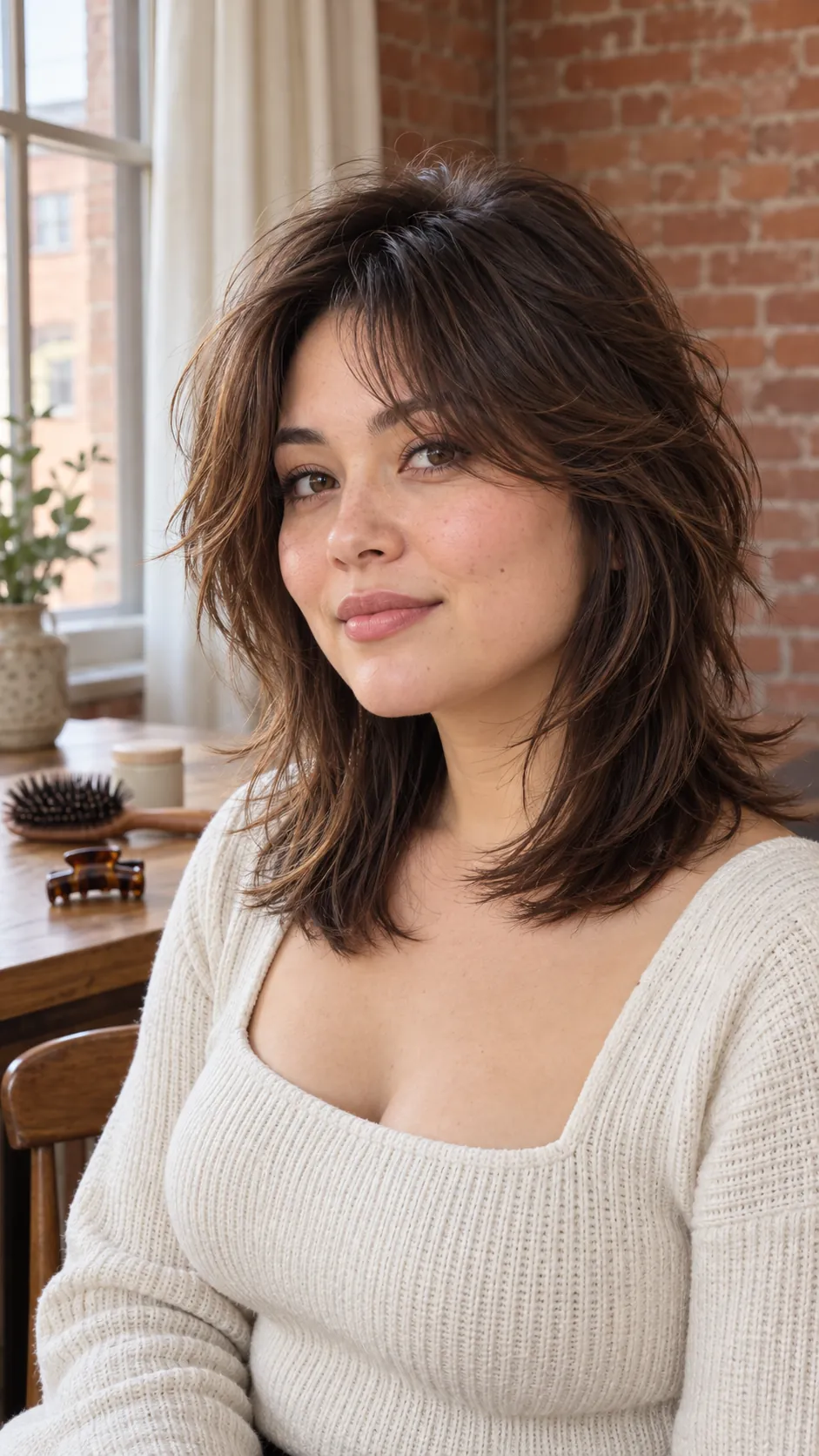
Ask for soft connection and a conservative crown guide. Use root lift at the top and avoid heavy texture products through the lower length.
Side Part Cut For Natural Curls
A lifted diagonal part and curl groups that fall below the cheek can create an open, elongated frame. The cut should respect different shrinkage zones.
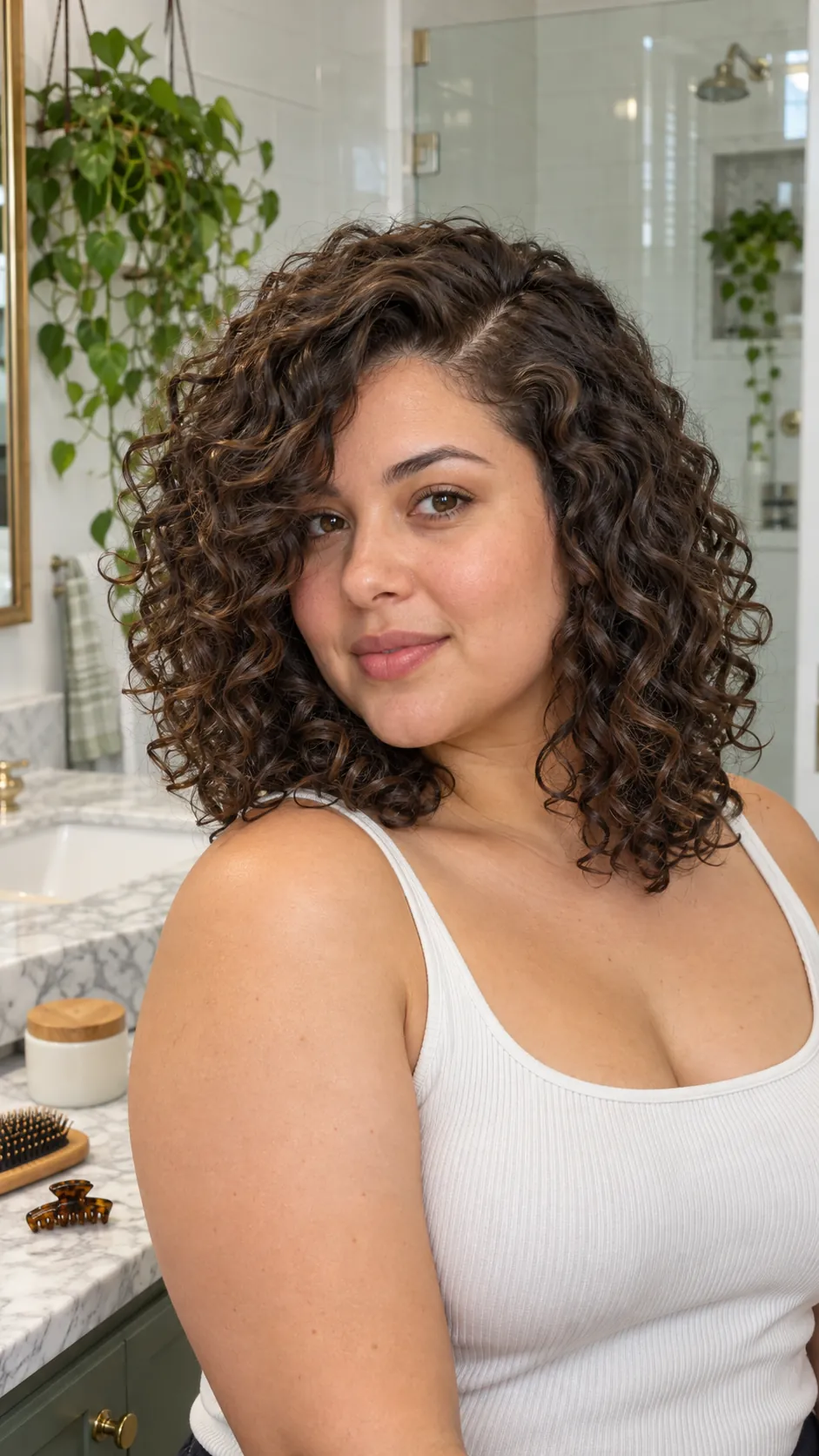
Have the stylist map curl spring on both sides. Refresh the part and crown separately instead of adding product to every curl.
Collarbone Cut With Long Side Fringe
The long fringe crosses the forehead diagonally and remains easy to tuck. It changes the frame without the commitment of short bangs.
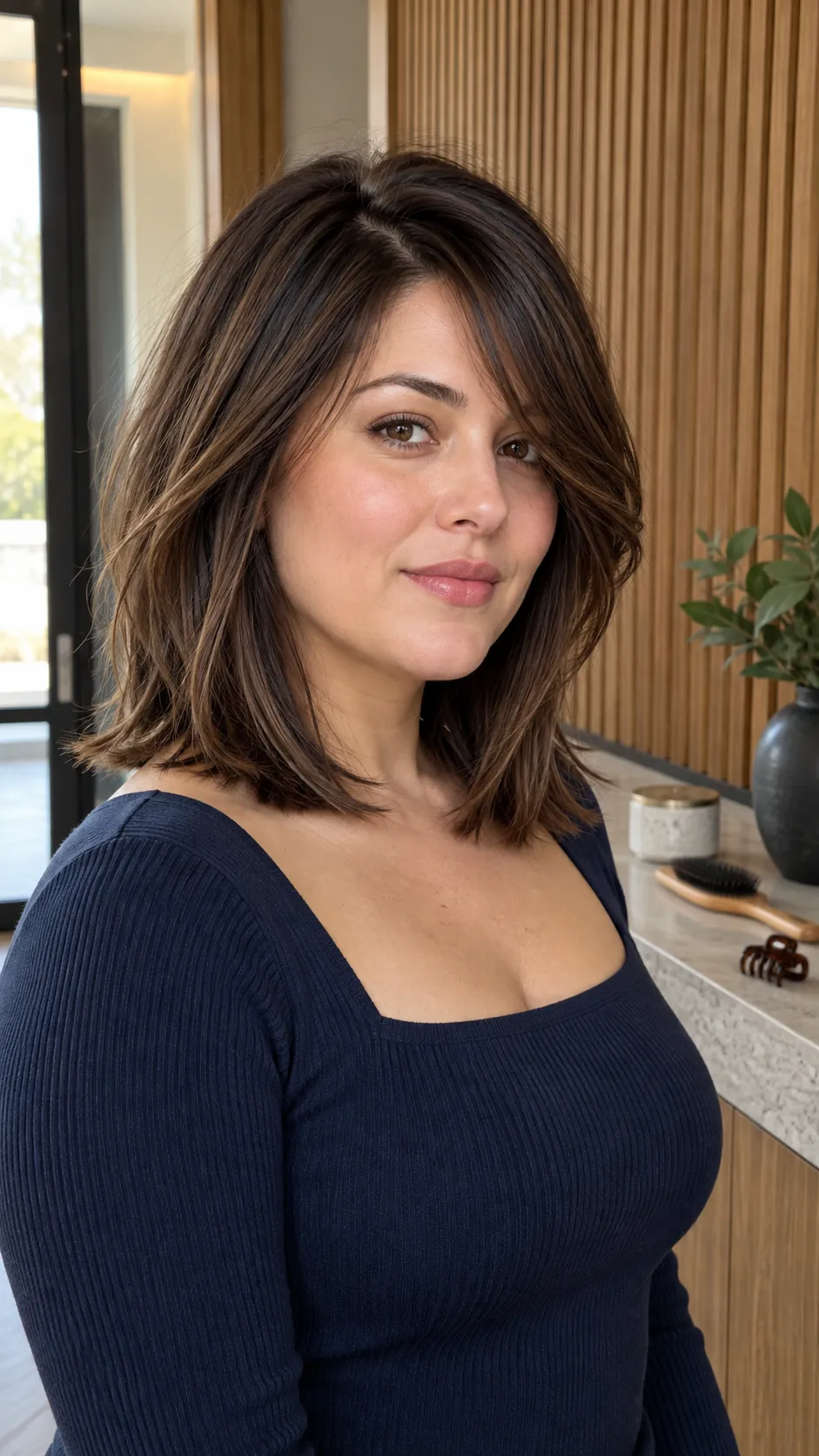
Keep the fringe long enough for low maintenance days. Dry the roots in both directions, then place the sweep and cool it in position.
How To Choose The Right Version
Start with your natural part, density, texture, and realistic styling routine. Then choose the first layer, fringe length, and perimeter strength. Bring front, side, and back references that show a similar texture. Ask how the shape will look air dried, how much can still be tied back, and when the fringe will need trimming.