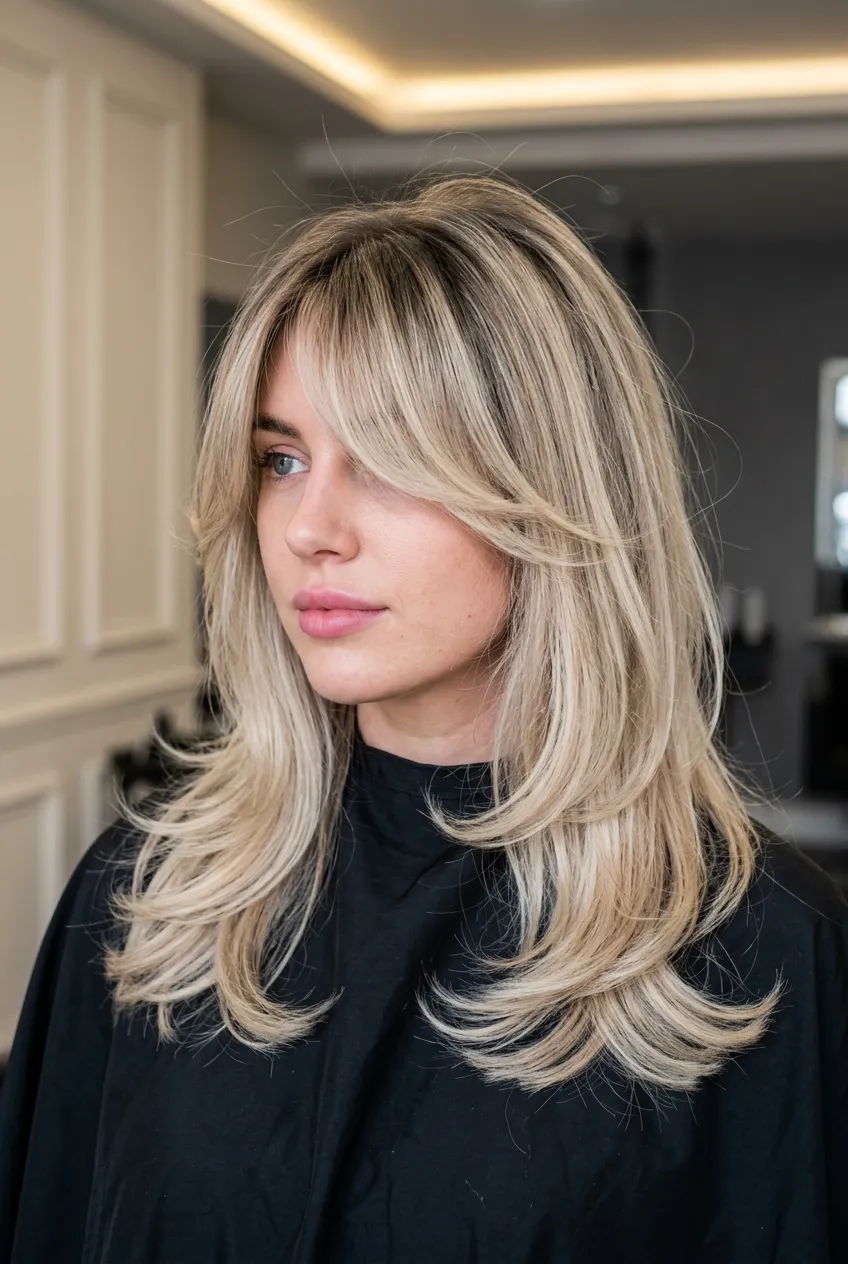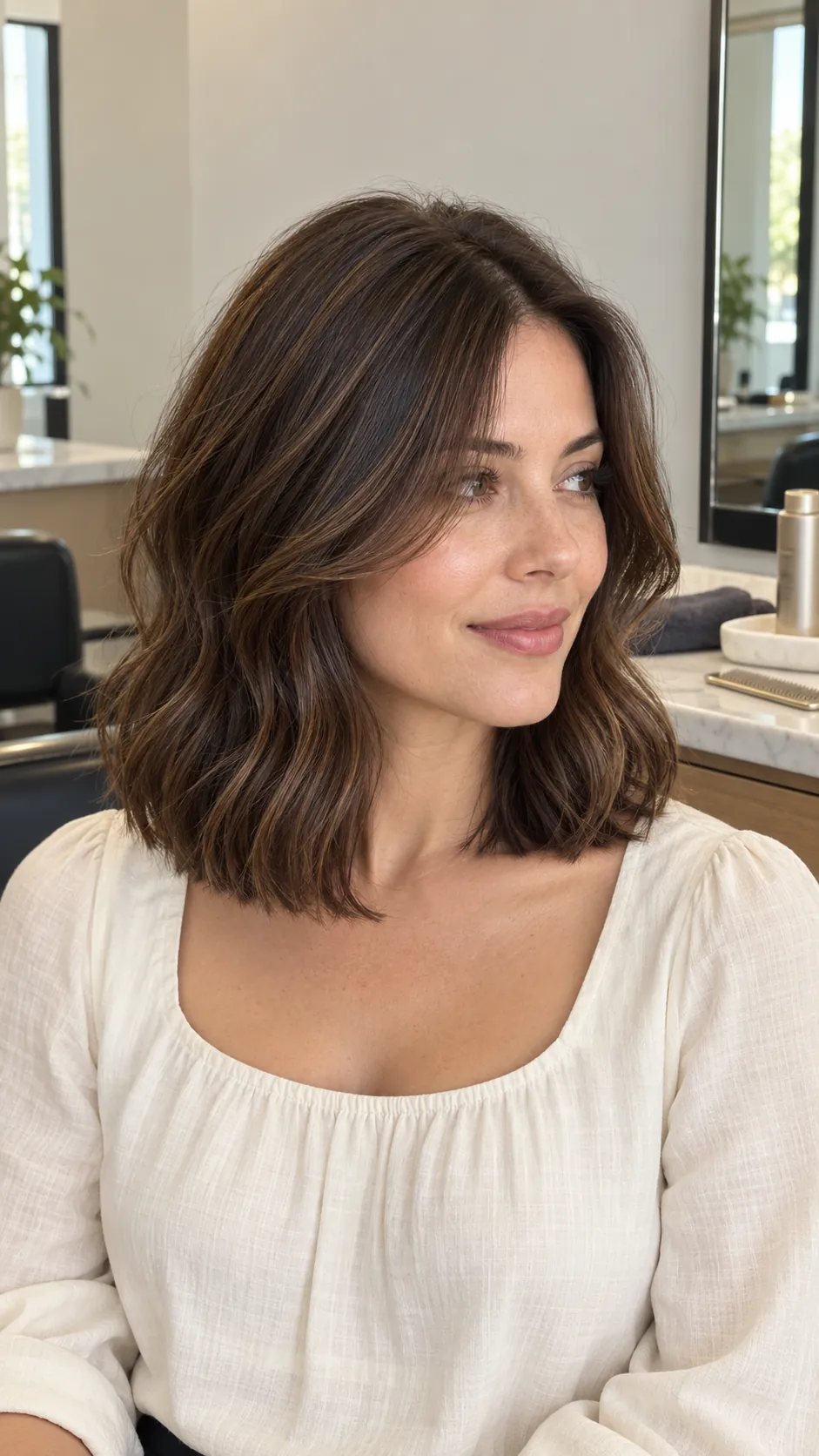

Your part can be in the right place while the finish still feels wrong: flat roots, a heavy front section, or ends that flip when they touch your shoulders. Choose the movement you want first, then set the part to support it. These generated hairstyle references illustrate possible finishes; your texture, cut, and styling routine will affect the result.
A smooth blunt finish
A smooth finish makes a clean perimeter and an off center part easy to see. Dry the roots in the direction you want them to sit, then smooth the lengths in small sections. Use heat protection when applying hot tools and follow the tool instructions rather than repeatedly passing over the same hair. Keep finishing product away from the roots if they flatten easily.

A deep part with a lifted front
A deep side part moves more hair across the forehead and can create a fuller front sweep. Set the part while the roots are damp, because changing it after drying may leave an awkward ridge. Lift the front section as you dry it, then let it cool in that position before disturbing it. If your natural growth pattern resists the sweep, move the part slightly closer to its usual position instead of forcing a fixed line.

A rounded blowout
A rounded bob blowout curves the ends inward without turning them into tight curls. Work with a brush size that suits your length, keeping gentle tension rather than pulling hard at the scalp. Let the ends cool before brushing through them so the curve has a chance to settle. A full inward bend needs some styling time, so choose a softer version if your usual routine is brief.
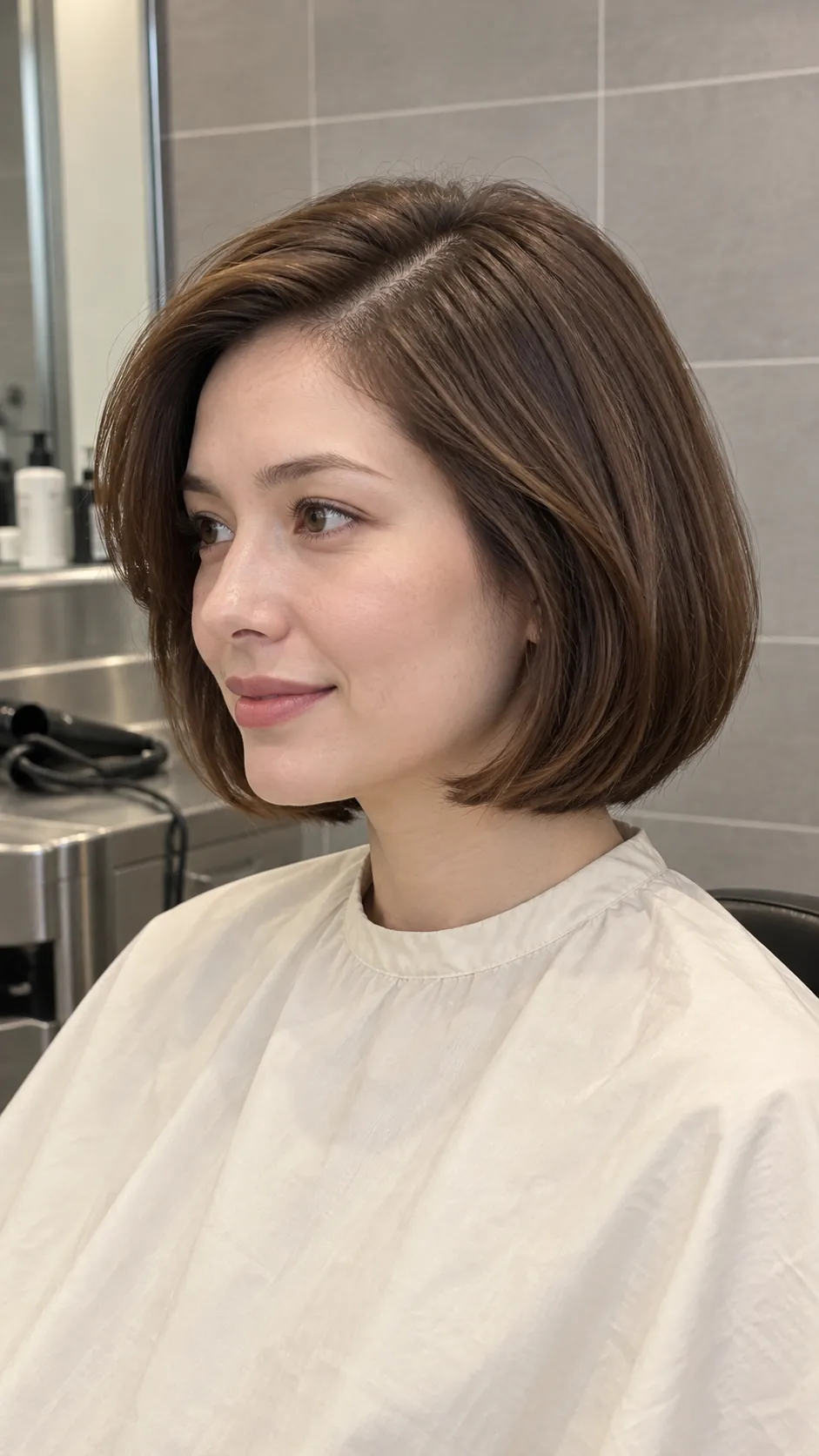
Outward flicks at the ends
Outward flicks turn a common frustration into an intentional finish. Keep the roots and upper lengths relatively smooth, then bend only the tips away from the neck. The flicks can vary slightly rather than forming an identical wing on each side. If shoulder contact already pushes your ends outward, work with that movement before adding more heat.

Soft waves with straighter tips
Wavy side part bob styling can feel less formal when the tips remain fairly straight. Create bends through the middle of the hair and leave the last section out of the tool. Allow the waves to cool, then loosen them with your fingers instead of brushing them into a fluffy mass. This finish suits a relaxed outline, but the exact wave size should follow your length and density.

A brushed retro wave
A brushed wave gives the heavier side a continuous curve rather than separate ringlets. Form the sections in a consistent direction, let them cool, and brush gently until they connect. Stop before the hair loses all definition or becomes a cloud of frizz. A deep part supports the sweep, while the lighter side can stay close to the head.

A single bend near the cheek
One bend beside the cheek changes the outline without requiring a whole head of waves. Keep the rest of the bob simple so the bend remains the focal point. Start below the root area and adjust the direction to keep the face comfortably clear. If the section falls across your eye, move the part or reduce the bend rather than pinning it into an uncomfortable position.

Natural waves with a soft part
A soft side part can follow your natural wave pattern instead of making a sharp scalp line. Arrange the front while damp, apply a suitable light styling product, and avoid repeatedly combing through developing waves. Let the two sides settle without insisting on identical bends. Natural texture often looks better when the finish allows some variation in volume and direction.

Defined curls with an open forehead
Defined curls can frame the face while the side part keeps one section away from the forehead. Apply your usual curl product evenly and separate the part gently before drying. Avoid pulling the front curls straight to make the line look precise. Judge the finished length when the curls are dry, because wet curls can suggest a much longer bob.
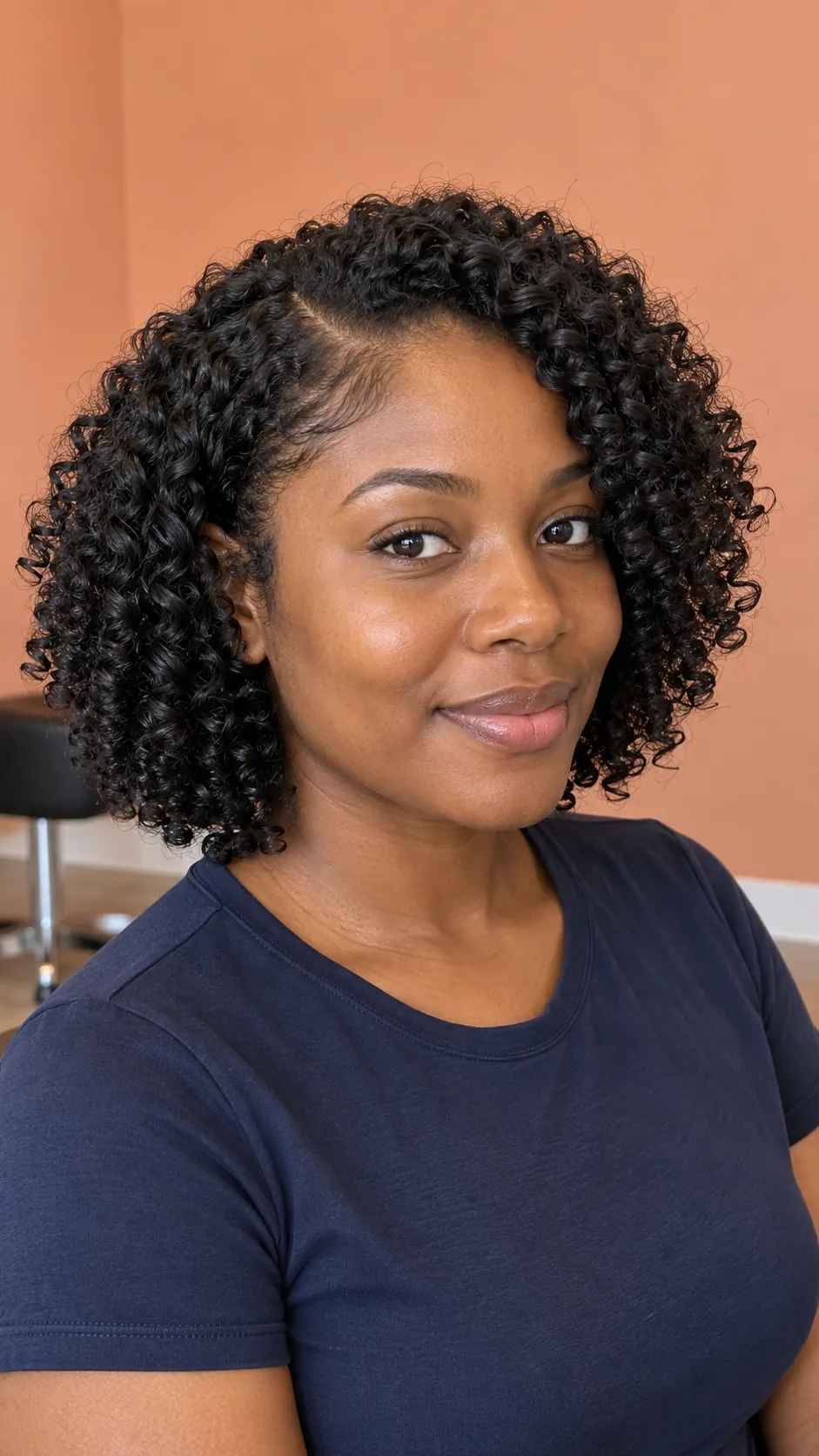
A coily bob with a diagonal part
A diagonal part gives a coily bob a clear direction without flattening the entire crown. Separate the roots carefully, then preserve the natural volume of the coil groups. A light definition product may help the sections hold their shape, but heavy buildup can weigh down the front. Keep the part comfortable and avoid tight repeated pulling at the same scalp area.
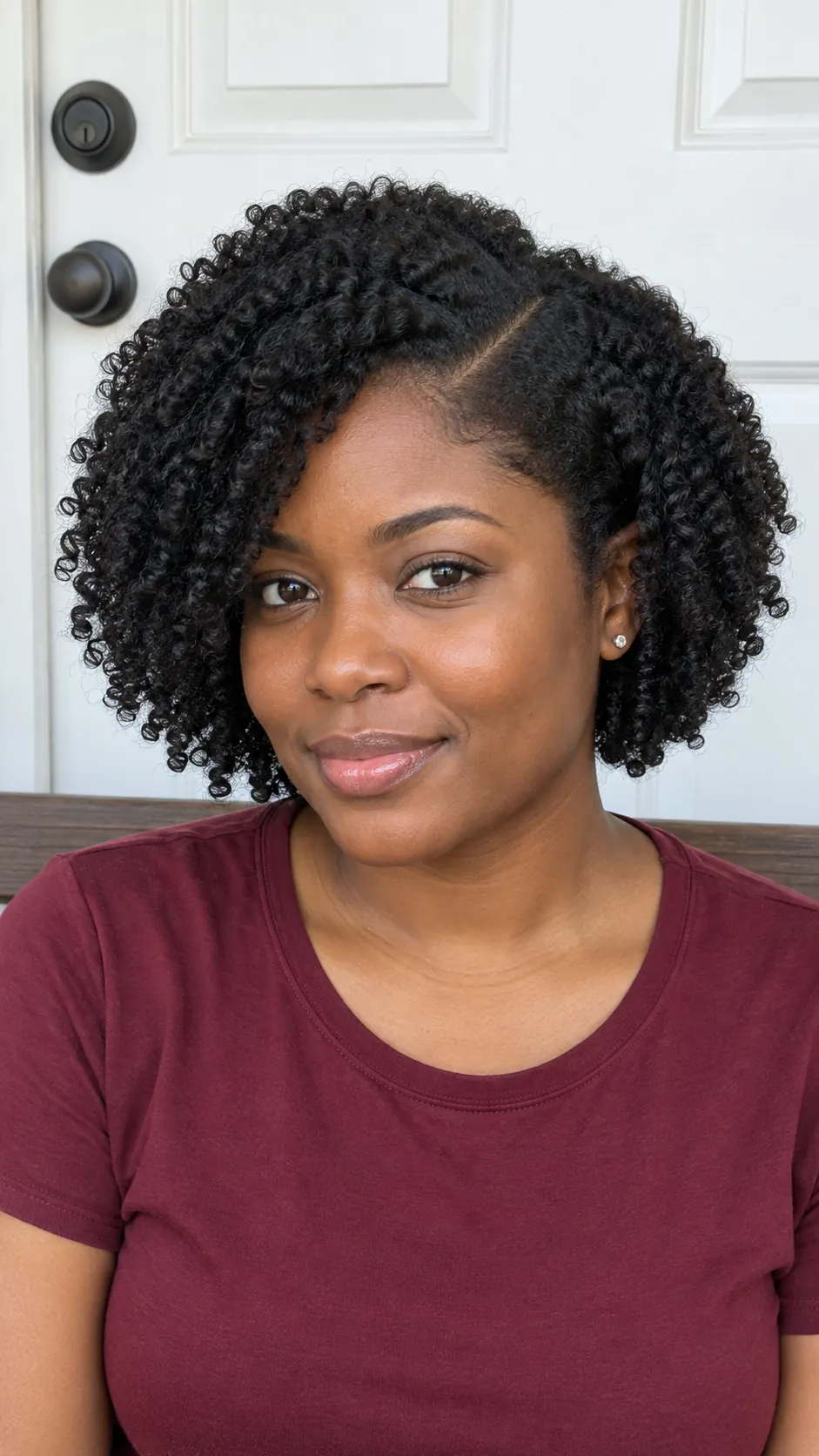
A lifted crown with a soft perimeter
Crown lift adds height behind the part while the ends remain understated. Dry the crown roots away from the scalp and let them cool before laying the surface hair over them. You do not need a sharply stacked haircut to create a modest amount of lift. If fine hair collapses quickly, use less product and accept a smaller, more sustainable shape.
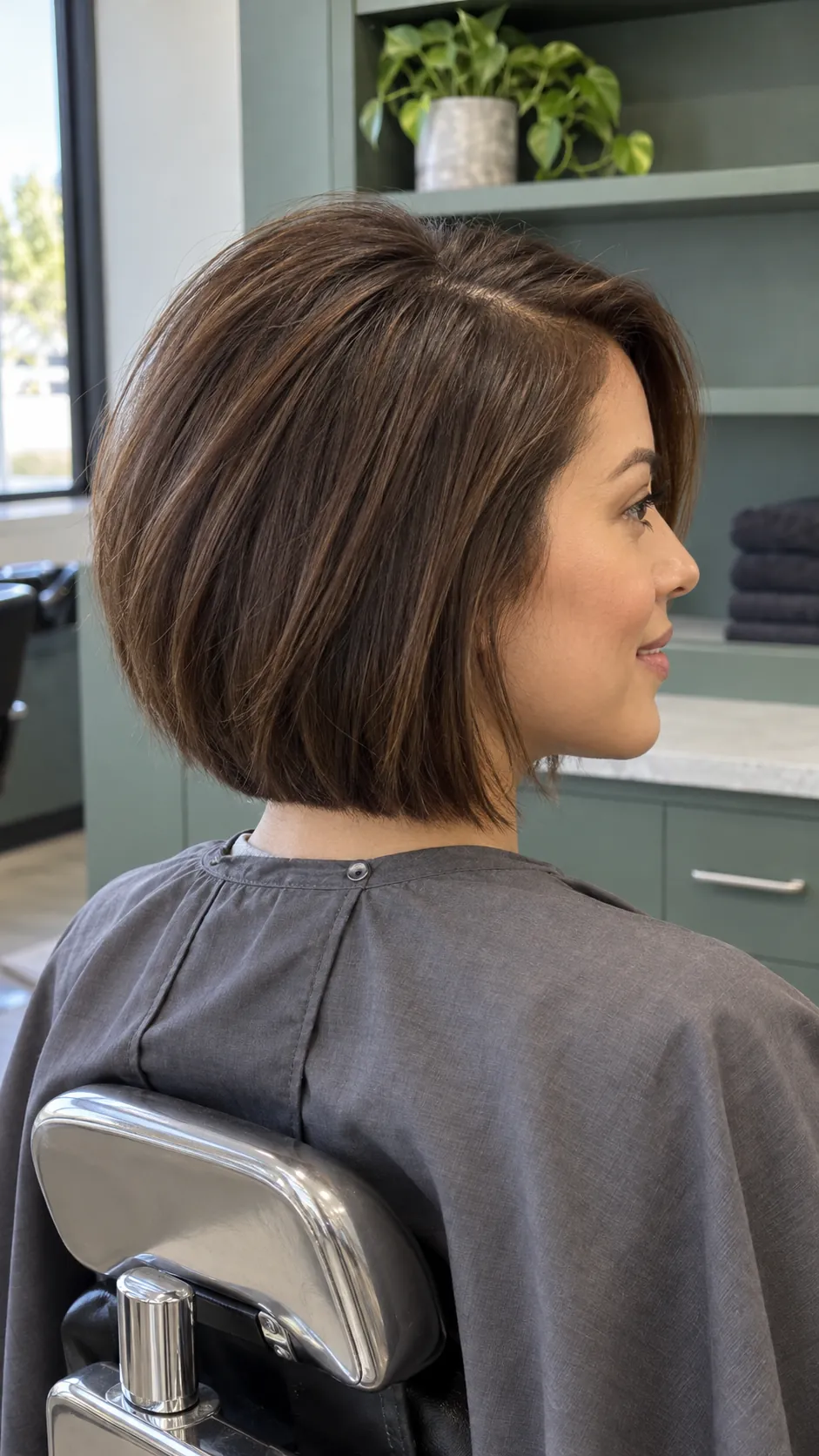
A satin finish for fine hair
A satin finish gives fine hair some shine without the heavy look of a coated surface. Choose a light product and start with less than you think you need, concentrating on the lower lengths. The part can sit slightly off center so neither side has to carry an extreme amount of hair. Preserve the perimeter when discussing the cut, because excessive thinning may make the ends look sparse.

A dense bob with a softly tucked side
Tucking the lighter side behind an ear creates space around the face while the fuller side stays loose. Leave the surface soft rather than slicking it tightly against the scalp. If the tuck does not stay comfortably, a discreet small clip can help without changing the overall finish. Discuss bulk around the ear with your stylist if dense hair repeatedly springs back out.

A polished ear tuck
A polished tuck pairs a clean part with a smooth surface and a deliberate line around the ear. Smooth the smaller side before placing it back, then check that the ends do not fold into an uncomfortable knot. A tiny amount of finishing product can control flyaways without coating the whole bob. This is a useful way to show earrings while keeping the heavier side visibly free.
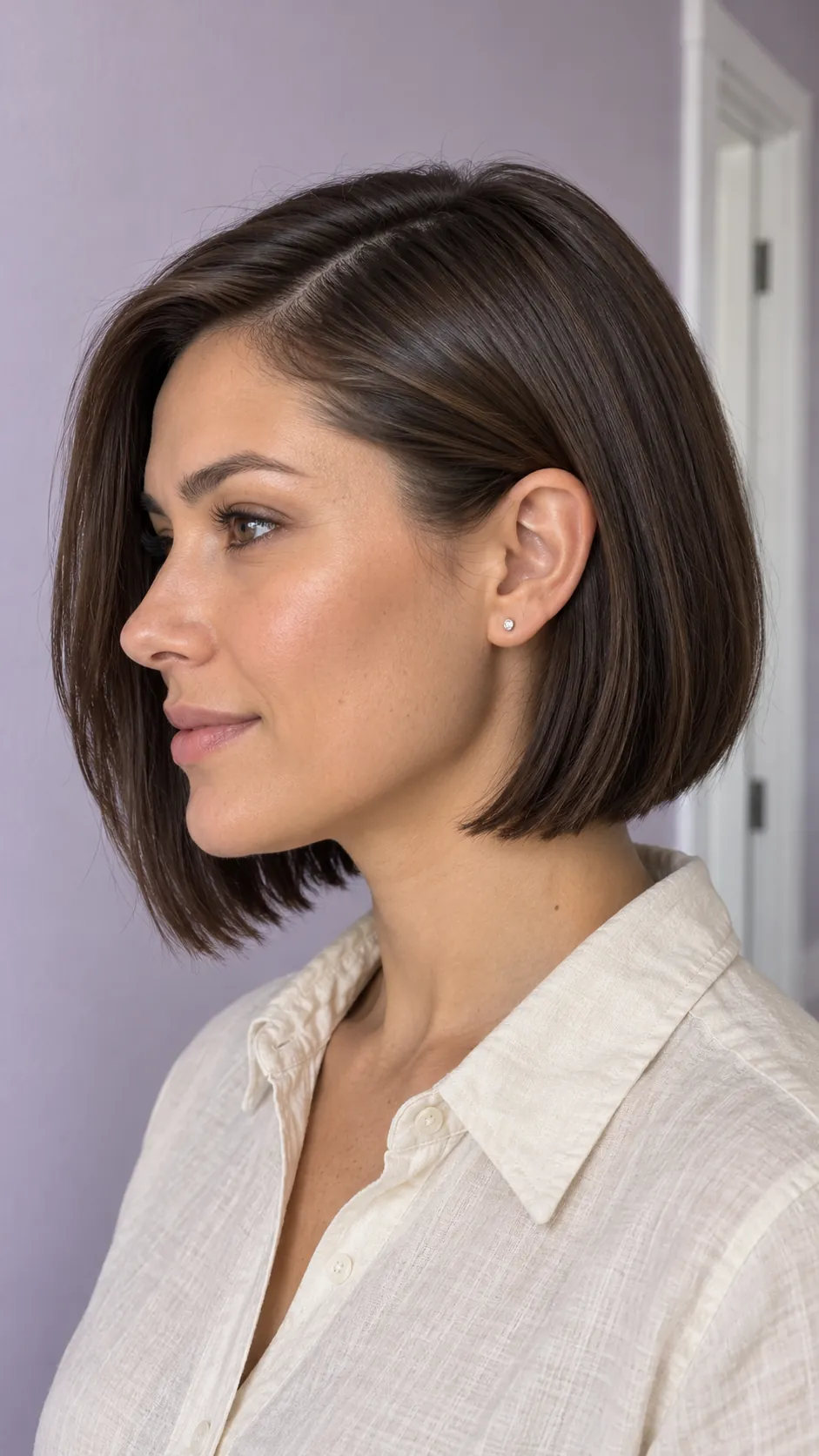
A matte piecey finish
A matte finish gives the ends separation without a wet shine. Warm a small amount of suitable styling product between your palms and touch it through selected ends rather than coating every strand. Keep the roots light so the side part does not become flat or greasy. The result should still read as a bob, with a clear outline beneath the individual pieces.

A controlled wet look
A wet look finish is created with styling product, not by leaving the hair dripping. Establish the side part first, then distribute the product through the surface with enough control to keep the shape close to the head. Avoid excessive buildup that leaves flakes or an uncomfortable stiff layer. Wash the product out as directed, and choose a softer gloss if you dislike a highly defined finish.
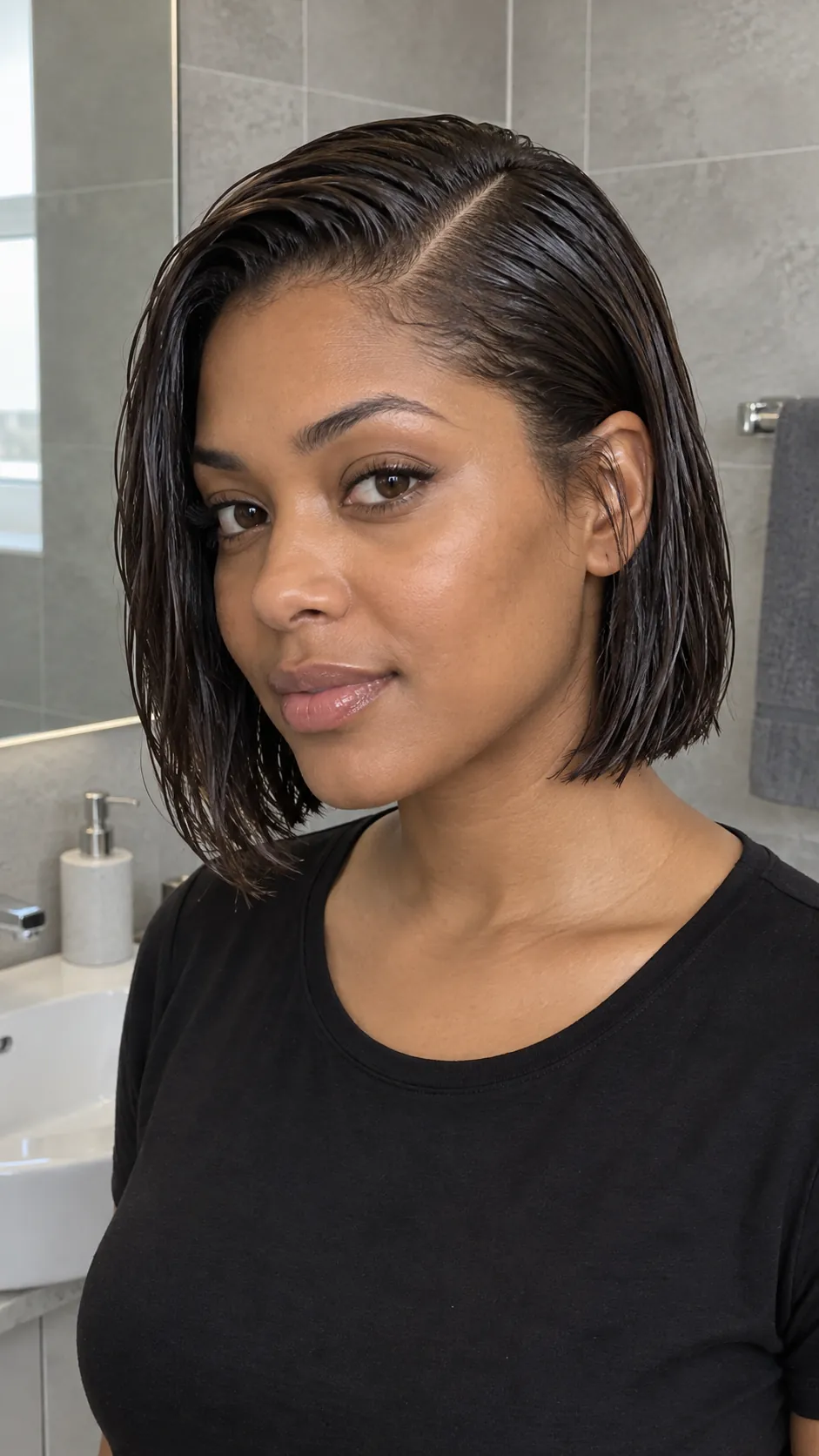
A sweeping fringe that blends into the bob
A sweeping fringe can join the heavier side of the part and soften the forehead line. Dry the fringe at its root before shaping the ends so it does not split into an unwanted gap. Its ideal length depends on how much eye coverage feels comfortable during normal activity. Bring a reference showing the fringe at rest, since a carefully placed photo can hide the maintenance involved.
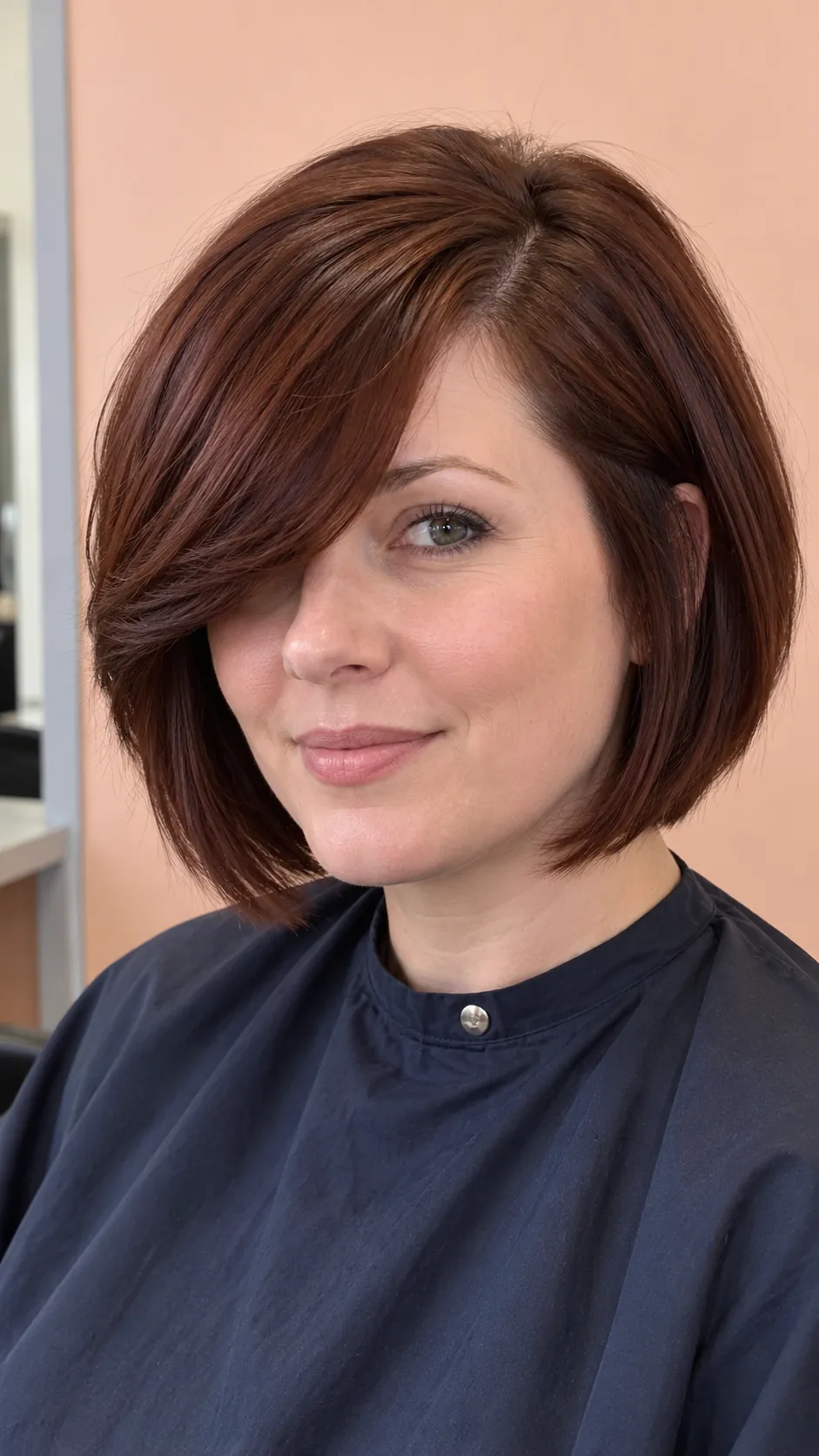
A short bob with a curved front
A curved front section gives a compact bob movement without adding length below the jaw. Guide the front gently away from the face while leaving the back close and simple. Check the profile so the curve does not create a disconnected puff above the temple. Short pieces may need more frequent adjustment, especially if you want the front to keep a precise direction.
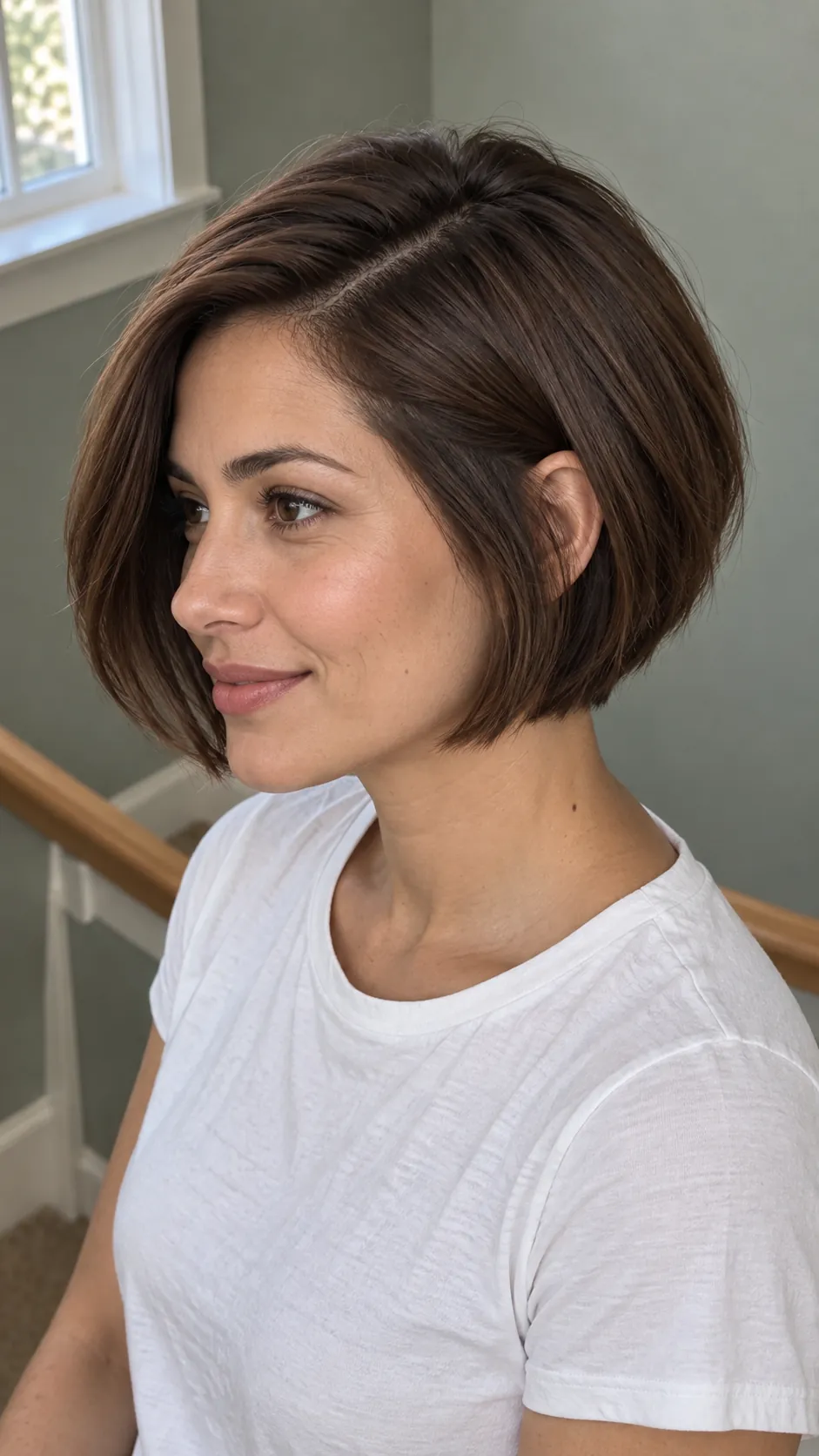
A long bob with relaxed shoulder movement
A longer bob can rest against the shoulders and develop a mixture of inward and outward ends. Keep the side part clear but allow the lower lengths to move rather than fighting every small flip. If you want a perfectly straight outline, ask whether your chosen length will keep touching the shoulders. A small length change may suit your routine better than repeated attempts to force a different bend.

A gentle refresh without restyling everything
A small refresh can restore the side part when the rest of the bob still looks usable. Lightly dampen only the root section that has changed direction, then dry it into place. Smooth or redefine a few visible ends instead of adding heat across the whole head. If your scalp or hair needs washing, use your usual wash routine rather than trying to cover discomfort with more product.